
TL;DR:
- Most homeowners overlook that HVAC systems are essential safety tools, managing air quality and fire hazards. Regular maintenance, inspections, and smart monitoring are crucial for preventing gas leaks, fire spread, and ensuring occupant health. Treat HVAC care as mission-critical safety infrastructure to protect your property effectively.
Most homeowners think of their HVAC system as a comfort appliance — something that keeps rooms warm in winter and cool during Avondale summers. That framing misses something significant. The role of HVAC in property safety extends well beyond temperature control. Your system actively manages air quality, limits the spread of smoke during a fire, detects hazardous gases, and can either protect or endanger every person inside your building depending on how well it is maintained. This article breaks down the full scope of HVAC system safety so you can make smarter decisions about your home or property.
Table of Contents
- Key Takeaways
- The role of HVAC in property safety, explained
- How HVAC connects to fire safety and hazard prevention
- Why HVAC maintenance is a safety requirement, not a luxury
- Smart HVAC technology and real-time safety monitoring
- Practical steps for homeowners and property managers
- My perspective on HVAC as a safety system, not just a comfort tool
- Keep your property safe with professional HVAC and duct services
- FAQ
Key Takeaways
| Point | Details |
|---|---|
| HVAC goes beyond comfort | Your system controls air quality, manages smoke, and helps prevent fire spread in your property. |
| Maintenance prevents real hazards | Scheduled inspections catch gas leaks, carbon monoxide, and wiring faults before they become emergencies. |
| Fire safety is directly linked | Smoke and heat control systems integrated with HVAC significantly reduce fire fatality risks for occupants. |
| Smart technology raises the bar | Modern HVAC monitors CO2 levels and provides auditable air quality data for compliance and tenant safety. |
| Professional service is non-negotiable | Qualified technicians and proper duct cleaning remove hazards that routine filter changes will never address. |
The role of HVAC in property safety, explained
When most people picture an HVAC system, they think of a thermostat, some vents in the ceiling, and a unit humming outside. The reality is more layered than that. A complete HVAC setup includes air handlers, ductwork, filters, refrigerant lines, heat exchangers, exhaust fans, and in many commercial properties, dedicated smoke and heat control (SHC) components. Each of those pieces plays a direct part in how safe your building is to occupy.
At its core, HVAC controls four things: heating, cooling, ventilation, and air filtration. The ventilation piece is where HVAC role in buildings gets serious from a safety standpoint. A properly ventilated space continuously replaces stale indoor air with fresh outdoor air, dilutes pollutants, and removes moisture that would otherwise feed mold growth. Without that exchange, airborne contaminants including carbon monoxide, volatile organic compounds, and allergens concentrate to levels that affect occupant health.
Here is what a well-functioning HVAC system actively manages in terms of safety:
- Air filtration: Removes particulates, allergens, mold spores, and bacteria from circulating air, reducing respiratory risks.
- Humidity control: Keeps indoor moisture levels in check, preventing mold colonization in walls and ductwork.
- Ventilation rate: Dilutes indoor pollutants by maintaining a steady supply of fresh outdoor air.
- Smoke management: In fires, SHC-integrated HVAC systems can contain or exhaust smoke to protect evacuation routes.
- Combustion safety: Gas-fired systems must be properly sealed and vented to prevent carbon monoxide from entering living spaces.
- Temperature regulation: Extreme heat or cold indoors can become a medical emergency, particularly for elderly occupants and young children.
Understanding how HVAC affects safety at each of these levels changes how you prioritize its care. It is not just about comfort. It is about whether the air in your building is safe to breathe and whether your system will protect rather than harm occupants in an emergency.
How HVAC connects to fire safety and hazard prevention
This is the connection most homeowners never make, and it matters more than they realize. 34% of fire-related fatalities result from being overcome by gas or smoke rather than from direct flame exposure. That single statistic reframes the entire conversation about fire safety in buildings. It is not just about sprinklers and exit signs. It is about managing what people breathe in the critical minutes after a fire starts.
Smoke and heat control systems are life-safety components, and they work directly with your HVAC infrastructure. In a fire event, a correctly integrated SHC system can pressurize stairwells to keep them smoke-free, exhaust smoke from occupied zones, and prevent fire spread through ductwork. SHC systems protect occupants by controlling smoke movement and limiting heat exposure, which also reduces structural damage and recovery time after an incident.
The fire safety risks tied to HVAC go beyond smoke management. Consider the following:
- Ductwork as a fire pathway: Unlined or poorly maintained ducts can carry flames and superheated air from one zone of a building to another, accelerating fire spread.
- Refrigerant fire risk: Newer refrigerants like R-290 are environmentally better but significantly more flammable. Flammable refrigerants require strict professional risk assessments and proper installation to prevent ignition hazards.
- Electrical faults in components: Mismatched or counterfeit HVAC parts can cause arc flashes exceeding 35,000°F, creating ignition sources inside your system.
- Grease and debris accumulation: In residential settings, lint and dust buildup in ducts and around heat exchangers creates ready fuel for ignition if temperatures spike.
Pro Tip: If your HVAC system uses a newer refrigerant or was installed or modified in the last three years, ask your technician specifically whether a fire risk assessment was completed. Many homeowners assume this was handled automatically, and often it was not.
For property managers overseeing multi-unit buildings, the integration between your HVAC system and your fire alarm and sprinkler system is not optional. It needs to be designed, tested, and maintained together. A gap anywhere in that chain is where fatalities happen. Resources like preventing HVAC fire hazards at home and in commercial settings offer a practical starting point for understanding these risks across both contexts.
Why HVAC maintenance is a safety requirement, not a luxury
Here is a framing shift that changes behavior: stop thinking of HVAC maintenance as a cost center and start treating it as mission-critical safety infrastructure. That mental shift is especially important in healthcare settings and high-occupancy residential buildings, but it applies equally to single-family homes.
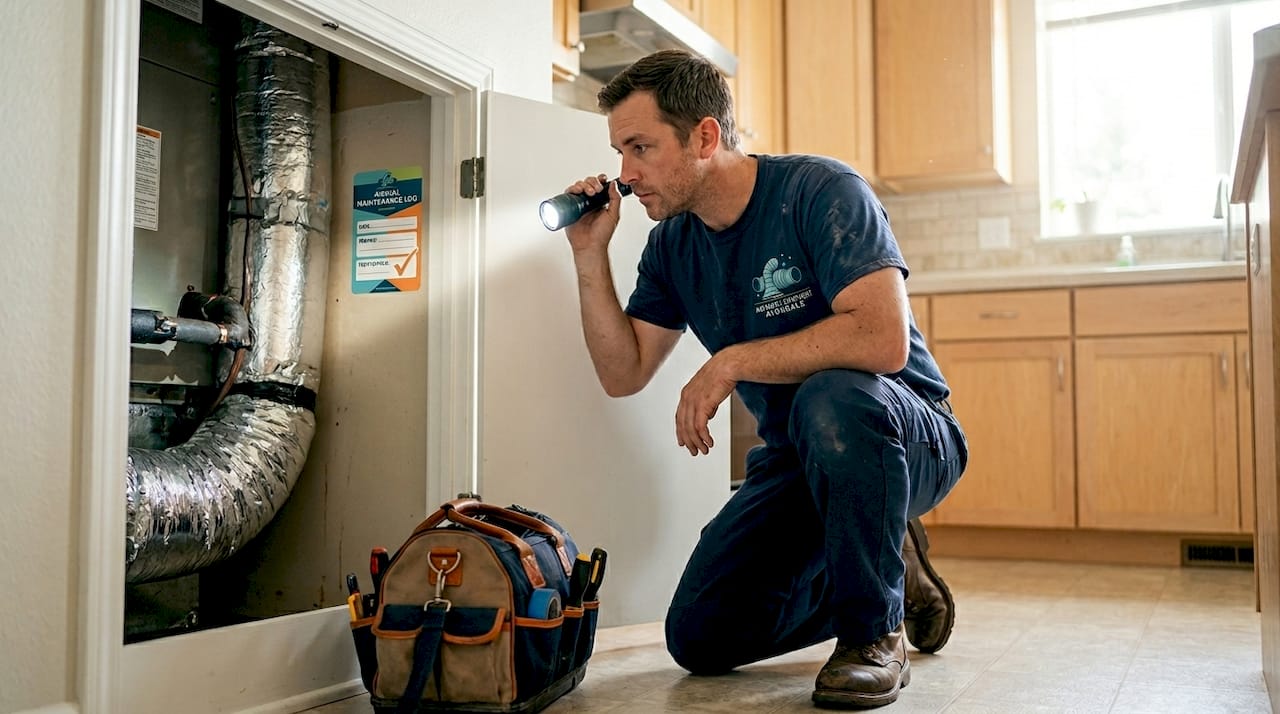
HVAC inspections detect gas leaks, carbon monoxide emissions, and faulty wiring before those problems reach occupants. These are not abstract risks. Carbon monoxide is odorless and colorless, and a cracked heat exchanger on your furnace can release it directly into your living space with zero warning. Gas leaks near ignition sources create explosion risk. Wiring degradation inside air handlers causes fires. Every one of those scenarios is preventable with a scheduled inspection.
Here is a practical maintenance schedule for homeowners and property managers to follow:
- Change air filters every 1 to 3 months. Clogged filters reduce airflow, force motors to work harder, and allow contaminants to bypass filtration entirely.
- Schedule a professional inspection twice yearly. Before cooling season and before heating season are the two critical windows for catching seasonal failures.
- Have ductwork inspected every 3 to 5 years. Leaks, disconnected joints, and debris accumulation all create both efficiency and safety problems.
- Test carbon monoxide detectors every six months and replace them on the manufacturer's schedule. Your HVAC system and your CO detector work as a team.
- Verify refrigerant levels annually. Low refrigerant is not just an efficiency problem. It can point to a leak that poses environmental and safety concerns.
- Document all service visits. For property managers, this documentation is your legal protection and your operational record.
Preventive HVAC maintenance reduces equipment downtime by 15%, which translates directly to fewer situations where occupants are exposed to unsafe temperatures or uncontrolled air quality. In extreme heat markets like Avondale, Arizona, an HVAC failure in July is not just an inconvenience. For vulnerable occupants, it can be a medical emergency.
Pro Tip: When scheduling maintenance, ask your technician to check duct connections at the air handler specifically. That junction is where disconnections most commonly occur, and a loose connection there recirculates unconditioned, potentially contaminated air directly into your living spaces.
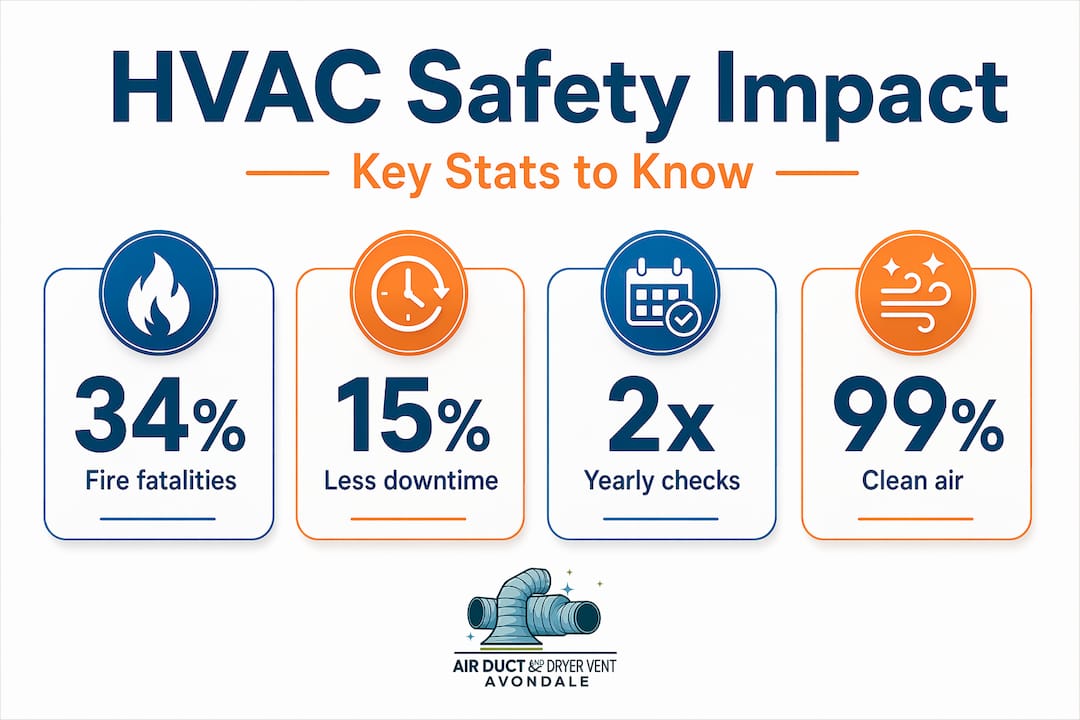
Understanding the real cost of HVAC wear on your air quality and system efficiency helps put maintenance investment into proper perspective.
Smart HVAC technology and real-time safety monitoring
The most significant shift in HVAC system safety over the last decade is not a mechanical improvement. It is the ability to monitor what is happening inside your building in real time. Smart HVAC systems paired with indoor air quality sensors give homeowners and property managers something they never had before: continuous, objective data about whether the air their occupants breathe is actually safe.
The standard that smart systems target is a CO2 concentration below 800 parts per million in occupied zones. Sub-800ppm CO2 monitoring gives building managers an auditable benchmark they can use in lease negotiations and compliance conversations. If your ventilation system is working correctly, it shows up in the data. If it is not, the data tells you before your occupants do.
Here is what modern smart HVAC safety technology delivers:
- Real-time CO2 and pollutant tracking: Sensors alert building managers when air quality drops below acceptable thresholds before the problem becomes visible or symptomatic.
- Predictive maintenance alerts: AI-integrated systems analyze operating patterns and flag components showing early signs of failure, allowing repairs before emergencies occur.
- Automated safety responses: Systems tied into building automation can adjust damper positions, increase ventilation rates, or trigger alerts when smoke or CO is detected.
- Compliance and audit trails: Air quality monitoring records are increasingly required for regulatory compliance and serve as documentation of due diligence for property managers.
| Feature | Traditional HVAC | Smart HVAC |
|---|---|---|
| Air quality feedback | None | Continuous real-time monitoring |
| Maintenance triggers | Calendar-based | Data-driven predictive alerts |
| Fire/CO response | Manual detection | Automated system integration |
| Compliance documentation | Paper service records | Digital audit trails |
| Energy efficiency | Fixed schedules | Demand-based adjustments |
The post-pandemic period accelerated tenant and regulatory expectations around indoor air quality. Buildings that cannot demonstrate air quality performance are at a competitive disadvantage in leasing markets and at legal risk when occupant health complaints arise. Smart HVAC is no longer a premium feature. It is becoming a baseline expectation.
Practical steps for homeowners and property managers
Knowing the theory is useful. Having a checklist you can act on today is better. The following covers the most impactful steps for strengthening property safety and HVAC performance without overcomplicating the process.
- Know your system's age and service history. Systems older than 15 years carry significantly higher failure risk. If service records are missing, treat the system as uninspected.
- Identify the warning signs of HVAC safety problems early. Unusual odors (burning, musty, or sulfur-like smells), inconsistent airflow, water around the unit, and strange noises are all signals that deserve professional attention, not a wait-and-see approach.
- Only use qualified, licensed technicians. Unlicensed work on HVAC systems voids warranties, creates liability, and can introduce the exact electrical and refrigerant hazards you are trying to avoid.
- Ask about refrigerant type during any service visit. If your system uses an older refrigerant scheduled for phase-out, understand your timeline and options for transition. Newer refrigerants require updated safety protocols.
- Get your ducts cleaned by a professional, not a discount service. Debris-filled ducts reduce air quality, increase fire risk from particulate buildup near heat sources, and make your system work harder. A proper air duct cleaning addresses all of that with documented results.
- Schedule indoor air quality testing. This is especially important after renovations, in older buildings, or when occupants report recurring respiratory symptoms. Air quality testing gives you real data instead of guesses.
- Review your local safety codes annually. Building codes related to HVAC, ventilation, and fire integration do change, and property managers are responsible for knowing when upgrades are required.
Taking these steps is not about obsessing over your HVAC system. It is about closing the gaps where real risk lives. Most safety failures are preceded by warning signs that were noticed and ignored, or maintenance that was deferred one season too long.
My perspective on HVAC as a safety system, not just a comfort tool
I've been working around HVAC systems in residential and commercial properties for years, and the pattern I see most often is not ignorance about how the system works. It is underestimation. Homeowners and property managers know they should maintain their HVAC systems. What they don't always understand is the specific category of harm they are preventing when they do.
When I've talked to homeowners after a carbon monoxide scare or a dryer vent fire, the consistent reaction is shock. Not at the event itself, but at the fact that their HVAC or ventilation system was the source of a life-safety risk. They thought they had a comfort system with a maintenance schedule. They didn't realize they had safety infrastructure that required the same seriousness as their electrical panel or their sprinkler system.
My honest take: the importance of HVAC safety is chronically undersold in how these systems are marketed and discussed. Manufacturers emphasize efficiency ratings and smart features. Contractors talk about comfort. Almost nobody leads with the fire risk, the carbon monoxide exposure, or the role that duct condition plays in whether your air is safe to breathe. That gap in communication costs people.
The technology is genuinely exciting. Smart monitoring, predictive maintenance, and automated safety responses are making it easier than ever to stay ahead of HVAC problems before they become emergencies. But technology only works if someone installs it correctly, maintains it consistently, and knows what the data is telling them.
My recommendation: treat your next HVAC inspection as a safety audit, not a tune-up. Go in with questions. Ask about the heat exchanger, the refrigerant, the duct condition, and the connection to your fire detection system if you have one. That conversation alone puts you in a better position than most homeowners.
— Shaun
Keep your property safe with professional HVAC and duct services
If this article clarified one thing, it should be that HVAC maintenance is safety maintenance. At Airanddryerventcleaningavondale, we work with homeowners and commercial property managers across Avondale, Arizona to deliver exactly that. Our team specializes in the cleaning and inspection services that prevent the hazards described throughout this article.
Dirty ducts carry allergens, mold, and debris that degrade air quality and increase fire risk near heat sources. Our air vent cleaning services remove that buildup at the source. If you want objective data on what your occupants are breathing, our indoor air quality testing gives you an auditable baseline and a clear picture of what your system is actually delivering. We also offer dryer vent cleaning to eliminate one of the most overlooked fire hazards in residential properties. Flexible scheduling, after-hours availability, and a customer-first approach make it easy to get started. Contact Airanddryerventcleaningavondale today for a service that treats your property's safety as seriously as you do.
FAQ
What is the role of HVAC in property safety?
HVAC systems manage air quality, ventilation, humidity, and smoke control, all of which directly affect occupant health and fire safety. A properly maintained system prevents carbon monoxide buildup, limits fire spread through ducts, and keeps air safe to breathe.
How does HVAC affect fire safety in a building?
HVAC systems integrated with smoke and heat control components can exhaust smoke, pressurize escape routes, and prevent fire from traveling through ductwork. Since 34% of fire fatalities are caused by smoke and gas inhalation, this function is critical.
How often should HVAC systems be inspected for safety?
Professional inspections should happen twice a year, once before cooling season and once before heating season. These visits catch gas leaks, carbon monoxide risks, and wiring faults that routine filter changes will not reveal.
Can dirty air ducts be a safety hazard?
Yes. Debris and dust accumulation in ducts increases fire risk near heat sources, degrades air quality, and can harbor mold that circulates through your home or building. Regular professional cleaning addresses all three of those risks.
What CO2 level should HVAC systems maintain for safety?
Smart HVAC systems target CO2 levels below 800 parts per million in occupied zones. Levels above this threshold indicate insufficient ventilation and are associated with reduced cognitive function and occupant discomfort.