
TL;DR:
- Most dryer vents harbor dangerous buildup of lint, mold, allergens, residues, and carbon monoxide, posing fire and health risks. Regular professional cleaning is essential to remove internal obstructions, prevent mold growth, and ensure safe, efficient operation. Recognizing signs like prolonged drying times, odors, or visible lint indicates the need for expert inspection and maintenance.
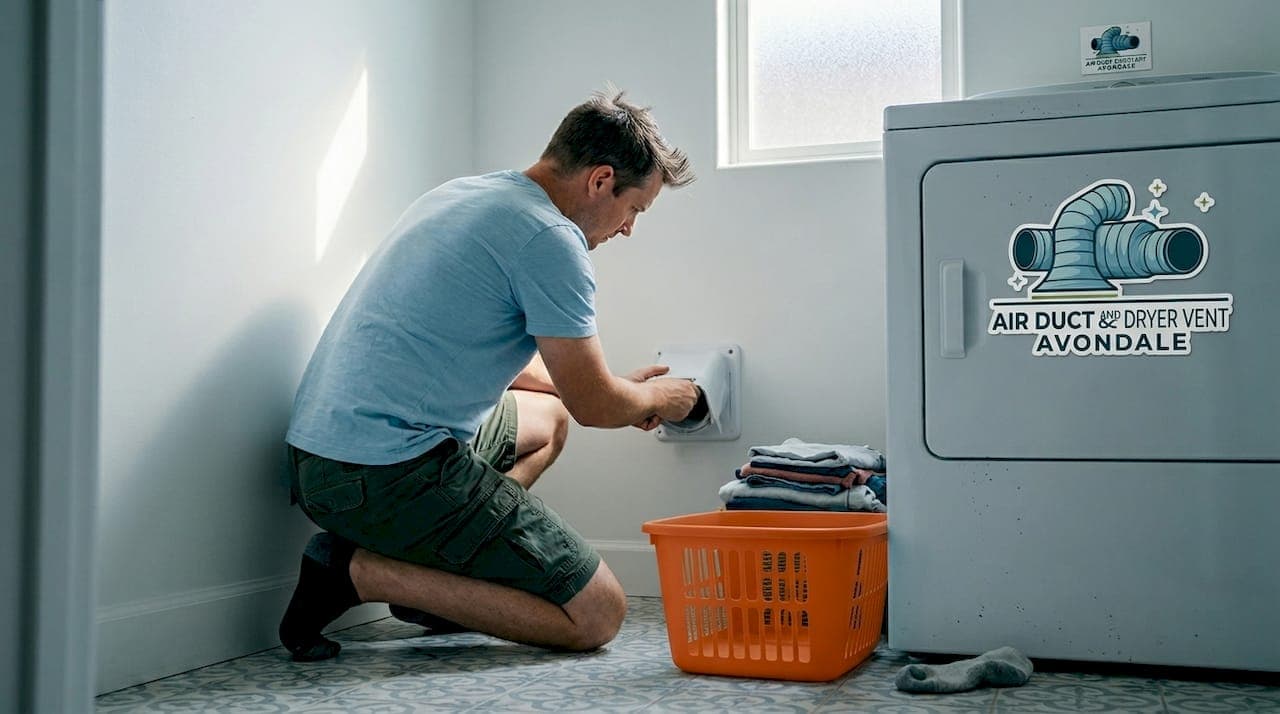
Most homeowners clean the lint trap after every load and consider the job done. But the top contaminants in dryer vents go far beyond that thin layer of fuzz. Lint, mold, allergens, chemical residues, and even carbon monoxide can build up inside your vent ducts, creating fire hazards, health risks, and energy waste that most people never connect back to their dryer. Knowing what you are dealing with is the first step toward protecting your home and your family.
Table of Contents
- Key takeaways
- 1. Lint and textile fibers: the top contaminant in dryer vents
- 2. Moisture accumulation and mold growth
- 3. Dust, pet dander, pollen, and allergens
- 4. Chemical residues and fabric softener buildup
- 5. Carbon monoxide from blocked gas dryer vents
- 6. Signs your dryer vent has a contamination problem
- 7. Quick-reference guide to dryer vent contaminants
- What I have learned from years of seeing this firsthand
- Protect your home with professional dryer vent cleaning
- FAQ
Key takeaways
| Point | Details |
|---|---|
| Lint trap is not enough | The lint trap only catches 75-80% of lint, leaving the rest to accumulate deep in the vent duct. |
| Mold is a hidden hazard | Moisture trapped in vents creates ideal conditions for mold that circulates through your home's air. |
| Chemical residues reduce airflow | Fabric softener buildup coats lint screens and duct walls, restricting airflow and cutting dryer efficiency. |
| Gas dryers carry CO risk | Blocked vents on gas dryers can redirect carbon monoxide into your living spaces instead of outside. |
| Professional cleaning is necessary | DIY vacuuming often compacts lint deeper into ducts, worsening blockages until a professional clears them. |
1. Lint and textile fibers: the top contaminant in dryer vents
Lint is the most recognized contaminant in laundry vents, but most people dramatically underestimate how much of it bypasses the trap. Lint traps capture only 75-80% of the fibers released during a drying cycle. That remaining 20-25% travels down the vent duct, where it sticks to duct walls, accumulates at bends, and builds into dense mats over time.
Those mats are what make lint genuinely dangerous. Lint is highly combustible. It ignites at low temperatures, and since vent ducts run hot air through them constantly, the combination creates a real fire hazard. Failure to clean dryer vents accounts for roughly 34% of dryer-related fires, contributing to approximately 2,900 preventable fires every year in the U.S.
Beyond fire risk, dryer vent lint buildup directly chokes airflow. When airflow is restricted, the dryer has to work longer to dry the same load. You end up with clothes that are still damp after one cycle, a machine that runs hot to the touch, and energy bills that creep upward without an obvious cause.
Here are the clearest signs that lint accumulation has become a problem:
- Clothes take more than one cycle to dry fully
- The outside of the dryer feels unusually warm during operation
- The laundry room air feels humid or stuffy after a cycle
- Visible lint clusters appear around the exterior vent opening
- The dryer shuts off mid-cycle due to an overheating safety cutoff
Pro Tip: Run water over your lint screen every few months. If water beads up and does not flow through, a residue film is blocking the mesh. Wash the screen with warm soapy water and a soft brush to restore airflow.
Understanding why lint accumulates in the vent duct rather than just at the trap is what separates reactive maintenance from real prevention.
2. Moisture accumulation and mold growth
Every load of laundry releases a significant amount of water vapor as the dryer works. That moisture is supposed to travel out through the vent duct and exit the building. When airflow is restricted, moisture lingers inside the duct instead. Warm, damp, dark conditions are exactly what mold needs to take hold.
Once mold establishes itself in a dryer vent, it does not stay contained. Blocked vents circulate mold spores through your home's air with every drying cycle. For healthy adults, that exposure can cause sneezing, congestion, and irritated eyes. For children, the elderly, and anyone with asthma or compromised immunity, it is a more serious concern.
"Mold spores floating in air cause allergy, asthma aggravation, and respiratory infections, especially in vulnerable groups." FEMA Mold Guidance 2026
Watch for these indicators that moisture and mold have become a problem in your vent:
- A persistent musty smell in the laundry room, even when the dryer is not running
- Damp or mildew-smelling clothes after a full drying cycle
- Visible discoloration or dark staining around the exterior vent cap
- Increased allergy or asthma symptoms among household members
- Condensation on walls or surfaces near the dryer
The relationship between moisture and mold in dryer vents is often overlooked because the duct is out of sight. Mold as a microscopic environmental hazard requires prompt attention in damp vent systems before it becomes embedded and difficult to fully remove.
3. Dust, pet dander, pollen, and allergens
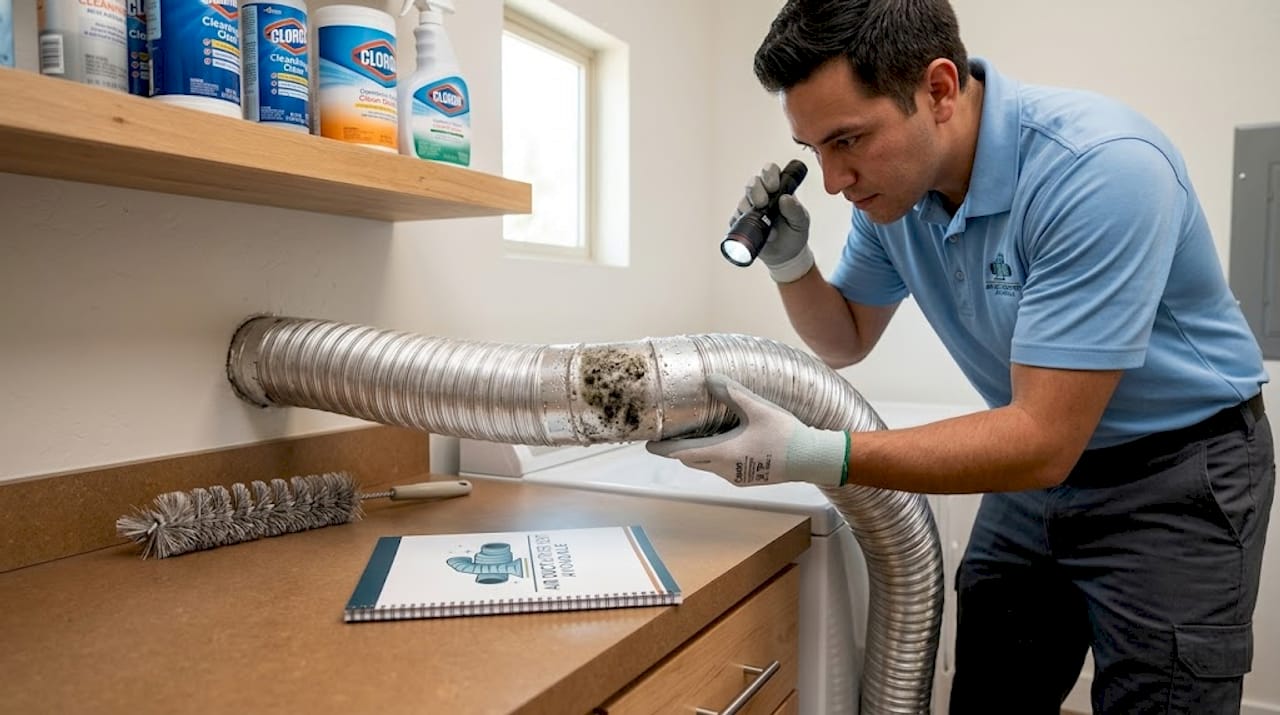
Lint is not the only thing that travels through your dryer's exhaust system. Dust particles, pet dander, and pollen attach to clothing during normal wear and daily activity. When those items go into the dryer, heat loosens those particles and sends them into the airstream. Most exit the duct, but a portion clings to the duct walls alongside accumulated lint.
The result is a vent duct that functions as a reservoir for common household allergens. Contaminants in laundry vents accumulate in layers, with lint providing a sticky surface that traps finer particles like dander and pollen on top of it. Clogged vents affect air quality and pose health risks, particularly for people who are already sensitive to these allergens.
Here is how allergen accumulation in the vent affects your household:
- Pet owners face faster buildup because animal hair and dander are much heavier than typical textile fibers
- Households in high-pollen areas see seasonal spikes in vent contamination
- Residents with existing allergies or asthma may notice worsening symptoms without understanding the source
- Children who spend time near the laundry room may show increased respiratory sensitivity
The practical takeaway is that your dryer vent is not just a fire hazard. It is also an indoor air quality concern that affects everyone breathing in your home. If you have pets, you should clean your vents more frequently than the standard annual recommendation.
4. Chemical residues and fabric softener buildup
Fabric softener sheets and liquid softeners leave behind a waxy residue that coats the lint screen and, over time, the interior walls of the vent duct. This film is invisible to the naked eye, but fabric softener residue reduces lint screen effectiveness significantly. Water beads on a coated screen rather than passing through, which is a reliable sign that the mesh is clogged with chemical film rather than just lint.
Inside the duct itself, this residue mixes with lint fibers to form a denser, more adhesive buildup than lint alone would produce. That combination is harder to dislodge and compacts more tightly when disturbed. The result is a slower, harder-working dryer that costs more to run and wears out faster.
Reducing chemical residue buildup comes down to a few practical habits:
- Wash your lint screen with warm soapy water every one to three months
- Switch from dryer sheets to wool dryer balls, which soften laundry without leaving residue
- Use liquid fabric softener sparingly and avoid pouring it directly onto clothing
- Inspect the interior of the dryer drum periodically for waxy buildup on the walls
Clogged dryer vents increase energy use by 25 to 35% per load. A large part of that inefficiency comes from chemical residue combined with lint restricting airflow progressively over months and years.
Pro Tip: After washing your lint screen, hold it up to a light source. If you can see clearly through the mesh, it is clean. If the light looks dim or uneven, there is still residue blocking the screen.
5. Carbon monoxide from blocked gas dryer vents
This contaminant carries the most acute risk. If you have a gas dryer, combustion produces carbon monoxide as a byproduct. Under normal conditions, that CO travels out through the vent duct and exits the home safely. But when airflow issues in dryers create a blockage, CO has nowhere to go except back into the room.
Carbon monoxide is colorless and odorless. You will not smell it, see it, or taste it. Gas dryers produce CO that requires venting outside; a blocked vent redirects that gas into your living space. Symptoms of CO exposure include:
- Headaches that begin or worsen while at home
- Dizziness and nausea, particularly in the laundry room area
- Fatigue or confusion without an obvious cause
- Symptoms that improve when you leave the house and return when you come back
If you experience any of these symptoms, leave the home immediately and call emergency services. Install CO detectors on every floor of your home, and place one near the laundry area specifically. But prevention is the real answer here. Regular vent cleaning that keeps airflow unobstructed is the most reliable way to protect against this risk.
6. Signs your dryer vent has a contamination problem
Most contamination in dryer vents builds gradually. That makes early detection a skill worth developing. By the time a problem is obvious, it has usually been building for months.
The most reliable warning signs you need to inspect or clean your dryer vent are:
- Drying time increases noticeably. A full load that used to dry in 45 minutes now takes 70 to 80. That is a sign of restricted airflow, not a failing heating element.
- Clothes come out hotter than usual. When airflow is blocked, heat concentrates inside the drum instead of moving through and out.
- A musty or burning smell during operation. Musty points to mold. Burning points to lint or debris near the heating element.
- The laundry room feels warm and humid. Moisture that should exit through the vent is being pushed back into the room.
- Lint appears around the exterior vent flap. If lint is escaping through the cap, it means the duct is already saturated.
Signs of vent contamination include longer drying times, musty or burning odors, excessive heat, and visible lint buildup. The moment you notice any two of these together, schedule a professional inspection rather than waiting to see if it gets worse.
Clogged vents that go unaddressed do not plateau. They compound. Lint compacts, moisture increases, and the risk of a dryer vent fire rises with every load you run.
7. Quick-reference guide to dryer vent contaminants
Use this table to compare the top contaminants, what they cause, how to spot them, and what action to take.
| Contaminant | Primary risk | Common signs | Recommended action |
|---|---|---|---|
| Lint and textile fibers | Fire ignition, airflow restriction | Long drying times, warm exterior, lint at vent cap | Annual professional cleaning; check lint screen each use |
| Mold and mildew | Respiratory illness, poor air quality | Musty odor, damp clothes, dark staining at vent | Professional cleaning with moisture assessment |
| Dust, pet dander, pollen | Allergy and asthma aggravation | Increased allergy symptoms, lingering stuffiness | More frequent cleaning for pet owners; air quality check |
| Chemical residue | Reduced airflow, higher energy bills | Beading water on lint screen, longer drying cycles | Wash lint screen regularly; reduce or eliminate dryer sheets |
| Carbon monoxide (gas dryers) | Poisoning, potential fatality | Headache, dizziness, nausea near laundry area | CO detector installation; immediate vent inspection if symptoms occur |
Each contaminant on this list interacts with the others. Lint holds moisture that feeds mold. Chemical residue makes lint stickier and harder to remove. Blocked airflow concentrates CO. Thinking about preventing dryer vent blockages as one integrated system rather than separate problems leads to better, more lasting results.
What I have learned from years of seeing this firsthand
I have seen dryer vents that looked clean from the outside but were completely packed inside the duct with a compacted mix of lint, chemical residue, and dried mold. The homeowners had no idea. They were cleaning the lint trap after every load and felt they were doing everything right.
That is the most common misconception I run into: that screen cleaning equals vent maintenance. It does not. The screen catches the largest fibers. Everything finer makes it through, and those fibers travel four, six, sometimes ten feet into the duct before settling. Over a year of weekly laundry, that adds up to a serious blockage.
The second thing I see underestimated constantly is chemical residue. Homeowners who use dryer sheets every load are coating their vent systems slowly from the inside. They switch to dryer balls and notice their drying times drop within weeks. Not because the dryer improved. Because it could finally breathe.
For property managers running multiple units, the cleaning frequency question comes up often. My honest answer is that it depends on how many people are using the machine and whether there are pets in the unit. A single-person household with no pets might get by with annual cleaning. A family of five with two dogs needs to clean every six months or risk spending money on service calls that a $150 cleaning would have prevented.
DIY vacuuming sounds like a reasonable middle ground, but partial cleaning compacts lint deeper into ducts rather than removing it, which makes the next professional cleaning harder and more expensive. The equipment matters. A rotating brush system on a professional-grade vacuum pulls material out rather than pushing it around.
Your dryer vent is not a passive piece of metal tubing. It is an active system that either exhausts contaminants out of your home or traps them inside. That distinction is worth taking seriously.
— Shaun
Protect your home with professional dryer vent cleaning
If any of the signs described in this article sound familiar, your dryer vent likely has contamination that a lint screen cleaning will not fix. Airanddryerventcleaningavondale provides professional dryer vent cleaning services for homeowners and property managers throughout Avondale, Arizona, using specialized rotary brush equipment that physically removes lint, mold, chemical residue, and allergen buildup from the full length of the duct.
Unlike a shop vac run from the back of the dryer, professional cleaning reaches every section of the duct and clears the exterior vent cap as well. The result is restored airflow, reduced fire risk, lower energy bills, and cleaner air in your home. Most appointments take under an hour, and the dryer vent cleaning service includes a full inspection to identify any damage, improper materials, or unsafe duct configurations. For homes with air quality concerns beyond the dryer, Airanddryerventcleaningavondale also offers air vent and duct cleaning as part of a complete indoor air quality assessment.
FAQ
What are the most dangerous contaminants in dryer vents?
Lint is the top fire risk, accounting for about 34% of dryer fires, while carbon monoxide from blocked gas dryer vents poses the most immediate health danger. Mold, allergens, and chemical residues follow as chronic health and efficiency concerns.
How often should dryer vents be professionally cleaned?
Most households need professional cleaning once per year, but homes with pets, heavy laundry use, or long duct runs may need cleaning every six months to prevent blockages and maintain safe airflow.
Can a dirty dryer vent cause health problems?
Yes. Blocked vents circulate mold spores, allergens, and potentially carbon monoxide into your living space, aggravating asthma, allergies, and in the case of CO, causing acute poisoning symptoms.
Why doesn't cleaning the lint trap prevent vent contamination?
Lint traps only capture 75 to 80% of fibers released during drying. The rest bypasses the trap and accumulates inside the duct itself, where it combines with moisture and chemical residues far beyond the trap's reach.
What is the fastest way to tell if my dryer vent needs cleaning?
If your clothes take more than one full cycle to dry, or you notice a burning or musty smell during operation, those are two of the most reliable early indicators that your vent has a contamination problem requiring inspection.