
TL;DR:
- Proper HVAC airflow ensures comfort, air quality, and energy efficiency in Avondale homes.
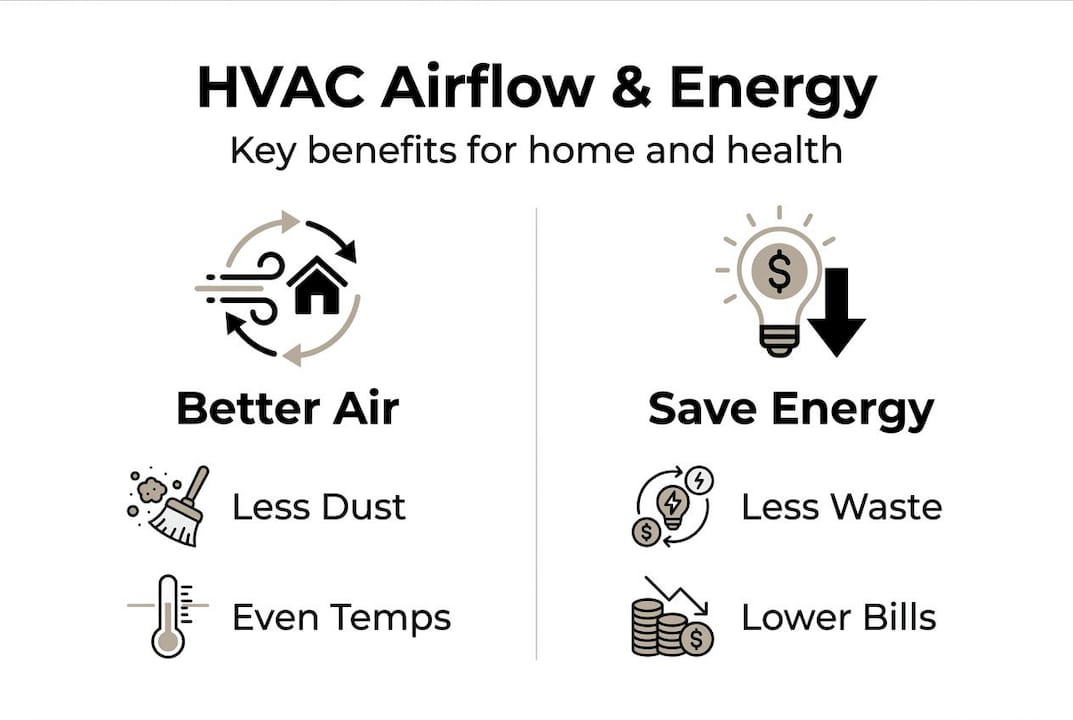
- Accurate measurement and balancing of airflow prevent hot spots, dust buildup, and rising bills.
- Local expertise in sealing ducts, choosing filters, and seasonal adjustments optimizes system performance.
Most Avondale homeowners think of their HVAC system as a temperature machine. Turn it on, cool the house, done. But airflow is actually the hidden engine behind indoor air quality, energy costs, and even how healthy your family or employees feel day to day. When airflow is off, you get stuffy rooms, dust buildup, uneven temperatures, and utility bills that keep climbing. Proper HVAC airflow is tied directly to indoor air quality, efficiency, and cost savings. In Avondale's desert climate, where your system runs hard for months on end, getting airflow right is not optional. This article breaks down what HVAC airflow actually is, how it's measured, how your filter choices affect it, and what you can do today to improve it.
Table of Contents
- What is HVAC airflow and why does it matter?
- How HVAC airflow is measured and balanced
- Air filters and airflow: Choosing for performance and health
- Improving and troubleshooting HVAC airflow in Avondale
- What most experts miss about HVAC airflow in Arizona
- Get professional help improving your HVAC airflow
- Frequently asked questions
Key Takeaways
| Point | Details |
|---|---|
| Balanced airflow boosts health | Proper HVAC airflow ensures clean air and a comfortable indoor environment. |
| Sealing and filter choices save energy | Duct sealing and correct filters reduce bills by up to 30% and protect air quality. |
| Arizona climate demands customized solutions | Avondale’s unique heat and dust require local expertise for optimal HVAC airflow. |
| Regular airflow checks are essential | Periodic measurement and maintenance keep your system performing at its best. |
What is HVAC airflow and why does it matter?
HVAC airflow is simply the movement of air through your heating, cooling, and ventilation system. Air gets pulled in through return vents, conditioned by your unit, and pushed back out through supply vents into your living or working spaces. That cycle repeats constantly while your system runs. When it works correctly, every room gets the right amount of conditioned air, temperatures stay consistent, and fresh air keeps circulating to dilute pollutants.
When airflow breaks down, problems stack up fast. Hot and cold spots appear. Humidity levels get uneven. Dust and allergens build up because air isn't moving through filters often enough. Your system works harder to compensate, which drives up energy bills and shortens equipment life. The HVAC impact on air quality is real and measurable, not just a marketing claim.
Airflow measurement standards define airflow in cubic feet per minute, or CFM, which tells you exactly how much air moves through your system per minute. A typical residential system might deliver 400 CFM per ton of cooling capacity. If your system is undershooting that number, you'll feel it in comfort and see it in your energy bill.
In Avondale, there's an extra layer of complexity. Attic temperatures here can hit 150°F or more during summer. That extreme heat radiates into your ductwork, which often runs through the attic. Even a well-designed system loses efficiency when ducts are exposed to that kind of heat. This is why efficient HVAC systems in Arizona need to account for local conditions, not just national averages.
Here are the most common signs that airflow is the root cause of your HVAC problems:
- Rooms that are noticeably hotter or cooler than the rest of the home or building
- Stuffy or stale air that doesn't clear even when the system is running
- Dust accumulating quickly on surfaces near vents
- Weak airflow from one or more supply vents
- Unusually high electricity bills during peak cooling months
The bottom line: ASHRAE, the leading authority on HVAC standards, sets minimum ventilation rates for residential and commercial spaces. If your system doesn't meet those minimums, you're not just uncomfortable. You're breathing air that hasn't been adequately filtered or refreshed.
Understanding airflow is the first step. The next is knowing how professionals actually measure and fix it.
How HVAC airflow is measured and balanced
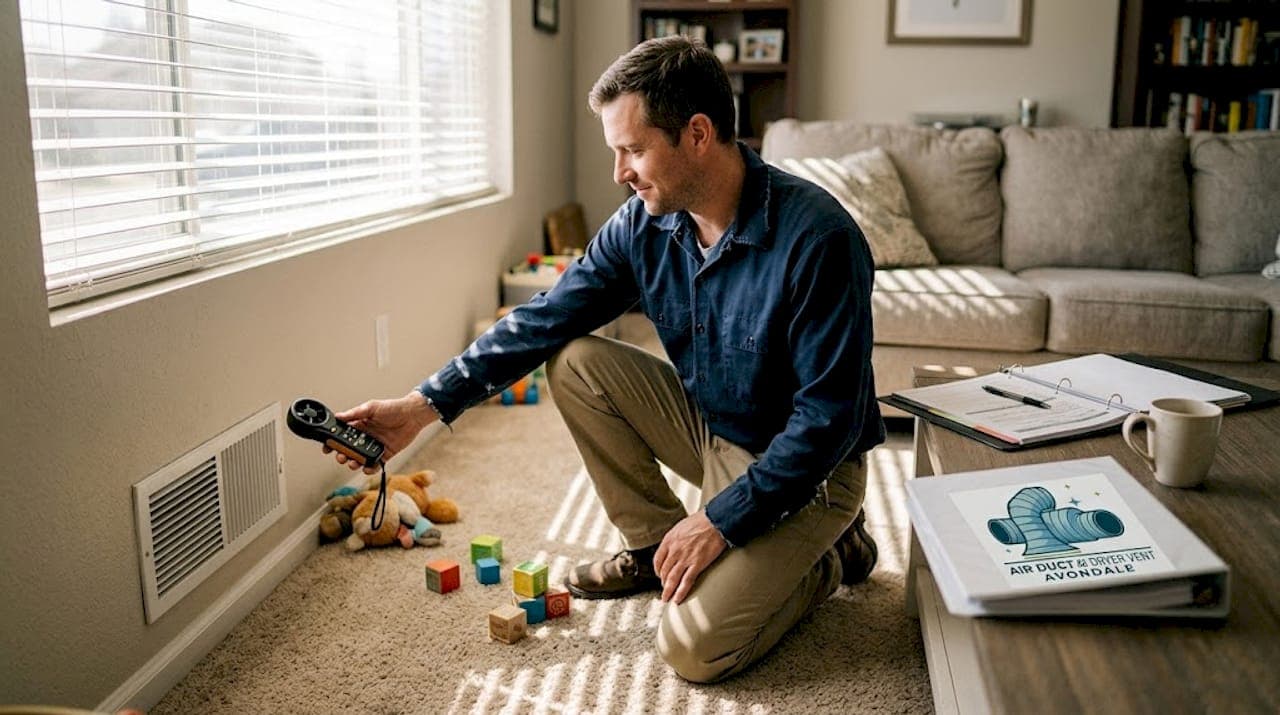
Measuring airflow isn't something you do by feel. Professionals use specific tools to get accurate numbers. Two of the most common are anemometers, which measure air speed at vents, and manometers, which measure pressure differences across ducts and filters. Together, these tools give a full picture of how air is moving through your system.
Here's how a professional airflow assessment typically works:
- Measure supply and return vent flow using an anemometer or flow hood to get CFM readings at each register.
- Check static pressure with a manometer across the air handler to identify restrictions from dirty filters, undersized ducts, or blockages.
- Compare readings to design specs based on your system's rated capacity and the Manual J load calculation for your home.
- Identify imbalances where some rooms get too much air and others too little.
- Seal and adjust ductwork, dampers, or registers to bring the system into balance.
Measurement uses anemometers and manometers, and balancing follows ASHRAE 111 standards, which allow a tolerance of plus or minus 10 to 20 percent of the design CFM at each terminal. That tolerance exists because perfect balance in a real home is nearly impossible. But staying within that range makes a huge difference in comfort and efficiency.
For Avondale homes and businesses, Manual J and Manual D calculations are especially important. Manual J determines how much heating and cooling your space actually needs, accounting for insulation, window area, and yes, attic heat gain. Manual D then sizes the ductwork to deliver that conditioned air efficiently. Arizona HVAC sizing done with these calculations, combined with proper duct sealing, can boost efficiency by 20 to 30 percent compared to systems that were sized or installed without them.
One of the biggest efficiency wins available to Avondale homeowners is duct sealing. Most older homes have ducts that leak conditioned air into the attic or wall cavities, where it does absolutely nothing for your comfort. The ductwork sealing benefits go beyond comfort. You're also reducing the load on your system, which means lower bills and fewer repairs over time.
| System condition | Temperature consistency | Energy efficiency | Air quality |
|---|---|---|---|
| Balanced airflow | Even throughout | Optimal | High |
| Imbalanced airflow | Hot/cold spots | Reduced by 15-30% | Moderate to poor |
| Leaky ducts | Very uneven | Severely reduced | Poor |
| Dirty or blocked ducts | Uneven | Reduced | Poor |
Pro Tip: After any HVAC cleaning steps or duct work, ask your technician to take before and after CFM readings. That data tells you exactly how much the service improved your airflow, and gives you a baseline for future checkups.
Balancing airflow is part science, part local knowledge. And once you have balance, the next variable that can throw it off is your filter.
Air filters and airflow: Choosing for performance and health
Your air filter sits right in the path of every cubic foot of air your system moves. Choose the wrong one, and you're either letting pollutants through or choking your system's airflow. Both outcomes hurt you.
Filters are rated on the MERV scale, which stands for Minimum Efficiency Reporting Value. Higher MERV ratings mean the filter catches smaller particles. That sounds like a good thing, but a denser filter also creates more resistance to airflow. If your system wasn't designed to handle that resistance, you end up with reduced airflow, higher energy consumption, and potentially a frozen evaporator coil.
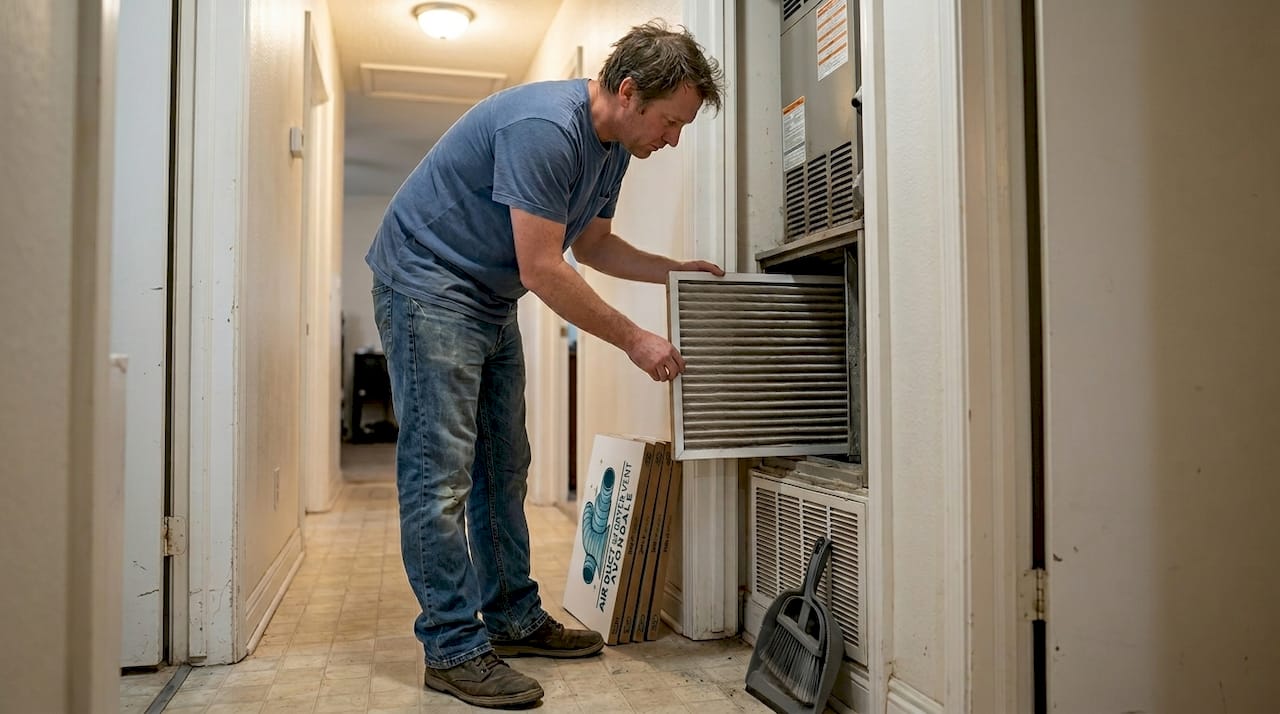
MERV 8 to 13 filters strike the best balance between capturing pollutants and maintaining healthy airflow for most residential systems. ASHRAE 62.2 also sets minimum ventilation rates for homes, and your filter choice directly affects whether your system can meet those rates. Going above MERV 13 without a system designed for it can actually make your indoor air quality worse by starving the system of airflow.
For Avondale residents, dust is a constant challenge. The desert environment means fine particulate matter gets into homes regularly. That makes filter selection and replacement timing more important here than in many other parts of the country.
| MERV rating | Particles captured | Airflow impact | Best use |
|---|---|---|---|
| 1 to 4 | Large dust, pollen | Minimal | Basic protection only |
| 5 to 7 | Mold spores, dust mites | Low | Budget residential |
| 8 to 10 | Fine dust, pet dander | Moderate | Most Avondale homes |
| 11 to 13 | Smoke, bacteria | Moderate to high | Allergy sufferers |
| 14 and above | Viruses, fine particles | High | Medical or specialty systems only |
Here's what a clogged or wrong filter actually does to your system:
- Reduces airflow volume, causing rooms to heat up faster than the system can cool them
- Forces the blower motor to work harder, increasing electricity use
- Allows the evaporator coil to get too cold, potentially causing ice buildup
- Lets unfiltered air bypass the filter through gaps around the frame
Knowing types of air filters and their tradeoffs helps you make a smarter choice. And scheduling regular air filter replacement on a consistent schedule, every 1 to 3 months in Avondale's dusty climate, keeps airflow where it needs to be.
Pro Tip: Look at HVAC filter examples for your specific system type before buying. The right MERV rating depends on your blower's capacity, not just the size of the filter frame.
Improving and troubleshooting HVAC airflow in Avondale
Now let's get practical. Whether you're in a single-family home in Avondale or managing a small commercial space, these steps will help you identify and fix airflow problems before they turn into expensive repairs.
Start by walking through your space with the system running. Notice which rooms feel comfortable and which don't. Check each supply vent to feel whether air is actually coming out. Look at your return vents to make sure nothing is blocking them, furniture, rugs, or stored items are common culprits.
Here's a step-by-step process for improving airflow:
- Inspect all vents and registers for blockages, dust buildup, or closed dampers. Open any that are partially or fully closed.
- Replace the air filter if it's been more than 60 days, or sooner if you have pets or live near construction.
- Check ductwork for visible damage in accessible areas like the attic or crawl space. Look for disconnected sections, holes, or gaps at joints.
- Seal duct leaks with mastic sealant or metal tape. Avoid standard duct tape, which fails quickly under heat.
- Schedule a professional airflow assessment if problems persist after these steps.
Signs that your airflow needs professional attention include:
- Persistent hot or cold spots that don't respond to vent adjustments
- Vents that make whistling or rattling noises during operation
- A sudden increase in monthly energy bills without a change in usage habits
- Visible dust blowing from vents when the system starts up
- Rooms that feel humid even when the AC is running
Duct sealing yields 20 to 30 percent savings in energy efficiency, and proper airflow can reduce fan energy use by 27 percent. Those are real numbers that show up on your utility bill. Pairing ductwork replacement benefits with regular Avondale filter replacement gives you the biggest combined impact on both comfort and cost.
Pro Tip: Pick up a basic CO2 monitor for under $50 and place it in the room where you spend the most time. A reading below 1000 ppm means your ventilation is adequate. Readings above that are a clear signal that fresh air exchange is insufficient, even if the system feels like it's running fine.
What most experts miss about HVAC airflow in Arizona
National HVAC guidelines are written for a broad audience. They assume average conditions: moderate attic temperatures, typical duct runs, standard insulation. Avondale is not average. Attic temperatures here regularly exceed what most national standards factor in, and that changes everything about how a system should be designed, sized, and maintained.
We've seen systems in Avondale that were installed perfectly by the book but still underperformed because the duct runs through the attic were losing too much conditioned air to heat transfer before it ever reached the living space. No amount of balancing fixes that without addressing the insulation and sealing around those ducts. Manual J and D calculations accounting for attic heat gain, combined with verified airflow as required by ENERGY STAR, are the only way to get it right here. And duct sealing experience in local conditions confirms that the 20 to 30 percent efficiency gain from sealing is consistently achievable when done properly.
The other thing most guides skip is the seasonal review. Avondale's climate shifts dramatically between summer and winter. A system balanced in February may be struggling by July. Dust accumulation, filter loading, and thermal expansion of ductwork all change with the seasons. Treating airflow as a one-time fix is the mistake we see most often. The homes and businesses that stay comfortable year-round are the ones that treat airflow as an ongoing practice, not a checkbox.
Get professional help improving your HVAC airflow
Understanding airflow is valuable, but knowing what to look for and actually fixing it are two different things. Avondale's climate, duct configurations, and dust levels create challenges that benefit from local expertise rather than generic solutions.
At Air Duct and Dryer Vent Cleaning Avondale, we specialize in exactly this kind of work. Whether you need Avondale commercial duct cleaning for your business or Avondale vent cleaning for your home, our team brings the tools and local knowledge to get your system performing the way it should. We also offer Avondale air quality testing to give you a clear picture of what's actually in the air you're breathing. Better airflow means lower bills, healthier air, and a more comfortable space. Let's make that happen for you.
Frequently asked questions
How do I know if my HVAC airflow is poor?
Common signs include uneven temperatures between rooms, stuffy or stale air, excessive dust near vents, noisy registers, and energy bills that are higher than expected for the season.
Which HVAC filter is best for Avondale homes?
MERV 8 to 13 filters balance air quality and system airflow well for most Avondale homes. Avoid higher MERV ratings unless your system was specifically designed to handle the added resistance.
How can sealing ducts improve HVAC airflow?
Duct sealing improves efficiency by 20 to 30 percent by stopping conditioned air from leaking into unconditioned spaces like attics, which directly improves airflow to your living areas and reduces energy waste.
Should I monitor CO2 levels for ventilation?
Yes. CO2 below 1000 ppm indicates adequate ventilation in your space. A basic CO2 monitor is an inexpensive and reliable way to check whether your HVAC system is exchanging enough fresh air.