
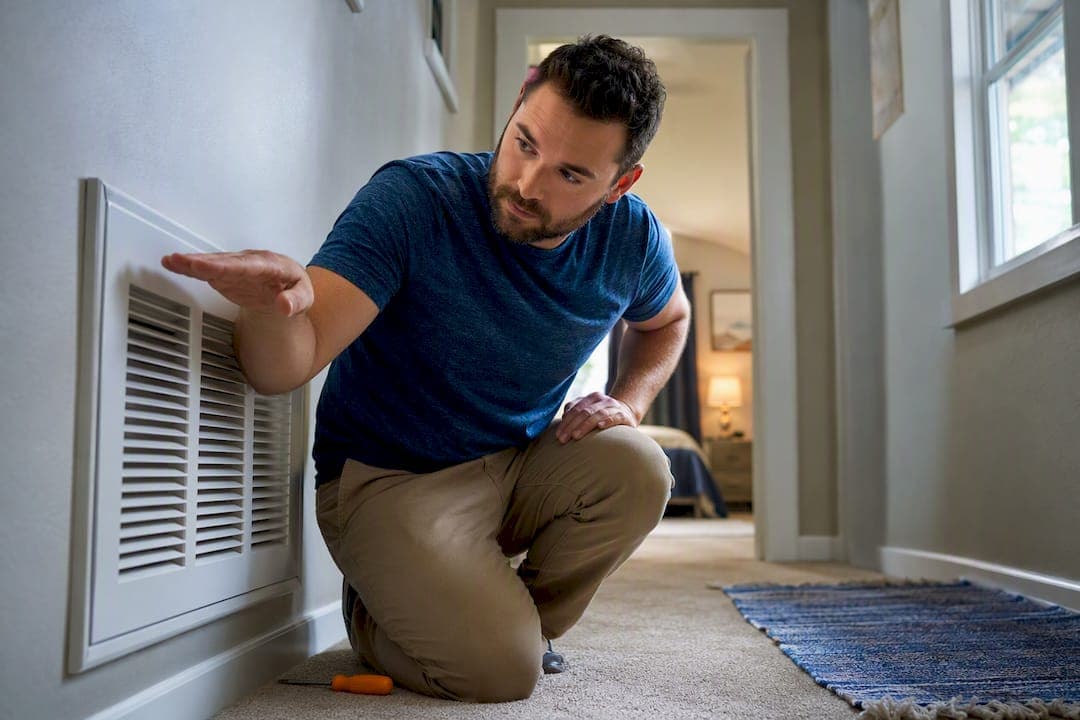
Start with the filter and the vents. Replace a dirty filter, open every supply register and return grille, and prop interior doors open for a quick test. That resolves most uneven airflow in-house situations within the hour. If the imbalance stays put, you're likely looking at a duct leak, a stuck damper, or a blower problem, and those need a technician armed with a static pressure gauge, not more guessing.
TL;DR:
- Most airflow issues can be fixed by replacing filters, opening all vents, and ensuring return paths are unobstructed, often resolving uneven air distribution within an hour.
- Persistent problems usually indicate duct leaks, stuck dampers, or blower issues, which require professional testing with static pressure and airflow measurements.
- Duct leaks can cause a home to lose 20 to 30 percent of conditioned air, and sealing or repairing ductwork is often necessary for long-term improvement.
- Closing vents in unused rooms can raise system pressure and worsen airflow imbalances, making it better to keep all vents open and add transfer pathways if needed.
- Signs like recurring coil freezing, musty odors, or no airflow suggest a system diagnosis involving static pressure, temperature difference, and actual airflow is required before repairs.
Table of Contents
- Quick Checks You Can Run in 10 to 30 Minutes
- How to Tell If It's One Room or the Whole House
- What TESP, Delta-T, and CFM Tests Actually Reveal
- Fixing the Problem Once You Know the Cause
- When the Problem Needs a Technician
- What Years of Duct and Vent Work Teach You About Airflow Complaints
- What a Technician Checks First, and the One Habit That Prevents Repeat Problems
- Get the Airflow Fixed Instead of Managing It Room by Room
- Sources
- FAQ
Quick Checks You Can Run in 10 to 30 Minutes
Before you call anyone, rule out the easy stuff. Most airflow problems in house systems trace back to something a homeowner can fix without tools.
- Pull the filter and hold it up to a light. If you can't see light through it, it's choking your system's airflow. A clogged filter is one of the single most common causes of weak output at the vents.
- Check the MERV rating. Higher isn't always better. MERV 13 filtration helps trap finer particles, but jumping too high on a system not built for it adds resistance the blower has to fight, which can choke output even with a brand new filter.
- Walk the house and open every register and return grille. Furniture, rugs, and curtains block more vents than people realize.
- Test with doors open, then closed. Close a bedroom door and feel the vent again. If airflow drops noticeably, that room likely has no return path.
- Check thermostat placement. A thermostat near a sunny window or a kitchen reads the temperature wrong for the whole house.
- Listen at the air handler. If the blower is running but registers barely move air, that points toward a duct or blower issue rather than a filter problem.
How to Tell If It's One Room or the Whole House
Isolating the pattern is what turns a guess into a diagnosis. Run through this sequence and take notes. It's exactly the kind of information that saves a technician time, and saves you money, on a service call.
- Pick a healthy room and a problem room. Compare vent output, temperature, and how quickly each responds to the thermostat.
- Close the problem room's door for 10 minutes, then reopen it. If pressure builds up and the door gets hard to open or close, the room lacks a return grille or transfer path.
- Check the vent at the duct, not just the register. Weak airflow at one register but strong airflow at the trunk line often means a disconnected or crushed duct section closer to that room.
- Test a second and third room on the same side of the house. If the whole wing runs warm or cold, suspect a zone damper or a duct branch, not a single register.
- Note whether the problem is temperature or airflow. Weak air that's the right temperature usually points to a blockage. Strong air that's the wrong temperature often points to insulation, duct leaks, or a refrigerant issue.
- Write down room name, vent strength (weak/normal/strong), thermostat reading, and door position for each room. Bring this list if you call a professional.
One room off suggests a local blockage or a closed damper. Multiple rooms in a pattern suggest a duct or zoning problem. The whole house feeling weak points toward the blower or a major duct leak.
What TESP, Delta-T, and CFM Tests Actually Reveal
Once the obvious fixes don't work, the next step is measurement, not another swap of parts. Technicians rely on the same three readings whenever they diagnose an airflow complaint, and Fieldpiece's testing documentation lays out how each one is taken with a digital manometer.
- Total External Static Pressure (TESP) measures how hard the blower has to work to push air through the whole duct system. Think of it as the system's blood pressure: high readings mean something downstream is restricting flow, often a dirty filter, a crushed flex duct, or an undersized return.
- Delta-T compares the temperature of air going into the system with air coming out. A gap that's too small or too large on the cooling side can point to either an airflow problem or a refrigerant charge issue, which is why techs check both before assuming a compressor is at fault.
- Live CFM (cubic feet per minute) measures actual air volume moving through the system. Techs compare the reading against a target of roughly 350 to 400 CFM per ton of cooling capacity, and a number well below that range confirms an airflow restriction rather than a bigger mechanical failure.
Homeowners can track symptoms and patterns. The actual PSI-style readings need a calibrated gauge and someone trained to interpret them against your equipment's specs.
Fixing the Problem Once You Know the Cause
Different causes call for different fixes, and the cost and effort involved vary a lot. Here's what actually addresses each one.
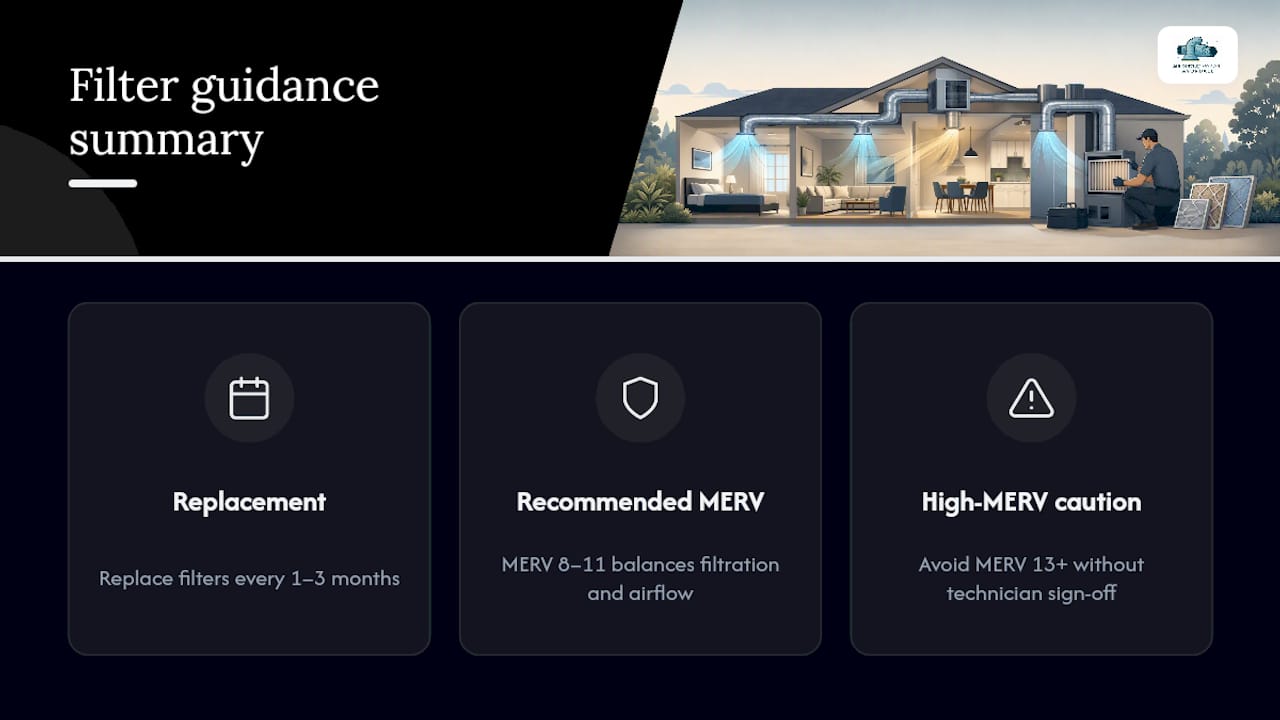
Filters and airflow resistance. Swap filters every one to three months depending on pets and dust. If you're chasing better indoor air quality, MERV 8 to 11 filtration balances filtration with airflow for most residential systems; going above MERV 13 without a technician's sign off can strain a blower that wasn't sized for it.
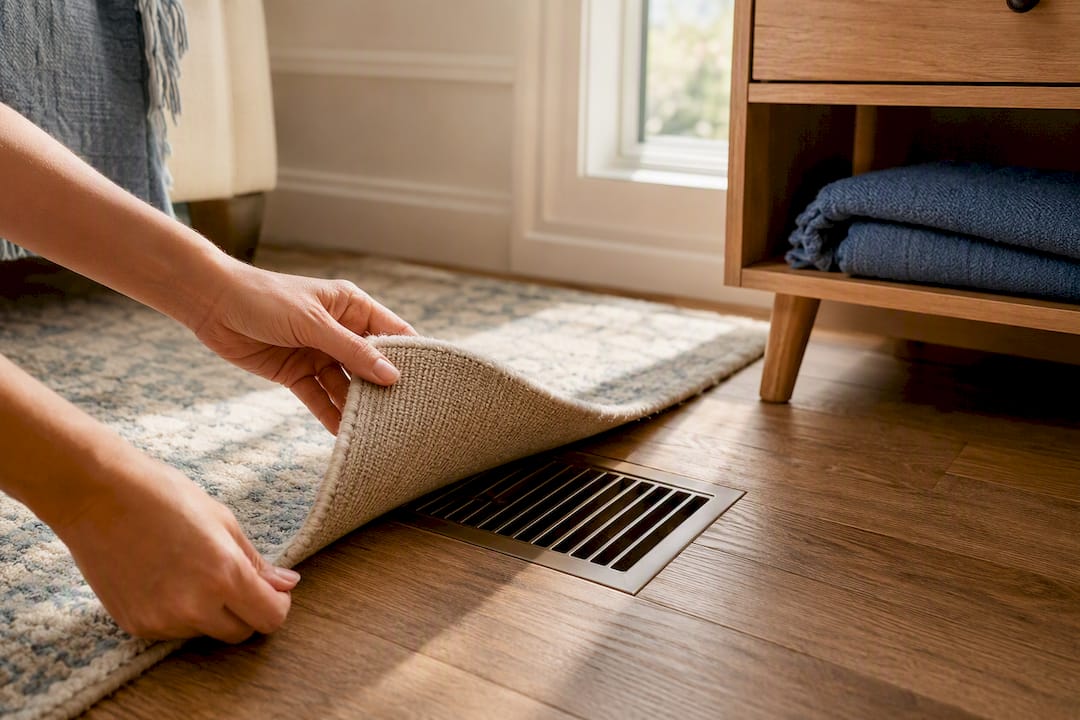
Blocked or closed vents. Clear furniture and rugs away from registers. If a room still runs weak with everything open, a transfer grille above the door or a jump duct into the hallway often solves rooms with no dedicated return, a fix that commonly resolves hot and cold spots without touching the equipment itself.
Duct leaks and disconnections. The average home loses 20% to 30% of conditioned air through leaky or disconnected ductwork, which is a major reason certain rooms never get their fair share. Small gaps at joints can be sealed with mastic; crushed or torn flex duct in a crawlspace or attic usually needs replacement, not tape.
Dampers. Manual dampers on branch ducts should be adjusted in small increments, not slammed shut. Closing too many vents or dampers raises system pressure and can choke overall airflow instead of redirecting it where you want it.
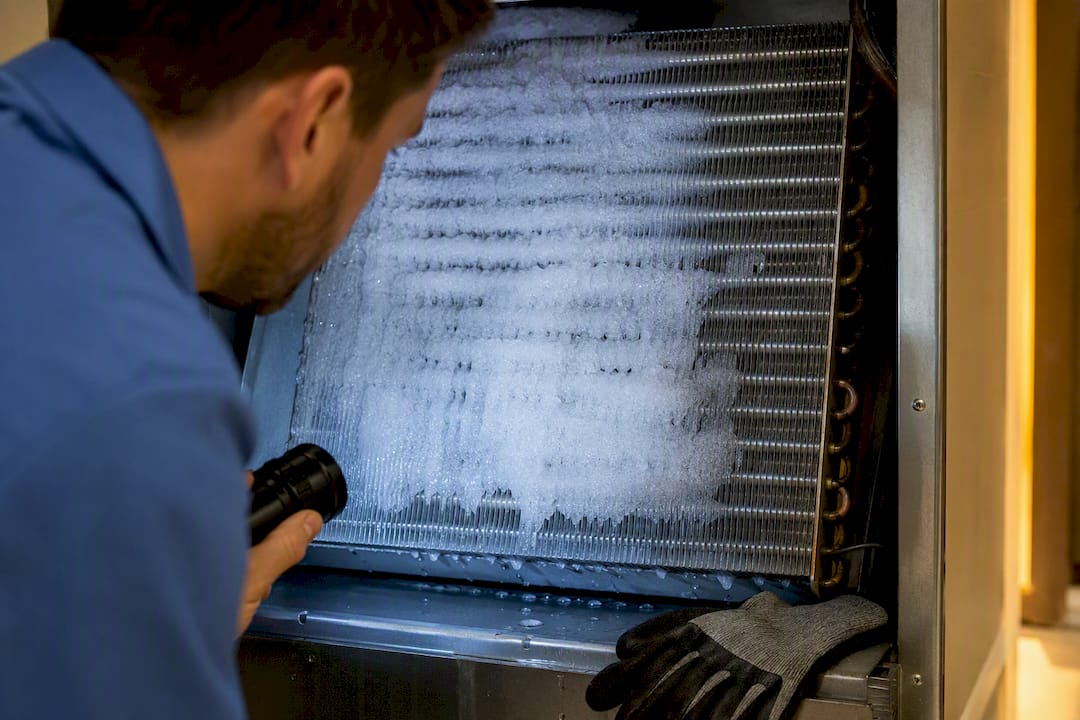
Blower and frozen coils. A blower running quiet or a coil caked in ice usually means restricted airflow upstream. Shut the system off, let any ice melt, and check the filter before restarting; repeated freezing is a sign to call for service, not a DIY project.
Pro Tip: If one bedroom always runs hot, check whether it has its own return grille before you touch the thermostat or dampers. A missing return is the single most overlooked cause of one-room imbalance.
When the Problem Needs a Technician
Certain symptoms mean it's time to stop troubleshooting and pick up the phone.
- No airflow at all from one or more vents, even after filter and register checks.
- A coil that freezes more than once in a season.
- Burning or musty smells coming from vents.
- A breaker that trips when the system starts or runs.
A diagnostic visit typically includes a TESP reading at the air handler, a visual duct inspection for leaks or crushed sections, and a blower amperage check. Each step rules out a different cause before a technician recommends a repair.
Cost and time vary by cause. A filter swap and register adjustment takes 30 minutes and costs little. Duct sealing on an accessible section often runs a few hours of labor. Full system balancing across multiple rooms, or blower motor repair, takes longer and costs more. Before the visit, have your room notes ready, along with clear attic and crawlspace access if ducts need inspection.
What Years of Duct and Vent Work Teach You About Airflow Complaints
A local duct and vent cleaning company handles air duct cleaning, dryer vent cleaning, vent replacement, and duct repair for homes in the area, and the same pattern shows up again and again: a homeowner assumes the whole HVAC system is failing when the real issue is one collapsed duct run or a return that got walled off during a remodel.
Cleaning alone often restores airflow when the cause is years of dust buildup narrowing the duct interior; that's a straightforward job with a noticeable difference at the register afterward. But when the cause is a structural one, a disconnected joint, a crushed section, a damper stuck halfway, cleaning won't fix it. That's when sealing, repair, or balancing work has to happen alongside the cleaning to actually even things out room to room.
What a Technician Checks First, and the One Habit That Prevents Repeat Problems
Every technician walks in and checks the same three things before touching a wrench: the filter's condition, whether registers are open, and whether the return grilles are actually unobstructed. Nine times out of ten, at least one of those three has been quietly working against the homeowner for months.
The most common mistake? Closing vents in unused rooms to "save energy." It does the opposite. Closed vents raise pressure across the whole system and can push a mild imbalance into a serious one.
Pro Tip: If a room stays uncomfortable no matter what you adjust, add a transfer grille above the door or undercut the door by an inch. It gives air somewhere to return to, which is usually the missing piece.
— Shaun
Get the Airflow Fixed Instead of Managing It Room by Room
A new thermostat or a bigger filter won't fix a duct that's leaking a quarter of your conditioned air into the attic. Specialized services handle the parts of uneven airflow problems that DIY checks can't reach: duct cleaning and repair, vent and register replacement, damper adjustment, and air quality testing for homes.

A diagnostic visit starts with the same measurements outlined above, static pressure and airflow checks at the registers, so you get an actual reading instead of a guess about which duct run or blower issue is causing the imbalance. If dust buildup is part of the problem, duct cleaning service restores flow that's been narrowing for years. If a register is damaged or a room needs a transfer path, vent replacement handles it directly. Concerned about dust or allergens circulating through weak return paths? An air quality test confirms what's actually moving through your ducts before any repair work starts. Call to schedule a diagnostic visit and get your home's airflow measured, not guessed at.
Sources
ENERGY STAR's duct sealing fact sheet breaks down how much conditioned air the average home loses to leaky ductwork. Fieldpiece's static pressure testing guide explains the tools technicians use to measure restrictions. Harvard's Healthy Buildings program covers filtration choices and their tradeoffs. The EPA's indoor air quality guidance rounds out practical steps for humidity and ventilation control.
- Measuring HVAC total external static pressure with a digital manometer — Fieldpiece
- Healthy Buildings program — risk reduction strategies and filtration guidance
FAQ
How do you fix uneven airflow in your house?
Start with the filter, open all registers and returns, and test rooms with doors open versus closed. If the imbalance persists, the cause is usually a duct leak, a stuck damper, or a blower issue that needs professional testing with TESP and CFM measurements.
What are signs my house has poor ventilation?
Musty odors, visible dust buildup around vents, rooms that feel stuffy no matter the thermostat setting, and noticeably higher humidity than outdoors are common signs. The EPA recommends keeping indoor humidity between 30% and 50% as one marker of healthy ventilation.
How can I balance the airflow in my house?
Open all vents rather than closing off unused rooms, add a transfer grille or undercut doors in rooms without a return path, and have a technician adjust dampers based on measured static pressure. Professional balancing frequently eliminates hot and cold spots without needing new equipment.
Why is one vent pushing out less air than the others?
A weak vent usually means a local blockage: a closed or partially closed damper, a crushed section of flex duct, or a disconnected joint between that vent and the trunk line. If the register itself checks out fine, the problem is inside the ductwork and needs an inspection.