

TL;DR:
- Proper budget planning for vent cleaning involves estimating costs based on vent count, labor rates, and potential add-ons. Homeowners should schedule, bundle services, and prepare thoroughly to reduce expenses and ensure effective cleaning. Proactive budgeting and quality contracting help maintain system efficiency, safety, and long-term savings.
Vent cleaning budget planning is the process of estimating and allocating funds to maintain clean, efficient, and safe air ducts and vents in your home or small business. The national average for residential air duct cleaning runs $300 to $700, with pricing structured at $25 to $50 per vent or $0.15 to $0.30 per square foot. Angi and NerdWallet both confirm that most homeowners underestimate this expense by failing to account for labor, add-ons, and frequency. Getting your vent maintenance budget right from the start means fewer surprises, better air quality, and real energy savings year over year.
What factors drive your vent cleaning budget planning costs
Air duct cleaning costs are not one-size-fits-all. Four variables determine what you will actually pay, and understanding each one lets you build a budget that reflects your specific home or building rather than a national average that may not apply to you.
Number of vents and duct length. The most direct cost driver is how many vents your system has. At $25 to $50 per vent, a home with 20 vents costs $500 to $1,000 in vent-only pricing before labor is added. Longer duct runs and more complex layouts add time and therefore cost. A single-story ranch with a straightforward trunk-and-branch layout will always cost less than a two-story home with zoned HVAC and multiple air handlers.
Labor rates and job duration. Labor typically runs $90 to $125 per hour, and most residential jobs take between 3 and 8 hours depending on system size and how accessible the ductwork is. That means labor alone can add $270 to $1,000 on top of per-vent pricing. Technicians who use truck-mounted vacuum systems with HEPA filtration tend to charge more than those using portable units, but the results are measurably better.
Add-ons and service bundles. Dryer vent cleaning adds $75 to $175 to the total bill. HVAC coil cleaning ranges from $75 to $450, and minor duct repairs add $50 to $700 depending on the damage. Mold remediation, when needed, can push costs well beyond the standard cleaning range. These are not optional extras for most homes. They are the services that determine whether your system actually performs after the cleaning is done.
Home size and regional pricing. Small condos and apartments often fall in the $150 to $300 range. Large homes with systems exceeding 2,000 square feet regularly exceed $1,000. Regional labor markets also shift prices significantly. Avondale, Arizona sits in a competitive metro market, which generally keeps pricing closer to the national midpoint than rural areas where fewer contractors operate.
| Cost factor | Typical price range | What it means for your budget |
|---|---|---|
| Per-vent pricing | $25–$50 per vent | Count your vents before requesting quotes |
| Labor rate | $90–$125 per hour | Job duration directly multiplies this cost |
| Dryer vent cleaning | $75–$175 add-on | Bundle it to avoid a separate service call |
| HVAC coil cleaning | $75–$450 add-on | Skip it only if coils were recently serviced |
| Minor duct repairs | $50–$700 add-on | Budget a contingency of 15–20% for surprises |
| Mold remediation | Varies widely | Get a separate quote if moisture issues exist |
How to plan your vent cleaning budget step by step
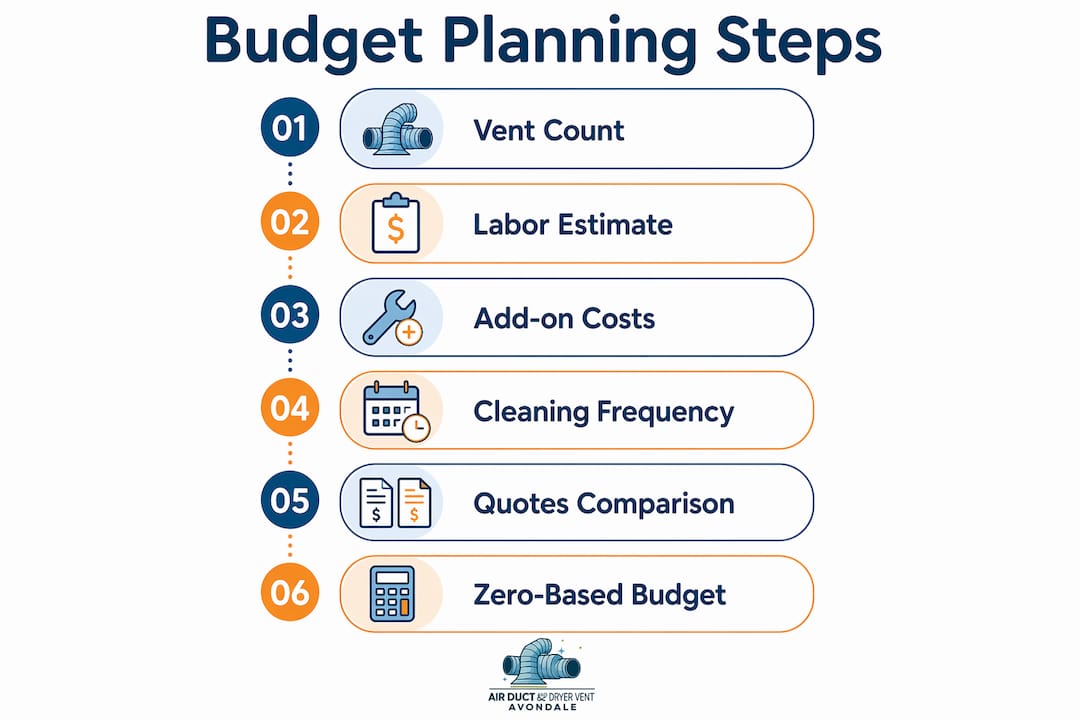
A structured approach to how to plan for vent cleaning removes the guesswork and prevents the most common budgeting mistake: calling one contractor, accepting the first quote, and discovering hidden costs on the day of service.
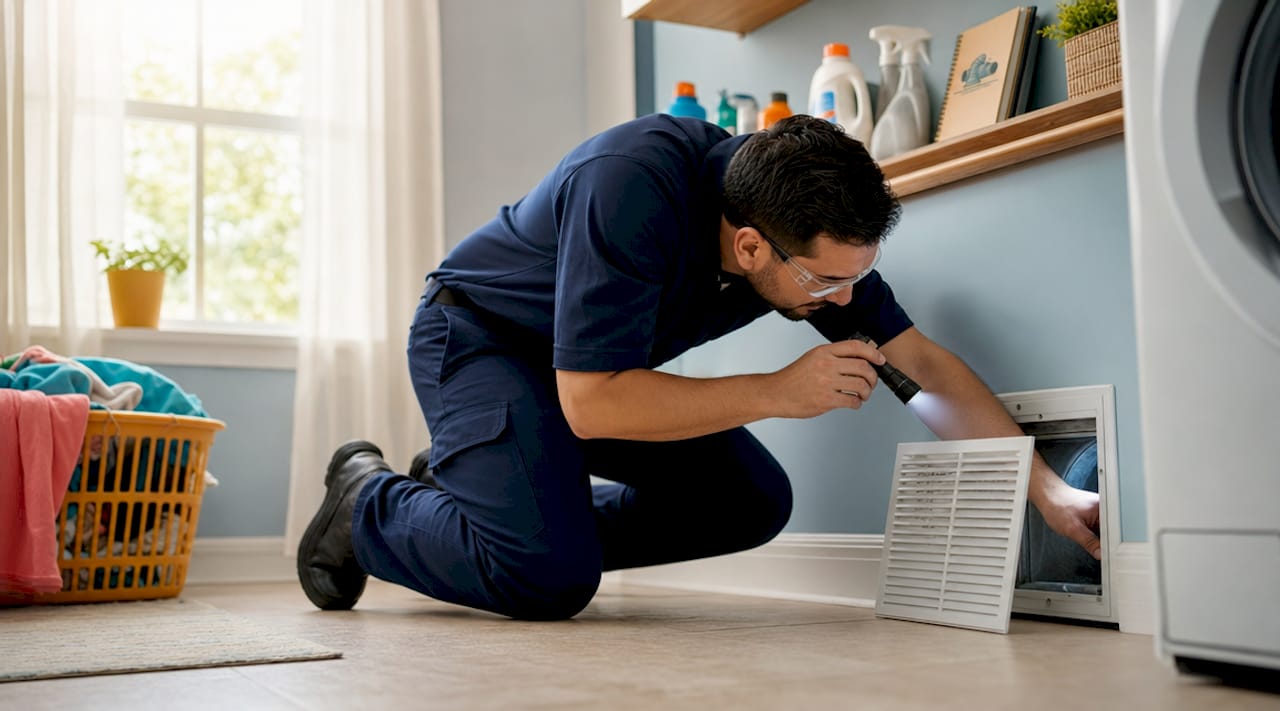
Step 1: Inventory your vents and duct layout. Walk your home or building and count every supply and return vent. Note which ones are in hard-to-reach locations like crawl spaces, attics, or behind large appliances. Use the DIY air vent inspection tips available from Airanddryerventcleaningavondale to document your system before any contractor arrives. This inventory becomes the foundation of every quote comparison you do.
Step 2: Estimate labor hours and local rates. Residential cleaning jobs typically run 1 to 4 technician hours for smaller homes and 3 to 6 hours or more for larger or more complex systems. Multiply your estimated hours by the local labor rate of $90 to $125 per hour to get a realistic labor baseline. Add your per-vent estimate on top of that for a rough total before add-ons.
Step 3: Add costs for common add-ons. Build dryer vent cleaning, coil cleaning, and a repair contingency into your budget from day one. Most homeowners who skip this step end up spending 25 to 40 percent more than their original estimate when the technician identifies issues on-site. Treating add-ons as expected rather than unexpected keeps your budget intact.
Step 4: Factor in cleaning frequency. Professional dryer vent cleaning is recommended annually, and full air duct cleaning is generally recommended every 3 to 5 years for most homes. Homes with pets, allergy sufferers, or recent construction may need more frequent service. Divide your total estimated cost by the number of years between cleanings to calculate your annual vent maintenance budget contribution.
Step 5: Collect and compare at least three quotes. Request itemized quotes that break out per-vent pricing, labor, and add-ons separately. A quote that bundles everything into one number makes comparison impossible and often hides inflated labor charges. Ask each contractor whether they offer package pricing for combining air duct and dryer vent cleaning in a single visit.
Step 6: Apply zero-based budgeting logic. Rather than carrying over last year's maintenance spend, evaluate each service line on its current necessity and return on investment. Zero-based budgeting applied to HVAC maintenance forces you to justify each expense against actual system condition, which reduces waste and extends equipment life.
Pro Tip: Request quotes in writing and ask contractors to specify the equipment they use. Truck-mounted HEPA vacuum systems deliver better results than portable units and are worth the modest price premium.
| Budgeting step | Typical cost range involved |
|---|---|
| Vent count and inventory | $0 (DIY preparation) |
| Labor estimate | $270–$1,000 based on hours |
| Add-ons (dryer vent, coil) | $150–$625 combined |
| Repair contingency (15–20%) | $75–$200 |
| Annual budget contribution | $100–$350 per year amortized |
Smart strategies to reduce vent cleaning costs without sacrificing quality
Cost-effective vent cleaning is not about finding the cheapest contractor. It is about structuring your service to eliminate waste, reduce labor time, and capture discounts that most homeowners never ask for.
Schedule during slow seasons. HVAC contractors in most markets are busiest in spring and fall when homeowners are switching between heating and cooling seasons. Booking in mid-winter or mid-summer, when demand drops, gives you negotiating leverage. Scheduling during slow seasons and bundling services can reduce labor costs by 10 to 30 percent. That is a meaningful saving on a $600 to $800 job.
Bundle services into a single visit. Every separate service call carries a trip charge and a minimum labor billing. Combining air duct cleaning, dryer vent cleaning, and coil cleaning into one appointment eliminates redundant charges. Bundling dryer vent cleaning with duct cleaning also improves overall system efficiency, so you get a performance benefit on top of the cost savings. Airanddryerventcleaningavondale offers bundled packages specifically designed for this purpose.
Prepare your home before the technician arrives. Clear furniture away from vents, move items stored near the air handler, and make sure attic or crawl space access points are unobstructed. Contractors bill by the hour. Every minute a technician spends moving your belongings is a minute you are paying for. Proper preparation can shave 30 to 60 minutes off a standard job, which translates directly to $45 to $125 in labor savings.
Choose targeted cleaning over unnecessary full-system replacements. Some contractors upsell full duct replacement when a thorough cleaning would solve the problem. Unless your ducts are physically damaged, collapsed, or contaminated with mold that cannot be remediated, cleaning is the right call. Get a second opinion before agreeing to any replacement work quoted during a cleaning visit.
Verify contractor credentials before booking. The National Air Duct Cleaners Association (NADCA) certifies technicians and sets standards for equipment and process. Hiring a NADCA-certified contractor reduces the risk of incomplete work that requires a costly repeat service. Check that the contractor carries liability insurance and offers a written service guarantee.
Pro Tip: Ask your contractor directly whether they have any current promotions for bundling services or for referrals. Many local HVAC cleaning companies offer 10 to 15 percent off for first-time customers or for customers who book multiple services at once. The discount is rarely advertised but almost always available if you ask.
What to expect during vent cleaning and how it affects your budget
Understanding the standard cleaning process helps you recognize when a job is being done correctly and when a contractor is cutting corners that will cost you more later.
A standard residential air duct cleaning follows this sequence:
- System inspection: The technician inspects accessible ductwork, the air handler, and all vents before starting. This step identifies damage, mold, or blockages that require add-on services and should be communicated to you before work begins.
- Negative pressure setup: The contractor connects a high-powered vacuum to the main trunk line to create negative pressure throughout the system. This prevents dislodged debris from circulating into your living space during cleaning.
- Vent-by-vent agitation: Each supply and return vent is cleaned using brushes, air whips, or compressed air tools to dislodge accumulated dust, lint, and debris. This is the most time-intensive step and the one most directly tied to labor cost.
- Air handler and coil inspection: After duct cleaning, a thorough contractor will inspect the air handler and evaporator coil. If coil cleaning is needed, this is when it is performed and priced.
- Final walkthrough: The technician should walk you through the system condition after cleaning, note any repairs identified, and provide documentation of the work completed.
The most common budget surprises occur when mold or heavy contamination is discovered mid-job. Mold remediation is a separate service with separate pricing and cannot be accurately quoted until the system is opened. Budget a contingency of 15 to 20 percent of your total estimate to cover this possibility.
Preventive cleaning also delivers measurable long-term savings. Preventive maintenance programs deliver an estimated 545% return on investment and cut overall maintenance costs by up to 50 percent compared to reactive repairs. For a homeowner spending $600 every four years on duct cleaning, that math justifies the expense clearly. Clean ducts also reduce strain on your HVAC blower motor, extending equipment life and lowering utility bills. Learn more about energy savings from regular maintenance on the Airanddryerventcleaningavondale blog.
Dryer vent cleaning deserves a specific note on safety and cost. Clogged dryer vents cause approximately 2,900 preventable fires annually in the U.S., and a clean dryer vent reduces energy consumption by 25 to 35 percent per load. At $75 to $175 added to a duct cleaning appointment, it is one of the highest-value add-ons available. Skipping it to save $100 while running an inefficient dryer costs more in electricity within a single year.
Key takeaways
Effective vent cleaning budget planning requires knowing your vent count, local labor rates, and add-on costs before you request a single quote.
| Point | Details |
|---|---|
| Know your baseline costs | National averages run $300 to $700, but your actual cost depends on vent count and system complexity. |
| Labor is the largest variable | At $90 to $125 per hour over 3 to 8 hours, labor often exceeds per-vent pricing in total cost. |
| Bundle services to save | Combining dryer vent and coil cleaning in one visit cuts trip charges and can reduce total cost by 10 to 30 percent. |
| Preventive cleaning pays back | Scheduled maintenance delivers up to 50 percent lower costs compared to emergency repairs over time. |
| Prepare before the technician arrives | Clearing access points before service reduces billable labor time by 30 to 60 minutes per job. |
Why I think most homeowners budget for vent cleaning completely wrong
Most people treat vent cleaning as a one-time expense they deal with when something goes wrong. A musty smell, a spike in the electric bill, or a dryer that takes two cycles to dry a load. By that point, the system has been underperforming for months, and the cleaning bill is often higher because of accumulated buildup or damage that a routine service would have caught early.
What I have seen consistently is that homeowners who budget proactively, meaning they set aside a fixed annual amount for vent maintenance regardless of whether they schedule a cleaning that year, end up spending significantly less over a five-year period. They are not reacting to problems. They are preventing them. Facility management professionals treat this as capital preservation, not a discretionary line item. Homeowners should think the same way.
The other mistake I see regularly is prioritizing price over process. A contractor quoting $199 for a whole-house duct cleaning is almost certainly using a portable shop-vac-style unit and skipping the negative pressure setup that makes the cleaning effective. You end up with disturbed debris that resettles in your ducts within weeks. The $199 job costs you $199 plus the cost of a proper cleaning when you realize nothing improved.
My honest recommendation: budget $150 to $200 per year as your vent maintenance contribution, schedule a full cleaning every 3 to 4 years, and add dryer vent service annually. That cadence, combined with a NADCA-certified contractor and a bundled service approach, keeps your total spend predictable and your system performing at its best. If you are a small business owner managing a commercial property, commercial duct cleaning schedules require more frequent attention given higher occupancy and HVAC load.
— Shaun
Plan your vent cleaning with Airanddryerventcleaningavondale
Airanddryerventcleaningavondale serves residential and commercial clients across Avondale, Arizona with transparent, itemized pricing and no surprise add-ons. Whether you need a full air duct and vent cleaning for your home or a scheduled maintenance program for a commercial property, the team provides written quotes, NADCA-aligned processes, and flexible scheduling including after-hours appointments.
Bundle your dryer vent cleaning service with your air duct appointment to lock in package pricing and eliminate a separate service call. Airanddryerventcleaningavondale also offers commercial air duct cleaning for small business owners who need a reliable maintenance partner with documented service records. Contact the team today to get an itemized quote that makes your vent cleaning budget planning straightforward from the start.
FAQ
What is the average cost of air duct cleaning in 2026?
The national average for residential air duct cleaning runs $300 to $700, with pricing at $25 to $50 per vent or $0.15 to $0.30 per square foot. Small homes may fall below $300, while large or complex systems can exceed $1,000.
How often should I budget for vent cleaning?
Most homes need full air duct cleaning every 3 to 5 years, while dryer vent cleaning is recommended annually. Homes with pets, allergy sufferers, or recent construction may require more frequent service and a higher annual budget allocation.
Can I reduce my vent cleaning expenses without cutting quality?
Scheduling during contractor slow seasons and bundling dryer vent and coil cleaning with your duct cleaning appointment can reduce total costs by 10 to 30 percent. Preparing your home by clearing vent access points before the technician arrives also reduces billable labor time.
What add-ons should I include in my vent cleaning budget?
Budget for dryer vent cleaning ($75 to $175), HVAC coil cleaning ($75 to $450 if needed), and a 15 to 20 percent contingency for minor duct repairs ($50 to $700). These add-ons are the most commonly overlooked items that cause budgets to run over.
Is vent cleaning worth the cost for small business owners?
Preventive maintenance programs deliver an estimated 545% return on investment and cut overall maintenance costs by up to 50 percent compared to reactive repairs. For small business owners managing commercial HVAC systems with higher usage loads, scheduled vent cleaning is a cost-preservation strategy, not a discretionary expense.