
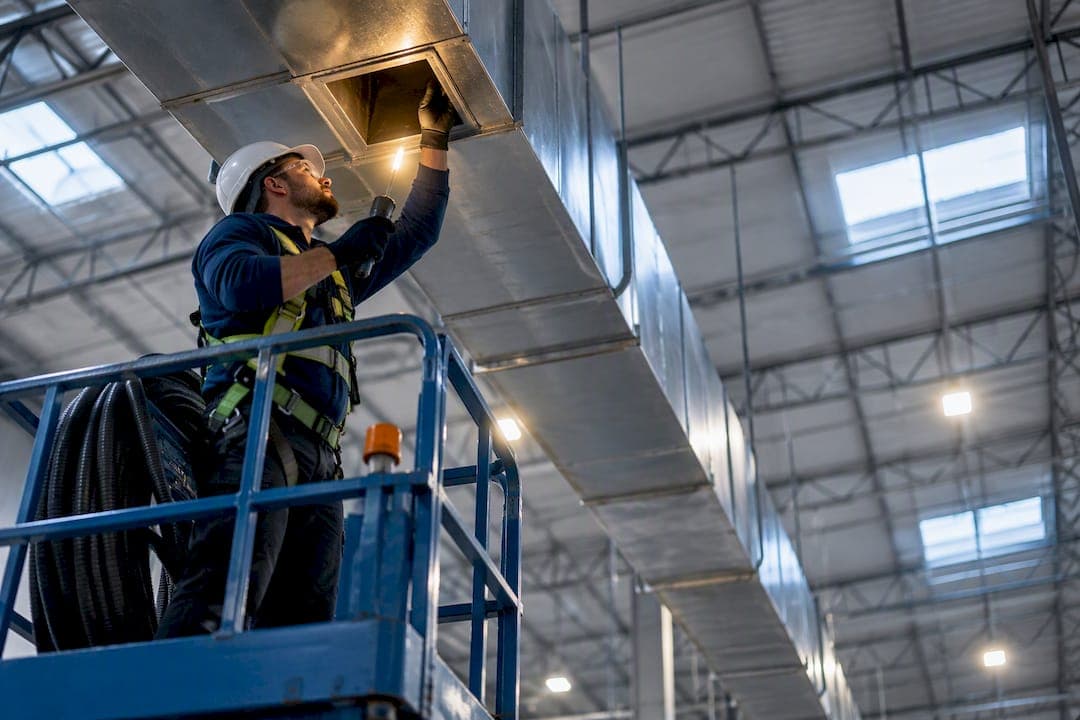
Warehouse air duct cleaning typically runs from several thousand dollars for a single rooftop unit and simple ductwork to significantly higher amounts for large facilities with multiple air handlers and heavy contamination. The real number depends on documented scope, access difficulty, and whether the vendor follows NADCA-level verification instead of a flat guess. Air Duct and Dryer Vent Cleaning Avondale builds every warehouse bid around that documented scope, not a per-square-foot shortcut.
TL;DR:
- Costs depend on system complexity, contamination level, and access requirements, not just the warehouse's floor size or square footage.
- It is essential to request detailed, NADCA-informed scope lists from bidders, including all components like coils, VAV boxes, and exhaust fans, for accurate comparison.
- Different pricing methods, such as per-system, hourly, per-square-foot, or itemized bids, have advantages and pitfalls; avoid flat per-foot quotes without scope specifics.
- Verification procedures, containment plans, and safety protocols should be documented and follow industry standards to ensure thorough cleaning and compliance.
- Regular cleaning schedules, typically annual or biannual, reduce long-term costs and cleaning complexity, especially for warehouses with heavy dust or mold concerns.
Table of Contents
- Warehouse Air Duct Cleaning Cost Examples by Facility Type
- What Drives the Price: Scope, Components, and Access
- How Should You Compare Commercial Duct Cleaning Quotes?
- What Standards and Safety Verification Should You Require?
- Preparing Your Warehouse and How Timeline Affects Price
- Getting Accurate Bids: The Checklist to Send Every Vendor
- How Does Cleaning Frequency Change Your Total Cost?
- Hidden Costs: Inspections, Repairs, and Mold Remediation
- Why Transparent Scoping Matters More Than a Low Number
- Request a Warehouse Duct Cleaning Assessment
- Sources
- FAQ
Warehouse Air Duct Cleaning Cost Examples by Facility Type
Square footage alone tells you almost nothing about what a warehouse duct job will cost. A 100,000 square foot facility with two simple rooftop units can cost less to clean than a 40,000 square foot plant with five air handlers, VAV boxes, and a decade of dust buildup. What actually drives the number is system complexity, not floor area.
Rough scenarios, treated as estimates rather than fixed quotes:
- Small warehouse, single simple system: one rooftop unit, straight duct runs, light dust. Often the least expensive tier, closer to residential-scale pricing multiplied by system size.
- Medium warehouse, multiple air handlers: several AHUs, VAV boxes, and exhaust fans feeding different zones. Expect a multi-day job with several crew members and rental equipment.
- Large or contaminated facility: extensive ductwork, coil buildup, or signs of mold that require remediation-level work. Costs climb fastest here because of containment, testing, and possible material removal.
For context, EPA's consumer guidance cites residential systems running $450 to $1,000 each. A warehouse with the equivalent of six or eight residential-scale systems, plus commercial-grade components like VAV boxes and larger exhaust fans, naturally lands well above that per-unit math. Per-square-foot pricing gets misleading fast in this setting: two buildings the same size can have wildly different duct networks, so treat any flat per-foot number as a red flag until it's tied to an actual system count.
What Drives the Price: Scope, Components, and Access
Price starts with a component list, not a square-foot multiplier. NADCA's commercial checklist spells out what a credible proposal should name explicitly:
- Air handling unit (AHU) internal surfaces
- Coils and condensate collectors or drains
- VAV boxes and dual-duct boxes
- Blowers and exhaust fans
- Registers, grilles, and diffusers
Each item adds labor hours and sometimes specialized equipment. Coils and condensate pans, for example, often require wet cleaning with water extraction and wastewater disposal planning, which is a different cost category than dry brushing a straight duct run.
Access work matters just as much as component count. If technicians need scaffolding, lifts, or new service openings cut into ductwork to reach equipment above a mezzanine or a high bay, that labor gets billed separately, and it can rival the cleaning cost itself.
Contamination type changes the math again. Surface dust responds to standard mechanical cleaning, but porous or mold-affected materials may need evaluation for removal or replacement rather than cleaning. Research on vacuum cleaning effectiveness on fungal contamination found that contact vacuuming can knock down surface fungal load, but the reduction can be temporary, and heavily colonized porous liner may not be salvageable at all.
Pro Tip: Ask every bidder to name the exact NADCA components they're pricing before you compare a single dollar figure. A quote that only says "duct cleaning" without listing AHUs, coils, and VAV boxes is impossible to compare against one that itemizes them.
How Should You Compare Commercial Duct Cleaning Quotes?
Vendors price warehouse jobs four common ways, and knowing which one you're looking at changes how you read the number.
- Per-system pricing. A flat rate per air handler or duct zone. Works well when the facility has a manageable number of discrete systems.
- Hourly pricing. Common for jobs with unpredictable access issues or unknown contamination levels until the crew opens things up.
- Per-square-foot pricing. Fast to quote, but often the least reliable for warehouses because it ignores how many components actually sit inside that square footage.
- Itemized fixed-price bids. The most useful for procurement records because every line item, from AHU cleaning to disposal, is priced separately and can be checked against the scope you requested.
A suspiciously low per-square-foot number is usually a sign that something got left out, not a sign of a good deal. Before accepting any bid, ask for the estimated labor hours, the specific equipment being used, the containment plan, and how cleanliness will be verified when the job wraps. If a vendor can't answer those four questions in writing, the quote isn't really comparable to anything else you've collected.
What Standards and Safety Verification Should You Require?
NADCA's ACR standard is the closest thing the industry has to a shared rulebook for commercial HVAC cleaning. It defines assessment procedures, cleanliness levels, and the verification steps a contractor should follow before calling a job done. Asking a bidder which edition of ACR they follow, and whether they'll document cleanliness verification, is a fair and standard procurement question.
Containment matters as much as the cleaning itself. EPA guidance on HVAC cleanup procedures recommends negative pressure with HEPA filtration during active cleaning, paired with mechanical agitation and HEPA vacuum capture, to keep loosened debris from spreading into occupied warehouse space.
Key items to require in writing:
- Written acceptance criteria and cleanliness verification, whether visual, photographic, or particle-based
- A stated negative-pressure and HEPA containment plan for the work areas
- Lockout/tagout procedures for any equipment being serviced
On the safety side, EPA's own guidance is notably cautious about routine cleaning absent visible contamination or a specific facility concern. That's a good filter for your budget: tie the scope to documented dust, mold, or airflow problems rather than cleaning on a calendar alone.
Preparing Your Warehouse and How Timeline Affects Price
Facility prep isn't free labor you're saving. Clearing access paths, protecting stored inventory, and isolating or shutting down HVAC zones all take coordination time that shows up in the final invoice if the crew has to do it themselves.
Scheduling has a real dollar cost too. After-hours or weekend work protects your operations but usually adds a premium for the crew's time. Staged, zone-by-zone cleaning across several nights costs more overall than one continuous shutdown, but it keeps the warehouse running.
- Confirm which zones can be isolated without shutting down the whole facility
- Decide whether after-hours work is worth the added labor premium
- Expect three rough phases: assessment and setup, active cleaning, and verification/cleanup, each consuming its own share of labor hours
Facilities that run tight shift schedules should also look at how they handle after-hours coordination generally. A service like 24/7 call answering built for HVAC teams can keep scheduling communication moving even when a cleaning crew is working nights your office isn't staffed.
Getting Accurate Bids: The Checklist to Send Every Vendor
Send this checklist to every bidder before you request pricing, so you're comparing apples to apples instead of guessing what each quote actually includes.
- Complete component scope: AHUs, coils, condensate collectors, VAV boxes, blowers, exhaust fans, registers/grilles/diffusers
- Containment plan: negative pressure, HEPA filtration, agitation method
- Verification method: visual acceptance, photographic documentation, or particle testing
- Access and service-opening work, including who cuts and repairs openings
- Disposal plan for debris and any contaminated material
- Schedule, proof of insurance, and payment terms
Pro Tip: Request a firm fixed price when the facility and contamination level are well understood. Ask for hourly billing only when access or contamination is genuinely unknown until the crew opens up the system, and cap the hourly estimate in writing.
Watch for vague scope language, no mention of cleanliness verification, and no proof of insurance. Those three gaps are the most common source of disputes after the invoice arrives.
How Does Cleaning Frequency Change Your Total Cost?
A warehouse that cleans on a set schedule almost always spends less per visit than one that waits until dust buildup forces an emergency call. Regular maintenance keeps each job smaller: less accumulated debris, fewer clogged coils, and less chance that surface dust has turned into something that needs remediation instead of routine cleaning.
Facilities running heavy production, food storage, or dusty processes often benefit from annual or biannual cleaning cycles, while lighter-use storage warehouses can often stretch that interval longer without much added risk. The right interval depends on your specific contamination sources, not a generic calendar rule, which is exactly why EPA guidance cautions against routine cleaning without a documented reason.
There's a scheduling cost trade-off worth planning around too. Bundling a full facility cleaning into one extended shutdown is usually cheaper per labor hour than staging smaller cleanings across multiple nights, but it also means a longer stretch without full airflow in that zone. Warehouses that can't tolerate a full shutdown often split the difference: cleaning half the AHUs one quarter and the rest the next, spreading cost across two smaller invoices instead of one large one.
Multi-year service agreements can also flatten pricing somewhat, since a vendor already familiar with your duct layout, access points, and component list spends less time on reassessment each visit. If you're negotiating a repeat-service arrangement, ask whether the assessment phase gets shorter, and whether that savings gets reflected in the price, rather than assuming a repeat customer discount is automatic.

Hidden Costs: Inspections, Repairs, and Mold Remediation
The quoted cleaning price is rarely the entire invoice on a warehouse job. Post-cleaning inspection or verification testing is sometimes billed separately from the cleaning itself, especially when a client requests particle testing or third-party documentation rather than a standard visual check. Confirm up front whether verification is bundled into the base price.
Duct repairs surface more often than facility managers expect. Crews frequently find damaged seams, disconnected sections, or corroded metal once debris is cleared away, and none of that repair work is typically included in a standard cleaning bid. Ask whether the contractor will quote repairs separately as issues are found, or whether there's a pre-agreed rate for common fixes.
Mold remediation is the biggest wildcard. If contamination turns out to be more than surface dust, the research on vacuum cleaning effectiveness makes clear that porous materials colonized by mold may need removal rather than cleaning, which shifts the job into remediation territory with its own cost structure entirely. That can include material replacement, containment barriers beyond standard cleaning, and disposal of contaminated liner or insulation.
Wastewater disposal from wet-cleaning coils and condensate pans is another line item that catches people off guard. Water extraction and disposal have to follow local regulations, and a vendor who hasn't planned for it can create delays that cost you operational time even if the invoice itself doesn't grow. Ask bidders directly how they handle wastewater before the job starts, not after.

Why Transparent Scoping Matters More Than a Low Number
Proposals for commercial duct cleaning jobs should be built around an itemized, NADCA-informed scope rather than a quick square-foot estimate, because a warehouse manager comparing three vague bids has no real way to know which one is actually cheaper once the work starts. Visit our commercial air duct cleaning page for sample scope language, or request an on-site assessment before your next budget cycle.
— Shaun
Request a Warehouse Duct Cleaning Assessment
Warehouse jobs should be priced itemized by component, tied to NADCA-informed scope language, and backed by a written containment and verification plan instead of a guess dressed up as a quote.
That itemized approach matters most when you're trying to defend a budget line to ownership or compare bids from multiple vendors. Instead of a single flat number, you get a scope document that lists every AHU, coil, and VAV box being cleaned, along with how cleanliness gets verified when the crew is done. Request an on-site assessment through our commercial air duct cleaning service page, and we'll walk your facility, note access constraints, and return a written scope you can send straight into your procurement process.
Sources
- Commercial Cleaning Checklist | National Air Duct Cleaners Association (NADCA)
- Should You Have the Air Ducts in Your Home Cleaned? — EPA
- Effectiveness of Vacuum Cleaning on Fungally Contaminated Duct Materials — EPA
- Voluntary Guidelines for Methamphetamine Laboratory Cleanup: HVAC Cleanup — EPA
FAQ
What Is the Average Cost to Clean Warehouse Air Ducts?
Warehouse air duct cleaning ranges widely, from a few thousand dollars for a single simple system to significantly higher amounts for large or heavily contaminated facilities. The exact figure depends on how many components, like AHUs, coils, and VAV boxes, are included in the documented scope.
How Often Should a Warehouse Get Its Ducts Cleaned?
Frequency depends on your contamination sources rather than a fixed calendar, with heavy-production or dusty facilities often needing annual or biannual cleaning. Lighter-use storage warehouses can typically go longer between cleanings without added risk.
Why Do Warehouse Quotes Vary So Much Between Vendors?
Quotes vary because vendors scope jobs differently. One bid might cover only ductwork while another includes AHUs, coils, and exhaust fans with full NADCA-level verification, which explains most of the price gap.
Does Air Duct and Dryer Vent Cleaning Avondale Offer Commercial Warehouse Quotes?
Yes, Air Duct and Dryer Vent Cleaning Avondale provides itemized commercial quotes built around NADCA-informed scope language. Current pricing is available by requesting an on-site assessment through the commercial air duct cleaning page.
What Hidden Costs Should I Watch for in a Duct Cleaning Bid?
Post-cleaning verification testing, duct repairs found during cleaning, and mold remediation are the most common add-ons that catch facility managers off guard. Ask every bidder to state upfront whether these are included or billed separately.