
TL;DR:
- Air duct leaks in Avondale homes cause significant energy waste, uneven temperatures, and reduced indoor air quality. Proper detection and sealing with professional-grade materials can save costs, extend HVAC lifespan, and improve respiratory health. Consulting experts ensures accurate repair, confirming leaks are eliminated and systems are properly balanced.
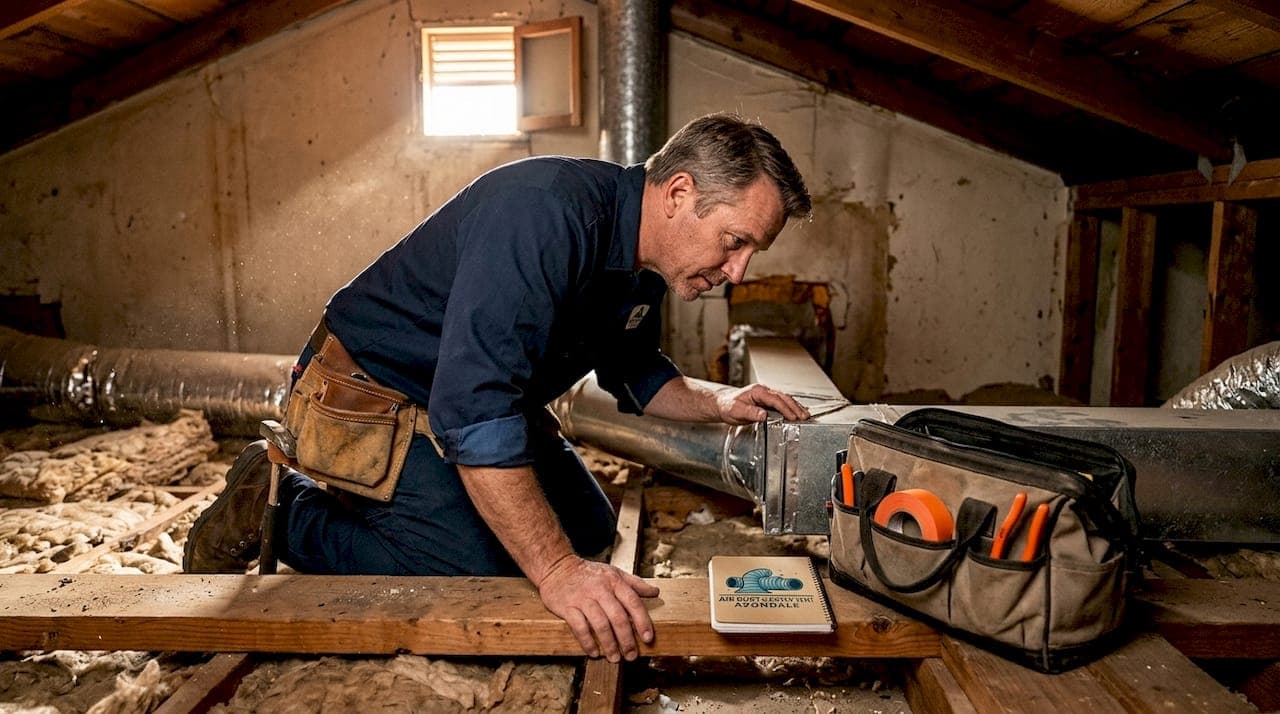
If your Avondale home feels stuffy in one room and comfortable in another, your air ducts might be the culprit. What are air duct leaks, exactly? They are gaps, holes, and poor connections in your HVAC ductwork that let conditioned air escape before it ever reaches your living spaces. Typical homes lose 20 to 30% of their cooled or heated air through these leaks. In Arizona's brutal summer heat, that waste hits your wallet hard every single month. This guide walks you through the signs, causes, and fixes so you can take action with confidence.
Table of Contents
- What are air duct leaks and why do they matter?
- Signs your home or business has air duct leaks
- How to locate air duct leaks in accessible ductwork
- Effective methods to fix and seal air duct leaks
- Broader impacts of air duct leaks on indoor air quality and HVAC health
- The overlooked truths about air duct leaks and repairs
- Professional air duct services in Avondale for lasting comfort and savings
- Frequently asked questions
Key Takeaways
| Point | Details |
|---|---|
| Significant air loss | Air duct leaks can waste 20-30% of conditioned air, raising energy costs and causing uneven temperatures. |
| Indoor air quality impact | Leaky ducts draw dust and allergens from unconditioned spaces, reducing indoor air quality. |
| DIY repair limits | Minor accessible leaks can be sealed with UL-181 mastic or foil tape, but professional testing is important. |
| Avoid gray duct tape | Standard duct tape fails quickly in heat; use UL-rated products for lasting seals. |
| Professional help pays off | Experts provide thorough inspection, quality sealing, and system balancing for better comfort and savings. |
What are air duct leaks and why do they matter?
Air duct leaks are breaks in the sealed network of metal, fiberglass, or flexible tubing that carries conditioned air from your HVAC system to every room. These breaks can be tiny pinholes, torn flexible duct sections, or full joint disconnections where two duct pieces were never properly connected. Each type lets air bleed out into your attic, walls, or crawlspace instead of reaching your bedroom or office.
In Avondale, this is not a minor inconvenience. Summers regularly push past 110°F, which means your air conditioner runs long and hard. When leaky ducts force your system to work overtime, the impact on energy savings compounds quickly. Ducts routed through unconditioned attic spaces face a double hit: they lose air through gaps and absorb heat through the duct walls. Ducts in unconditioned spaces lose 20 to 30% efficiency from leakage and heat gain, which is a critical concern in Arizona's climate.
Here is what that means for your day-to-day life in Avondale:
- Uneven temperatures: Rooms far from the air handler feel hotter or cooler than rooms close to it
- Higher utility bills: Your HVAC runs longer to compensate for lost airflow, burning more electricity
- Reduced air quality: Leaks on the return side of your system can pull unfiltered air, dust, and insulation particles into your home
- Faster equipment wear: A system fighting against leaky ducts ages faster and breaks down sooner
- Humidity imbalances: Lost cool air in humid climates or monsoon season means more moisture stays indoors
Understanding the causes of air duct leaks helps prevent future ones. The most common causes are poor original installation, vibration over time that loosens joints, age-related deterioration of flexible duct material, and physical damage from pests or renovation work.
Signs your home or business has air duct leaks
Most homeowners do not know they have duct leaks because the ducts are hidden behind walls or buried in attic insulation. You rarely see the leak itself. What you notice instead are the symptoms it leaves behind. Learning to read these signs of air duct leaks early saves you money before the problem gets worse.
Watch for these red flags:
- Unexplained spikes in your energy bills: If your cooling costs jump without a change in habits or weather patterns, leaking ducts are a likely cause. Leaky ducts add hundreds of dollars to annual heating and cooling costs by wasting conditioned air and straining your HVAC system.
- Hot or cold spots room to room: A bedroom that never cools down while the living room feels fine is a classic sign that the duct serving that bedroom is losing air before it arrives
- Excessive dust on furniture and surfaces: If you are dusting more than usual, your ducts may be the source. Learn more about the causes of ductwork dust and how to address them
- Visible insulation fibers on your HVAC filter: This is one of the most telling signs. Insulation getting sucked into the filter means your return ducts are pulling air from the attic, where fiberglass insulation lives
- Weak airflow from registers: Hold your hand over a supply register. If the airflow feels weak even when your system is running full blast, air is escaping somewhere between the air handler and that vent
- Noisy ducts: Whistling or flapping sounds in your ductwork often point to gaps where air is rushing through an unintended opening
If you recognize more than one of these symptoms, do not wait. Review the signs you need duct cleaning to understand when cleaning alone is not enough and repairs are needed.
How to locate air duct leaks in accessible ductwork
Air duct leak detection does not always require expensive equipment. For ducts in your attic, garage, or crawlspace, you can run a basic inspection yourself. The goal is to find where air is escaping so you can mark those spots and decide whether to tackle a DIY fix or call a professional.
Follow these steps:
- Turn your HVAC system to fan-only mode so air flows through the ducts without heating or cooling. This gives you a steady airflow to work with and keeps you comfortable while you inspect
- Walk the visible duct runs in your attic or garage and look for obvious problems: disconnected joints, sections of torn flex duct, areas where the duct has kinked or collapsed, and spots where tape has peeled away
- Use your hand along every joint and seam. Hold your palm near each connection point. Escaping air has a clear, detectable rush that you will feel even if you cannot see the gap
- Light an incense stick or use a smoke pencil near suspected areas. Drifting smoke tells you exactly where air is moving unexpectedly. This works especially well near joints, end caps, and areas around flex duct collars
- Mark every leak you find. Use a grease pencil or attach a small ribbon. You want to be able to find these spots again when you return with sealant and tape
- Check your air handler cabinet itself. Gaps around the cabinet door, where supply and return ducts connect to the unit, are common leak points that people routinely miss
DIY duct sealing with UL-181 mastic applied at nickel thickness or metal-backed foil tape can fix accessible minor leaks, but professional testing is recommended afterward to verify the system is balanced and all leaks are closed.
Pro Tip: Run your system for 10 minutes before you start your inspection. Pressurized ducts make leaks easier to feel by hand, especially in areas with small gaps.
Effective methods to fix and seal air duct leaks
Once you have located the leaks, repairing air duct leaks comes down to using the right materials and applying them correctly. The single biggest mistake homeowners make is grabbing gray cloth duct tape from the hardware store. That tape fails fast, especially in Arizona's heat. Here is what actually works.
The right way to seal a duct leak, step by step:
- Clean the surface around the leak. Wipe away dust, grease, and old adhesive residue. Mastic and foil tape both need a clean surface to bond properly
- For large gaps or cracks, lay fiberglass mesh first. This mesh bridges the gap and gives the mastic something to grip
- Apply UL-181 mastic sealant with a paintbrush. Work it into the gap and spread it to a nickel-thick layer over the surrounding area. Mastic looks like thick paint and stays flexible after curing
- For smaller seams, foil tape is a faster alternative. Press the tape firmly, starting from one edge and smoothing out air bubbles as you go
- Wrap the sealed area with R-6 foil-faced duct insulation to reduce heat gain in your attic, which is just as important as sealing the leak itself
- Allow mastic 24 to 48 hours to fully cure before running your system under load. Testing before it cures can crack the seal and undo your work
Never use standard gray duct tape for repairs, as it degrades quickly. Use UL-181 mastic at nickel thickness or foil tape only, then wait the full 24 to 48 hour cure time before testing.
Here is a quick comparison of your main sealing options:
| Sealant type | Best for | Durability | Heat resistance | DIY friendly |
|---|---|---|---|---|
| UL-181 mastic | Gaps and large seams | Excellent | High | Yes, with practice |
| Metal-backed foil tape | Small seams and joints | Very good | High | Yes |
| Aeroseal (professional) | Hidden and inaccessible ducts | Excellent | High | No, pro only |
| Standard gray duct tape | Nothing duct-related | Poor | Low | Not recommended |

For ducts buried in walls or hard-to-reach attic areas, professional aeroseal injection is the most effective approach, as it seals leaks from the inside without requiring physical access. Review the benefits of duct repairs to understand the full return on that investment.
Pro Tip: After repairing leaks, compare your utility bills month over month. Most Avondale homeowners see measurable savings within one billing cycle if their leaks were significant.
Broader impacts of air duct leaks on indoor air quality and HVAC health
The energy waste is the headline, but the impact of air duct leaks on your health and equipment can be just as serious. Return-side leaks, the ducts that pull air back to your air handler, create a suction effect that draws air from wherever there is a gap. In most Avondale homes, that means attic air loaded with dust, insulation fibers, and sometimes pest debris flows directly into your living spaces.
"Leaky ducts pull dust from attics, basements, or crawlspaces into homes, increasing dust and affecting air quality." This is not just a cleaning inconvenience. For anyone with allergies, asthma, or respiratory sensitivities, it is a genuine health concern.
Leaky ducts pull dust from attics, basements, or crawlspaces into living spaces, directly degrading the air your family breathes. Fiberglass insulation particles are small enough to stay airborne and irritate airways for hours. Understanding why removing allergens from ducts matters goes beyond aesthetics and into actual respiratory health.
The equipment damage angle is one most homeowners do not consider until it is too late. Leaky ducts shorten HVAC lifespan by forcing constant overwork, a common and costly surprise for homeowners.
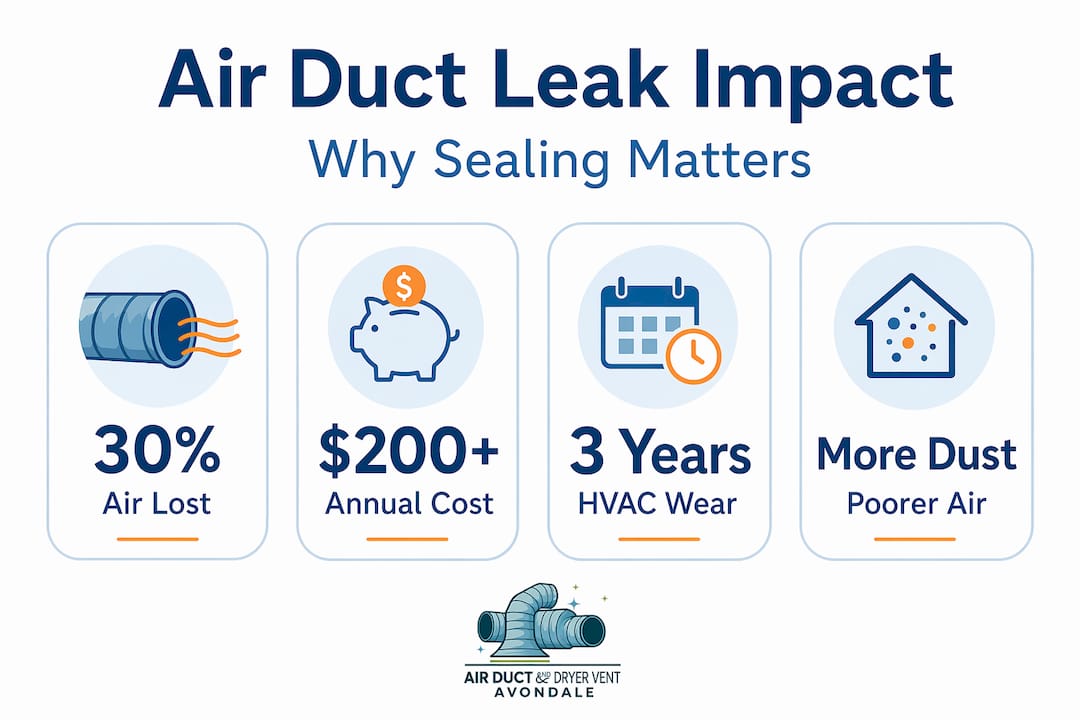
Here is how these impacts add up across your system and home:
| Impact category | What happens | Result for you |
|---|---|---|
| Energy loss | 20 to 30% of conditioned air escapes | Higher monthly utility bills |
| Indoor air quality | Return leaks pull in dust and allergens | Worsened allergies and respiratory issues |
| HVAC wear | System overworks to reach target temperature | More frequent breakdowns and shorter lifespan |
| Humidity control | Cool air lost reduces dehumidification | Muggy indoor air, especially in monsoon season |
| Safety risk | Return leaks near gas furnaces can cause backdrafting | Carbon monoxide risk in some systems |
The safety issue at the bottom of that table deserves attention. If your home has a gas furnace and your return ducts leak near the combustion area, negative pressure can pull exhaust gases back into the home instead of venting them outside. This is rare but serious enough to warrant a professional inspection if you have an older system or suspect large return duct leaks.
The overlooked truths about air duct leaks and repairs
After working with Avondale homeowners and small business owners, we have seen the same patterns repeat. The most common one: people acknowledge their ducts "probably have some leaks" and then do nothing for years because the problem feels invisible. Meanwhile, those small leaks cost them $200 to $400 extra every summer without a single dramatic warning sign to spur action.
The math is not complicated, but it does not feel urgent when the leaks are in your attic. That is exactly why they go unfixed for so long.
The other pattern we see constantly is DIY repairs done with the wrong materials. Someone buys gray duct tape, wraps a few joints, feels good about it, and rediscovers the problem two summers later when the tape has peeled off completely. Areas previously taped with improper materials are among the most common trouble spots, because prior leaks indicate ongoing issues that proper mastic handles far better.
There is also a design problem that purely DIY approaches miss. Some homes have ductwork that was never properly balanced when it was installed. Rooms that run consistently hot might not just have a leak nearby. They might have an undersized duct run or a damper set wrong. Sealing leaks in a poorly designed system helps but does not fix the underlying imbalance. A professional inspection catches both the leaks and the design issues.
The honest truth about why investing in duct repairs pays off is this: the savings show up in your utility bills, your HVAC repair history, and your family's respiratory health simultaneously. That is a rare overlap where one fix solves three problems at once. And leaks that force HVAC overwork shorten equipment lifespan, meaning a $400 sealing job can defer a $6,000 system replacement by years.
The homeowners and business owners who fix their ducts properly and completely, with the right materials and a professional verification afterward, are the ones who stop calling us back for the same problem. That outcome is the goal every time.
Professional air duct services in Avondale for lasting comfort and savings
If you have identified signs of leaks or want to know exactly where your system stands, the team at Air Duct and Dryer Vent Cleaning Avondale is ready to help. We serve residential and commercial clients throughout Avondale with professional inspections that go beyond what a flashlight and a hand-feel test can find.
Our services cover the full range: air vent cleaning to remove accumulated debris, air duct repair and replacement using UL-181 mastic and foil tape for durable seals, and indoor air quality testing to give you a clear picture of what your family is breathing. After repairs, we verify system balance so every room gets the airflow it is supposed to have. We offer flexible scheduling including after-hours appointments, and our work comes backed by warranties. Fixing your ducts should not be stressful, and with local experts who know Avondale's climate and home construction, it does not have to be.
Frequently asked questions
What causes air duct leaks?
Air duct leaks are caused by gaps, tears, or disconnections in ductwork, most often from poor original installation, age-related material breakdown, physical damage from pests, or joints that were never properly sealed in the first place.
How do air duct leaks affect my energy bills?
Leaks force your HVAC to run longer to compensate for lost airflow, and leaky ducts add hundreds of dollars to your annual heating and cooling costs by wasting conditioned air before it reaches the rooms you are actually trying to cool or heat.
Can I fix duct leaks myself?
Yes, for accessible leaks. DIY mastic or foil tape repairs work well on visible joints, but professional testing after the fact is strongly advised to confirm you caught every leak and your system is properly balanced.
Why is standard duct tape not recommended for sealing leaks?
Standard gray duct tape loses adhesion quickly in heat and does not create a lasting seal. Use UL-181 mastic or foil tape instead, both of which are rated specifically for HVAC ductwork and hold up through Arizona's temperature swings.
How do duct leaks affect indoor air quality?
Return-side leaks create suction that pulls unfiltered air from attics and crawlspaces into your home. Leaky ducts pull dust and allergens directly into your living spaces, worsening conditions for anyone with allergies, asthma, or sensitivities to airborne particles.