
TL;DR:
- Most HVAC contaminants go beyond dust and include mold spores, bacteria, allergens, VOCs, and particulate matter that circulate through your system. Moisture from condensation and leaks fosters microbial growth, while improper filtration and duct leaks introduce unfiltered pollutants into indoor air. Addressing moisture, controlling sources, and professional cleaning are essential to maintaining healthy indoor air quality and preventing respiratory issues.
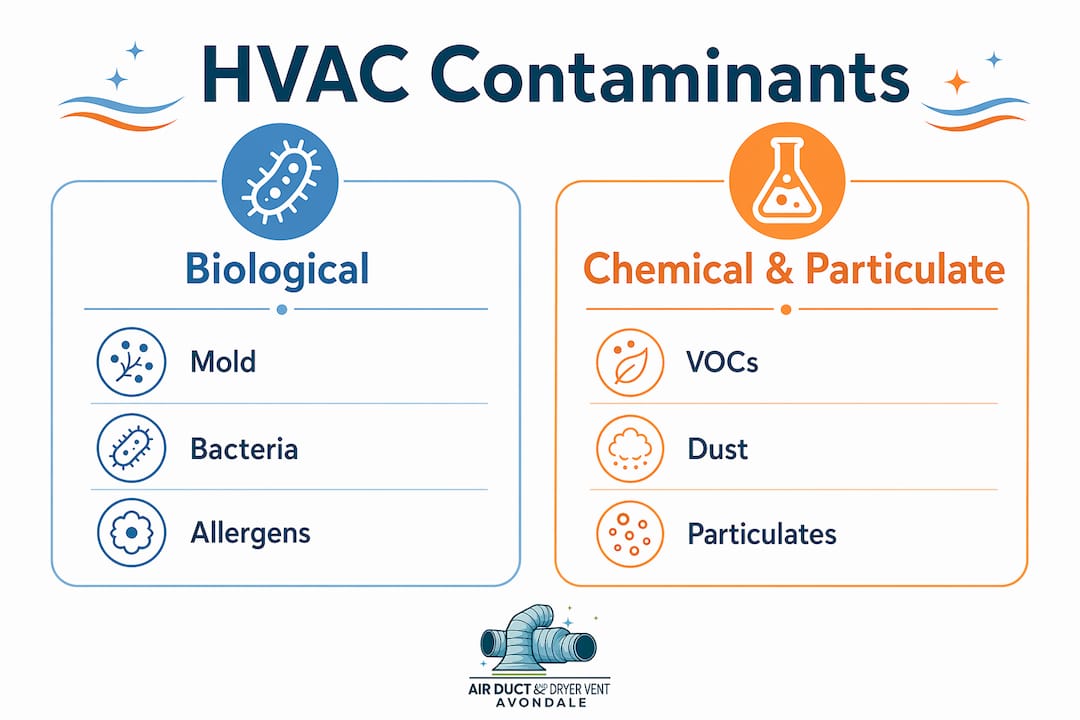
Most homeowners assume dust is the main problem lurking in their HVAC system. The reality is far more complicated. What are common HVAC contaminants? The full list includes mold spores, biological allergens, volatile organic compounds, bacteria, and particulate matter, all of which your system can pick up, circulate, and deposit throughout your living space. Understanding the types of HVAC contaminants present in your home is not just academic. It directly determines whether you are breathing clean air or quietly dealing with a source of respiratory irritation, allergy flare-ups, or worse.
Key Takeaways
| Point | Details |
|---|---|
| Beyond dust and dirt | HVAC systems carry mold, bacteria, allergens, VOCs, and particulate matter, not just visible dust. |
| Moisture drives contamination | Condensation and drain pan issues create conditions where mold and bacteria thrive inside your ducts. |
| Filtration vs. ventilation | Filters remove particles, but only fresh air ventilation reduces gas-phase pollutants like VOCs effectively. |
| Duct leaks introduce new threats | Leaky ducts pull in unfiltered insulation fibers, pest debris, and radon that bypass your filter entirely. |
| Source control comes first | Cleaning ducts without fixing the underlying moisture or pollutant source leads to rapid re-contamination. |
What are common HVAC contaminants of the biological type
Biological contaminants are the category most people are surprised to learn about. The EPA identifies biological pollutants as bacteria, viruses, fungi including mold, dust mites, pollen, pet allergens, and pests like rodents and cockroaches along with their droppings and body parts. Every one of these can move through your ductwork and settle in conditioned spaces.
How they get inside your system
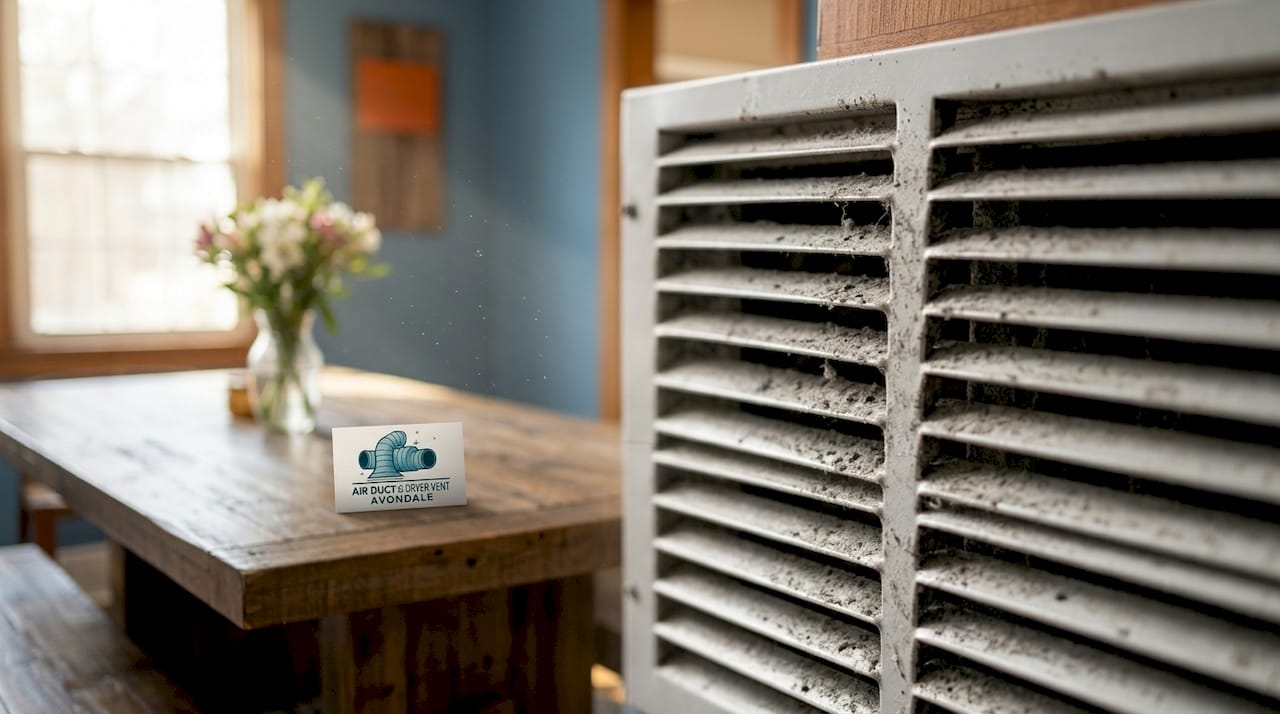
Biological contaminants enter buildings through surprisingly ordinary routes. Open windows, ventilation leaks, plumbing cracks, and even the soles of shoes bring pollen, mold spores, and dust mite allergens indoors. Once inside, your HVAC system acts as a distribution network. If your air handler pulls in contaminated air, it can push those particles into every room.
Moisture is the critical accelerant. When condensation forms on cooling coils or a drain pan backs up, you create the exact wet environment where mold and bacteria multiply. The EPA specifically notes that moist areas encourage microbial growth inside duct systems, meaning a routine drainage problem can silently become a mold issue in a matter of weeks.
Here is a breakdown of the most common biological HVAC contaminants and where they originate:
- Mold spores: Grow on damp duct liners, cooling coils, and drain pans. The most common indoor mold genera include Cladosporium, Aspergillus, and Penicillium.
- Dust mite allergens: Produced by microscopic mites living in upholstered furniture, bedding, and carpet. Their waste particles become airborne and get pulled into return air vents.
- Pet dander: Tiny protein particles shed from animal skin and saliva. They are small enough to stay suspended in air for hours and pass through low-rated filters with ease.
- Pollen: Enters from outside and accumulates on filter media. During high-pollen seasons in Avondale, Arizona, HVAC systems without adequate filtration become efficient pollen distributors.
- Bacteria and viruses: Can travel on larger particles and aerosol droplets that enter return ducts from occupied spaces.
- Pest allergens: Rodent droppings and cockroach fragments are potent allergens. If pests have accessed your duct system, their debris circulates every time the system runs.
"Health effects from biological contaminants range from sneezing and watery eyes to serious infections, particularly in occupants with compromised immunity, asthma, or pre-existing respiratory conditions." (EPA, Indoor Air Quality)
Pro Tip: If you notice musty smells coming from supply vents when the system first kicks on, that is a strong indicator of biological growth somewhere in your air handler or duct system. Do not ignore it.
Understanding what are HVAC allergens specifically helps you address the right sources. Pet dander, dust mite waste, pollen, and mold fragments are the primary HVAC allergens, and each requires a somewhat different control strategy.
Chemical and particulate contaminants in HVAC systems
Biological pollutants get a lot of attention, but chemical and particulate contaminants create their own set of serious HVAC air quality issues. These are often harder to detect because you cannot see or smell many of them at dangerous concentrations.
Particulate matter: the invisible particle problem
Particulate matter is classified by size. PM10 refers to particles 10 micrometers or smaller, while PM2.5 covers the finer fraction at 2.5 micrometers and below. PM2.5 is the more dangerous category because those particles penetrate deep into lung tissue. Sources include cooking smoke, candles, tobacco smoke, and resuspended dust from foot traffic. Pet dander falls into this category as well.
Your HVAC system can either capture these particles through proper filtration or recirculate them. MERV 8 filters capture dust, pollen, and pet dander, while MERV 11 adds mold spores, and MERV 13 captures bacteria and some virus carriers. The catch is that higher-rated filters create more airflow resistance, and not every system can handle them without losing efficiency.
Volatile organic compounds and gases
Volatile organic compounds, or VOCs, come from paint, cleaning products, adhesives, new furniture, and building materials. They off-gas at room temperature and become part of your indoor air. Standard HVAC filters do nothing to remove them. Ventilation and fresh air intake are the primary methods to dilute VOCs; activated carbon filters can adsorb some VOCs but are uncommon in typical residential systems.
Carbon monoxide deserves a separate mention. It comes from gas furnaces, water heaters, and attached garages. Unlike VOCs, carbon monoxide at high concentrations is immediately life-threatening. Your HVAC system cannot filter it out, which is exactly why carbon monoxide detectors are non-negotiable in any gas-heated home.
| Contaminant type | Primary sources | Removal method |
|---|---|---|
| PM2.5 / PM10 particles | Cooking, candles, dust, pet dander | HVAC filtration (MERV 8-13) |
| VOCs | Paint, cleaning products, furniture | Ventilation and fresh air dilution |
| Carbon monoxide | Gas appliances, attached garages | Detectors, proper combustion venting |
| Mold spores | Wet HVAC components, damp building materials | Filtration + moisture control |
| Dust and allergens | Normal occupancy, outdoor infiltration | Filtration + source reduction |
The effects of HVAC contaminants in the chemical category include headaches, eye irritation, fatigue, and at higher exposures, more serious organ effects. Most people attribute these symptoms to stress or illness, never connecting them to their indoor air.
- Cooking without exhaust ventilation generates both PM2.5 and VOCs simultaneously.
- New construction or recent renovation dramatically spikes VOC levels indoors for weeks.
- Scented candles and air fresheners are significant VOC sources that most people never suspect.
HVAC system factors that drive contamination
Understanding the common HVAC contaminants list is only part of the picture. Your system's physical condition and maintenance history determine how aggressively those contaminants build up and spread.
-
Duct leaks and disconnections. Energy Star estimates 20 to 30 percent air loss from duct leaks. When ducts run through attics or crawl spaces and develop gaps, they pull in unfiltered air containing insulation fibers, rodent waste, and radon. That contaminated air bypasses your filter entirely and flows directly into living spaces.
-
Drain pan and condensate line problems. The drain pan under your air handler collects condensation every cooling cycle. When it does not drain properly, standing water forms in minutes. That water breeds bacteria, mold, and algae, all of which then ride the airflow into your ductwork.
-
Dirty or wrong-rated filters. A clogged filter becomes a contaminant source itself. Dust, debris, and even mold can accumulate so densely on a neglected filter that air begins bypassing the media and pulling those particles directly into the system. Filter replacement frequency and MERV selection are decisions that affect system performance and air quality simultaneously.
-
Dirty ducts versus active pollution sources. This is one of the most misunderstood points in HVAC air quality discussions. The EPA states that dirty ducts contribute less to particle exposure than pollutants entering from outdoors or from indoor activities. In other words, ducts that look dusty are not necessarily making your air worse than the cooking smoke, cleaning sprays, or open windows already affecting your home. Cleaning alone does not solve what enters your space daily.
-
Moisture without remediation. Simply cleaning visible growth without fixing the water source leads directly to re-contamination. The EPA is clear that moisture management through humidity control and leak repair is not optional if you want lasting results. Mold will return to a damp environment within days of cleaning.
Pro Tip: Check your condensate drain line every spring before cooling season begins. A shop vac on the drain line access point clears most clogs in under two minutes and prevents standing water problems throughout the summer.
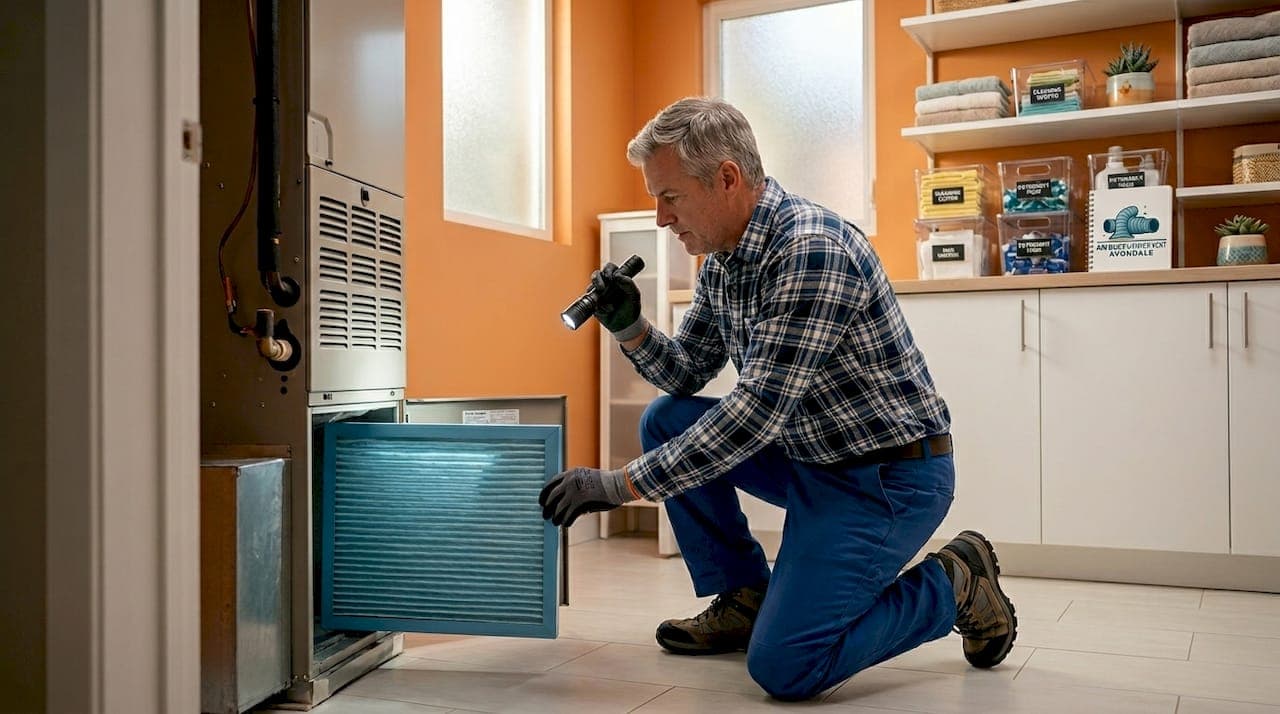
Knowing how to identify HVAC pollutants in your system starts with these physical inspection points, not with testing kits. If you can see standing water, smell mustiness from vents, or notice filter bypass gaps, you already have your diagnosis.
How to prevent and control HVAC contaminants
Addressing common indoor pollutants in your HVAC system combines three strategies: source control, ventilation, and filtration. No single strategy alone is sufficient. Here is how to apply all three in practice.
Signs you may already have a problem
Watch for these indicators before symptoms worsen:
- Musty or chemical odors coming from supply vents when the system runs
- Visible dust blowing from registers shortly after cleaning surfaces
- Allergy or asthma symptoms that improve noticeably when you leave the building
- Dark staining around supply or return grilles
- Condensation on walls or windows near vents indicating humidity issues
Pro Tip: Place a white tissue over a supply vent for 30 seconds while the system runs. Discoloration or visible debris on the tissue is a quick indicator of what your ducts are circulating.
Practical maintenance steps
Upgrading your filter to a MERV 8 to 13 rating handles the particle side of the equation well for most homes. Replace it every 60 to 90 days, and more often if you have pets or anyone with respiratory conditions in the household. Arizona's dust conditions make quarterly replacement a minimum, not a suggestion.
Control indoor VOC sources by increasing ventilation when painting or cleaning, and by allowing new furniture to off-gas in a well-ventilated garage before bringing it inside. Use bathroom and kitchen exhaust fans consistently to remove moisture and cooking pollutants before they reach the return air system.
For HVAC mold prevention, keep indoor humidity below 50 percent. In a desert climate like Avondale, this is usually easier than in humid regions, but monsoon season changes that calculus significantly.
Studies show that addressing all contaminated HVAC components rather than isolated sections is necessary to prevent re-contamination, which is why professional duct cleaning that skips the air handler, coils, and drain pan falls short. A thorough job covers the full system.
When professional cleaning makes sense: after construction or renovation that generated dust and debris, after a confirmed mold or pest infestation, when purchasing an older home with no service history, or when allergens from ducts are clearly affecting occupant health despite regular filter changes.
My take on what most people get wrong about HVAC air quality
I have seen homeowners invest in premium duct cleaning and then call back six weeks later with the same musty smell, the same allergy symptoms. And every time, the culprit was not the cleaning job. It was everything that got left unchanged.
What frustrates me about how HVAC contamination gets discussed is the singular focus on ducts. Ducts are a surface. Contaminants are a process. If you clean the surface but leave the drain pan filling with water every afternoon, or if you keep cooking without running an exhaust fan, you have not solved anything. You have spent money on a temporary result.
The homeowners who actually see lasting improvement do three things differently. They fix the moisture source first. They reduce the pollutant load from daily activities. And then they clean the system. In that order. The cleaning at the end is maintenance, not the cure.
I also see a lot of people skip HVAC sanitizing entirely because they think it sounds unnecessary. For a household with allergy sufferers, it is one of the more effective tools available, particularly after a confirmed mold situation. It is not a gimmick when applied correctly after cleaning.
The common hvac allergens explained in medical literature, things like dust mite allergens and mold fragments, are small enough to stay airborne for extended periods. That means your system can keep recirculating them even after you have cleaned visible surfaces. Air quality testing, done before and after a service, gives you actual data instead of guesswork.
My honest advice: stop treating indoor air quality as a one-time fix and start treating it as an ongoing maintenance category. Your HVAC system affects every breath taken in your home. It deserves the same attention you give your car.
— Shaun
Clean air starts with a professional inspection
If reading through the types of HVAC contaminants in your system has you thinking about what might be circulating in your home or office right now, that instinct is worth acting on.
Airanddryerventcleaningavondale provides residential and commercial air duct and vent cleaning services in Avondale, Arizona, covering the full system rather than just accessible duct surfaces. That means the air handler, coils, drain pan, and duct runs get attention together, which is the only way to prevent rapid re-contamination.
For business owners concerned about employee health and regulatory compliance, the commercial duct cleaning service addresses the higher contaminant loads that come with greater occupancy and more complex duct systems. If you are not sure where your indoor air quality currently stands, professional air quality testing identifies specific contaminants before you spend money on solutions that may not target your actual problem. If duct leaks are pulling in unfiltered attic air or pest debris, duct repair and replacement closes those gaps at the source. Airanddryerventcleaningavondale offers flexible scheduling including after-hours appointments, so service does not have to interrupt your workday. For professional guidance on selecting a commercial HVAC maintenance provider, regular service contracts are consistently shown to reduce biological contamination rates over time.
FAQ
What are the most common HVAC contaminants?
The most common HVAC contaminants include mold spores, dust mite allergens, pet dander, pollen, bacteria, particulate matter, and VOCs. The EPA identifies biological pollutants as a primary category, with moisture and poor ventilation as the main conditions that allow them to thrive.
Can HVAC systems spread mold through a building?
Yes. When mold grows on damp HVAC components like cooling coils or drain pans, the system distributes spores through every connected supply vent. Moisture control is the only way to prevent this from recurring after cleaning.
How do I know if my HVAC has a contamination problem?
Look for musty odors from vents, visible dark staining around grilles, and respiratory symptoms that improve when you leave the building. A professional air quality test provides definitive identification of specific contaminants present.
Do air filters remove VOCs from HVAC air?
Standard HVAC filters do not remove VOCs. Filtration targets particles while ventilation with fresh outdoor air is the primary method for diluting gas-phase pollutants like VOCs indoors.
How often should I have my ducts professionally cleaned?
The EPA does not specify a fixed interval, but professional cleaning is recommended after renovation, confirmed mold or pest infestation, or when purchasing a home with no service history. For most occupied homes, an inspection every three to five years helps identify whether cleaning is warranted.