
TL;DR:
- Duct contaminants originate from indoor particles, recirculation, and moisture that enable microbial growth. Proper system design, moisture control, and targeted cleaning are essential for effective long-term air quality improvement. Addressing moisture sources and system flaws prevents recurring contamination beyond mere duct cleaning.
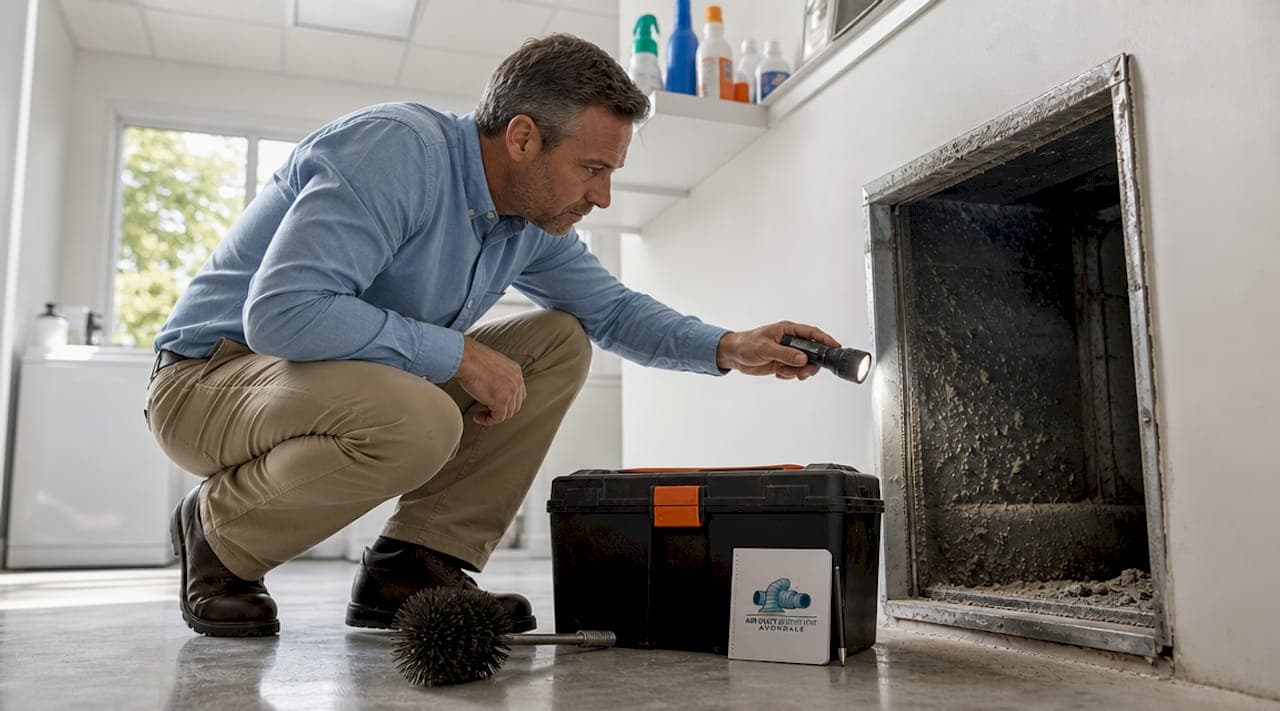
Duct contaminants are defined as particles, microorganisms, and chemical residues that accumulate inside HVAC air ducts through a combination of indoor pollutant generation, airflow recirculation, and moisture exposure. The industry term for this problem is "duct contamination," and understanding its root causes is the most direct path to protecting your indoor air quality. Three forces drive the buildup: what your household generates daily, how your HVAC system moves and traps air, and whether moisture is present to trigger microbial growth. NADCA and the EPA both identify these as the primary duct contamination sources, and every homeowner or property manager in Avondale, Arizona should know how they interact.
What causes duct contaminants in your home?
Duct contaminants develop from particles already present in your living space. Every time your HVAC system runs, it pulls air from every room through return vents, filters it (partially), and pushes it back through supply ducts. Dust, pollen, pet dander, skin cells, and airborne chemicals all travel this circuit. The filter catches some of it, but no standard residential filter captures everything. What passes through settles on duct walls, collects at bends and joints, and builds up over months and years.
The recirculation effect is what makes this problem compound so quickly. Air is recirculated 5 to 7 times daily through your duct system, meaning every particle that escapes the filter gets another pass through the network. Each cycle deposits a thin layer of material on duct surfaces. Over a year, those layers become significant accumulations of dust and debris that reduce airflow and harbor allergens.
The causes of air duct dirt are not mysterious. They are the direct result of normal household life. Cooking generates grease particles and combustion byproducts. Vacuuming stirs up fine dust that re-enters the air. Walking across carpet releases fibers and skin cells. Every one of these particles is a candidate for duct buildup.
How pets and smoking accelerate contamination
Pets and smoking are two of the most aggressive contributors to duct contamination. Pets, smoking, and renovation activities dramatically increase the volume of airborne particles entering your duct system. A single dog or cat sheds dander continuously, and that dander is fine enough to pass through many air filters. Cigarette smoke deposits sticky residues on duct walls that bind other particles, creating a layered buildup that is far harder to remove than ordinary dust.
Renovation work is another major trigger. Drywall dust, insulation fibers, and wood particles generated during construction are extremely fine and penetrate deep into ductwork. If your HVAC system runs during a renovation without sealed vents, the contamination can be severe enough to require professional cleaning before the space is occupied.
- Cooking smoke and grease particles from stovetop activity
- Pet dander from dogs, cats, and birds
- Cigarette and cigar smoke residues
- Renovation dust from drywall, wood, and insulation
- Pollen tracked in from outdoors through open doors and windows
- Skin cells shed by occupants throughout the day
Pro Tip: Reducing indoor pollutant load starts with consistent home cleaning. Vacuuming with a HEPA-filter vacuum, grooming pets regularly, and keeping windows closed during high-pollen days all reduce the volume of particles your HVAC system has to process.
What role does moisture play in creating duct contaminants?
Moisture transforms a dirty duct into a contaminated one. Dust and debris alone are a maintenance problem. Add moisture, and you create the conditions for microbial growth inside ducts, including mold, bacteria, and fungi that release spores directly into your circulated air. This is the distinction that separates routine duct cleaning from a genuine indoor air quality crisis.
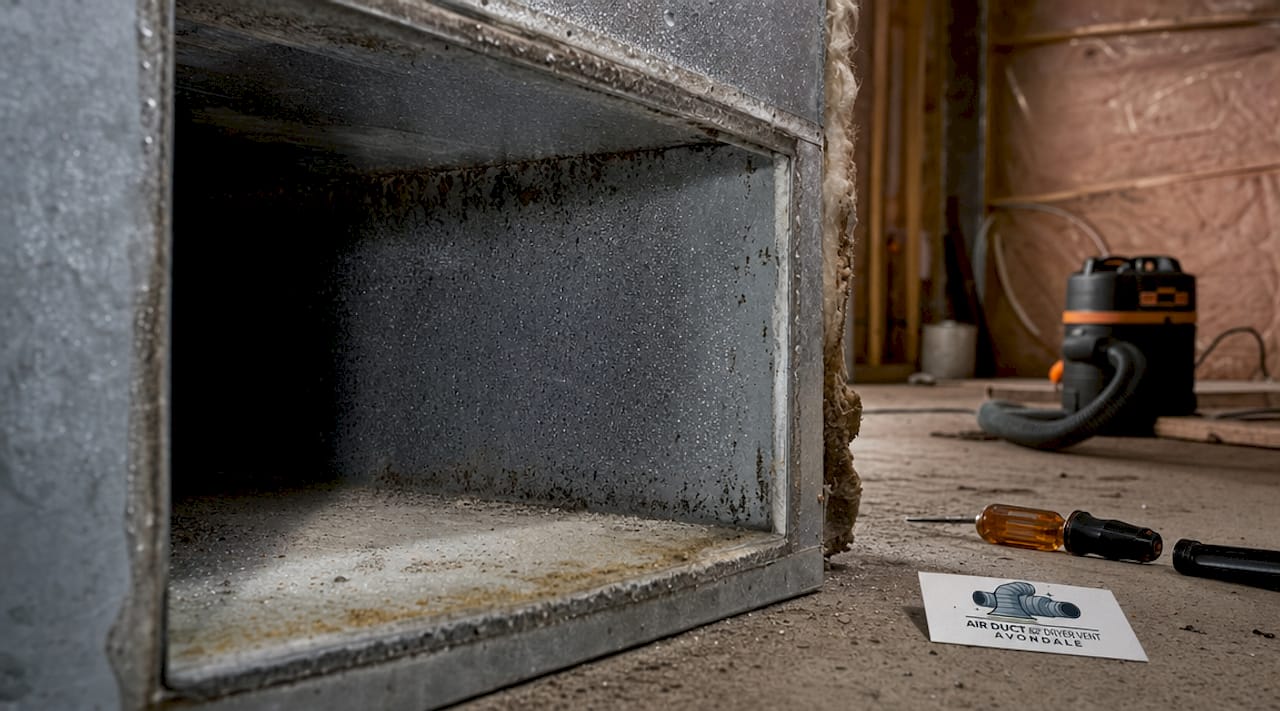
Mold does not need standing water to grow inside a duct. It needs only a damp surface and an organic food source, which the accumulated dust already provides. Microbial growth concentrates near coil and plenum areas where moisture and dust coincide, but spores travel throughout the entire duct network once growth is established. A mold colony near your air handler can distribute spores to every room in your home within hours of the system running.
Common moisture sources inside duct systems
Understanding where moisture enters your ducts is the first step toward controlling it. The sources are more varied than most homeowners expect.
- Condensation on evaporator coils. The cooling coil inside your air handler sweats during operation. If drainage is restricted or the coil is dirty, moisture migrates into adjacent ductwork.
- Clogged condensate drain pans. A blocked drain pan overflows, sending water directly into the air handler cabinet and nearby ducts.
- Duct leaks in humid spaces. Ducts routed through attics or crawlspaces in humid climates draw in warm, moist outside air when the system runs, creating condensation on cooler duct surfaces.
- Wet or damaged duct insulation. Insulation that has absorbed moisture from a roof leak or plumbing failure stays damp for weeks, keeping the duct surface below it wet.
- High indoor humidity. Homes without adequate dehumidification maintain elevated relative humidity that condenses on cool duct surfaces near supply registers.
Condensation and wet insulation are the primary moisture sources that trigger microbial contamination in residential duct systems. This finding from mold remediation research confirms that the problem is almost always tied to a specific, fixable moisture source rather than general humidity alone.
The EPA is direct on this point: controlling moisture is the most effective prevention for microbial growth in ducts. Cleaning a mold-contaminated duct without fixing the moisture source produces only temporary results. The mold returns within weeks because the conditions that created it have not changed.
Pro Tip: If you notice a musty smell when your HVAC system starts, that is a reliable indicator of microbial growth somewhere in the duct network. Do not ignore it. A professional air quality test can identify the specific contaminants present before you commit to a cleaning or remediation approach.
How does HVAC system design affect duct contamination?
The physical condition and design of your HVAC system determines how quickly contaminants accumulate and how severe the buildup becomes. A well-installed, properly maintained system with tight duct connections and clean components resists contamination far better than one with design flaws or deferred maintenance.
Improper installation, clogged drain pans, and damaged duct insulation are identified by the EPA as direct contributors to duct contamination. These are not rare edge cases. They are common findings in residential HVAC systems that have never received a professional inspection. A system installed with loose duct connections pulls unfiltered air from attics or wall cavities directly into the supply stream, bypassing the filter entirely.
Duct insulation type matters significantly. Porous fiberglass insulation retains moisture and microbes far more readily than bare sheet metal ductwork. Fiberglass-lined ducts that become wet are extremely difficult to clean effectively and often require replacement rather than remediation. This is a design consideration that affects long-term contamination risk, not just immediate cleanliness.
System issues that accelerate buildup
- Oversized HVAC units that short-cycle run for brief periods, never fully dehumidifying the air or drying the coil surface between cycles
- Leaky return ducts in unconditioned spaces that draw in attic dust, insulation fibers, and outdoor pollutants
- Dirty evaporator coils that restrict airflow and create cold spots where condensation pools
- Infrequent filter changes that allow filters to become so loaded they bypass air around the edges, sending unfiltered particles directly into the duct system
- Blocked or closed supply registers that create pressure imbalances, forcing air through gaps in duct connections
Airflow patterns inside the duct network also influence where dust settles. Horizontal duct runs accumulate more debris than vertical ones because gravity works against the airflow. Bends and transitions create turbulence that drops particles out of the air stream. A system with many horizontal runs and sharp bends will show heavier contamination at those points, which is why professional duct inspection maps the system before cleaning rather than applying a uniform approach.
Pro Tip: Schedule an HVAC inspection every two years, not just when something breaks. A technician checking for HVAC system maintenance issues like coil fouling, drain pan blockages, and duct leaks will catch contamination causes before they become serious problems.
Comparing common duct contaminants and their sources
Not all duct contaminants behave the same way or carry the same risks. The table below maps the most common types to their origins and the specific concerns they raise for homeowners and property managers.
| Contaminant | Primary source | Associated risk |
|---|---|---|
| Dust and dirt | Indoor activities, outdoor infiltration, occupant movement | Reduced airflow, filter clogging, allergen exposure |
| Mold spores | Moisture from coil condensation, leaks, high humidity | Respiratory irritation, allergic reactions, structural damage to ducts |
| Pet dander | Dogs, cats, birds, and other animals in the home | Allergic reactions, asthma triggers, persistent airborne allergen load |
| Pollen | Outdoor air entering through doors, windows, and duct leaks | Seasonal allergy symptoms, compounded by recirculation |
| Chemical residues | Cleaning products, paint, pesticides, cigarette smoke | Volatile organic compound (VOC) exposure, respiratory irritation |
| Insulation fibers | Damaged duct lining, attic infiltration through leaky return ducts | Lung irritation, carcinogenic risk from older fiberglass or asbestos-containing materials |
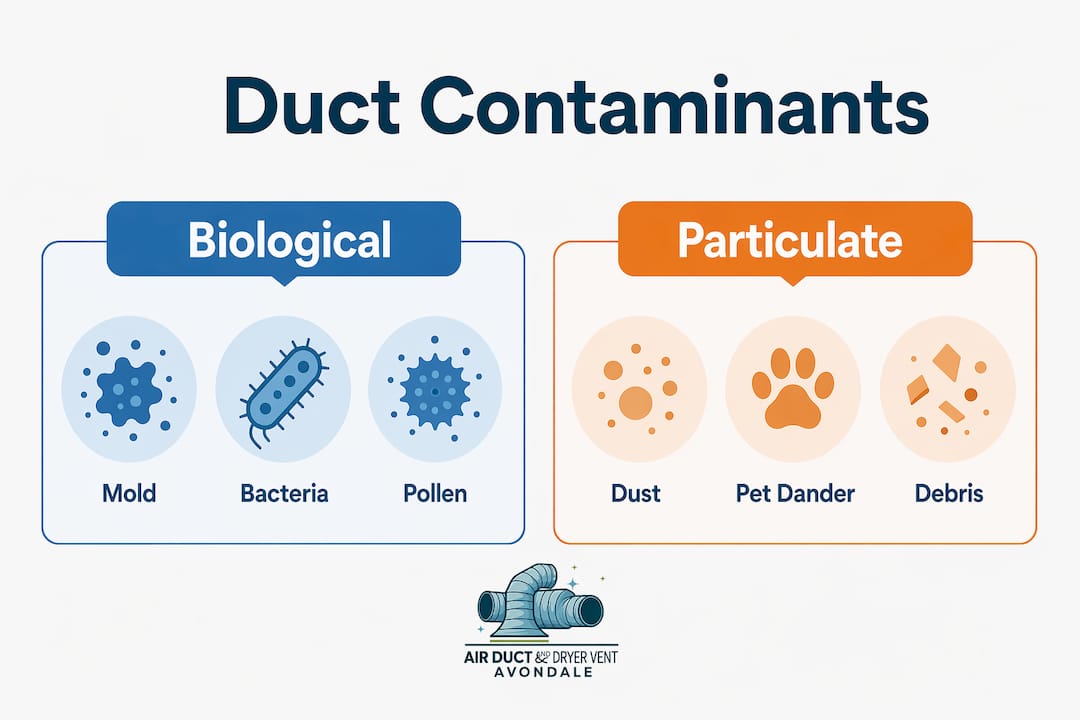
The common HVAC contaminants in residential systems span biological, particulate, and chemical categories. Each category requires a different response. Dust responds to mechanical cleaning and better filtration. Mold requires moisture control first, then remediation. Chemical residues often require source elimination rather than duct cleaning alone.
One nuance worth understanding: the EPA notes that most dust adheres to duct surfaces and is not continuously released into room air under normal conditions. This means a dusty duct is not automatically a health emergency. The greater concern is microbial contamination, which does release active biological material into circulated air. Prioritizing moisture control and mold prevention delivers more measurable indoor air quality benefit than cleaning dust alone.
Key takeaways
Duct contamination results from three converging forces: indoor particle generation, HVAC airflow recirculation, and moisture that enables microbial growth. Addressing all three is the only way to achieve lasting improvement in indoor air quality.
| Point | Details |
|---|---|
| Indoor activities drive particle load | Cooking, pets, smoking, and renovation work are the top sources of particles that enter and accumulate in ducts. |
| Moisture is the critical risk factor | Moisture from coil condensation, leaks, or high humidity creates conditions for mold growth that dust alone cannot. |
| HVAC design flaws worsen contamination | Leaky ducts, oversized units, and porous fiberglass insulation accelerate buildup and make cleaning less effective. |
| Recirculation compounds the problem | Air cycling through ducts 5 to 7 times daily means every particle that escapes the filter gets deposited repeatedly. |
| Fix the source, not just the symptom | Cleaning ducts without addressing moisture sources or system flaws produces only temporary results. |
What I've learned from years of watching homeowners miss the real problem
Most homeowners call about duct cleaning because they can see dust on their registers or they've heard it's something you're supposed to do every few years. That's a reasonable starting point. But after working with hundreds of homes in Avondale, the pattern I see most often is this: the cleaning gets done, the ducts look better for a while, and then the same problems return within a year or two. Sometimes faster.
The reason is almost always moisture. Not the dust, not the pet dander, not even the renovation debris. Moisture is what turns a maintenance issue into a recurring contamination problem. When I walk through a home and find a musty smell, visible discoloration near supply registers, or a homeowner who says "we just had this cleaned," I start looking at the coil, the drain pan, and the duct connections in unconditioned spaces. The moisture source is there almost every time.
The other thing I've found is that allergens in ducts get blamed for health symptoms that are actually caused by mold spores or VOCs from chemical residues. Homeowners spend money on air purifiers and premium filters when the real fix is a $150 drain pan cleaning and a properly sealed duct connection in the attic. Systemic thinking beats reactive spending every time.
My honest recommendation: before you schedule any cleaning service, understand what is actually in your ducts and why it got there. A professional inspection that maps your system and identifies moisture sources gives you a diagnosis, not just a service. That diagnosis is what tells you whether you need cleaning, remediation, duct repair, or all three. Skipping that step means you're treating symptoms without understanding the cause.
— Shaun
Professional duct cleaning services in Avondale, AZ
If you've read this far, you already understand that duct contamination has specific causes that require specific solutions. Airanddryerventcleaningavondale provides residential and commercial air vent cleaning services in Avondale, Arizona, with a focus on diagnosing the root causes of contamination before any cleaning begins. The team inspects for moisture sources, coil condition, drain pan blockages, and duct integrity as part of every service visit.
For property managers dealing with recurring contamination complaints, Airanddryerventcleaningavondale also offers commercial duct cleaning with flexible scheduling and documented results. Whether your concern is dust buildup, mold presence, or a system that has never been professionally evaluated, the right starting point is a thorough inspection. Contact Airanddryerventcleaningavondale through the website to schedule a service visit and get a clear picture of what is actually happening inside your duct system.
FAQ
What are the main causes of duct contaminants?
Duct contaminants develop from three primary sources: indoor particles generated by occupants and activities, HVAC airflow that recirculates those particles through the duct network, and moisture that enables mold and bacterial growth on duct surfaces.
How do duct contaminants develop from everyday activities?
Cooking, vacuuming, pet activity, and smoking all release fine particles into the air that enter return vents and deposit on duct walls. NADCA research confirms that air cycles through residential ducts 5 to 7 times daily, compounding the accumulation with each pass.
Does moisture always cause mold in air ducts?
Moisture creates the conditions for mold growth, but mold requires both moisture and an organic food source such as accumulated dust. The EPA identifies condensation from HVAC coils and wet duct insulation as the most common triggers for microbial contamination in residential systems.
Can cleaning ducts fix a contamination problem permanently?
Cleaning removes existing contaminants but does not prevent recurrence if the underlying causes remain. Microbial contamination returns after cleaning when moisture sources and system design flaws are not corrected first, according to mold remediation research.
How do I know if my ducts have contaminants beyond normal dust?
A musty odor when the HVAC system runs, visible discoloration near supply registers, or worsening allergy symptoms indoors are reliable indicators of microbial contamination. Professional air quality testing identifies the specific contaminants present and guides the appropriate response.