
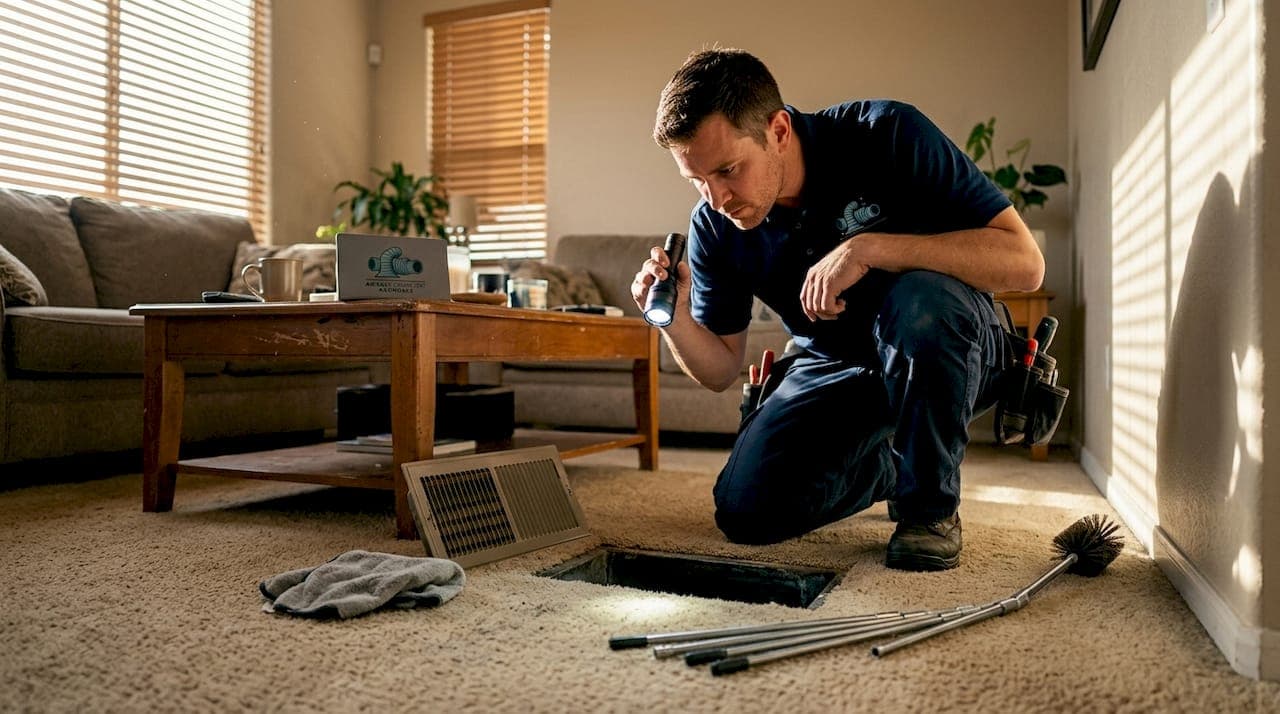
If you've noticed a layer of dust coating your vents or felt like your home gets dusty faster than it should, your ductwork might be the hidden culprit. In Avondale, the combination of desert dust storms, low humidity, and year-round HVAC use creates a perfect environment for dust to accumulate inside air ducts. This buildup doesn't just settle quietly. It recirculates through your home every time your system runs, affecting the air you breathe. Understanding what causes this dust and how to reduce it can make a noticeable difference in your indoor air quality and comfort.
Table of Contents
- Key Takeaways
- Understanding the main sources of ductwork dust
- How leaky ductwork and poor filtration worsen dust buildup
- The role of airflow and maintenance in dust accumulation
- Unique factors increasing dust buildup in Avondale, Arizona
- Keep your indoor air clean with expert duct cleaning in Avondale
- Frequently asked questions
Key Takeaways
| Point | Details |
|---|---|
| Duct dust sources | Dust in ducts comes from a mix of indoor particles such as skin cells, pet dander, pollen, textile fibers, soil, and insects that are drawn into the system. |
| Leaky duct issues | Leaky ductwork causes air loss and pulls dusty outdoor and attic air directly into ducts, bypassing filtration. |
| Filtration matters | Inadequate filtration lets particles bypass filters and recirculate, highlighting that higher MERV rated filters can reduce dust entry. |
| Regular cleaning advised | Avondale homes should consider cleaning ducts every one to three years to reduce dust buildup and recirculation. |
Understanding the main sources of ductwork dust
Dust isn't just dirt. It's a complex mixture of organic and inorganic particles that float through your home and eventually find their way into your HVAC system. Dust in ductwork primarily accumulates from airborne particles including skin cells, pet dander, pollen, textile fibers, soil, and insects. These microscopic materials become airborne through everyday activities like walking across carpet, shaking out bedding, or opening windows.
Your HVAC system acts like a giant vacuum, constantly pulling air from your living spaces and returning it through the ductwork. Every time it cycles, it draws in whatever particles happen to be floating around. Indoor sources contribute heavily to this load. Pets shed dander and fur continuously. Humans shed millions of skin cells daily. Carpets, curtains, and upholstered furniture release textile fibers with every touch.
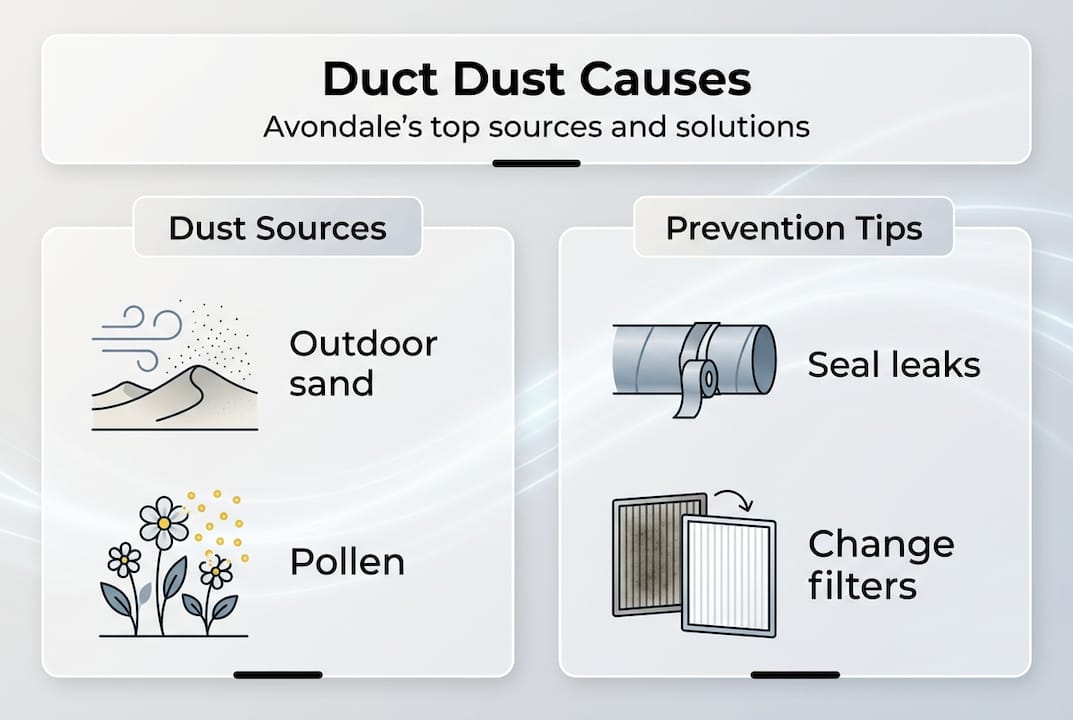
Outdoor sources add another layer of complexity, especially in Avondale. Desert pollen from mesquite, palo verde, and other native plants enters through windows, doors, and any gaps in your home's envelope. Fine soil particles kicked up by wind or tracked in on shoes settle into carpets and become airborne again. Construction dust from nearby building projects can infiltrate your home for weeks.
The composition of duct dust varies by season and household. Spring brings higher pollen counts. Summer dust storms coat everything in fine silt. Winter sees more indoor sources as windows stay closed. Pet owners deal with constant dander regardless of season. Using air filter replacement helps reduce the amount entering your ductwork, but no filter catches everything. Some particles are simply too small or slip past due to gaps around the filter frame.
Common indoor dust sources include:
- Human skin cells and hair
- Pet dander, fur, and tracked-in dirt
- Textile fibers from carpets, bedding, and clothing
- Food particles and cooking residue
- Paper dust from books and documents
Outdoor contributors specific to Avondale:
- Desert dust and fine soil particles
- Pollen from native plants and landscaping
- Construction and agricultural dust
- Vehicle exhaust particles
- Wildfire smoke during certain seasons
How leaky ductwork and poor filtration worsen dust buildup
Even with dust sources identified, your HVAC system should theoretically filter most particles before they settle in ducts. The problem is that many systems have two critical flaws: leaky ductwork and inadequate filtration. These issues don't just allow dust in. They actively pull it from the worst possible places.
Leaky ductwork allows 20 to 30% air loss and pulls in dusty air from unconditioned spaces like attics, especially problematic in Arizona's dusty climate. When your system runs, it creates negative pressure that sucks air through any gaps, holes, or poorly sealed joints. Attics in Avondale accumulate thick layers of dust from roof vents and construction gaps. Crawl spaces collect soil particles and outdoor debris. All of this unfiltered air gets drawn directly into your ductwork, bypassing your filter completely.
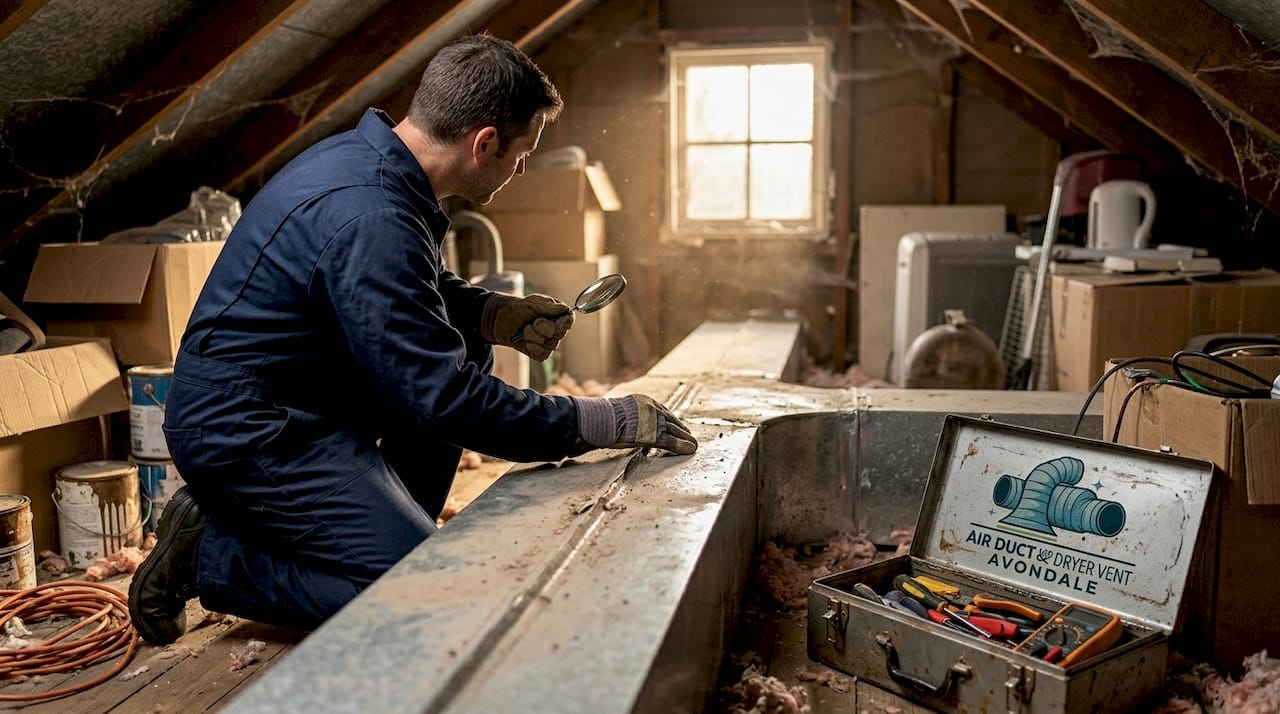
Arizona's environment makes this worse. Dust storms deposit fine particles that work their way into every crack. Construction projects throughout the valley generate clouds of concrete dust and soil that settle on roofs and infiltrate attics. Unlike humid climates where moisture helps particles clump and fall, our dry air keeps dust suspended and mobile. Getting air duct replacement services or following repair ductwork tips can eliminate these infiltration points.
Filtration quality matters enormously. Standard fiberglass filters with MERV ratings of 1 to 4 catch only the largest particles. They're designed to protect your equipment, not your air quality. Fine dust particles between 0.3 and 10 microns sail right through. MERV 11 filters reduce PM2.5 by 19%, MERV 14 by 39% compared to no filter. That difference translates directly to how much dust accumulates inside your ducts.
| MERV Rating | Particle Size Captured | PM2.5 Reduction | Best For |
|---|---|---|---|
| 1 to 4 | >10 microns | 0 to 5% | Basic equipment protection |
| 5 to 8 | 3 to 10 microns | 5 to 15% | Standard residential use |
| 9 to 12 | 1 to 3 microns | 15 to 35% | Better air quality, allergy sufferers |
| 13 to 16 | 0.3 to 1 microns | 35 to 50%+ | Superior filtration, health concerns |
Pro Tip: Seal duct leaks before upgrading to higher MERV filters. Leaks reduce system pressure, making it harder for your blower to pull air through denser filters. Fix the leaks first, then upgrade filtration for maximum dust reduction without straining your equipment.
The role of airflow and maintenance in dust accumulation
Even with sealed ducts and quality filters, dust can still accumulate if your system's airflow isn't properly maintained. The physics of how dust moves and settles inside ductwork depends heavily on air velocity and turbulence patterns. When airflow slows or becomes turbulent, particles drop out of the air stream and stick to duct surfaces.
Poor airflow from dirty filters and blockages causes particles to settle in ducts via turbulent deposition; dust recirculates when system runs. Think of it like a river. Fast-moving water carries sediment downstream. Slow-moving water allows sediment to settle on the bottom. Your ductwork works the same way. When air moves quickly and smoothly, it carries dust particles along and deposits them on your filter. When air slows down, especially in bends, joints, or areas with restricted flow, dust settles and accumulates.
Dirty or clogged filters are the primary cause of reduced airflow velocity. As filters load up with captured particles, they create more resistance to airflow. Your blower has to work harder to pull air through. Air velocity drops throughout the system. This slower air allows more particles to settle inside ducts rather than reaching the filter. It becomes a vicious cycle: dirty filter causes dust to settle, settled dust never reaches the filter to be captured, more dust accumulates.
Regular maintenance breaks this cycle. Changing filters on schedule maintains optimal airflow velocity. Clean filters allow your system to move air efficiently, keeping particles suspended until they reach the filter. Most residential systems need filter changes every 30 to 90 days depending on filter quality, household conditions, and HVAC usage. In Avondale, where systems run year-round and dust loads are higher, monthly checks are smart.
Blockages beyond the filter also matter. Closed or blocked supply registers restrict airflow in specific branches. Furniture or curtains covering return vents reduce overall system airflow. Crushed or kinked flex duct creates turbulence zones where dust settles. Even excessive dust buildup on the blower wheel itself reduces air movement efficiency. Getting air vent cleaning steps completed regularly keeps the entire airflow path clear.
The recirculation problem compounds everything. Once dust settles inside your ducts, it doesn't stay put forever. Every time your system runs, some of that settled dust gets stirred up and blown back into your living spaces. You clean your house, dust settles in the ducts, system runs, dust blows back out, you clean again. Without addressing the duct accumulation, you're fighting a losing battle.
Key maintenance actions to minimize dust settling:
- Check and replace filters monthly during peak use seasons
- Ensure all supply and return vents remain unobstructed
- Schedule professional blower cleaning if airflow seems weak
- Inspect flex duct runs for crushing or damage
- Monitor system runtime and cycling patterns for efficiency issues
Pro Tip: Install a filter pressure gauge or smart thermostat with filter monitoring. These tools alert you when filter resistance increases, so you can change filters based on actual conditions rather than arbitrary schedules. This prevents the airflow slowdowns that cause dust to settle.
Unique factors increasing dust buildup in Avondale, Arizona
Avondale's desert environment creates dust challenges that homeowners in other climates simply don't face. The combination of natural weather patterns, low humidity, and year-round HVAC demands means your ductwork accumulates dust faster and requires more frequent attention than national averages suggest.
Desert dust storms, low humidity, pollen, and constant HVAC use accelerate dust buildup; cleaning every 1 to 3 years recommended in AZ versus 3 to 5 years elsewhere. Haboobs, those massive dust storms that roll across the valley, deposit incredible amounts of fine particulate matter. Even with windows and doors closed, some of this dust infiltrates through any available gap. It coats roofs, fills attics, and gets pulled into ductwork through the infiltration points discussed earlier.
Low humidity keeps dust particles suspended in the air longer. In humid climates, moisture causes dust particles to clump together and fall to surfaces more quickly. This actually reduces the amount of airborne dust that HVAC systems pull in. Arizona's typical humidity levels of 10 to 30% mean particles stay airborne and available for your system to capture. The flip side is we avoid the mold and moisture problems that plague humid regions, but dust management requires more vigilance.
Pollen seasons add another organic dust component. Desert plants have adapted to spread pollen efficiently in dry conditions. Mesquite, palo verde, olive trees, and various grasses release pollen that travels far on dry winds. This pollen enters homes and HVAC systems just like other dust particles. For allergy sufferers, this means ductwork can harbor allergens that trigger symptoms even when outdoor pollen counts drop.
Constant HVAC use year-round means your system never gets a break. In climates with distinct seasons, HVAC systems might only run heavily for a few months per year. Your system cycles on and off constantly from April through October for cooling, then again from November through March for heating. More runtime means more air moved through ductwork, more opportunities for dust to be pulled in, and more accumulation over time. Understanding duct inspection benefits helps catch buildup before it becomes severe.
| Location | Recommended Cleaning Frequency | Primary Factors |
|---|---|---|
| Avondale, AZ | Every 1 to 3 years | Dust storms, low humidity, year-round HVAC use, desert pollen |
| National Average | Every 3 to 5 years | Moderate dust, seasonal HVAC use, varied humidity |
| Humid Climates | Every 3 to 5 years | Lower airborne dust, mold concerns, seasonal use |
Preventive actions tailored for Avondale conditions:
- Seal all duct leaks and gaps to prevent pulling in attic dust and storm debris
- Upgrade to MERV 11 or higher filters to capture fine desert dust particles
- Increase cleaning frequency to every 1 to 3 years based on household conditions
- Monitor and maintain indoor humidity between 30 to 50% to help particles settle
- Check ductwork after major dust storms for increased accumulation
- Consider whole-house air purification for additional particle removal
- Schedule inspections before peak cooling season to ensure system readiness
Keep your indoor air clean with expert duct cleaning in Avondale
Understanding what causes dust in your ductwork is the first step. Taking action to remove existing buildup and prevent future accumulation is where real improvements happen. Professional air duct cleaning services use specialized equipment to dislodge and extract accumulated dust that regular maintenance can't reach. This removes the source of recirculating particles and gives you a fresh start.
Combining professional cleaning with regular air filter replacement services creates a comprehensive approach. Clean ducts mean less dust to stir up. Quality filters prevent new dust from accumulating. If inspection reveals leaks or damage, air duct repair and replacement stops the infiltration of unfiltered dusty air from attics and outdoors. In Avondale's challenging environment, these services aren't luxuries. They're practical investments in your indoor air quality and system efficiency.
Frequently asked questions
What is the main cause of dust in air ducts?
Airborne particles from indoor sources like skin cells and pet dander combine with outdoor dust entering through leaks and inadequate filtration. Poor maintenance allows these particles to settle and accumulate inside ductwork over time.
How do duct leaks increase dust buildup?
Leaks create negative pressure that pulls unfiltered air from dusty attics and outdoor spaces directly into your ductwork, bypassing your filter completely. In Avondale, this means desert dust and construction particles enter your system constantly.
Do higher MERV filters really reduce duct dust?
Yes, significantly. MERV 11 filters reduce fine particle levels by 19% and MERV 14 by 39% compared to no filtration. Higher ratings capture more dust before it enters ductwork, though they require adequate airflow to work effectively.
Why does Avondale need more frequent duct cleaning?
Desert dust storms, low humidity that keeps particles airborne longer, heavy pollen seasons, and year-round HVAC use all accelerate dust accumulation. These factors make cleaning every 1 to 3 years necessary versus 3 to 5 years in other climates.
Can regular maintenance prevent dust from building up in ducts?
Regular filter changes and sealing leaks significantly reduce accumulation, but some buildup is inevitable over time. Combining monthly filter maintenance with professional cleaning every few years provides the best long-term dust control and air quality.