
TL;DR:
- Indoor air pollution in Avondale primarily comes from chemicals, biological contaminants, and combustion sources.
- Proper ventilation, source control, and regular HVAC maintenance are essential for improving indoor air quality.
- Addressing the root causes and proper building maintenance are more cost-effective than relying solely on air purifiers.
Your home might look spotless, but the air inside it could be working against you. Indoor air pollution is primarily caused by indoor sources that release gases or particles into the air, and most of them are completely invisible to the naked eye. In Avondale, where summers push temperatures past 110 degrees and dust storms roll through without warning, those sources tend to be more active and more concentrated than in cooler, wetter climates. This guide breaks down what's actually polluting your indoor air, why Avondale's desert environment makes it worse, and what you can do right now to protect your home or business.
Table of Contents
- Core sources of indoor air pollution
- The hidden role of ventilation and outdoor air
- Special threats: Combustion and soil gases
- Temperature and humidity: The overlooked factors
- Smart steps for Avondale: Reducing indoor air pollution
- A perspective you rarely hear: Fixing air quality isn't just about filters
- Breathe easier in Avondale with professional help
- Frequently asked questions
Key Takeaways
| Point | Details |
|---|---|
| Indoor sources dominate | Most indoor air pollution comes from materials, products, and activities inside your building. |
| Ventilation is vital | Proper airflow reduces accumulation of harmful indoor pollutants and brings in fresh air. |
| Special risks: combustion and radon | Appliances and soil gases like radon are invisible hazards that need targeted prevention. |
| Humidity and temperature matter | Moisture and warmth can increase pollutants and support mold if not managed. |
| Act locally for healthier air | Source control, routine maintenance, and professional help are the most reliable ways to improve Avondale indoor air. |
Core sources of indoor air pollution
Now that you understand that invisible hazards may lurk even in spotless rooms, let's break down what actually puts pollutants in your indoor air.
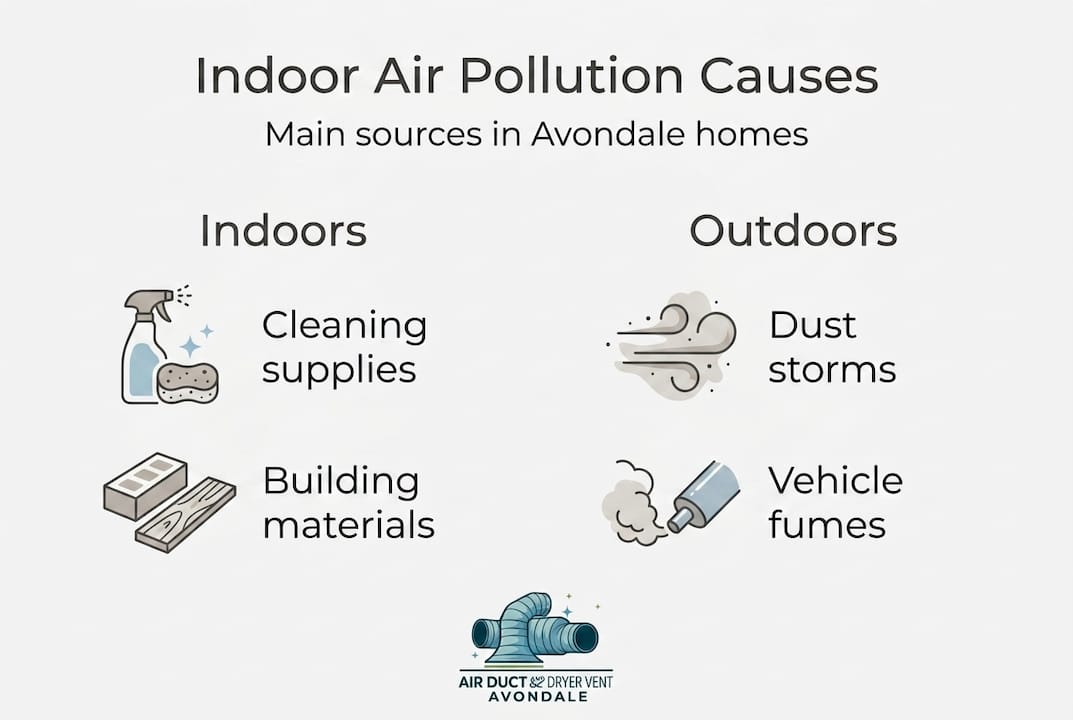
The most common culprits fall into two broad categories: chemical sources and biological sources. Both are present in virtually every home and commercial space in Avondale, and both can build up to harmful levels over time, especially in tightly sealed buildings.
Chemical sources are everywhere, and most people walk right past them every day without a second thought:
- Building materials and furnishings. Pressed wood products, carpeting, and vinyl flooring release formaldehyde and other volatile organic compounds (VOCs) into the air. New furniture is especially active during the first several months after purchase.
- Paints and finishes. Many interior paints, varnishes, and adhesives off-gas for weeks or months after application. Oil-based products are the most aggressive, but even water-based options can contribute.
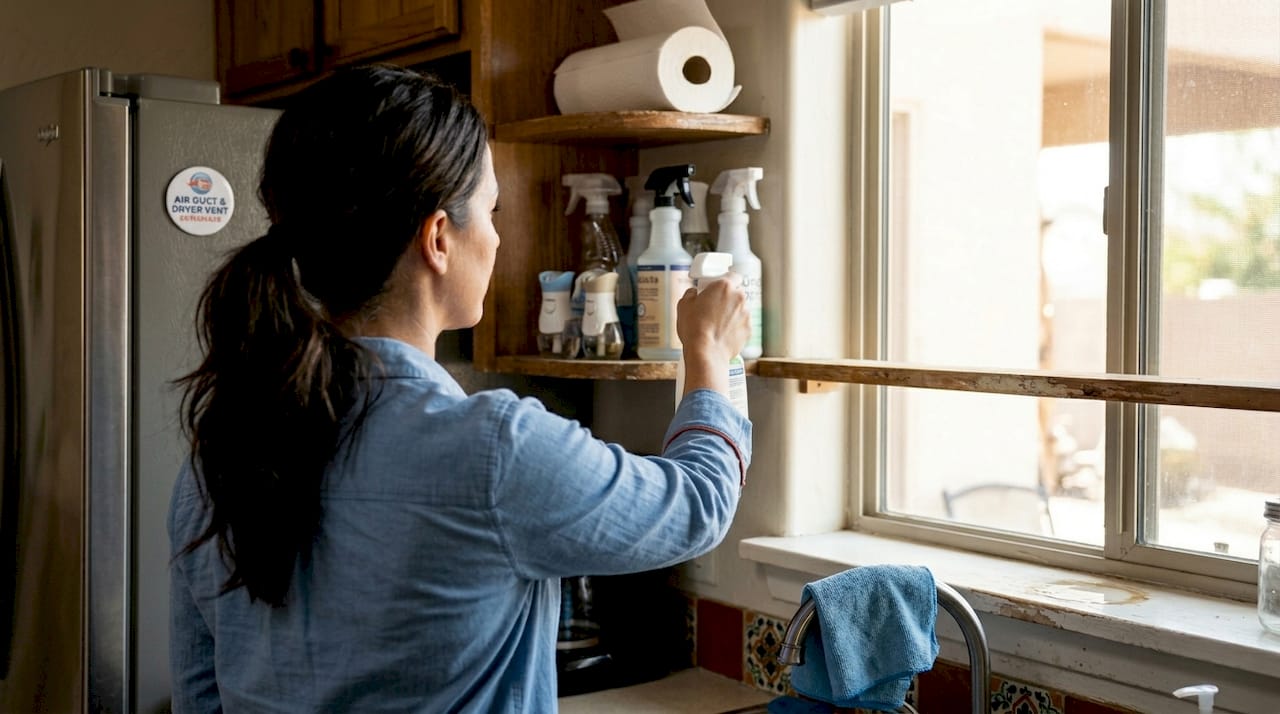
- Household cleaning products. Spray cleaners, disinfectants, and aerosol air fresheners release a cocktail of chemicals including ammonia, chlorine compounds, and synthetic fragrances. The irony? The products you use to make your home feel fresh are often making your air worse.
- Personal care products. Hairsprays, nail polish removers, and perfumes all add VOCs to the air every time they're used.
- Combustion appliances. Gas stoves, fireplaces, wood-burning heaters, and tobacco smoke generate carbon monoxide, nitrogen dioxide, and fine particulate matter. These are among the fastest-acting indoor air hazards.
Biological sources are just as widespread and often harder to eliminate:
- Mold and mildew. These grow wherever moisture is present, including inside air ducts, behind walls, and under flooring. Even Arizona's dry climate doesn't make you immune, because air conditioning systems create condensation.
- Pet dander. Tiny flakes of skin shed by cats, dogs, and other animals circulate through the air and settle into ductwork, carpets, and upholstery.
- Dust mites. These microscopic creatures thrive in bedding, carpets, and upholstered furniture. Their waste particles are among the most potent triggers for asthma and allergies.
- Pollen. In Avondale, spring and fall bring significant pollen counts from desert plants and grasses. It enters through doors, windows, and the ventilation system.
Common indoor sources include building materials, furnishings, household products that emit chemicals, and biological contaminants like mold, dust mites, and pet dander. Getting your air vent cleaning done regularly prevents biological contaminants from recirculating every time your HVAC system runs. If you've recently completed construction or remodeling work, it's also essential to clean vents after renovation to remove the debris and chemical residue left behind.
| Source type | Examples | Primary pollutants |
|---|---|---|
| Chemical | Paints, cleaning products, pressed wood | VOCs, formaldehyde, ammonia |
| Biological | Mold, pet dander, dust mites, pollen | Allergens, mycotoxins, bacteria |
| Combustion | Gas stoves, fireplaces, tobacco | CO, NO2, fine particulates |
| Soil gases | Radon, other ground gases | Radon-222, trace gases |
Pro Tip: Before investing in an air purifier, focus on removing or reducing the actual pollution source. Cleaning products, old carpeting, or a poorly maintained combustion appliance create far more pollutants than any portable air cleaner can handle on its own.
The hidden role of ventilation and outdoor air
While source control is critical, how you move air in and out of your space also plays a huge role.
Inadequate ventilation is a major driver of higher indoor pollutant levels because it allows pollutants to accumulate rather than dilute and escape. Simply put, when fresh outdoor air can't get in and stale indoor air can't get out, everything you release into that space stays there.
There are two main types of ventilation working in your building at any given time:
| Ventilation type | How it works | Avondale consideration |
|---|---|---|
| Natural | Open windows, doors, and passive vents | Dust storms and extreme heat make this risky seasonally |
| Mechanical | HVAC systems, exhaust fans, ERVs | Requires regular maintenance to stay effective |
| Infiltration | Uncontrolled air entry through cracks and gaps | Can introduce soil gases, dust, and outdoor pollutants |
In Avondale's climate, most residents and business owners keep their buildings sealed tight for about six months out of the year because of the heat. That's understandable. But it also means your HVAC system becomes your only real source of fresh air exchange. When ductwork is dirty or filters are clogged, the system can't do its job, and pollutants pile up fast.
"Inadequate ventilation — meaning too little outdoor air exchange and poor exhaust to remove indoor pollutants — is one of the primary reasons indoor pollution levels can reach two to five times higher than outdoor levels." — EPA: Introduction to Indoor Air Quality
Outdoor air isn't always clean either. Outdoor pollutants like smoke and vehicle emissions can enter your building through vents, cracks, and gaps, raising indoor levels significantly. In Avondale and across the Phoenix metro, this is especially relevant during haboob (dust storm) season and during periods of poor regional air quality linked to wildfire smoke drifting in from California or northern Arizona. A dust storm can deposit fine particulate matter throughout your ductwork in a single event.
Pro Tip: Check your HVAC filter after every major dust storm, not just on a scheduled basis. A filter that would normally last three months may be completely clogged after one severe storm. Swapping it out immediately protects both your system and your air quality. You can also schedule duct cleaning seasonally to clear out what filters miss.
Special threats: Combustion and soil gases
Beyond general sources and ventilation, some hidden hazards need special attention, particularly in a desert city like Avondale.
Combustion appliances including stoves, fireplaces, wood and coal heating, and tobacco smoke are major indoor pollution sources. They generate pollutants like carbon monoxide and particulate matter that can reach dangerous concentrations quickly in a poorly ventilated space.
Carbon monoxide (CO) is the most immediately dangerous. It's colorless and odorless, and even low-level exposure causes headaches, dizziness, and fatigue. At higher concentrations, it's fatal. Gas stoves are a particularly common source, especially in older homes where range hoods aren't vented to the outside. Even "clean-burning" natural gas produces measurable amounts of CO and nitrogen dioxide during normal use.
The radon issue in Avondale
Radon gets less attention than CO, but it carries its own serious risk. Soil gases including radon can enter homes through building cracks and gaps, and they represent a significant indoor air pollution source. Radon is a naturally occurring radioactive gas that forms from the breakdown of uranium in soil and rock. It seeps up through the ground and enters buildings wherever there are openings, including foundation cracks, utility penetrations, and sump pits.
Many Avondale residents assume they don't need to worry about radon because Arizona isn't a traditionally high-radon state. That's partly true, but individual properties vary enormously depending on local soil composition. The only way to know your radon levels is to test.
Here's a practical prevention checklist for managing combustion and soil gas risks in your Avondale home or business:
- Install carbon monoxide detectors on every floor, especially near sleeping areas and combustion appliances. Replace batteries annually and replace the units every five to seven years.
- Have gas appliances inspected by a licensed technician at least once a year. A cracked heat exchanger or misaligned burner can dramatically increase CO output.
- Ensure your range hood vents outside. Recirculating hoods with charcoal filters help with odors but do nothing to remove combustion gases.
- Test for radon. Long-term radon tests are inexpensive and available at most hardware stores. If results come back above 4 pCi/L (the EPA action level), consult a mitigation professional.
- Seal foundation cracks and utility penetrations. This reduces both radon infiltration and general soil gas entry.
- Inspect your fireplace and chimney before each heating season. A blocked or cracked flue can send combustion byproducts back into your living space.
Noticing more dust buildup, musty smells, or unexplained allergy symptoms? These are common signs you need duct cleaning and shouldn't be ignored, especially after running combustion appliances heavily through winter.
Temperature and humidity: The overlooked factors
Besides obvious polluters, even the climate inside your building affects air quality in subtle and fixable ways.
Temperature and humidity can increase concentrations of some pollutants and promote moisture-related problems such as mold. This is a fact that most Avondale homeowners don't fully appreciate because the desert climate makes humidity feel like a non-issue. It's not.
Here's the reality: your air conditioning system removes heat but also pulls moisture out of the air. That moisture has to go somewhere, and in a system with even minor maintenance issues, it can collect inside ductwork, air handlers, and drain pans. Those damp environments become prime breeding grounds for mold and bacteria, which then circulate through your entire building every time the system runs.
High indoor temperatures accelerate the off-gassing of VOCs from building materials, furniture, and flooring. A room that reaches 85 or 90 degrees because the AC is struggling will release more formaldehyde from pressed wood furniture than the same room kept at 72 degrees. This is particularly relevant during Avondale's monsoon season (July through September), when outdoor humidity spikes and home cooling systems work overtime.
How humidity affects biological pollutants:
- Mold growth becomes active above 60 percent relative humidity and grows aggressively above 70 percent
- Dust mite populations thrive between 70 and 80 percent relative humidity, and they die off significantly below 50 percent
- Bacteria in air handling systems multiply faster in warm, humid conditions
- High humidity causes pollen and dust particles to swell and settle more slowly, extending their airborne time
Practical humidity management tips for Avondale:
- Keep indoor relative humidity between 30 and 50 percent year-round
- During monsoon season, use your HVAC fan to actively circulate and dehumidify air
- Check condensate drain lines on your air conditioner every spring before the cooling season begins
- If you notice standing water near your air handler or a persistent musty smell, schedule an inspection immediately
- Use bathroom and kitchen exhaust fans consistently to remove moisture at the source
Pro Tip: A basic digital hygrometer costs less than $15 and tells you the relative humidity in any room. Check your bedroom and any room with visible HVAC registers. If any room consistently reads above 55 percent during summer, your system may need service. Regular HVAC cleaning services help ensure moisture isn't accumulating inside your system where it can't be seen.
Smart steps for Avondale: Reducing indoor air pollution
After identifying the causes, it's time for actionable, Avondale-specific steps to make your indoor air safer.
The EPA is clear that source control followed by ventilation is the most effective approach for improving indoor air quality, with filtration as a supplemental measure. That hierarchy matters because it tells you where to focus your energy and money first.
Here's a practical action sequence for Avondale homeowners and small business owners:
- Remove or reduce pollution sources. Swap VOC-heavy cleaning products for low-VOC or fragrance-free alternatives. Replace old pressed wood furniture with solid wood or formaldehyde-free options when possible. If you smoke, do it exclusively outside and away from doors and windows.
- Improve ventilation strategically. On mild days in the early morning (typically in spring or fall), open windows and doors for 20 to 30 minutes to flush indoor air. Run bathroom and kitchen exhaust fans longer than you think you need to.
- Maintain your HVAC system. Change air filters on schedule, ideally monthly during heavy use seasons. Have your system inspected professionally before each cooling and heating season.
- Clean your ductwork regularly. Regular air duct cleaning removes accumulated dust, allergens, mold spores, and debris that filters can't catch once they're already inside the system.
- Monitor humidity and temperature. Keep a hygrometer in key rooms and take action when readings climb above 55 percent.
- Test for radon. Spend $15 to $30 on a test kit and check your results. It takes three to six months for an accurate long-term reading, but the peace of mind is worth it.
- Consider air quality testing. If you've tried the above steps and still notice symptoms or unexplained odors, a professional air quality test can identify specific pollutants so you can target them directly.
Before spending several hundred dollars on high-end air purifiers, consider whether you've addressed the steps above. Many Avondale homeowners who assume they need expensive gadgets are surprised to discover that cleaning their ducts and swapping cleaning products makes a dramatic difference. If you're weighing the DIY route, learn what DIY duct cleaning actually involves before deciding whether to hire out.
Pro Tip: Don't rely on CO2 (carbon dioxide) levels alone as your measure of overall indoor air quality. CO2 tells you how well the space is ventilated for human occupancy, but it tells you nothing about VOCs, mold spores, radon, or particulates. True indoor air quality involves many factors beyond a single measurement.
A perspective you rarely hear: Fixing air quality isn't just about filters
The air quality industry loves to sell gadgets. HEPA purifiers, UV sterilizers, ionizers, smart monitors with mobile apps, the market is packed with technology that promises to solve your indoor air problems with a one-time purchase or a monthly subscription. Many of these products work to some degree. But they're treating symptoms, not causes.
Here's the pattern we see repeatedly in Avondale: a homeowner notices allergy symptoms getting worse. They buy a high-end air purifier. Symptoms improve slightly but never fully resolve. The real problem, a moldy section of ductwork or a gas range with a poorly calibrated burner, keeps pumping pollutants into the space faster than any filter can handle them.
Air purifiers are valuable. We use them and recommend them. But a HEPA filter placed downstream of a contaminated air duct is like mopping the floor while the faucet is still running. Indoor CO2 measures ventilation context but does not provide an overall indication of air quality because IAQ is affected by multiple factors beyond CO2 levels, as ASHRAE notes. The same logic applies to single-parameter gadgets of all kinds.
The most effective and cost-efficient path to cleaner air almost always involves the unglamorous basics: reducing pollution sources, getting your ductwork cleaned, keeping your HVAC system in proper working order, and understanding how Avondale's specific climate (the dust, the heat, the monsoon humidity) interacts with your building. A properly maintained HVAC system does more for your air than most air purifiers ever will, and the connection between HVAC systems and air quality is worth understanding before you invest in anything else.
The uncomfortable truth is that healthy indoor air in Avondale is mostly a maintenance story, not a technology story. Regular cleaning, seasonal checks, and sensible product choices deliver more consistent results than any device you plug into the wall. That's not the exciting answer, but it's the right one.
Breathe easier in Avondale with professional help
Understanding what pollutes your indoor air is the first step. Acting on it is what actually protects your family or your team.
At Air Duct and Dryer Vent Cleaning Avondale, we help homeowners and small business owners across Avondale identify and address the real sources of indoor air pollution through targeted cleaning and maintenance services. Our professional air vent cleaning removes the biological and chemical contaminants that build up inside your ductwork over time. If you want to understand exactly what's in your air before deciding on a solution, our air quality test gives you a clear picture with specific pollutant readings. For a complete approach, explore our full-service HVAC cleaning options, including flexible scheduling and after-hours availability designed for busy Avondale households and businesses.
Frequently asked questions
What are the top three causes of indoor air pollution in Avondale homes?
The main causes are emissions from building materials and household products, poor ventilation that traps pollutants indoors, and indoor activities like cooking or burning fuels that release combustion byproducts.
How can I tell if my building has poor indoor air quality?
Common signs include stuffy or stale-smelling air, musty odors, increased dust on surfaces, and occupants experiencing headaches or allergy symptoms that improve when they leave the building. Inadequate ventilation is often the root cause of these symptoms.
Does outdoor air pollution affect my indoor air in Arizona?
Yes, outdoor pollutants like dust, wildfire smoke, and vehicle emissions can enter your building through windows, doors, gaps, and your ventilation system, raising indoor pollutant levels significantly during poor air quality events.
Should I worry about radon in Avondale?
Radon is possible anywhere in Arizona because soil gases enter through cracks and foundation gaps regardless of climate or geography. The EPA recommends testing every home since radon levels vary by property, not just by region.
Is using an air purifier enough to protect indoor air quality?
Air purifiers help, but source control and ventilation are more effective first steps. Removing the pollution source and improving air exchange reduces pollutants at the origin rather than trying to capture them after they've already spread through your space.