
TL;DR:
- Common area duct cleaning involves removing dust, mold, and contaminants from shared HVAC systems in commercial buildings. It is necessary when there is mold, vermin, excessive debris, or post-renovation dust, and is recommended every 1–3 years in high-traffic areas. Proper maintenance includes inspection, full-system cleaning, and duct sealing to ensure indoor air quality and system efficiency.
Common area duct cleaning is the professional removal of dust, debris, mold, and contaminants from shared HVAC ductwork in commercial buildings, apartment complexes, and multi-family properties. The industry standard term is "commercial HVAC source removal," and it covers far more than just the ducts. Registers, coils, fans, and air handlers all require attention to prevent re-contamination. The EPA and NADCA (National Air Duct Cleaners Association) both recognize this process as the correct response to confirmed contamination, not a routine calendar event. For facility managers and building owners, understanding this distinction is the difference between spending money wisely and wasting it.
What is common area duct cleaning and how does it work?
Common area duct cleaning targets the shared HVAC ductwork that serves lobbies, hallways, fitness centers, laundry rooms, and other spaces used by multiple occupants. These systems accumulate contaminants faster than residential ducts because they run continuously and handle higher volumes of foot traffic and airborne particles. Shared commercial HVAC systems operate with high airflow volumes, making duct cleanliness critical to system longevity and indoor air quality.
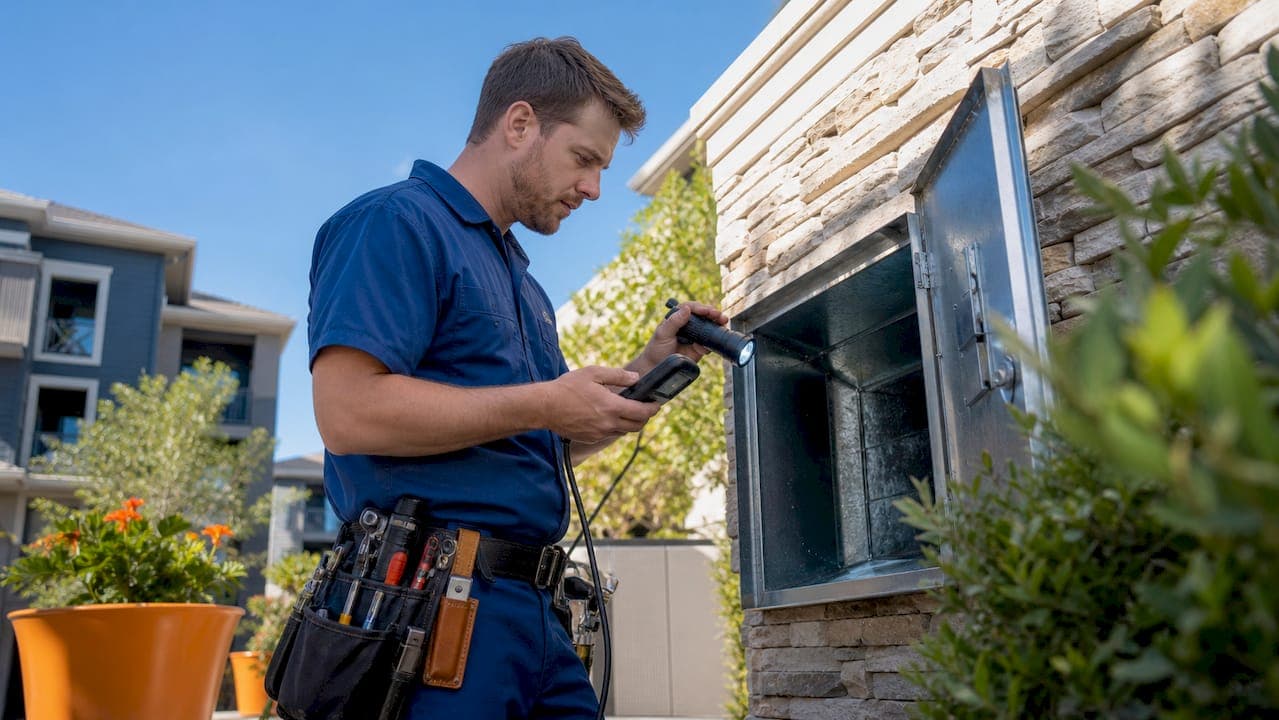
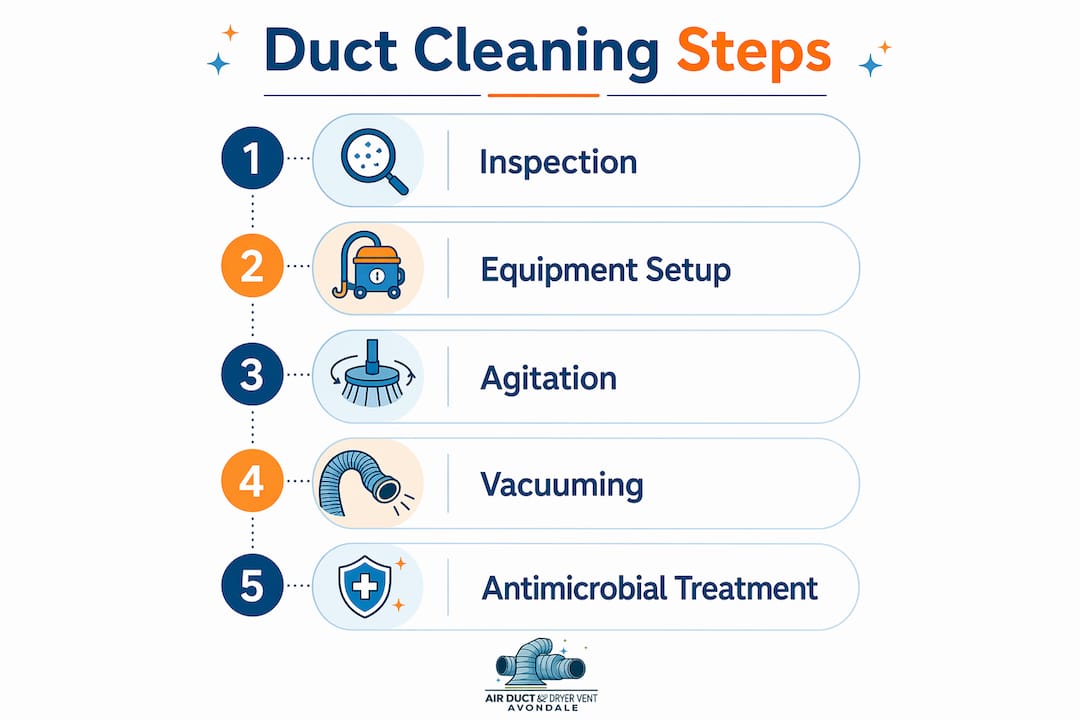
The process begins with a full inspection to confirm contamination before any equipment is deployed. A technician maps the supply and return duct network, identifies problem zones, and documents findings. This step prevents unnecessary cleaning and gives building managers a clear picture of what they are paying for.
The equipment professionals use
Qualified technicians use high-powered negative air pressure vacuum systems to create a contained environment inside the ductwork. This negative pressure pulls loosened debris toward the collection unit rather than allowing it to escape into occupied spaces. Negative air pressure vacuuming combined with agitation tools improves airflow by up to 46%.
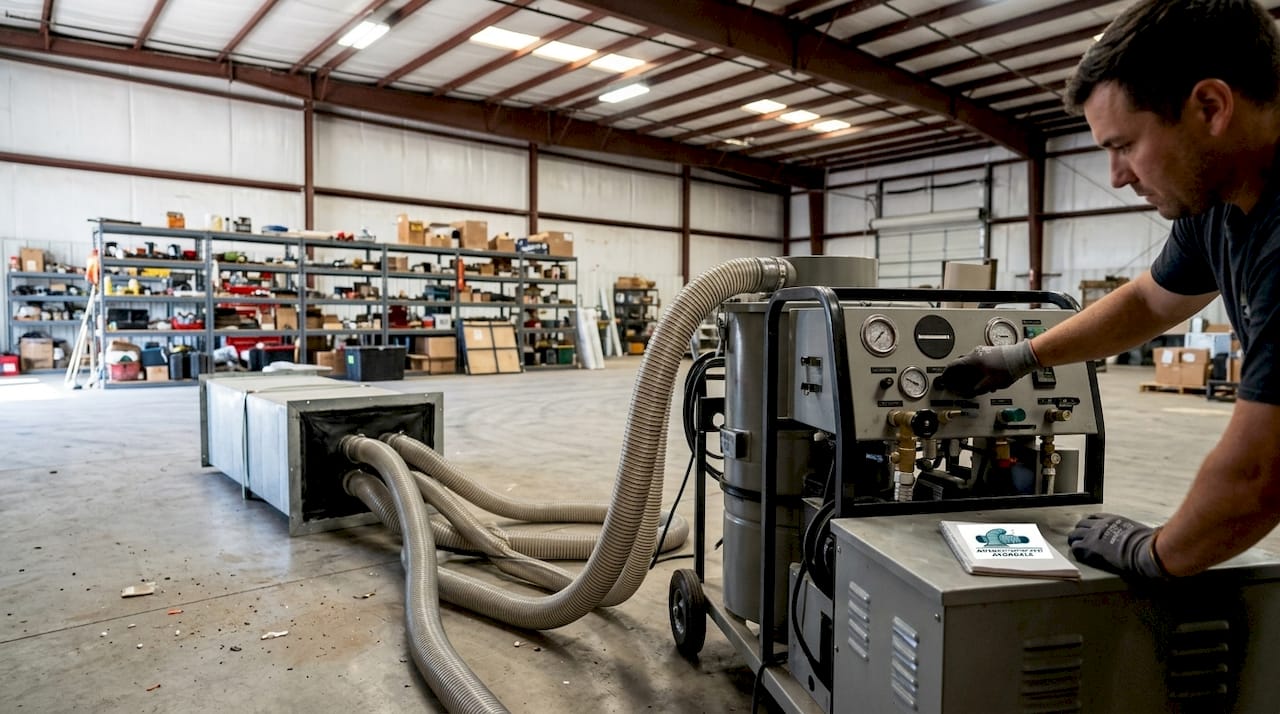
Mechanical agitation tools do the heavy lifting. Rotary brushes scrub duct walls, while air whips and pneumatic tools dislodge compacted debris. HEPA-filtered collection systems capture particles as small as 0.3 microns, protecting building occupants from cross-contamination during the process. NADCA standards require cleaning the entire HVAC system, including supply and return ducts, air handler components, coils, and fans.
The process often ends with optional antimicrobial treatments to inhibit mold or bacterial regrowth. Antimicrobial treatments should only be applied after contamination is confirmed and the source issue is resolved. Applying them without addressing the root cause is a short-term fix that wastes money.
Pro Tip: Ask any service provider for their NADCA certification before scheduling. Certified technicians follow documented protocols for full-system cleaning, not just duct vacuuming.
When and why is common area duct cleaning necessary?
The EPA does not recommend routine, calendar-based duct cleaning. Instead, the agency identifies specific triggers that justify the service. Knowing these triggers saves building managers from unnecessary expense and helps them act decisively when a real problem exists.
The four primary conditions that warrant cleaning are:
- Visible mold growth inside ducts or on HVAC components. Mold spreads through airflow and poses direct health risks to occupants.
- Vermin infestation. Rodent or insect activity inside ductwork leaves behind debris, droppings, and pathogens that contaminate the air supply.
- Excessive dust or debris. When dust visibly discharges from supply registers during normal operation, the system requires cleaning.
- Post-construction or post-renovation contamination. Major renovations generate fine dust that penetrates ductwork despite temporary barriers, and mechanical brushing combined with compressed air methods reduces construction dust deposits by up to 99%.
Common areas like lobbies and fitness centers see more frequent duct servicing because of constant air exposure and foot traffic. Industry guidance in 2026 recommends cleaning common area ductwork in multi-family buildings every 1–3 years, compared to every 3–5 years for individual residential units.
High-traffic common areas accumulate contaminants faster than any residential system. A lobby HVAC unit running 24 hours a day pulls in far more particulate matter than a bedroom unit running eight hours a day. Higher occupancy in shared spaces demands more frequent cleaning to maintain system performance and indoor air quality.
Neglecting common area ducts creates three compounding problems. Air quality deteriorates, which affects tenant health and satisfaction. System efficiency drops as restricted airflow forces the HVAC unit to work harder. Regulatory compliance becomes a risk, particularly in jurisdictions where fire damper inspections and HVAC maintenance are legally required. Common property HVAC components often fall under fire safety codes, making duct cleaning part of compliance, not just aesthetics.
What are the benefits and limitations of duct cleaning in common areas?
Duct cleaning delivers real benefits when applied to confirmed contamination. It removes allergens, odors, and microbial contaminants that degrade air quality for every occupant sharing the system. The table below separates what cleaning reliably achieves from what it cannot do on its own.
| What duct cleaning does | What duct cleaning does not do |
|---|---|
| Removes accumulated dust, debris, and allergens | Replace regular filter changes |
| Reduces mold and bacterial contamination | Fix underlying leaks or system faults |
| Improves airflow in restricted duct sections | Guarantee long-term air quality without follow-up maintenance |
| Eliminates odors caused by organic buildup | Substitute for coil and fan cleaning |
| Supports regulatory compliance in commercial buildings | Provide energy savings without duct sealing |
Energy savings are a common selling point, but the reality is more specific. Duct sealing addresses 20–30% energy loss in HVAC systems, and cleaning alone does not capture those savings. Sealing and cleaning together produce measurable efficiency gains. Cleaning without sealing risks immediate re-contamination through the same leaks that caused the problem.
Changing filters every 1–3 months and sealing ducts are far more cost-effective for ongoing air quality than duct cleaning alone. Duct cleaning targets confirmed contamination. Filter replacement and sealing prevent contamination from building up in the first place.
Pro Tip: Schedule a duct inspection before committing to a full cleaning. An inspection confirms whether contamination is present and prevents spending on a service the system does not yet need.
Duct cleaning effectiveness depends on integrating it within a comprehensive HVAC maintenance program rather than treating it as a standalone fix. Cleaning coils and fans alongside ducts prevents the cleaned ductwork from being re-contaminated by dirty components downstream.
How does common area duct cleaning differ from residential duct cleaning?
The core process is similar, but the scale, frequency, and regulatory context are entirely different. Understanding these differences helps building managers set realistic expectations and budget appropriately.
Key differences between common area and residential duct cleaning:
- System operation. Common area HVAC systems often run 24 hours a day with variable or constant volume setups. Residential systems cycle on and off based on occupant demand. Continuous operation accelerates debris accumulation in shared systems.
- Cleaning frequency. Common areas require service every 1–3 years. Individual residential units typically need attention every 3–5 years or during tenant turnover.
- Regulatory requirements. Commercial and multi-family buildings face compliance obligations that residential properties do not. Fire damper inspections, indoor air quality standards, and local building codes all create mandatory maintenance timelines.
- Coordination complexity. Cleaning a residential duct system requires one household's cooperation. Cleaning a shared system requires scheduling around tenant activity, building operations, and sometimes local authority notifications.
- Equipment scale. Commercial jobs use larger vacuum units, longer hose runs, and more agitation tools to cover extensive duct networks efficiently.
| Factor | Common area ducts | Residential ducts |
|---|---|---|
| System operation | Continuous, 24/7 | Intermittent |
| Cleaning frequency | Every 1–3 years | Every 3–5 years |
| Regulatory oversight | High (fire codes, IAQ standards) | Low |
| Service complexity | High (multi-zone, large networks) | Moderate |
| Coordination required | Tenants, building management | Single household |
Proper maintenance in common areas is an investment in longevity and compliance, often required by regulations covering fire damper inspections. Residential cleaning is largely discretionary. Commercial cleaning frequently is not.
You can spot key signs that a shared system needs attention before contamination becomes severe. Visible dust discharge, persistent odors in common areas, and unexplained spikes in HVAC energy consumption all indicate the system warrants inspection.
Key Takeaways
Common area duct cleaning delivers its greatest value when applied to confirmed contamination and integrated with full HVAC maintenance, not used as a routine calendar service.
| Point | Details |
|---|---|
| Source removal, not routine cleaning | The EPA recommends cleaning only when mold, vermin, excess debris, or post-renovation contamination is confirmed. |
| Frequency differs by building type | Common area ducts need service every 1–3 years; residential ducts typically every 3–5 years. |
| Full-system cleaning matters | NADCA standards require cleaning coils, fans, and air handlers alongside ductwork to prevent re-contamination. |
| Sealing amplifies cleaning benefits | Duct leaks account for 20–30% of energy loss; sealing ducts alongside cleaning produces real efficiency gains. |
| Filter changes are the frontline defense | Replacing filters every 1–3 months is more cost-effective for ongoing air quality than frequent duct cleaning alone. |
What I've learned from watching buildings skip the inspection step
The most common mistake I see facility managers make is scheduling a duct cleaning without first confirming contamination is present. They call because a tenant complained about dust or odors, and the instinct is to act fast. That instinct is right. The execution is often wrong.
Cleaning ducts that are not actually contaminated wastes budget and delays the real fix. Dirty coils, failing filters, or duct leaks cause most of the symptoms that get blamed on dirty ducts. Dirty ducts often indicate systemic HVAC issues like poor filtration or leaks, and addressing those issues is more impactful than cleaning ducts alone.
My strong advice: require a written inspection report before authorizing any cleaning work. A qualified technician should document what they found, where they found it, and why cleaning is the appropriate response. If a provider skips this step and goes straight to quoting a cleaning job, that is a red flag.
NADCA certification matters more than price. Certified providers follow a documented process that covers the full system, not just the accessible duct sections. Cheaper providers often clean only what is easy to reach, which leaves contamination in place and gives building managers a false sense of security.
Proactive maintenance planning beats reactive cleaning every time. Map your building's HVAC zones, track filter replacement dates, and schedule inspections on a fixed calendar. When contamination does appear, you will have the documentation to act quickly and the relationship with a trusted provider to get it done right.
— Shaun
Professional common area air duct services for Avondale buildings
Building managers in Avondale, Arizona, who need a qualified team for shared-space HVAC maintenance have a direct option available.
Airanddryerventcleaningavondale provides commercial air duct cleaning for multi-family and commercial properties, using high-powered negative air pressure systems and HEPA-filtered collection that meets NADCA standards. The team also handles dryer vent cleaning, air quality testing, and air filter replacement, so building managers can address the full scope of indoor air quality maintenance in one scheduled visit. Flexible scheduling, including after-hours options, keeps disruption to tenants minimal. Contact Airanddryerventcleaningavondale to schedule an inspection and get a maintenance plan built around your building's specific occupancy, use, and system age.
FAQ
What does common area duct cleaning include?
Common area duct cleaning covers supply and return ducts, registers, air handler components, coils, and fans in shared building spaces. NADCA standards require full-system cleaning, not just duct vacuuming, to prevent re-contamination.
How often should common area ducts be cleaned?
Industry guidance recommends cleaning common area ductwork every 1–3 years, depending on occupancy levels and environmental conditions. Individual residential units typically require cleaning every 3–5 years.
Does duct cleaning improve energy efficiency?
Duct cleaning alone produces limited energy savings. Combining cleaning with duct sealing addresses the 20–30% energy loss caused by duct leaks and delivers measurable efficiency improvements.
When is common area duct cleaning required by law?
Commercial and multi-family buildings often face mandatory HVAC maintenance timelines under fire safety codes and local building regulations, including fire damper inspections. Requirements vary by jurisdiction, so building managers should confirm local compliance obligations.
What is the difference between duct cleaning and duct sealing?
Duct cleaning removes accumulated contaminants from inside the ductwork. Duct sealing closes gaps and leaks that allow conditioned air to escape and outside contaminants to enter. Both services work best when performed together.