
TL;DR:
- HVAC sanitizing is recommended only after mold, water damage, or pest infestations occur.
- Proper sanitizing requires prior cleaning, inspection, and using EPA-registered antimicrobial agents.
- Regular duct cleaning and moisture control are more effective for air quality than routine chemical sanitizing.
Most Avondale homeowners assume that getting their HVAC system "sanitized" is something they should do every year, like a tune-up. That assumption is understandable, but it's not quite right. The EPA notes that HVAC sanitizing is only recommended after specific problems like mold growth, vermin infestation, or water damage, not as a standard maintenance step. In this article, we'll walk you through exactly what HVAC sanitizing is, how it works, when it's genuinely useful, and when you're better off skipping it. We'll also cover the real risks of doing it wrong, the methods professionals use, and how to find the right service provider for your home or business in Avondale.
Table of Contents
- What is HVAC sanitizing and how does it work?
- When is HVAC sanitizing needed, and when isn't it?
- Common HVAC sanitizing methods and how they're performed
- Limitations, risks, and myths about HVAC sanitizing
- Our take: What most Avondale residents get wrong about HVAC sanitizing
- Improve your air quality with trusted local HVAC experts
- Frequently asked questions
Key Takeaways
| Point | Details |
|---|---|
| Sanitizing defined | HVAC sanitizing uses EPA-approved antimicrobials after cleaning to target microbes on ducts, not as a routine procedure. |
| When to sanitize | Only sanitize HVAC systems after mold, pests, water damage, or stubborn odors—regular cleaning and moisture control are usually enough. |
| Professional help matters | DIY sanitizing can be dangerous and ineffective; always hire certified pros for the job. |
| Avondale benefits | The hot, dry Arizona climate helps some sanitizing methods work better, but proper cleaning is still key for indoor air quality. |
What is HVAC sanitizing and how does it work?
Now that we've challenged some common assumptions, let's clarify exactly what HVAC sanitizing is and how it fits into air system maintenance.
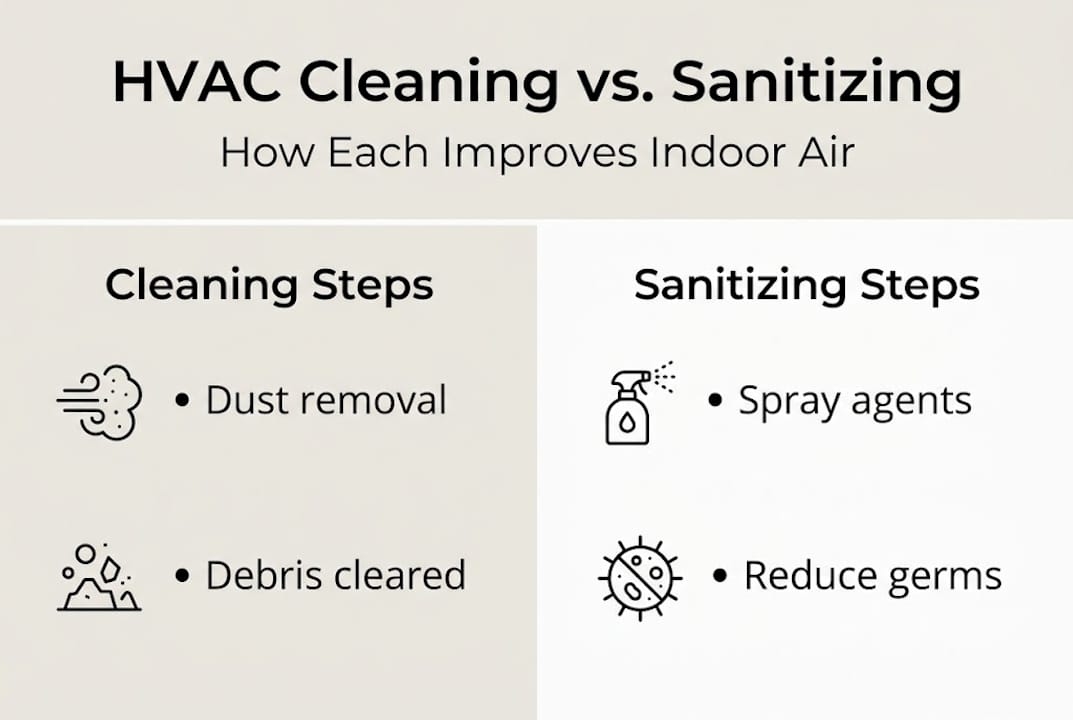
HVAC sanitizing is not the same as HVAC cleaning. Cleaning removes physical debris, dust, and buildup from inside your ducts and system components. Sanitizing comes after that step. It means applying an EPA-registered chemical agent to the interior surfaces of your ductwork to reduce bacteria, mold spores, and viruses that may remain even after a thorough cleaning.
The key word here is "surfaces." Sanitizing treats the walls of your ducts, not the air flowing through them. If your ducts haven't been cleaned first, applying a sanitizing agent is like spraying disinfectant on a dirty countertop without wiping it down. The agent can't reach what's buried under the grime.
HVAC sanitizing uses EPA-registered antimicrobial agents to reduce bacteria and mold on duct surfaces. When done correctly, these agents can kill 99.9% of bacteria on treated surfaces post-cleaning. That's a meaningful result, but only when the process is executed in the right order and with the right products.
It's also worth understanding the legal difference between "sanitizing" and "disinfecting." Sanitizing reduces microbial levels to a safe threshold defined by public health standards. Disinfecting eliminates a higher percentage of pathogens. HVAC professionals use the term "sanitizing" because the interior of ductwork is a porous, complex environment where achieving full disinfection is rarely possible or necessary.
For commercial spaces, this distinction matters even more. A restaurant or medical office has different contamination risks than a single-family home. That's why commercial air duct cleaning often involves a more detailed assessment before any chemical treatment is considered.
Key steps in a proper HVAC sanitizing process:
- Step 1: Full duct cleaning. Remove all dust, debris, and biological material using professional-grade vacuum equipment and brushes.
- Step 2: Inspection. Confirm that the source of contamination (mold, moisture, pests) has been addressed before applying any agent.
- Step 3: Apply the antimicrobial agent. Use an EPA-registered product via fogging, misting, or spraying, depending on the duct type and layout.
- Step 4: Allow dwell time. The agent must remain in contact with surfaces for a set period, typically 5 to 20 minutes, to be effective.
- Step 5: Restore system operation. Verify that no residue remains in the airstream before turning the system back on.
The antimicrobial efficacy of these agents depends heavily on proper application. If you skip cleaning first or use the wrong product for your duct material, you won't get the results you're expecting. This is why pairing sanitizing with full HVAC cleaning services is the only approach that actually delivers measurable improvements.
When is HVAC sanitizing needed, and when isn't it?
After understanding what HVAC sanitizing does, it's important to know when it's actually needed, and just as crucial, when it's not.
Here's the honest answer: most homes in Avondale don't need HVAC sanitizing on a regular schedule. The EPA is clear that sanitizing is only recommended after visible mold growth, vermin infestation, water damage, or heavy contamination. Outside of those specific situations, routine sanitizing has not been shown to provide additional health benefits.
That's an important point worth sitting with. If your ducts are clean, your filters are changed regularly, and your system has no moisture problems, adding a chemical sanitizing step doesn't make your air meaningfully cleaner. It adds cost and introduces chemicals into your system without a clear return.
"EPA does not recommend routine use of biocides in air ducts and cautions that the potential benefits of using biocides must be weighed against the possible risks." — EPA guidance
That said, there are real situations where sanitizing is the right call. Here's when it makes sense:
Scenarios where HVAC sanitizing is genuinely helpful:
- Visible mold growth inside the ductwork or on system components
- Water damage from a flood, leak, or condensation buildup that reached the ducts
- Rodent or insect infestation that left waste or nesting material inside the system
- Persistent musty or foul odors that remain after a full professional cleaning
- Post-construction contamination with biological debris in a newly renovated space
For most Avondale homeowners, the smarter investment is consistent air duct and HVAC cleaning every three to five years, combined with regular filter changes. That approach removes the actual source of air quality problems rather than treating symptoms with chemicals.
Pro Tip: Before agreeing to any sanitizing service, ask the technician to show you evidence of the specific problem they're treating. A reputable professional will have photos or air quality data to justify the recommendation. If they can't show you the problem, you probably don't need the solution.
For homeowners who want to improve their air quality proactively, duct cleaning for healthier air is the first and most impactful step, with sanitizing reserved as a targeted follow-up when a real contamination event has occurred.
Common HVAC sanitizing methods and how they're performed
Understanding when to sanitize naturally leads to the next question: how do the actual methods work and what should you know about the process?
Professionals use a few different tools to apply sanitizing agents inside ductwork. The most common are ULV (ultra-low volume) foggers and duct sprayers. Each has specific advantages depending on duct size, layout, and the type of contamination being treated.
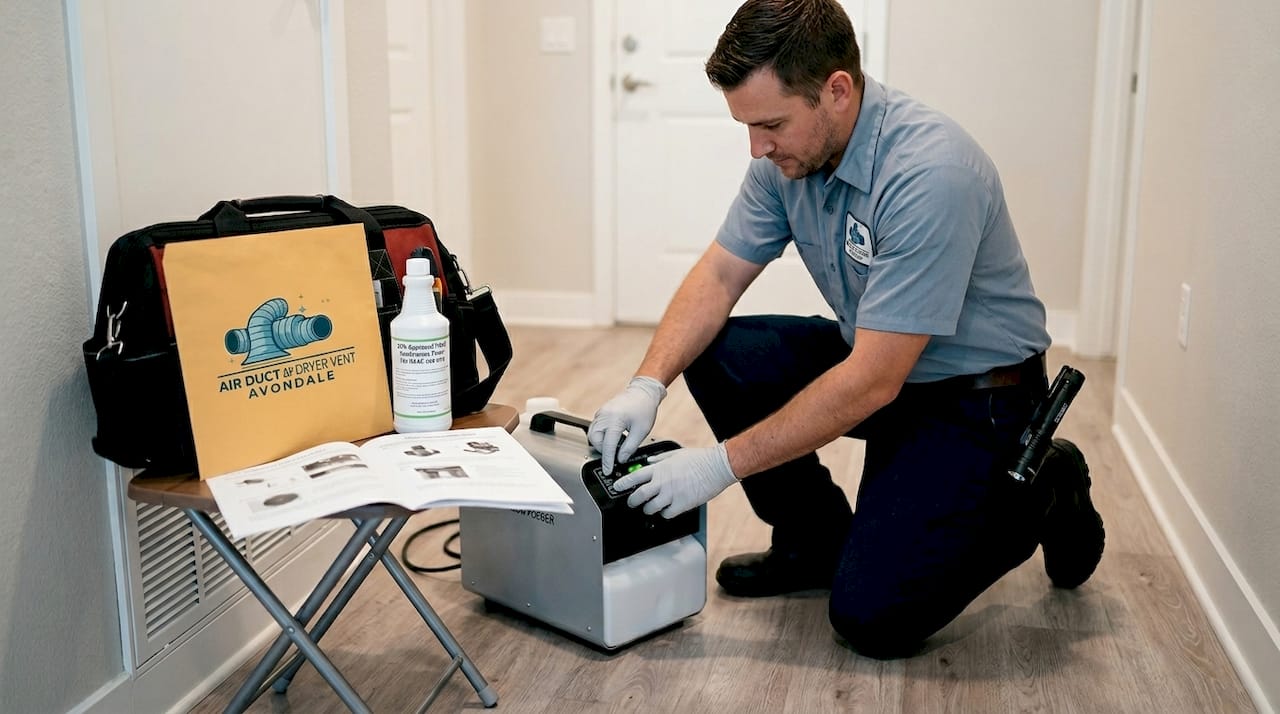
Methods include fogging, misting, or spraying EPA-registered antimicrobials post-cleaning, with dwell times of 5 to 20 minutes and effects that typically last around six months under normal conditions.
Comparison of common HVAC sanitizing methods:
| Method | Dwell time | Target microbes | Key precautions |
|---|---|---|---|
| ULV fogging | 10 to 20 min | Bacteria, mold, viruses | Vacate space during treatment |
| Duct spraying | 5 to 15 min | Surface mold, bacteria | Avoid fiberglass-lined ducts |
| Misting systems | 10 to 20 min | Airborne and surface microbes | Requires sealed system |
For Avondale's climate specifically, hydrogen peroxide fogging stands out. H2O2 fogging can remove 26 to 97% of bioaerosols, and it performs best in low humidity and higher temperature environments, exactly the conditions you find in Avondale most of the year.
Pro Tip: In Avondale's dry desert climate, hydrogen peroxide fogging is one of the safest and most effective options because low humidity allows the agent to disperse evenly and reach more surface area inside the ducts without leaving excessive moisture behind.
Typical steps a certified technician follows:
- Clean all ductwork using HEPA-filtered vacuum equipment and agitation tools
- Seal the system to prevent the sanitizing agent from escaping into living spaces
- Apply the EPA-registered sanitizer using the appropriate method for your duct type
- Allow full dwell time without interruption
- Restore system operation and verify air quality before leaving
For a detailed breakdown of the full process, the step-by-step HVAC cleaning guide covers what to expect from start to finish. It's also worth noting that reputable providers follow air duct cleaning service processes that align with NADCA (National Air Duct Cleaners Association) standards, which set the benchmark for safe and effective work.
Limitations, risks, and myths about HVAC sanitizing
While the methods can be powerful, it's just as important to know the boundaries and risks involved with HVAC sanitizing.
The biggest myth is that sanitizing fixes everything. It doesn't. If your system has a persistent moisture problem, poor airflow, or an unresolved mold source, sanitizing the ducts is a temporary measure at best. Within weeks, the same conditions that caused the contamination will allow it to return. Sanitizing treats a symptom, not the cause.
"Biocide use in ducts is not appropriate if the underlying moisture problem has not been corrected, as recontamination will likely occur." — EPA guidance
The no proven routine health benefit finding from the EPA also applies here. Without visible contamination issues, routine sanitizing doesn't add measurable value to your indoor air quality. And when it's done wrong, it can actively cause harm.
What not to do with HVAC sanitizing:
- Don't attempt DIY chemical application. Store-bought products are not formulated for duct systems and can leave residue that circulates through your home's air.
- Don't use ozone fogging machines. Ozone is a lung irritant and is not approved for occupied spaces or standard ductwork treatment.
- Don't skip moisture repairs first. Applying sanitizer to ducts that still have a leak or condensation problem will not produce lasting results.
- Don't use any product not registered with the EPA for use in HVAC systems. The label matters legally and for your safety.
Fiberglass-lined ducts require special attention. Many EPA-registered sanitizing products are not cleared for use on fiberglass surfaces because the material can absorb the chemical and release it slowly into the airstream. Always confirm your duct material before any treatment.
Working with professional HVAC cleaners who carry proper certifications protects you from these risks. A certified technician will know which products are approved for your specific system, how to apply them safely, and when to recommend against sanitizing altogether.
Our take: What most Avondale residents get wrong about HVAC sanitizing
With the technical details covered, let's cut through the noise. Here's what local pros and research-driven experts really think about HVAC sanitizing.
The most common mistake we see is homeowners equating the word "sanitize" with "cleaner air." It sounds reassuring. It feels proactive. But without a thorough cleaning first, applying a sanitizing agent to a dirty duct system is largely a wasted step. The chemistry doesn't work the way people imagine when surfaces are coated in dust and debris.
Avondale's dry climate actually works in your favor here. Low humidity means mold and bacteria don't thrive as aggressively as they do in humid regions. That's not a reason to ignore your HVAC system, but it does mean that regular cleaning and good filtration will handle the vast majority of air quality concerns without ever needing chemical treatment.
The COVID-19 era pushed a wave of sanitizing marketing that wasn't always grounded in evidence. Many providers offered routine sanitizing packages as a fear-driven upsell. The smarter, evidence-based approach is this: seal duct leaks, eliminate any moisture sources, replace filters on schedule, and call in certified technicians when you have a documented problem.
Pro Tip: For lasting better air with HVAC cleaning, prioritize source removal cleaning and moisture control over routine chemical treatment. That's where the real, measurable air quality gains come from.
Improve your air quality with trusted local HVAC experts
Ready to take the next step for healthier indoor air? Here's how Avondale experts can help.
Before any sanitizing decision is made, a professional assessment of your system is the right starting point. Our certified technicians evaluate your ductwork, identify any real contamination concerns, and give you an honest recommendation based on what they actually find, not what generates the most revenue.
Whether you're a homeowner concerned about allergens or a business owner managing air quality for employees and customers, we offer local air duct cleaning and commercial HVAC cleaning services tailored to your specific situation. If you want to know exactly what's in your air before making any decisions, our indoor air quality testing service gives you real data to work from. Schedule a consultation with our Avondale team and get clarity on what your system actually needs.
Frequently asked questions
Does HVAC sanitizing really improve indoor air quality?
It reduces microbes on duct surfaces after cleaning, but no proven routine health benefit exists unless a specific contamination problem has been identified and addressed first.
How often should I get my HVAC system sanitized?
Only after significant mold, pest activity, water damage, or persistent odors. The EPA does not recommend sanitizing on a routine basis without confirmed contamination.
Is DIY HVAC sanitizing safe?
No. DIY sanitizing risks include residue inhalation, system damage, and using products not approved for ductwork. Always hire certified professionals.
Does the Arizona climate affect HVAC sanitizing?
Yes. Lower humidity in Avondale increases sanitizer effectiveness, and H2O2 fogging performs better in low-humidity, higher-temperature environments like ours.