
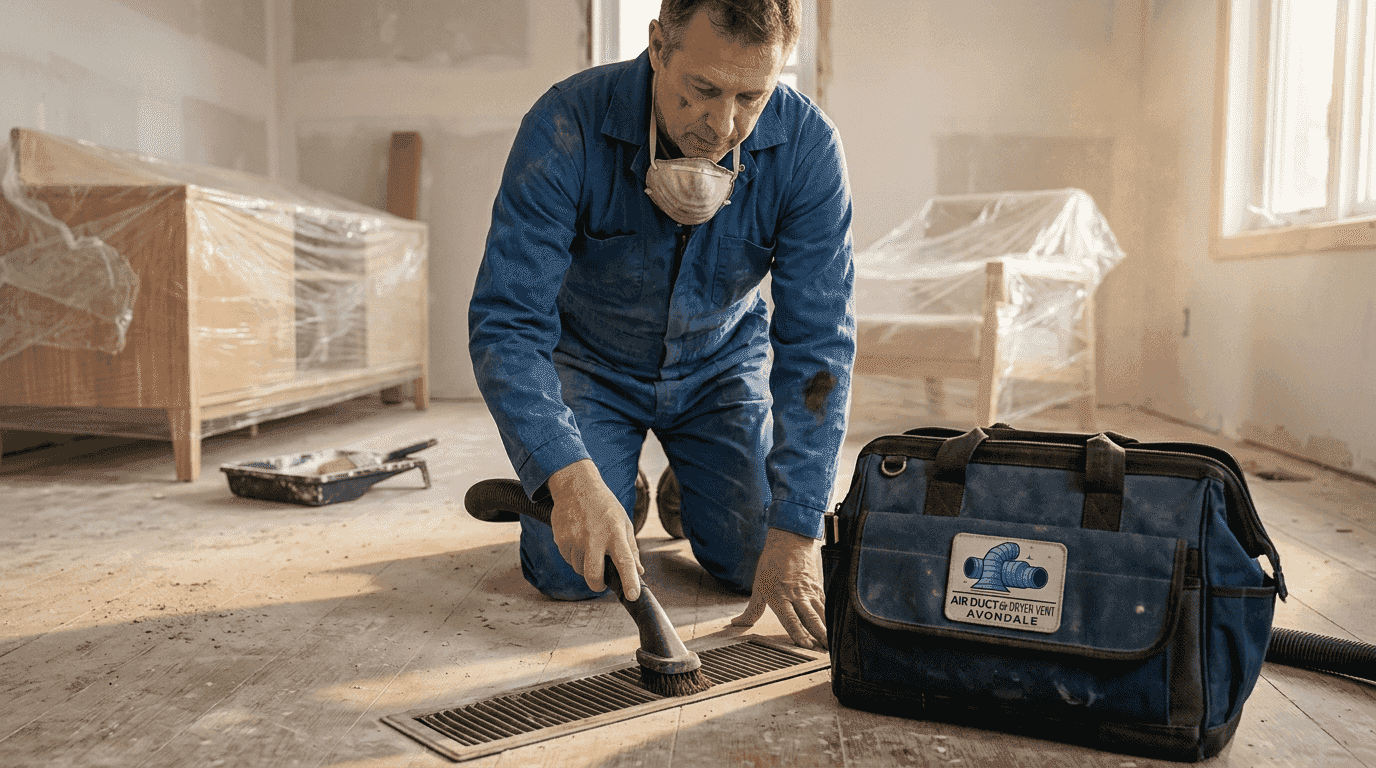
Renovations transform your Avondale home, but they also release clouds of dust, debris, and chemical particles that settle deep inside your air vents and ductwork. While you scrub countertops and vacuum floors, hidden contamination in your HVAC system continues circulating pollutants throughout every room. This invisible threat compromises indoor air quality and can trigger respiratory issues for your family. Cleaning your vents after renovation isn't just recommended, it's essential for protecting your health and maintaining a truly clean living environment. This guide reveals the critical reasons to prioritize post-renovation vent cleaning and shows you how to do it effectively.
Table of Contents
- How Renovation Affects Indoor Air And Vents
- Benefits Of Cleaning Vents After Renovation
- How To Ensure Effective Vent Cleaning Post-Renovation
- Long-Term Maintenance And Monitoring After Renovation
- Protect Your Indoor Air Quality With Expert Vent Cleaning In Avondale
- FAQ
Key takeaways
| Point | Details |
|---|---|
| Renovation dust infiltrates vents | Construction activities release particles that settle inside ductwork and recirculate through your home |
| Cleaning dramatically improves air quality | Professional vent cleaning reduces harmful particulates by up to 80% and VOCs by 60% |
| HEPA filtration is essential | Using HEPA filters during cleaning captures fine dust particles and prevents them from spreading |
| Inspection guides effective cleaning | Professional assessment identifies contamination levels and ensures targeted removal |
| Regular maintenance protects long-term health | Scheduled cleanings and filter changes maintain air quality in Avondale's dusty climate |
How renovation affects indoor air and vents
Construction work generates massive amounts of airborne particulates that infiltrate every corner of your home, including places you can't see or easily reach. Drywall dust, wood particles, paint fumes, and adhesive vapors don't simply settle on surfaces. They get pulled into your HVAC system through return vents, where they accumulate inside ductwork and on system components. Indoor air can be significantly impacted by construction activities due to airborne particulate matter, which often settles inside return vents, supply ducts, and HVAC components.
The problem intensifies because your HVAC system operates like a circulatory system for your home. Every time the system runs, it pulls air through return vents, pushes it through contaminated ductwork, and distributes it back into your living spaces. This continuous cycle means renovation dust doesn't stay contained. Instead, it spreads throughout your entire home, exposing everyone to potentially harmful particles days or even weeks after construction ends.
Several types of contaminants pose specific risks:
- Fine particulate matter (PM2.5) from sanding and cutting materials penetrates deep into lungs
- Volatile organic compounds from paints, sealants, and adhesives off-gas for extended periods
- Fiberglass particles from insulation work cause skin and respiratory irritation
- Silica dust from concrete or tile cutting creates serious long-term health hazards
Your ductwork essentially becomes a storage reservoir for these pollutants. The narrow passages and rough interior surfaces of ducts trap particles effectively, creating layers of contamination that standard cleaning methods can't address. Every time your system cycles on, air rushing through these passages picks up settled particles and carries them into bedrooms, living areas, and kitchens.
"Construction debris in ventilation systems doesn't just affect air quality temporarily. It creates an ongoing source of indoor pollution that impacts occupant health until properly removed through professional cleaning."
The debris hazards in vents after renovation extend beyond visible dust. Microscopic particles remain suspended in air for hours, settling slowly onto every surface including inside your respiratory system. Children, elderly family members, and anyone with existing respiratory conditions face heightened risks from this invisible contamination.
Benefits of cleaning vents after renovation
Professional vent cleaning delivers measurable improvements that transform your indoor environment from contaminated to healthy. The difference isn't subtle or theoretical. Post-renovation air duct cleaning significantly reduces particulate matter and volatile organic compounds, improving indoor air quality with reductions up to 80% in PM2.5 and 60% in VOCs. These aren't minor improvements. They represent the difference between breathing air laden with construction residue and breathing clean, healthy air.
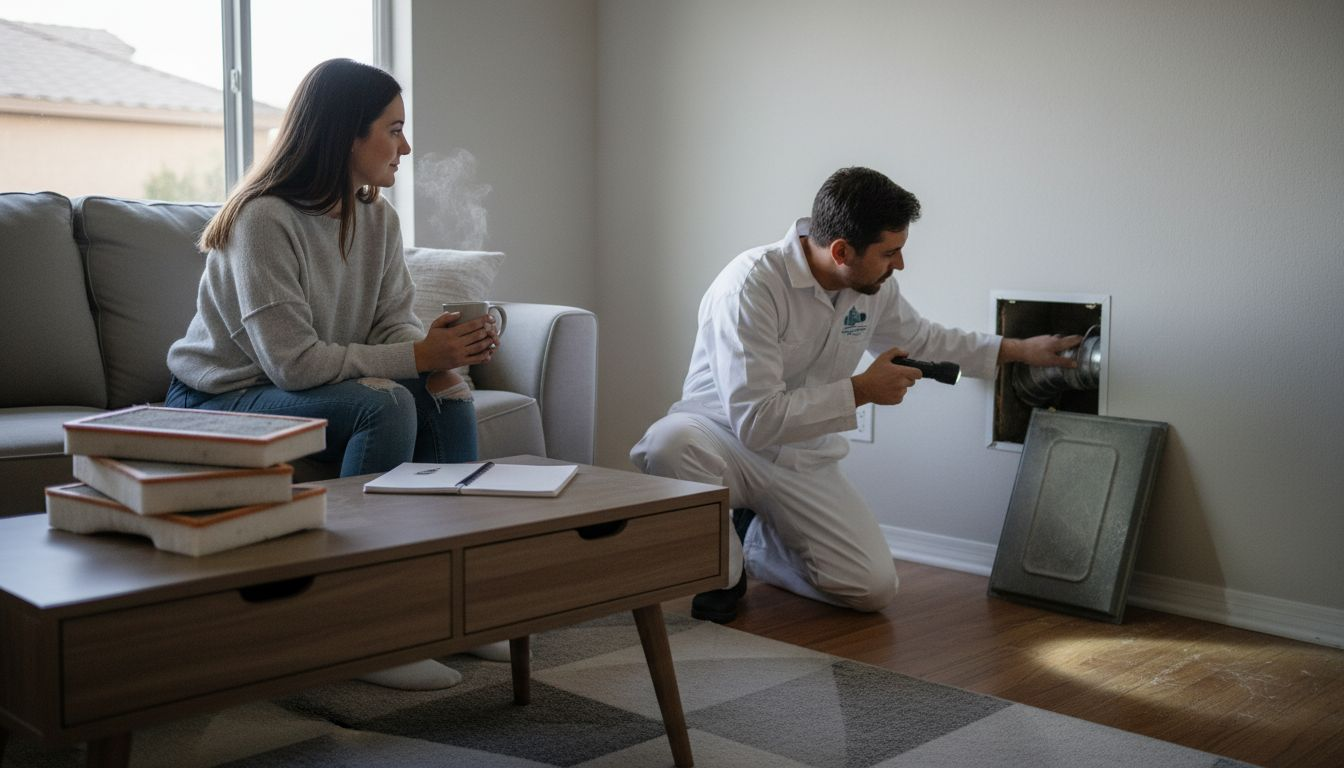
The immediate benefits you'll notice include fresher-smelling air, reduced dust accumulation on furniture, and fewer respiratory symptoms like coughing or congestion. Your HVAC system also operates more efficiently when ductwork is clear, because air flows freely without fighting through layers of debris. This efficiency translates directly to lower energy bills and extended equipment lifespan.
| Benefit Category | Specific Improvement | Typical Impact |
|---|---|---|
| Air Quality | Particulate reduction | 70-80% decrease in PM2.5 |
| Chemical Exposure | VOC removal | 50-60% reduction in VOCs |
| System Efficiency | Airflow improvement | 15-25% better circulation |
| Health Outcomes | Symptom reduction | Fewer allergy and asthma triggers |
The benefits of professional air duct cleaning extend to protecting your HVAC investment. Construction dust acts like sandpaper on moving components, accelerating wear on blower motors, fans, and heat exchangers. Removing this abrasive material prevents premature equipment failure and expensive repairs down the road.
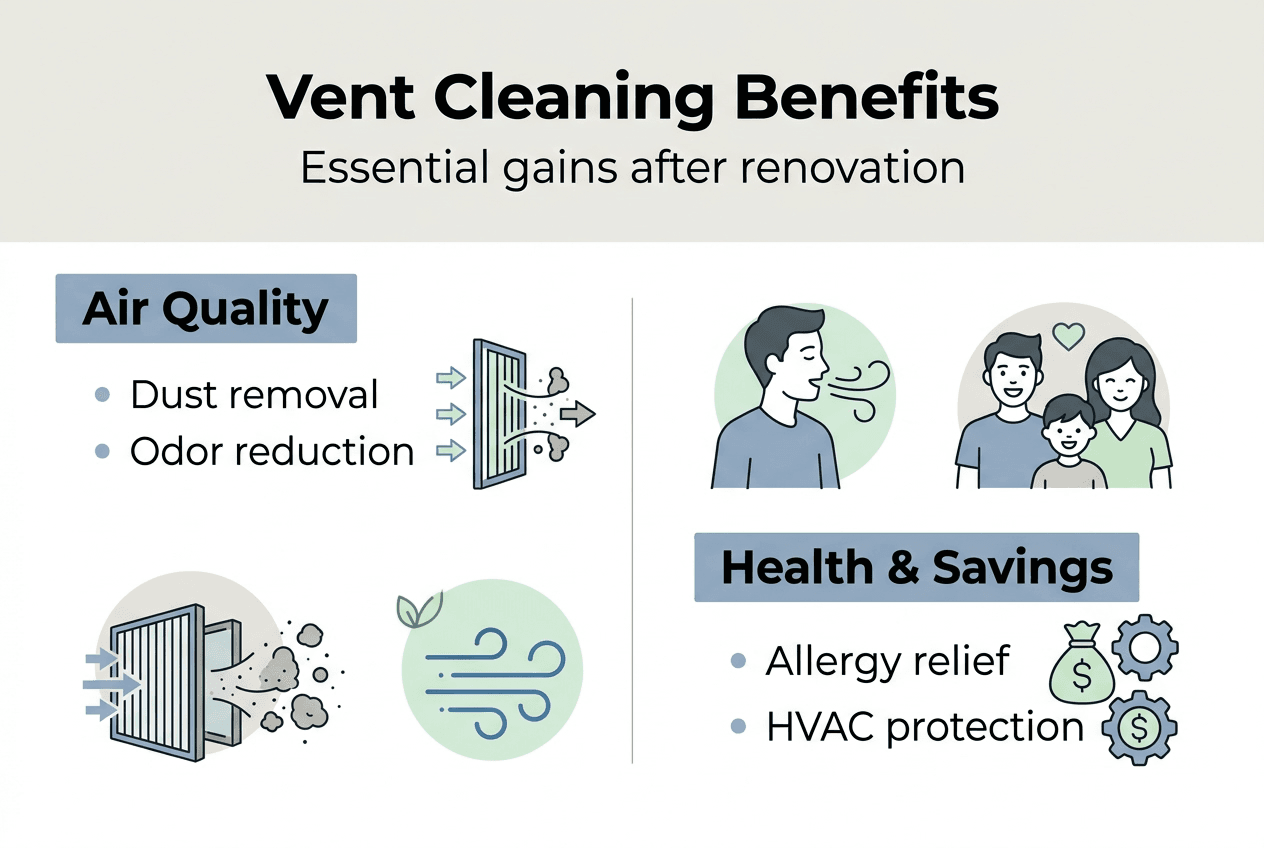
Your family's health represents the most compelling reason to clean vents after renovation. Respiratory irritation from construction dust isn't just uncomfortable, it can trigger asthma attacks, worsen allergies, and cause persistent coughing. Young children are especially vulnerable because they breathe faster and take in more air relative to their body size. Elderly family members and anyone with compromised immune systems also face elevated risks from poor indoor air quality.
Cleaning eliminates the source of these health threats rather than masking symptoms. You're not just filtering air better or covering up odors. You're physically removing the contamination that causes problems in the first place. This proactive approach protects everyone in your home and creates a genuinely healthy living environment.
Pro Tip: Schedule vent cleaning before moving furniture back into renovated spaces. This timing ensures maximum access for technicians and prevents you from breathing contaminated air while unpacking and settling in.
How to ensure effective vent cleaning post-renovation
Effective post-renovation vent cleaning starts with a thorough inspection, not immediate cleaning. Professional technicians need to assess contamination levels, identify problem areas, and determine the most appropriate cleaning methods for your specific situation. Inspection-first approach is recommended by NADCA to evaluate duct conditions before cleaning. This assessment prevents wasted effort on areas that don't need attention and ensures thorough cleaning where contamination is heaviest.
During inspection, technicians use cameras to view inside ductwork, checking for debris accumulation, damaged insulation, and disconnected sections. They measure airflow at various points to identify blockages and assess system performance. This data-driven approach transforms cleaning from guesswork into targeted remediation.
The cleaning method matters enormously for achieving real results. Standard vacuum cleaning doesn't capture fine particles effectively, allowing them to recirculate. Use of HEPA filtration during and after cleaning helps capture fine particles and prevent recirculation, critical in dusty areas like Avondale. HEPA filters trap 99.97% of particles as small as 0.3 microns, including the microscopic dust that poses the greatest health risks.
Key elements of effective vent cleaning include:
- Camera inspection to document contamination levels before and after cleaning
- Negative air pressure systems that prevent dust from spreading during cleaning
- Rotating brush systems that dislodge stubborn debris from duct walls
- HEPA-filtered vacuums that capture particles rather than redistributing them
- Antimicrobial treatment for areas with moisture or mold concerns
Comparing service providers requires looking beyond price to evaluate technology and thoroughness. Not all duct cleaning companies use HEPA filtration or provide video documentation. Some rely on outdated methods that stir up dust without effectively removing it.
| Service Feature | Basic Cleaning | Professional HEPA Cleaning |
|---|---|---|
| Filtration Standard | Standard shop vac | HEPA-certified filtration |
| Inspection Method | Visual only | Video camera documentation |
| Cleaning Coverage | Main trunk lines | All branches and registers |
| Particle Capture Rate | 60-70% | 99.97% of fine particles |
Avondale's desert environment adds another layer of consideration. Dust infiltration happens year-round here, not just during renovation. Your cleaning service should understand local conditions and recommend maintenance schedules appropriate for our climate. The NADCA inspection recommendations provide national standards, but local expertise ensures those standards get applied effectively in Arizona's unique environment.
Pro Tip: Request before and after photos or video footage of your ductwork. Visual documentation proves the cleaning was thorough and gives you baseline information for future maintenance decisions. The HEPA filtration advantages become obvious when you see the amount of debris removed from your system.
Long-term maintenance and monitoring after renovation
Post-renovation cleaning solves immediate contamination, but maintaining clean vents requires ongoing attention. Your first follow-up inspection should occur three to six months after initial cleaning, allowing time to assess how quickly dust accumulates in your specific home. This baseline helps you establish a maintenance schedule tailored to your needs rather than following generic recommendations that might not fit Avondale's conditions.
Regular maintenance prevents small problems from becoming major issues. A maintenance program should include:
- Quarterly visual inspections of accessible vents and registers
- Filter replacements every 30 to 90 days depending on system use and outdoor air quality
- Annual professional duct inspections with camera assessment
- Deep cleaning every three to five years or when inspection reveals significant buildup
- Immediate attention to any musty odors, reduced airflow, or visible mold
Avondale's environment accelerates dust accumulation compared to more humid climates. Our dry air carries more particulates, and dust storms deposit fine particles that infiltrate homes through tiny gaps and openings. Your HVAC system filters this incoming air, but filters have limited capacity. When they become clogged, system efficiency drops and indoor air quality suffers.
Homeowners and property managers should prioritize post-renovation duct cleaning to protect occupants from health hazards due to construction debris and chemical off-gassing. This priority shouldn't end after initial cleaning. Establishing maintenance routines protects your investment in clean air and prevents regression to contaminated conditions.
Filter replacement deserves special attention because it's the easiest and most cost-effective maintenance task you can perform. Standard fiberglass filters cost just a few dollars but provide minimal filtration. Upgrading to pleated filters with MERV ratings between 8 and 13 dramatically improves particle capture without restricting airflow excessively. The air filter replacement benefits include better air quality, improved system efficiency, and longer equipment life.
Monitoring indoor air quality helps you spot problems before they become serious. Simple indicators include:
- Dust accumulation rates on furniture and surfaces
- Frequency of allergy or respiratory symptoms among family members
- Musty or stale odors when the HVAC system runs
- Visible dust or debris around supply vents
- Increased energy bills suggesting reduced system efficiency
Proper ventilation practices complement mechanical cleaning by reducing pollutant concentrations naturally. Opening windows during mild weather allows fresh air exchange, diluting indoor contaminants. Using bathroom and kitchen exhaust fans removes moisture and odors at their source before they circulate through ductwork. These simple habits reduce the burden on your HVAC system and improve overall indoor air quality.
Pro Tip: Mark filter replacement dates on your calendar or set phone reminders. Consistent filter changes prevent most air quality problems and cost far less than emergency duct cleaning or HVAC repairs.
Protect your indoor air quality with expert vent cleaning in Avondale
Your newly renovated home deserves air quality that matches its fresh appearance. After investing time and money into improving your property, don't let hidden contamination in your ductwork undermine those improvements. Air and Dryer Vent Cleaning Avondale specializes in post-renovation air system restoration, using HEPA filtration technology and thorough inspection protocols to ensure your vents are genuinely clean.
Our team understands Avondale's unique environmental challenges and how construction dust behaves in our desert climate. We provide detailed video documentation of ductwork conditions before and after cleaning, so you can see exactly what we've removed and verify the thoroughness of our work. From initial inspection through final air quality testing, we focus on delivering measurable improvements that protect your family's health. Our professional air duct cleaning services include flexible scheduling, transparent pricing, and warranties that guarantee your satisfaction. Contact us today to schedule your post-renovation inspection and experience the difference that trusted air vent cleaning makes in your home.
FAQ
How soon after renovation should I clean my vents?
Clean your vents immediately after renovation completion and before fully reoccupying the space. Delaying increases your exposure to construction dust, VOCs, and other airborne contaminants that continue circulating through your HVAC system. Post-renovation air duct cleaning reduces harmful particles and VOCs effectively when performed promptly. Waiting weeks or months allows contaminants to spread throughout your home and embed deeper into ductwork surfaces, making removal more difficult and expensive.
What cleaning methods are best to remove renovation dust from vents?
Professional duct cleaning with HEPA-filter-equipped vacuums provides the most effective removal of renovation dust. An inspection-first approach ensures technicians target the most contaminated areas and use appropriate techniques for your specific situation. HEPA filtration during vent cleaning captures fine particles preventing recirculation, which standard cleaning methods cannot achieve. Rotating brush systems combined with negative air pressure remove stubborn debris while containing dust within the cleaning equipment.
Can cleaning vents after renovation reduce allergy and asthma symptoms?
Yes, thorough vent cleaning removes dust and VOCs that trigger allergies and asthma attacks. Improved air quality supports healthier indoor environments by eliminating the source of respiratory irritants rather than just filtering air better. Most homeowners prioritize duct cleaning post-renovation to protect occupants from health hazards like debris and chemical off-gassing. Many families report significant symptom reduction within days of professional cleaning, especially for children and elderly members who are most vulnerable to poor air quality.
How much does post-renovation vent cleaning typically cost in Avondale?
Costs vary based on home size, ductwork complexity, and contamination levels, but most residential cleanings range from $300 to $700. Larger homes or severe contamination may cost more, while smaller properties with minimal ductwork cost less. Request detailed quotes that specify exactly what's included, such as inspection, cleaning method, number of vents covered, and any antimicrobial treatments. Investing in thorough cleaning with HEPA filtration costs more upfront but delivers better results and longer-lasting air quality improvements compared to budget services using outdated methods.
Do I need to clean vents after minor renovations like painting one room?
Even minor renovations can contaminate ductwork if vents were uncovered during work. Painting releases VOCs that circulate through your HVAC system, and sanding or surface preparation creates fine dust that travels through ductwork. Assess your situation by checking return vents near the work area for visible dust accumulation. If you notice debris or smell paint fumes when your system runs, cleaning is worthwhile. At minimum, replace your HVAC filter immediately after any renovation work and monitor air quality for several weeks to determine if professional cleaning is necessary.
Recommended
- Air Vent Cleaning, Air Duct Cleaning, Avondale, AZ
- What is residential air vent cleaning? 2026 Avondale guide
- Air Duct Cleaning, Dryer Vent Cleaning, HVAC Services, Avondale, AZ
- Air Vent Replacement, Dryer Vent Cleaning, Avondale, AZ
- Blog Standard - Ecolife Homes - Park Model Home Manufacturer - Florida - USA
- Ventilación Mecánica Controlada: La solución para la condensación