
TL;DR:
- Regular professional cleaning of commercial dryer vents is essential to prevent fires, reduce energy costs, and extend equipment life. High-volume facilities should schedule cleaning every three to six months, with documentation proving compliance and maintenance history. Neglecting timely cleaning increases safety risks, operational expenses, and liability exposure for the facility.
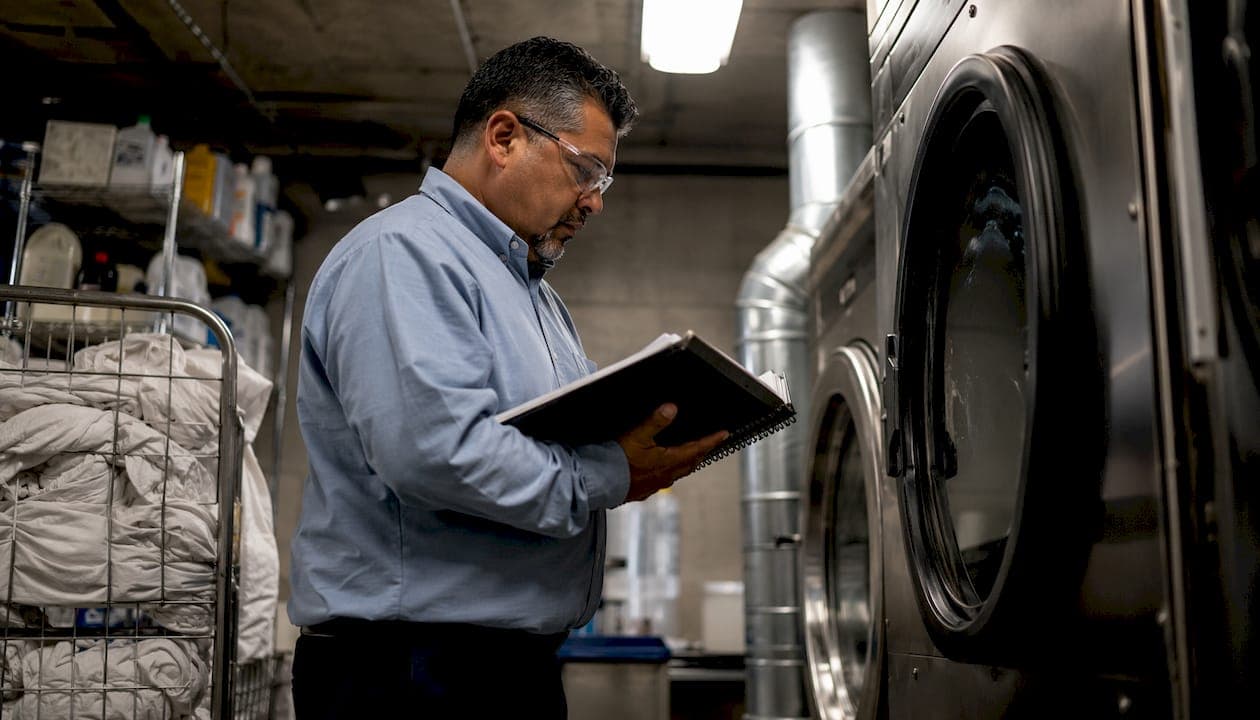
Commercial dryers require frequent cleaning because lint accumulates faster than most managers expect, and the consequences go well beyond a slow drying cycle. Restricted vents are a leading cause of dryer-related fires, a direct driver of energy waste, and one of the fastest ways to shorten expensive equipment life. Three governing bodies set the framework you need to know: the National Fire Protection Association (NFPA), the International Code Council (ICC) through its International Mechanical Code, and the National Air Duct Cleaners Association (NADCA), whose best practices define what professional service actually looks like. The core case for frequent cleaning breaks into three areas:
- Safety: Lint is highly combustible. Clogged vents trap heat and create the conditions for dryer fires, which the U.S. Fire Administration links to a substantial number of fires annually and significant property loss.
- Operational cost: A dryer running against restricted airflow uses significantly more energy per cycle and takes longer to finish each load, cutting throughput and raising utility bills.
- Equipment longevity: Overheating stresses heating elements, motors, and bearings. Regular cleaning is the single most effective way to extend machine life and reduce unplanned downtime.
Table of Contents
- What happens when commercial dryers aren't cleaned regularly
- How often should you clean commercial dryers and vents?
- Daily tasks, in-house cleaning, and what professional service actually covers
- Codes, inspections, documentation, and what insurers expect
- How frequent cleaning improves operations and delivers ROI
- Common cleaning mistakes and red flags managers should avoid
- What to expect from a reputable professional dryer-vent cleaning service
- Key Takeaways
- The part most managers get wrong
- Professional dryer vent cleaning for commercial facilities in Avondale
- Useful sources
- FAQ
What happens when commercial dryers aren't cleaned regularly
The risks from neglected dryer vents are not theoretical. They compound quickly in high-volume operations, and each category of harm feeds the next.
Fire risk
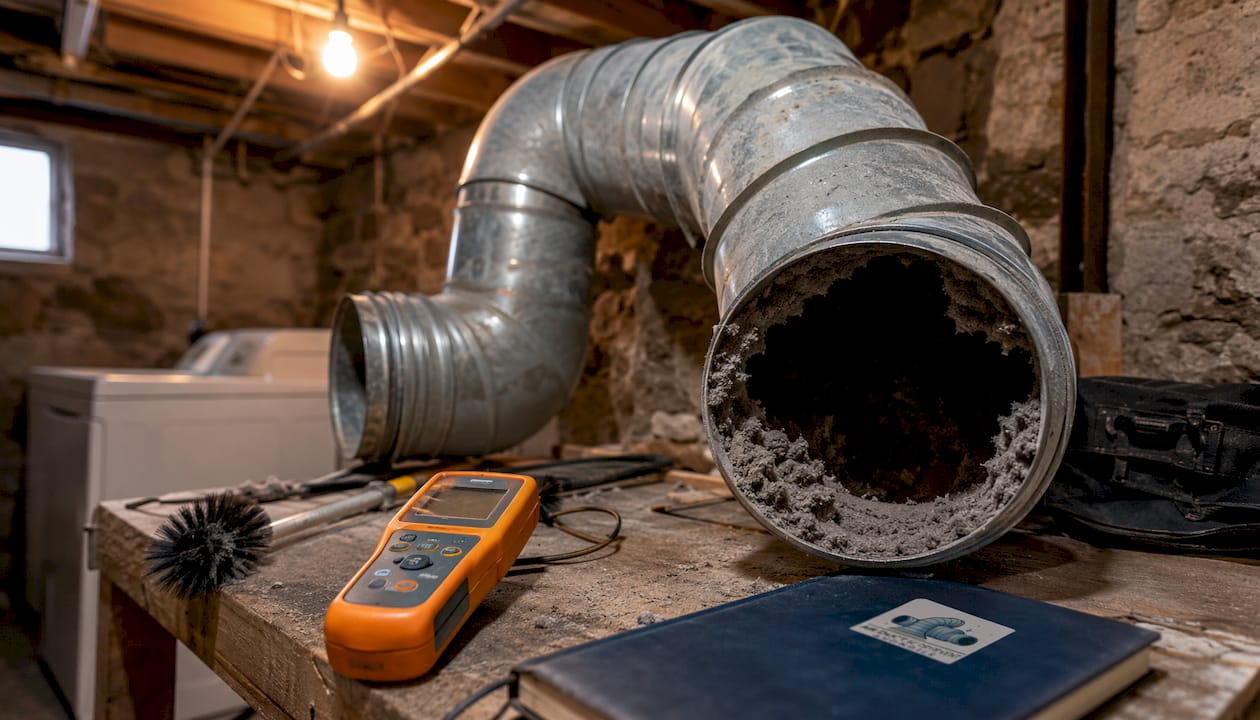
Lint is the primary fuel in dryer-related fires. It accumulates not just on the screen but deep inside ducts, around heating elements, and inside the dryer cabinet itself. Lint bypasses lint traps in commercial settings and builds up in places staff never see. Once a duct is partially blocked, exhaust temperatures rise, and the lint already coating the duct walls becomes an ignition risk.
"Lint buildup is a serious fire risk in laundromats, spas, and multi-unit housing. Proper cleaning prevents dangerous accumulation. The system either works as a whole or it doesn't work at all." — SpeedQueen Dryer Repair, How to Clean Commercial Dryer Vents and Ductwork
Operational impacts
A dryer fighting restricted airflow runs longer, uses more electricity or gas, and processes fewer loads per shift. With roughly 30% more energy consumed per cycle under substantial blockage, the utility cost penalty adds up fast across a bank of machines running eight or more hours a day. Longer cycles also mean customer complaints, backed-up laundry queues, and lost revenue in customer-facing operations.
Equipment damage
Heat that cannot escape through a clear duct path stays inside the machine. That sustained overheating degrades heating elements, strains motors, and accelerates bearing wear. The result is more frequent service calls, higher parts costs, and machines that need full replacement years ahead of schedule.
Health and linen quality
Moisture trapped with lint promotes mold and mildew growth inside drums and duct walls. In healthcare and hospitality settings, that contamination transfers odors and bacteria directly to the linens being dried. For any operation where linen hygiene matters, a dirty dryer vent is a patient-safety or guest-experience problem, not just a maintenance issue.
How often should you clean commercial dryers and vents?
Frequency depends on volume, load type, and duct configuration. There is no single answer suitable for both a hotel laundry and a coin-operated laundromat.
Baseline cadences by facility type
High-volume facilities such as laundromats and hospitality properties typically need professional duct cleaning every 3–6 months, with the heaviest users requiring cleaning every 3 months. Healthcare laundries, senior living facilities, and spas fall in a similar range. Apartment complexes and light-commercial operations with lower daily load counts can often extend to semi-annual or annual service, though that assumes daily staff checks are actually happening.
| Facility Type | Recommended Professional Cleaning | Daily Staff Check |
|---|---|---|
| Laundromat (high volume) | Every 3 months | Required |
| Hotel / hospitality | Every 3–4 months | Required |
| Healthcare / senior living | Every 3–4 months | Required |
| Apartment complex | Every 6 months | Recommended |
| Light commercial | Every 6–12 months | Recommended |
Triggers that require immediate service
Do not wait for the next scheduled cleaning if any of these appear:
- Drying cycles taking noticeably longer than baseline
- Dryer cabinet or surrounding area feels unusually hot
- Burning smell during or after a cycle
- Visible lint accumulating near exterior exhaust terminals
- Thermal shutdowns or error codes related to overheating
- Pest or bird nests discovered at vent terminations (a common hidden blockage cause)
Using usage data to set your schedule
Track loads per day and run hours per machine. If a machine processes towels or spa linens exclusively, it generates far more lint per cycle than one running standard garments. Adjust cleaning intervals accordingly and document the rationale. Inspectors and insurers respond well to a schedule that is clearly tied to actual operating data rather than a generic annual reminder.
Pro Tip: During the first 90 days after commissioning or after a major cleaning, take baseline airflow readings at the exhaust terminal. Log them. That number becomes your benchmark for triggering the next service call, and it gives you documented proof of due diligence if an inspector ever asks.
Daily tasks, in-house cleaning, and what professional service actually covers
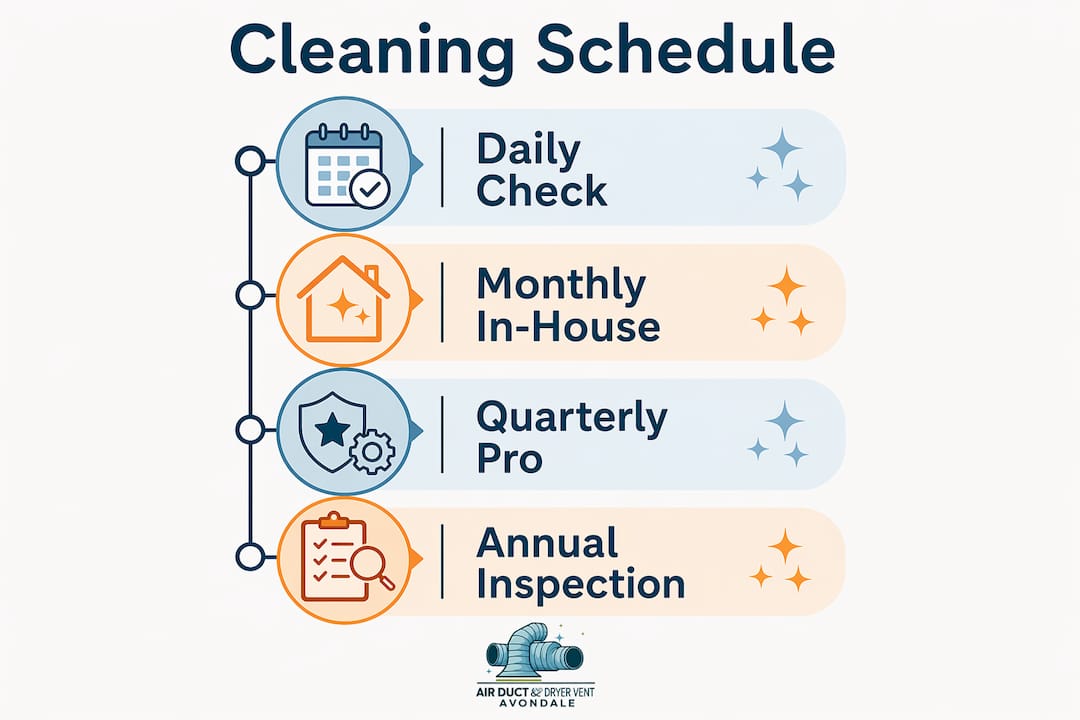
Effective dryer maintenance runs on three levels: what staff do every shift, what a trained in-house technician handles monthly, and what only a professional crew with the right equipment can reach.
Daily and per-shift tasks (staff level)
- Clean the lint screen before or after every load. This is non-negotiable and takes under a minute.
- Check the exterior exhaust terminal for visible lint buildup, blocked flaps, or debris.
- Note any unusual heat, odors, or cycle-time changes and report them immediately.
Monthly in-house deeper cleaning
Even with daily lint-screen cleaning, fabric softener and detergent residues form a film on the screen mesh that reduces airflow. Scrub screens with mild detergent and warm water every 2–3 months, not just rinse them. Staff can also vacuum visible lint from the transition hose connection and wipe down the cabinet exterior. Opening the dryer cabinet to vacuum around motors and heating elements is a technician-level task. Hidden cabinet lint near heating elements is a major fire hazard that staff-only cleaning will never reach.
What professional vent cleaning includes
Commercial duct runs are fundamentally different from residential ones. Long vertical runs, multiple elbows, and shared manifolds defeat retail brush kits and can push lint deeper if used incorrectly. Industrial-grade rotary systems combined with HEPA negative-air containment are required to clean the full exhaust path without spreading debris into the building.
| Service Deliverable | What It Means in Practice |
|---|---|
| Full duct-path agitation | Rotary tools clear lint from every section, including elbows and manifolds |
| HEPA negative-air containment | Debris is captured, not redistributed into the laundry room |
| Cabinet internal vacuuming | Lint removed from around motors and heating elements |
| Access panel inspection | Disconnected duct sections identified and corrected |
| Airflow verification | Before-and-after measurements confirm the cleaning worked |
| Signed service report | Date, technician name, findings, and corrective actions documented |
| Photographs | Visual record of pre- and post-cleaning condition |
A typical professional cleaning visit for a single commercial dryer and its duct run takes 1–2 hours depending on duct length and access. Facilities with multiple machines or shared manifolds should budget more time.
Cost context
Professional dryer vent cleaning typically costs between $130 and $160 per service for a single commercial dryer, which is a common industry-reported rate. That figure looks very different when set against the cost of a heating-element replacement, a motor rebuild, or a fire-damage claim. For most commercial operations, the math is straightforward.
Codes, inspections, documentation, and what insurers expect
Regulatory expectations around commercial dryer vents are specific, and the documentation gap is where most facilities get cited.
The governing standards
NFPA 96 addresses commercial cooking ventilation but its principles on grease and combustible residue management are frequently cited by fire marshals when evaluating dryer vent maintenance programs. More directly applicable is the International Mechanical Code (IMC), published by the International Code Council (ICC), which sets requirements for dryer exhaust duct construction, length limits, and termination. NADCA best practices define the equipment and methods expected of professional duct cleaning contractors. OSHA standards on workplace fire safety and hazard communication apply when employees work in or near laundry facilities.
"Fire-safety engineers emphasize the absence of documented maintenance programs as a systemic failure. Documentation is essential to demonstrate compliance with NFPA and ICC standards and to satisfy inspections." — Build News
Missing documentation is a common code violation. Inspectors do not just want to see that cleaning happened. They want to see when, by whom, with what credentials, and what the findings were.
What to keep in your maintenance file
- Date of each cleaning and inspection
- Technician name, company, and certification (NADCA or equivalent)
- Before-and-after airflow measurements or static-pressure readings
- Photographs of duct condition, access panels, and exhaust terminals
- Signed service reports listing all corrections performed
- Recommended follow-up schedule from the contractor
For multi-unit housing managers, this documentation also protects against tenant liability claims. A commercial vent cleaning planning guide can help you build a compliant schedule from scratch.
Insurance and liability
Insurers increasingly ask for maintenance records when processing fire-related claims. A facility that cannot produce documented cleaning history may face a coverage dispute. The liability exposure from an undocumented program is not hypothetical. It is a standard line of inquiry after any dryer-related incident.
How frequent cleaning improves operations and delivers ROI
The safety case is clear. The financial case is equally strong, and it is easier to present to a CFO or ownership group than most managers realize.
Energy and throughput
Restoring full airflow directly shortens cycle times. Fewer minutes per load means more loads per shift, more machines available, and lower utility costs per unit of laundry processed. A dryer that was consuming significantly more energy per cycle due to blockage returns to baseline after a proper cleaning. Across a facility running multiple machines daily, that recovery is measurable on the next utility bill.
Maintenance savings and equipment life
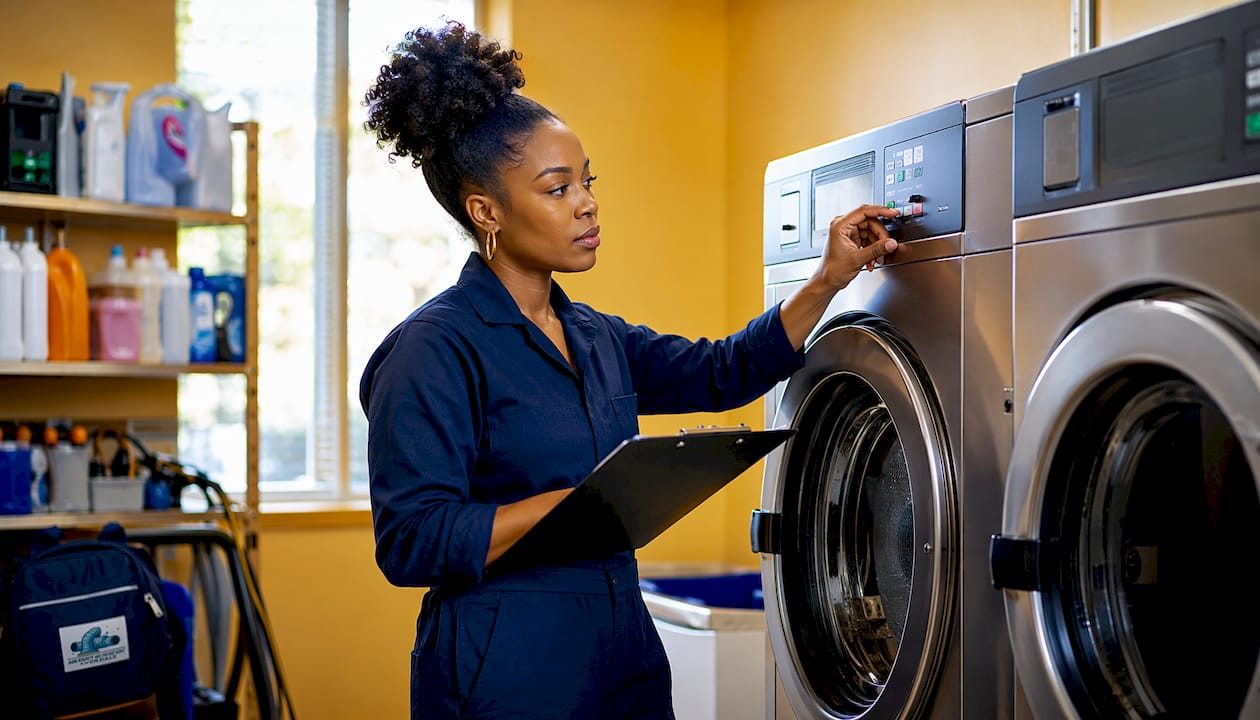
Fewer overheating events mean fewer heating-element failures. Reduced motor strain extends bearing life. The machines simply last longer when they run at the temperatures they were designed for. Emergency repair calls are expensive in both parts and labor, and they create downtime that customer-facing operations cannot absorb.
A simple ROI example
| Cost Category | Without Regular Cleaning | With Quarterly Cleaning |
|---|---|---|
| Energy penalty (per machine/year) | Up to 30% above baseline | Baseline |
| Emergency repair calls | 2–3 per year (estimated) | Reduced significantly |
| Professional cleaning cost | Deferred (higher risk) | $130–$160 per service |
| Equipment replacement cycle | Shortened by overheating | Extended |
| Fire/liability exposure | Elevated | Reduced |
The numbers in the "without" column are conservative. A single heating-element replacement plus a service call typically exceeds the cost of two full years of quarterly professional cleaning.
Common cleaning mistakes and red flags managers should avoid
A false sense of security is more dangerous than knowing you have a problem. These are the mistakes that create it.
What not to do:
- Rely only on lint screens. Screens catch a fraction of the lint generated in a commercial cycle. The rest travels into the duct.
- Use flexible foil ducting. Its accordion-style interior traps lint at every ridge. Rigid metal duct is the correct material for commercial installations.
- DIY vent brushing without proper equipment. A retail brush kit on a long commercial run often pushes lint deeper rather than removing it. Without negative-air containment, debris redistributes into the room.
- Skip the cabinet interior. Cleaning only the duct and ignoring the inside of the machine leaves the highest-temperature lint accumulation in place.
- Assume annual cleaning is enough for high-volume operations. A laundromat or hotel laundry running eight-plus hours a day can reach dangerous lint levels in three months.
Red flags that cleaning is overdue:
- Cycles running 10–15 minutes longer than your documented baseline
- Repeated thermal shutdowns or overtemperature error codes
- Dryer cabinet hot to the touch during or after a cycle
- Burning smell that clears when the machine stops
- Lint appearing in ceiling tiles, wall cavities, or service chases (a sign of duct disconnection)
- No documented cleaning in the past six months for a high-volume facility
Maintenance-process failures to fix now:
- No written cleaning schedule with assigned responsibility
- Staff-only cleaning with no professional verification on record
- Missed access panels that leave entire duct sections uncleaned
- No baseline airflow measurement to compare against
What to expect from a reputable professional dryer-vent cleaning service
Hiring the wrong contractor is almost as bad as not hiring one. Here is what a qualified service looks like and what to ask before you sign anything.
Vendor checklist
| Qualification | What to Verify |
|---|---|
| NADCA certification or equivalent | Ask for certificate number; verify it is current |
| Proof of liability insurance | Request a certificate of insurance naming your facility |
| Industrial rotary cleaning equipment | Confirm they use purpose-built commercial tools, not retail kits |
| HEPA negative-air containment | Required to prevent debris redistribution |
| Experience with commercial runs | Ask specifically about long duct runs, multiple elbows, and shared manifolds |
Questions to ask before hiring
- How do you handle access panels, and what happens if the duct has no existing panels?
- How do you verify airflow improvement after cleaning?
- What does your signed service report include?
- Do you photograph before and after?
- What is your warranty or guarantee on workmanship?
"Professionals start with a commercial dryer vent inspection to confirm the duct route, check for disconnects, and locate heavy lint deposits. Then they clean the entire exhaust path using purpose-built agitation and containment methods. They verify airflow so long drying times actually improve." — SpeedQueen Dryer Repair
For a broader look at what to expect from commercial vent cleaning vendors, the service scope and verification steps matter as much as the price.
Deliverables you should receive
Every professional service should produce a signed report listing the date, technician credentials, duct condition findings, corrections performed, airflow readings if possible, and a recommended follow-up schedule. If a contractor cannot provide all of that, find one who can.
Key Takeaways
Frequent commercial dryer cleaning is a safety and compliance requirement, not optional maintenance: lint accumulation causes fires, raises energy costs noticeably per cycle, and shortens equipment life measurably.
| Point | Details |
|---|---|
| Fire risk is the top priority | Lint is the primary ignition source in dryer fires; NFPA, ICC, and NADCA all address this hazard. |
| Clean every 3–6 months for high-volume sites | Laundromats, hotels, and healthcare facilities need professional cleaning every three to six months, with quarterly cleaning recommended for the busiest operations. |
| Documentation is a compliance requirement | Inspectors and insurers expect dated records, technician credentials, and airflow measurements. |
| Energy penalty is real and measurable | Restricted vents can add significantly more energy per cycle; restoring airflow cuts costs immediately. |
| Airanddryerventcleaningavondale covers commercial sites | Air Duct & Dryer Vent Cleaning Avondale provides on-site diagnostics, industrial-grade cleaning, and signed documentation for commercial facilities in Avondale, AZ. |
The part most managers get wrong
The conventional wisdom says "clean your lint screen daily and schedule a vent cleaning once a year." For a residential dryer, that is reasonable. For a commercial machine running six to ten hours a day, it is dangerously inadequate.
What gets overlooked is the compounding nature of lint accumulation in commercial systems. Each load adds a thin layer. Each layer slightly reduces airflow. Reduced airflow raises temperature, which bakes the next layer of lint onto the duct wall more firmly. By the time a thermal shutdown happens, the duct is not just dirty. It is a fire waiting for the right conditions.
The other thing managers underestimate is the documentation gap. A cleaning that happened but was not recorded is, from an insurer's and inspector's perspective, a cleaning that did not happen. The signed report and the airflow readings are not paperwork for their own sake. They are the proof that your facility exercised reasonable care. One practical step worth taking immediately: if you do not have a baseline airflow reading on file for each machine, get one at the next service visit and treat it as the starting point for every future inspection.
Professional dryer vent cleaning for commercial facilities in Avondale
If your facility is overdue for a cleaning or you have never had a professional airflow verification done, Air Duct & Dryer Vent Cleaning Avondale is the local specialist for commercial properties in Avondale, Arizona. The service goes well beyond a lint-screen wipe: on-site duct inspection, industrial rotary cleaning with HEPA containment, internal cabinet vacuuming, before-and-after airflow measurements, and a signed report you can hand to an inspector or insurer.
Scheduling is flexible, including after-hours appointments that work around your operating hours. Warranties are included. Every visit produces the photo and airflow documentation that code compliance and insurance coverage require. For facilities that also need commercial air duct cleaning as part of a broader maintenance plan, bundled service is available.
To schedule a commercial dryer vent cleaning or request an estimate, visit the dryer vent cleaning service page or call to discuss your facility's specific needs.
Useful sources
The standards and resources below are the primary references for commercial dryer vent safety, cleaning methods, and compliance documentation.
- NFPA (National Fire Protection Association) — Sets fire-safety standards including NFPA 96; the authoritative source on combustible residue hazards and fire prevention requirements.
- International Code Council (ICC) / International Mechanical Code — Governs dryer exhaust duct construction, length limits, and termination requirements adopted by most U.S. jurisdictions.
- NADCA (National Air Duct Cleaners Association) — Defines professional standards and certification requirements for duct cleaning contractors; the benchmark for verifying contractor qualifications.
- U.S. Fire Administration — Publishes dryer fire statistics and prevention guidance; cited for the 980+ fires and $11.9 million annual property loss figures.
- OSHA — Workplace fire safety and hazard communication standards applicable to laundry facility employees.
| Resource | Type | Primary Use |
|---|---|---|
| NFPA standards | Code / safety | Fire risk and combustible residue requirements |
| ICC International Mechanical Code | Code | Duct construction, length, and termination rules |
| NADCA best practices | Industry standard | Contractor qualification and cleaning methods |
| U.S. Fire Administration data | Statistics | Fire frequency and property loss figures |
| OSHA workplace standards | Regulation | Employee safety in laundry environments |
FAQ
How often do commercial dryers need professional cleaning?
High-volume facilities such as laundromats, hotels, and healthcare laundries typically need professional vent cleaning every three to six months, with quarterly cleaning recommended for heavy-use operations; lighter-use facilities may require less frequent service, provided daily staff checks are consistently performed.
Is professional dryer vent cleaning necessary, or can staff handle it?
Staff can and should clean lint screens daily and scrub them every 2–3 months, but professional cleaning is necessary to clear the full duct path, vacuum the cabinet interior, and verify airflow. Staff-only cleaning leaves the highest-risk lint accumulation untouched.
How long does a commercial dryer last with proper maintenance?
With regular cleaning and preventive maintenance, commercial dryers typically reach or exceed their rated service life. Neglected machines fail earlier due to overheating damage to heating elements and motors, often requiring costly replacement years ahead of schedule.
What are the biggest disadvantages of skipping commercial dryer maintenance?
The three main consequences are elevated fire risk from lint buildup, higher energy costs from restricted airflow (up to 30% more per cycle), and shortened equipment life from sustained overheating. Code violations and insurance complications are additional risks when documentation is missing.
What documentation should I keep after a professional dryer vent cleaning?
Keep the signed service report, technician credentials, before-and-after airflow measurements, photographs of duct condition, and the contractor's recommended follow-up schedule. Inspectors and insurers expect all of these when reviewing your maintenance program.