
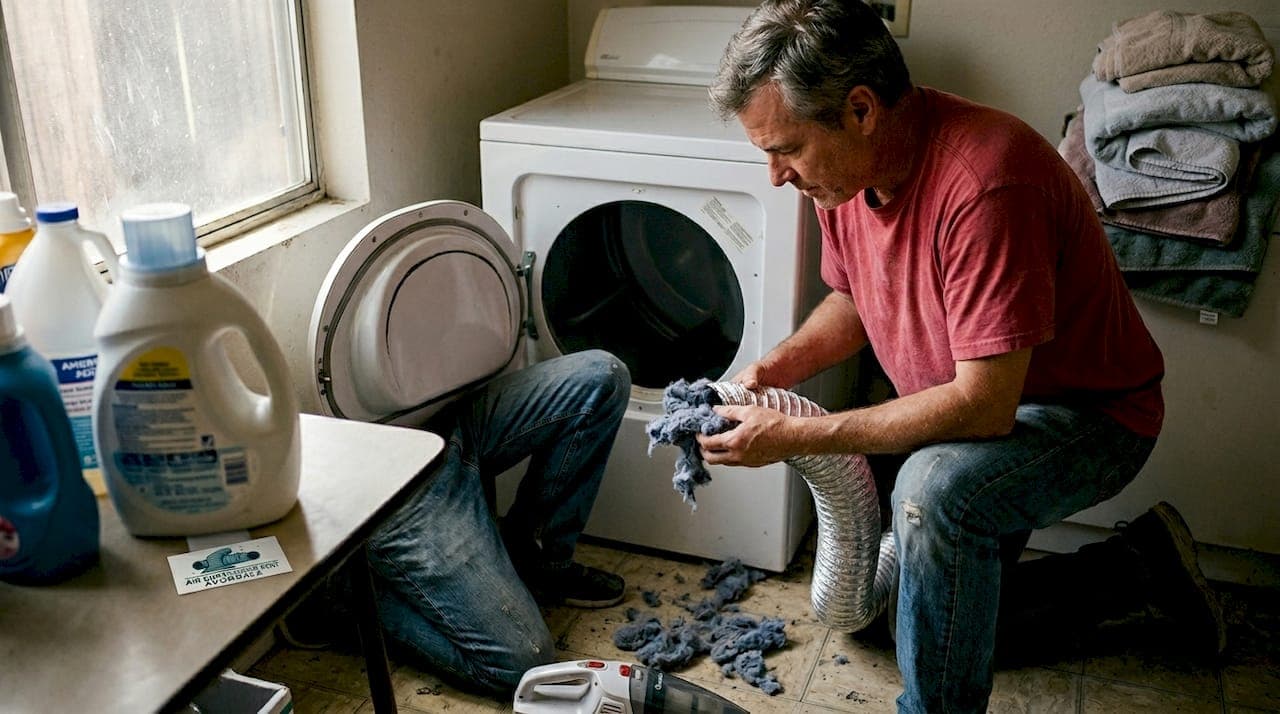
Every year, dryer vents cause thousands of home fires across the United States, with lint accumulation being the primary culprit. Most homeowners clean their lint screens regularly but overlook the deeper vent system where lint quietly builds up, creating a hidden fire hazard. In Avondale, Arizona's dry climate, static electricity and dust amplify these risks, making proper lint removal even more critical. This guide explains why removing dryer vent lint protects your home, saves energy, and extends your appliance's life, plus when to call professionals for thorough cleaning.
Table of Contents
- Understanding The Risks: Why Dryer Vent Lint Can Be Dangerous
- How Lint Buildup Affects Dryer Efficiency And Energy Use
- Best Practices For Removing Dryer Vent Lint Safely And Effectively
- Comparing Diy Lint Removal Versus Professional Services
- Protect Your Home And Business With Expert Dryer Vent Cleaning In Avondale
- Frequently Asked Questions
Key takeaways
| Point | Details |
|---|---|
| Fire prevention | Lint is highly flammable and the leading cause of dryer fires when allowed to accumulate in vents. |
| Energy savings | Blocked vents force dryers to run longer cycles, increasing electricity costs by 20 to 30 percent. |
| Appliance longevity | Regular lint removal reduces wear on dryer components and extends the machine's operational lifespan. |
| Professional value | Annual professional cleaning reaches hidden vent areas that DIY methods cannot access effectively. |
Understanding the risks: Why dryer vent lint can be dangerous
Lint poses a serious threat because it combines two dangerous properties: extreme flammability and rapid accumulation. When your dryer heats air to dry clothes, tiny fabric fibers break free and travel through the exhaust system. Most homeowners diligently clean the lint screen, but significant amounts bypass this filter and settle deep inside the vent ductwork. Over time, this creates a thick, fuzzy layer coating the vent walls.
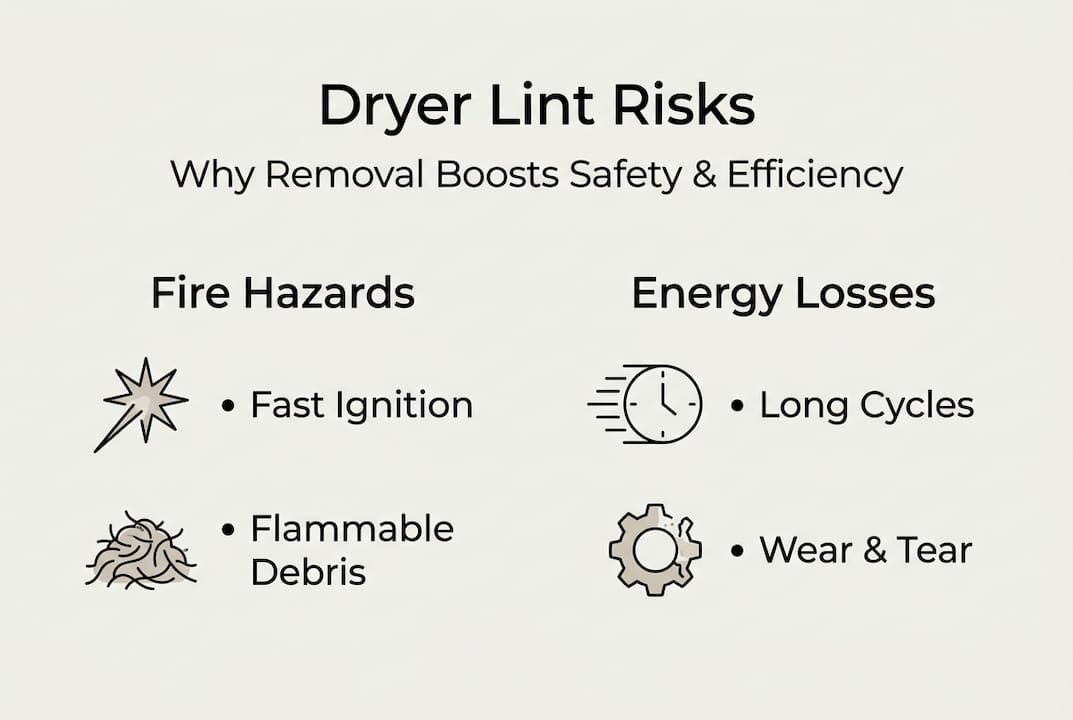
The danger escalates when you consider dryer operating temperatures. Standard dryers reach internal temperatures between 120 and 160 degrees Fahrenheit during normal cycles. Lint accumulation is the leading cause of home dryer fires in the United States, according to the National Fire Protection Association. When vents become clogged, heat cannot escape properly, causing temperatures to spike even higher. At a certain point, the trapped heat ignites the accumulated lint, starting a fire that can spread rapidly through your home's walls.
Avondale's climate introduces additional complications. The area's low humidity and dusty conditions increase static electricity buildup, which can cause lint to cling more stubbornly to vent surfaces. Dust particles mix with fabric fibers, creating an even more combustible mixture. Local homeowners often run dryers more frequently due to outdoor allergens and dust, accelerating lint accumulation compared to more humid regions.
Recognizing warning signs helps you catch problems early:
- Clothes take noticeably longer to dry than usual
- The dryer exterior feels excessively hot to the touch
- A burning smell emerges during or after drying cycles
- The laundry room becomes unusually warm and humid
- Lint appears around the outside vent opening
These symptoms indicate restricted airflow from lint blockage. Ignoring them puts your property at risk. The National Fire Protection Association reports that failure to clean dryers causes an estimated 16,800 home structure fires annually, resulting in deaths, injuries, and millions in property damage. Professional dryer vent cleaning service providers use specialized cameras and tools to inspect the entire vent run, identifying blockages before they become catastrophic.
"A clean dryer vent is not a luxury but a fundamental safety requirement for any home or business using electric or gas dryers."
Beyond fire risk, blocked vents create carbon monoxide hazards in gas dryers. When exhaust cannot escape properly, dangerous gases back up into living spaces. This invisible threat makes regular vent maintenance essential for both electric and gas appliance owners.
How lint buildup affects dryer efficiency and energy use
Lint accumulation transforms your efficient appliance into an energy guzzler. When vents clog, your dryer must work dramatically harder to achieve the same results, directly impacting your utility bills and the machine's lifespan. Understanding this relationship helps you appreciate why lint removal delivers immediate financial returns.
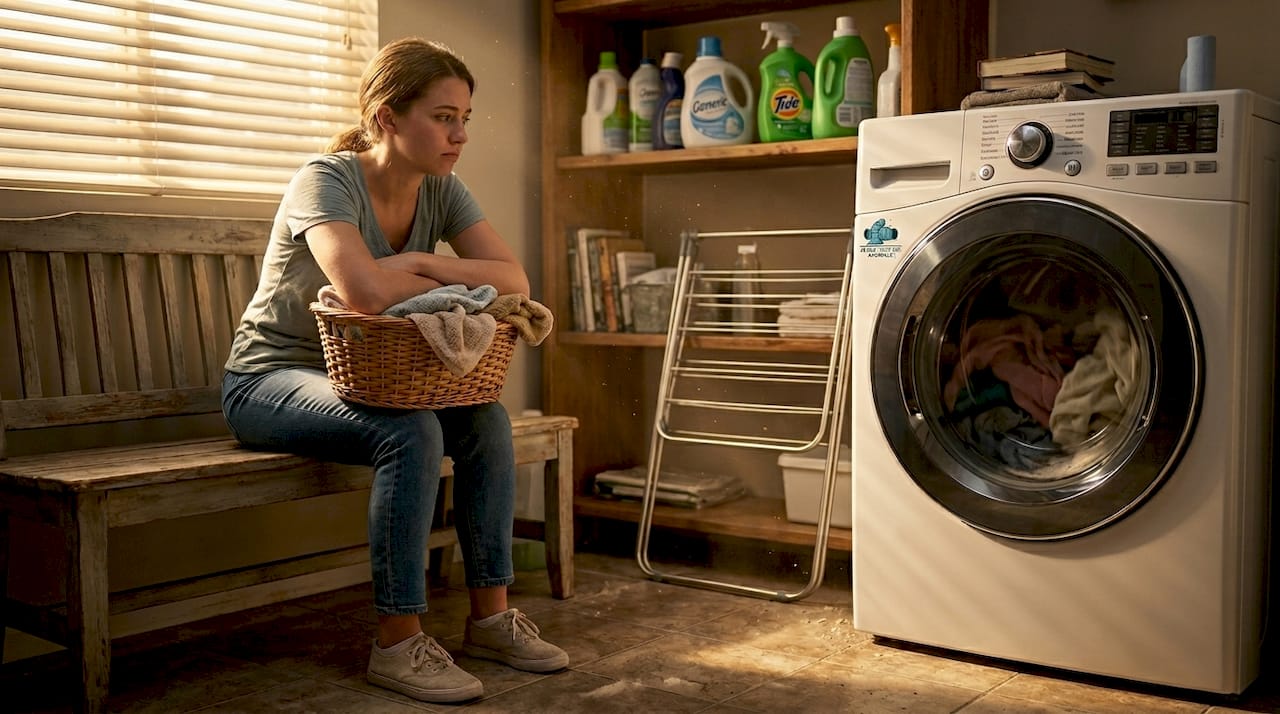
Airflow restriction forces fundamental changes in dryer operation. Clean vents allow hot, moist air to exit quickly, maintaining optimal drying conditions inside the drum. As lint builds up, this exhaust pathway narrows. The dryer's moisture sensor detects that clothes remain damp, triggering extended cycle times. What once took 45 minutes now requires 60 or 75 minutes, sometimes multiple cycles for a single load.
The energy cost implications are substantial. Regular dryer vent lint removal can improve drying efficiency and save on energy bills, according to the Department of Energy. Research shows lint blockage causes efficiency losses between 20 and 30 percent. For a household running the dryer five times weekly, this translates to roughly 50 to 75 extra hours of operation annually. At Arizona's average electricity rates, that represents $75 to $150 in unnecessary annual costs per household.
Consider these efficiency impacts in measurable terms:
- Cycle duration: Clean vents enable 40 to 50 minute cycles; blocked vents extend this to 70 to 90 minutes
- Temperature efficiency: Restricted airflow prevents heat from reaching clothes effectively, wasting energy as heat
- Motor strain: The blower motor works harder against resistance, consuming more electricity and wearing faster
- Heating element stress: Elements cycle on more frequently to compensate for poor air circulation
The following table illustrates typical efficiency degradation:
| Vent Condition | Average Cycle Time | Energy per Load | Annual Extra Cost |
|---|---|---|---|
| Clean vent | 45 minutes | 2.5 kWh | Baseline |
| Moderate buildup | 65 minutes | 3.6 kWh | $60 |
| Heavy blockage | 90 minutes | 5.0 kWh | $140 |
Beyond immediate energy costs, lint buildup accelerates wear on critical components. Heating elements, thermostats, and blower motors all have finite lifespans measured in operating hours. Every unnecessary minute of runtime brings these parts closer to failure. Replacing a heating element costs $150 to $250 including labor. A new blower motor runs $200 to $400. These repairs often become necessary years earlier when vents remain clogged.
Proper lint removal preserves your investment. Modern dryers should last 10 to 15 years with appropriate maintenance. Neglected vents can cut this lifespan by 30 to 40 percent, forcing premature replacement of a $600 to $1,200 appliance.
Pro Tip: Inspect your lint filter after every single load, even if you cleaned it before starting. Excessive lint on the screen after one cycle indicates vent blockage forcing lint backward into the dryer cavity.
Commercial facilities face even steeper costs. Laundromats, hotels, and apartment complexes running dryers continuously see proportionally larger energy waste. Professional dryer vent and air vent cleaning benefits include documented energy savings that justify the service investment within months for high-volume operations.
Best practices for removing dryer vent lint safely and effectively
Effective lint management combines consistent daily habits with periodic deep cleaning. Homeowners can handle routine maintenance while recognizing when professional intervention becomes necessary. This balanced approach maximizes safety and efficiency without unnecessary expense.
Your first line of defense is the lint screen. This simple component captures the majority of loose fibers if properly maintained. Follow these essential steps:
- Remove and clean the screen after every load: Never run consecutive loads without clearing accumulated lint
- Wash the screen monthly: Fabric softener residue creates an invisible film reducing airflow; scrub with warm soapy water
- Inspect the screen housing: Remove the screen completely and vacuum the slot where it sits, clearing trapped debris
- Check screen integrity: Replace damaged or warped screens immediately as they allow more lint into ductwork
Beyond the screen, accessible duct sections require regular attention. Most dryers connect to external vents through flexible or rigid ductwork. You can clean these areas using basic tools:
- Disconnect the dryer: Unplug electric models or shut off gas supply; pull the unit away from the wall carefully
- Remove the duct connection: Loosen the clamp securing the vent hose to the dryer outlet
- Vacuum thoroughly: Use a shop vacuum with a long hose attachment to remove lint from both the dryer outlet and duct interior
- Clean the exterior vent: Go outside and remove the vent cover, clearing any visible lint or debris blocking the opening
- Inspect for damage: Look for crushed sections, holes, or disconnected joints that need repair
- Reassemble securely: Ensure all connections fit tightly with proper clamps to prevent leaks
While these DIY steps help, they cannot reach the entire vent system. Most residential installations run 15 to 35 feet from dryer to exterior, often with multiple turns and vertical sections. Lint accumulates heavily in these inaccessible areas, particularly at elbows and transition points.
Annual professional cleaning addresses these limitations. Professional cleaning can reach vent areas inaccessible by homeowners, ensuring thorough lint removal. Certified technicians use rotating brush systems, high-powered vacuums, and inspection cameras to clean the entire vent run. They also identify structural issues like crushed ducts, improper installations, or code violations that compromise safety.
Pro Tip: Schedule professional dryer vent cleaning at least once yearly, or every six months for large households, multi-unit properties, or if you notice any warning signs like extended drying times.
Timing matters for optimal protection. Spring and fall represent ideal seasons for professional service in Avondale. Spring cleaning removes winter buildup before summer's heavy usage. Fall service prepares your system for increased indoor drying during cooler months when outdoor line drying becomes less practical.
Safety precautions during any cleaning work:
- Always disconnect power before accessing dryer components
- Wear gloves and eye protection when handling ductwork
- Avoid damaging flexible ducts with aggressive tool insertion
- Never use flammable solvents or chemicals inside vents
- Test dryer operation after reassembly to confirm proper airflow
Comparing DIY lint removal versus professional services
Homeowners often wonder whether professional cleaning justifies the cost or if diligent DIY maintenance suffices. The answer depends on your vent configuration, usage patterns, and risk tolerance. Understanding what each approach delivers helps you make informed decisions.
DIY lint removal excels at surface-level maintenance. Cleaning the lint screen, vacuuming the dryer outlet, and clearing the exterior vent opening take minimal time and cost nothing beyond basic tools you likely own. These tasks prevent the most obvious blockages and should never be skipped. However, DIY methods face inherent limitations. Standard vacuum attachments reach only 2 to 4 feet into ductwork. Flexible brush kits extend this range to perhaps 8 to 12 feet, still falling short of most complete vent runs.
Professional services bring specialized equipment and expertise. Professional dryer vent cleaning reduces fire risk more effectively than DIY methods alone. Technicians use rotating brush systems powered by drills or dedicated motors, scrubbing vent walls while simultaneously vacuuming loosened debris. High-capacity vacuums with HEPA filtration capture even fine particles that would escape household units. Inspection cameras allow visual confirmation of cleanliness throughout the entire system.
The following comparison clarifies key differences:
| Factor | DIY Approach | Professional Service |
|---|---|---|
| Cost | $0 to $30 for tools | $100 to $200 per visit |
| Effectiveness | Cleans accessible sections only | Removes lint from entire vent run |
| Time required | 30 to 60 minutes | 60 to 90 minutes |
| Safety verification | Limited to visual inspection | Camera inspection confirms thoroughness |
| Frequency needed | After every load (screen) | Annually or semi-annually |
Consider the advantages of each approach:
DIY Pros:
- Immediate availability whenever you notice issues
- No scheduling or appointment coordination
- Builds familiarity with your dryer system
- Handles routine maintenance between professional visits
- Zero ongoing cost for basic cleaning
DIY Cons:
- Cannot reach full vent length in most homes
- Lacks verification of complete lint removal
- Misses hidden blockages in walls or tight spaces
- No expertise to identify installation problems
- Limited tools may damage flexible ducts
Professional Pros:
- Thorough cleaning of entire vent system
- Identifies safety hazards and code violations
- Proper tools prevent duct damage
- Documentation for insurance or property records
- Often includes minor repairs or adjustments
Professional Cons:
- Requires scheduling and service fees
- Depends on technician availability
- May reveal costly repairs needed
- Overkill for very short, straight vent runs
Your optimal strategy combines both approaches. Maintain vigilant daily habits cleaning the lint screen and performing monthly inspections of accessible areas. Supplement this with annual professional service to address the entire system comprehensively. This layered defense maximizes safety while controlling costs.
Certain situations demand professional attention regardless of your DIY efforts. Contact professional dryer vent cleaning services immediately if you experience burning smells, notice the dryer shutting off mid-cycle due to overheating, or observe lint escaping around the dryer door. These symptoms indicate serious blockages requiring immediate professional intervention.
Commercial properties should always use professional services. The liability risks and usage intensity make DIY cleaning inadequate for businesses, apartments, or any multi-unit application. Regular professional maintenance protects tenants, satisfies insurance requirements, and prevents costly emergency repairs.
Protect your home and business with expert dryer vent cleaning in Avondale
You now understand how lint accumulation threatens your safety and drains your wallet through wasted energy. Taking action protects your investment and gives you peace of mind. While regular screen cleaning helps, only professional service reaches the hidden lint deposits lurking deep in your vent system.
Local Avondale homeowners and business owners benefit from specialized dryer vent cleaning services designed for Arizona's unique climate challenges. Professional technicians remove dangerous buildup, verify proper airflow, and identify potential issues before they become emergencies. Many providers also offer comprehensive air vent cleaning services to improve overall indoor air quality alongside dryer safety. Commercial properties can schedule commercial air duct cleaning to maintain safe, efficient operations for tenants and customers. Investing in annual professional cleaning costs far less than replacing a fire-damaged home or dealing with premature appliance failure.
Frequently asked questions
How often should I remove dryer vent lint?
Clean your lint screen after every single load without exception. Vacuum accessible duct sections monthly. Schedule professional dryer vent cleaning annually for standard households, or twice yearly if you have a large family, pets, or notice any performance issues.
What are the warning signs that my dryer vent needs immediate cleaning?
Watch for clothes taking multiple cycles to dry completely, the dryer exterior becoming extremely hot, burning smells during operation, or excessive lint around the outdoor vent opening. Any of these symptoms indicates dangerous blockage requiring prompt professional attention to prevent fire risk.
Can I clean dryer vents myself or do I need a professional?
You can and should handle routine maintenance like cleaning the lint screen and vacuuming the dryer outlet. However, professional service is essential annually because specialized tools reach the entire vent length, verify complete cleaning, and identify hidden problems that homeowners cannot detect with standard equipment.
Does lint buildup really increase my energy bills?
Yes, significantly. Blocked vents force your dryer to run 20 to 30 percent longer per load, wasting electricity and increasing wear on components. For typical households, this translates to $75 to $150 in unnecessary annual energy costs, plus shortened appliance lifespan requiring earlier replacement.
Why is dryer vent lint more dangerous in Avondale's climate?
Avondale's dry conditions increase static electricity, causing lint to cling more stubbornly to vent walls. Low humidity and frequent dust also mean homeowners run dryers more often, accelerating lint accumulation compared to humid regions. These factors combine to create faster buildup and elevated fire risks without proper maintenance.
What happens during a professional dryer vent cleaning?
Technicians disconnect your dryer, insert rotating brushes through the entire vent run to scrub walls clean, vacuum all loosened debris with high-powered equipment, inspect the system with cameras to verify thoroughness, check for damage or code violations, and test airflow after reassembly to confirm proper operation and safety.