

TL;DR:
- Indoor air in Avondale can be 2 to 5 times more polluted than outdoor air due to allergens hiding in HVAC ductwork. Regular professional cleaning, based on observable triggers, significantly reduces allergens, improves air quality, and enhances HVAC efficiency. Monitoring systems and tailoring maintenance to specific signs yield the best indoor environment for homes and businesses.
Most people in Avondale assume that keeping windows closed and running the AC all summer means breathing clean air. The reality is very different. Indoor air can be 2 to 5 times more polluted than outdoor air because of contaminants hiding inside HVAC ductwork. Every time your system runs, it can push dust, pollen, mold spores, and pet dander directly into the rooms where your family lives and works. This article covers exactly how allergens build up in ducts, what removing them actually does for your health, when cleaning makes sense, and how to keep your air clean year-round in Avondale's unique desert climate.
Table of Contents
- How do allergens accumulate in HVAC ducts?
- Why removing allergens from ducts matters
- How and when should ducts be cleaned?
- Best practices for maintaining healthy ducts and air in Avondale
- What most people get wrong about duct allergens in Avondale
- Improve your indoor air quality with professional help
- Frequently asked questions
Key Takeaways
| Point | Details |
|---|---|
| Hidden allergen hotspots | HVAC ducts collect and spread dust, pollen, and pet dander, worsening indoor air. |
| Targeted duct cleaning | Cleaning is essential when visible mold, dust, or pests are present, not on a strict schedule. |
| Healthier air strategies | Combining duct cleaning with HEPA filters and humidity control best reduces allergens for Avondale properties. |
| Professional cleaning advantages | Expert services remove deep-seated allergens and avoid the risks of improper DIY cleaning. |
How do allergens accumulate in HVAC ducts?
Understanding the problem starts with seeing your HVAC system for what it really is: a network of pathways that pulls air from every room in your home, runs it through a system, and pushes it back out again. That process happens dozens of times per day. Every single cycle is an opportunity for particles to get pulled in and deposited along the walls of your ductwork.
Everyday life is the biggest contributor. Cooking, vacuuming, walking across carpet, opening doors, and even just existing in a space generates airborne particles. Skin cells shed constantly. Pets drop dander and hair. Pollen drifts in every time someone opens a window or walks inside after being outdoors. In Avondale and the broader Phoenix metro area, monsoon season brings heavy dust loads, and those dust particles find their way into your return vents quickly.
Here are the most common allergens that accumulate in HVAC ducts from everyday use:
- Dust and fine soil particles from Avondale's desert environment, especially intense during haboobs and high-wind events
- Pollen from local grasses, trees, and shrubs that peaks in spring and again in fall
- Pet dander from dogs, cats, and other animals, which is microscopic and travels easily through air
- Mold spores that grow when humidity levels rise in ducts, particularly near evaporator coils
- Insect debris and pest droppings in ducts that are older or have gaps or cracks in the sealing
- Construction dust from nearby development or renovation work inside the property
- Volatile organic compounds (VOCs) from cleaning products, paints, or furniture that bind to dust particles
Once these particles enter the return air side of your system, most land inside the ductwork. Coarser particles settle near registers and bends in the duct. Finer particles travel deeper into the system. Over time, the buildup becomes thick enough to act almost like a second layer of insulation inside the duct walls.
Moisture makes everything worse. If your HVAC system has any condensation issues near the evaporator coil, or if a duct run passes through a humid space like an unconditioned attic, mold can begin to grow on the debris layer inside the duct. Once mold establishes, it releases spores every time the fan runs.
"Allergens in your ducts do not just sit still. They recirculate into your living spaces every time your system runs, creating a cycle of exposure that continues as long as the buildup stays in place."
You might already recognize the pattern. If allergies seem worse indoors than outdoors, or if symptoms flare right when the AC kicks on, those are signs you need duct cleaning that should prompt a closer look. That symptom-to-system connection is important and often overlooked.
Why removing allergens from ducts matters
Once you understand how allergens pile up inside ductwork, the case for removing them becomes straightforward. What might surprise you is how broad the impact turns out to be, reaching well beyond just sneezing less.
The most immediate benefit is symptom reduction. People with allergies, asthma, or chronic sinus issues often report noticeable improvements shortly after a thorough cleaning. That happens because the system stops redistributing the allergens that were triggering reactions. Professional duct cleaning prevents re-contamination and reduces airborne irritants pushed into rooms. When the trigger load drops, so do the symptoms.

Here is a look at the most significant benefits most people experience after allergen removal from their ducts:
| Benefit | Before cleaning | After cleaning |
|---|---|---|
| Airborne allergen levels | High, recirculated constantly | Significantly reduced |
| Allergy and asthma symptoms | Frequent and triggered indoors | Less frequent, milder |
| Dust on surfaces | Returns quickly after cleaning | Stays manageable longer |
| HVAC airflow efficiency | Restricted by buildup | Improved, less strain on system |
| Odors from HVAC system | Musty or stale smell when running | Fresh, neutral air output |
| Filter lifespan | Short, clogs fast from debris | Longer between replacements |
For small business owners in Avondale, this matters beyond personal comfort. If employees are dealing with constant indoor allergy symptoms, productivity drops. Customers notice musty smells or poor air quality. In food service or retail environments, air quality is directly tied to customer experience and even regulatory compliance. Cleaner ducts mean fewer sick days, better focus, and a more professional environment overall.
Did you know: Studies on indoor air quality in commercial buildings show that poor ventilation and allergen buildup are among the top causes of employee discomfort and reduced cognitive performance. This is not just a residential concern.
Scheduling healthier air after duct cleaning also contributes to lower energy bills. When ducts are clogged with debris, your HVAC system works harder to push air through. That extra effort drives up electricity consumption. In Avondale's hot summers, where AC runs nearly non-stop from May through September, that added strain adds up to real dollars.
Pro Tip: If you have household members who experience allergy symptoms year-round rather than just seasonally, consider that indoor allergens from ducts may be the primary trigger rather than outdoor pollen. That changes your approach significantly because outdoor pollen is seasonal, but duct buildup keeps circulating 365 days a year.
Knowing whether to try cleaning yourself or call a professional is a question many homeowners wrestle with. Before you grab a vacuum hose and a screwdriver, look at what DIY duct cleaning actually involves and where it falls short compared to professional equipment and methods.
How and when should ducts be cleaned?
This is where a lot of homeowners get tripped up by bad information. The internet is full of services pushing annual duct cleaning contracts. The EPA has a much more measured position on this, and it is worth knowing.
The EPA does not recommend routine cleaning of air ducts as a standard maintenance task unless specific conditions exist. There is no conclusive proof that routine cleaning prevents health problems in the absence of visible problems. That does not mean duct cleaning is useless. It means cleaning is most effective and most justified when triggered by observable issues.
The specific triggers that warrant professional cleaning include:
- Visible mold growth inside ducts or on any component of the HVAC system, including the air handler
- Evidence of rodent or insect infestation inside the ductwork, including droppings, nesting materials, or dead insects
- Excessive dust or debris visibly releasing from supply registers when the system runs
- A significant renovation or construction project completed inside the home or building
- Moving into a previously owned home where duct history is unknown
- New occupants with severe allergies or asthma who are reacting despite good filtration
- A musty or moldy odor that appears only when the HVAC system is running
Here is a clear comparison between doing it yourself and hiring a professional:
| Factor | DIY cleaning | Professional cleaning |
|---|---|---|
| Equipment quality | Household vacuum with brush attachment | Truck-mounted HEPA vacuum with rotary brush systems |
| Reach into system | Limited to first few feet near registers | Full system including main trunk lines and return ducts |
| Risk of spreading debris | High if not properly contained | Managed with negative pressure containment |
| Mold treatment capability | None | Biocide application where appropriate |
| System inspection included | No | Yes, including coils, drain pans, and blower |
| Time required | Several hours, incomplete results | Typically 3 to 5 hours for thorough completion |
The biggest risk with DIY cleaning is creating a bigger problem than you started with. Disturbing settled debris without proper negative pressure containment can lift particles back into the air and deposit them throughout your home. A household vacuum simply does not have the suction power to capture fine particles during the cleaning process.
Professional duct cleaning advantages include access to equipment that creates negative pressure inside the entire duct system simultaneously, preventing particles from escaping while brushes dislodge them from duct walls. That is the key mechanical difference that makes professional results substantially better.
Pro Tip: Before any cleaning appointment, ask the service provider whether they clean all components of the system, including the supply and return ducts, the air handler, evaporator coil, blower, and drain pan. A partial cleaning that misses the coil or blower leaves significant allergen sources in place.
A thorough step-by-step HVAC cleaning process should also include inspecting the duct system for leaks. In many Avondale homes, ducts run through hot attic spaces. Unsealed joints allow unconditioned, dusty attic air to be pulled into the system and delivered right into living areas. Sealing those leaks after cleaning is just as important as the cleaning itself.
After cleaning, the right filter matters. High-efficiency filters rated MERV 11 or higher catch significantly more fine particles than standard fiberglass filters. Ask your technician about the right rating for your system, since some older HVAC units cannot handle the airflow restriction of very high-MERV filters without straining the blower motor. You can also explore your options through vent cleaning services that include filter replacement as part of a complete package.
Best practices for maintaining healthy ducts and air in Avondale
Avondale's climate creates some specific challenges that do not apply to homes in cooler, wetter parts of the country. The combination of intense heat, monsoon season dust, and dry air through winter months means your HVAC system works extremely hard and faces unique contamination risks throughout the year.
Here are the most effective practices for keeping your ducts clean and your air healthy long-term:
- Inspect registers and return vents every six months. Remove register covers and use a flashlight to look inside the duct opening. Visible dust buildup, discoloration on duct walls, or any fuzzy growth are all signs that action is needed.
- Change filters on schedule and track when you do it. In Avondale, most households benefit from replacing standard 1-inch filters every 30 to 45 days during peak AC season and every 60 to 90 days in milder months. Higher-quality filters last longer but still need monitoring.
- Control indoor humidity actively. Avondale's dry climate generally keeps humidity low, but monsoon season can spike indoor humidity quickly. Keeping indoor relative humidity between 30 and 50 percent discourages mold growth inside ducts and on coil surfaces.
- Seal gaps around registers and returns. Small gaps where register boxes meet drywall allow room air to bypass the filter and enter the duct system directly with all its particles.
- Keep HVAC equipment areas clean. The area around your air handler should be clear of stored items, boxes, or debris. Dust near the unit gets drawn into the system during operation.
- Schedule professional inspection promptly after any construction or renovation work. Drywall dust and construction debris are extremely fine and penetrate deep into duct systems. A quick inspection after a kitchen remodel or bathroom renovation is always worth it.
- Monitor for odors. A musty smell when the system first starts up often means mold on the coil or in the duct near the air handler. A burning or dusty smell can indicate heavy debris near the heat strips or blower motor.
Regular HVAC maintenance scheduled at the change of seasons gives you the opportunity to catch problems before they become full-blown allergen factories. A quick coil cleaning and blower inspection in spring, before AC season ramps up, and again in fall before heating season starts, catches most issues early.
Removing HVAC odors is often the first signal that allergen buildup has reached a level worth addressing. That musty or stale smell is your system telling you that mold, bacteria, or concentrated debris is present and actively being circulated. Do not ignore it and hope it goes away with filter changes alone.
Pairing duct cleaning with humidity control and HEPA-grade filtration consistently produces the best indoor air quality results. These three elements work together. Cleaning removes the existing load. Filtration catches new particles before they settle. Humidity control prevents mold from establishing a new colony in cleaned ductwork.
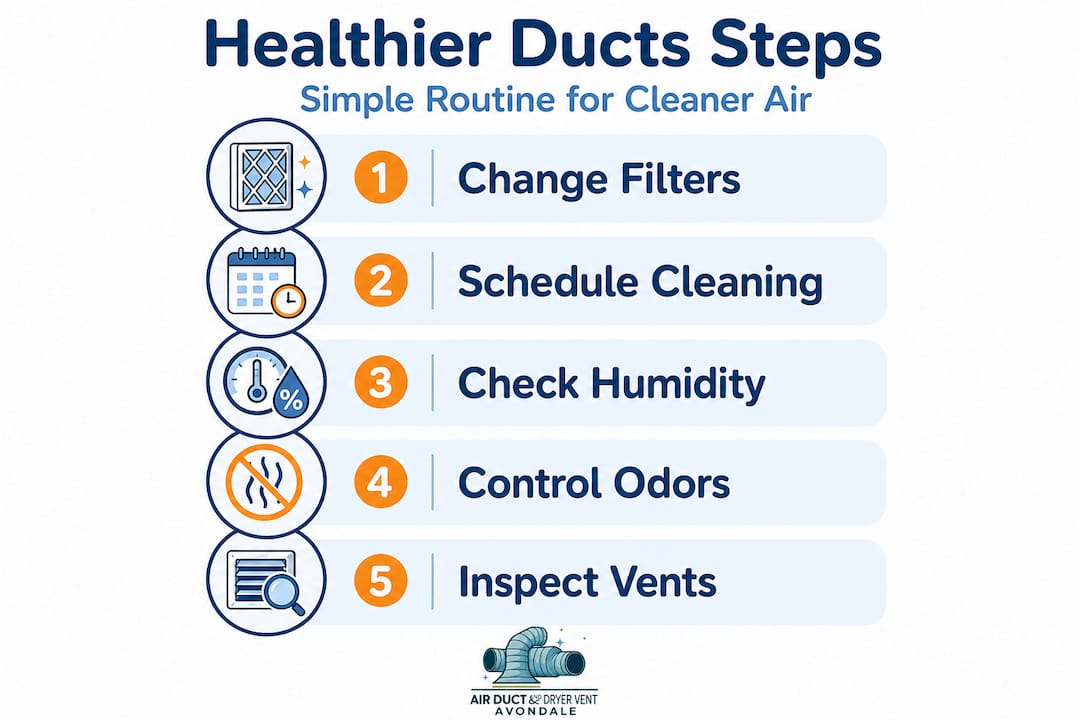
Pro Tip: After a professional cleaning, take photos of the inside of accessible duct sections near your main registers. Use those as your baseline. At your next semi-annual inspection, compare what you see. This makes it easy to judge whether buildup is returning at a rate that warrants action sooner than expected.
What most people get wrong about duct allergens in Avondale
Here is the perspective that took years of working with Avondale homeowners to fully appreciate: most people think of duct cleaning as either something you do every year on a schedule, or something you never really need. Both extremes miss the point entirely.
The real skill is learning to read your system. Scheduled cleaning without observable triggers is not necessarily better for your air quality than prompt cleaning when real warning signs appear. The EPA's own position confirms this. Inadequate cleaning can spread contaminants rather than remove them, and DIY approaches are largely ineffective at reaching the depths of a duct system where allergens settle most thickly.
What this means in practice is that observation beats routine. Walk through your home with fresh eyes twice a year. Look at the dust pattern on your supply registers. Notice whether your filter is gray after 30 days or barely dusty after 60. Pay attention when symptoms flare in specific rooms or at specific times of day. These observations give you actionable information that a calendar date never will.
The most harmful pattern we see is homeowners who attempt partial DIY cleaning because they spotted some dust near a vent, disturb settled debris without containing it, and end up with worse air quality for weeks afterward. The limitations of DIY cleaning are significant and not well advertised by the people selling cleaning attachment kits online.
A genuinely holistic approach to allergen control in your home or business means treating duct cleaning as one tool among several rather than the single solution. Great filters, appropriate humidity management, prompt response to visible problems, and professional intervention when the evidence calls for it: that combination consistently outperforms any rigid schedule. The homes in Avondale with the best indoor air quality tend to be the ones where the owner pays close attention, not the ones that booked an annual service and forgot about it.
Improve your indoor air quality with professional help
Putting these insights into action is a lot easier when you have a local team that already knows Avondale's HVAC systems, climate challenges, and the specific allergens that hit hardest here each season.
At Air Duct and Dryer Vent Cleaning Avondale, we specialize in exactly this kind of targeted, evidence-based service. Our air duct cleaning experts use professional-grade equipment to reach every part of your duct system, not just the accessible sections near registers. We also offer indoor air quality testing so you get actual data on what is in your air before and after service. Business owners can take advantage of our commercial duct cleaning program, designed for the specific demands of commercial HVAC systems. Flexible scheduling, honest assessments, and guaranteed work make it straightforward to take the next step toward genuinely cleaner air.
Frequently asked questions
How do I know if my ducts have allergens?
Look for visible dust around registers, a musty smell when the HVAC runs, or a noticeable increase in sneezing and congestion indoors. These are reliable indicators that allergens like dust, pollen, and dander have built up inside your ductwork and are being recirculated into your living spaces.
Will duct cleaning eliminate all allergens from my home?
Not entirely, but it makes a meaningful difference by removing the concentrated source inside your ducts. Professional cleaning reduces airborne irritants significantly when combined with proper filtration, humidity control, and attention to other allergen sources like bedding and carpets.
How often should ducts be cleaned in Avondale, AZ?
The EPA recommends cleaning only when specific triggers are present, such as visible mold, pest evidence, or excessive dust blowing from registers. Regular inspection every six months is more effective than cleaning on a fixed annual schedule regardless of what you observe.
Does DIY duct cleaning work as well as professional cleaning?
No. DIY cleaning typically reaches only a few feet into the duct and lacks the negative pressure containment needed to prevent debris from spreading. Inadequate cleaning can spread contaminants throughout your home, making the problem worse rather than better. Professional equipment and techniques are far more effective and safer.