
TL;DR:
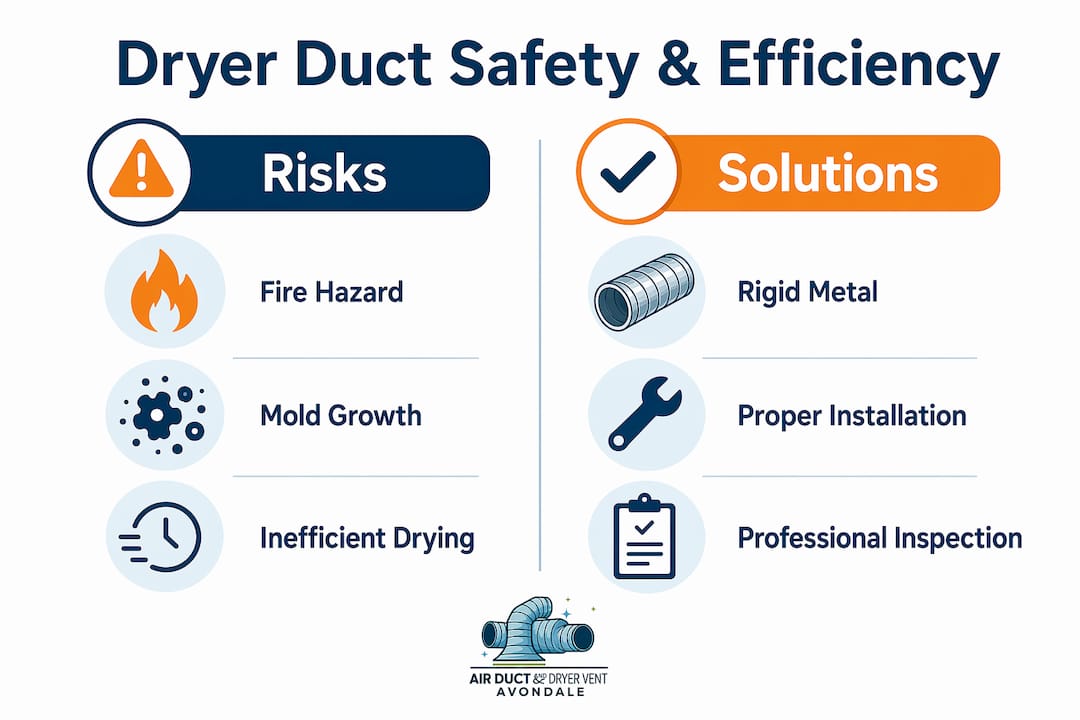
- Replacing non-compliant round dryer ducts with rigid metal ones reduces fire risk and improves airflow efficiency.
- Proper installation following code standards lowers energy bills and prevents mold growth caused by moisture leakage.
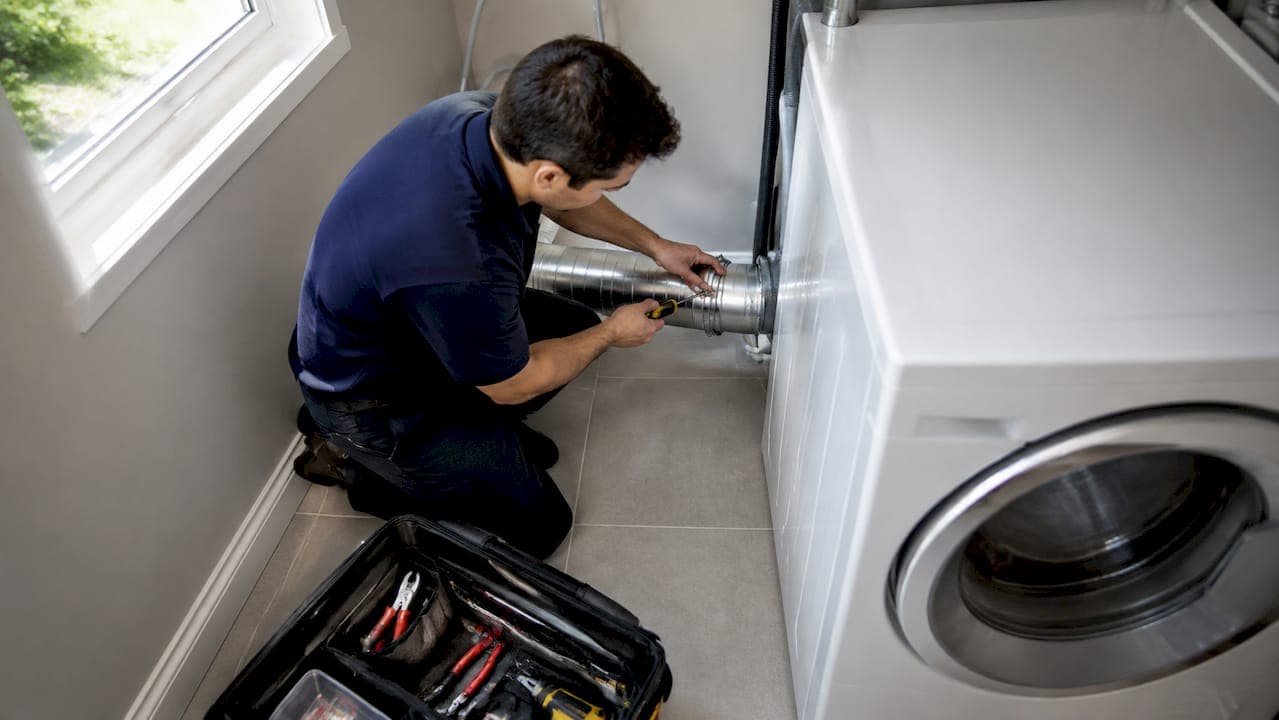
Dryer duct replacement is the process of removing non-compliant or damaged round dryer ducts and installing smooth, rigid metal ducts to restore safe, efficient exhaust airflow. The reason why replace round dryer ducts matters so urgently is fire risk. Clothes dryers cause about 14,000 home fires annually in the U.S., with lint buildup in obstructed or non-compliant ducts as the leading cause. Flexible foil and plastic round ducts trap lint in their ridges, restrict airflow, and violate current building codes. Replacing them with rigid smooth metal ducts is the single most effective step you can take to protect your home and lower your energy bills.
Why round dryer ducts are unsafe and inefficient
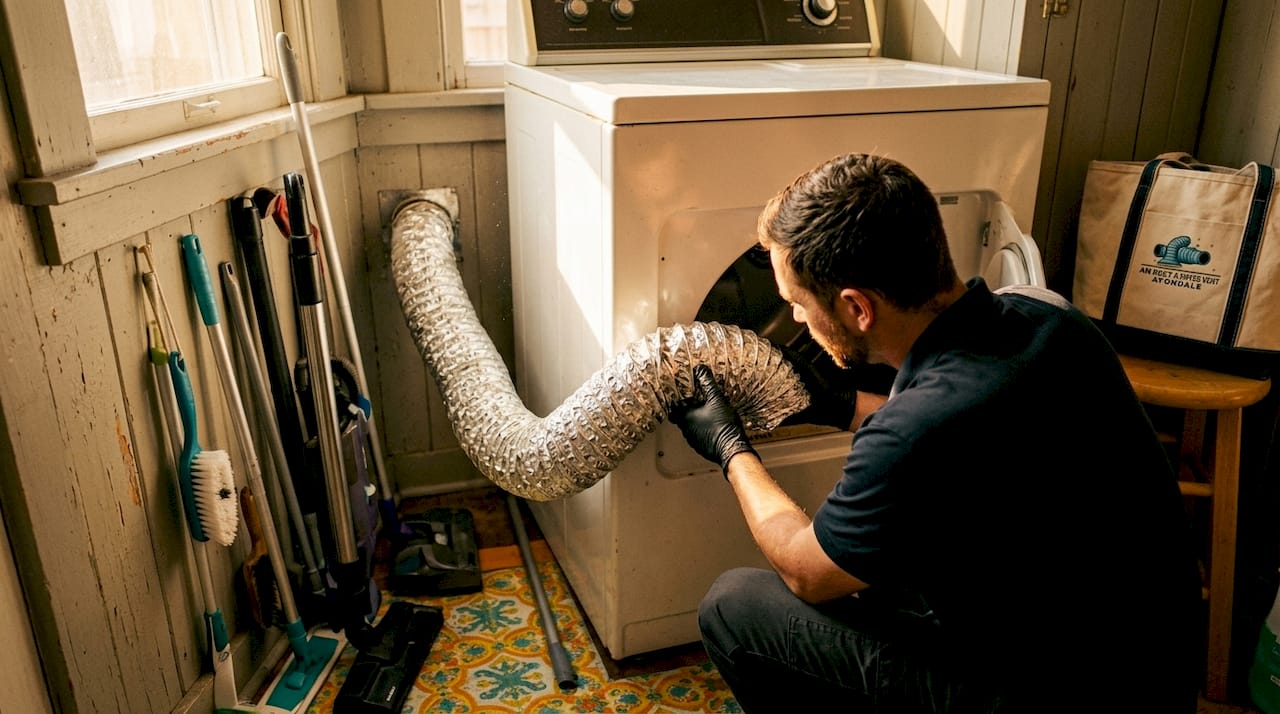
Round dryer ducts fail for two reasons: wrong materials and poor airflow geometry. Flexible foil accordion ducts and corrugated plastic ducts trap lint in every ridge along their length. Lint embeds into corrugated plastic or foil ducts making effective cleaning impossible, and both materials violate modern fire safety codes.
The physical shape of flexible round ducts compounds the problem. A kinked or crushed section cuts airflow velocity sharply, causing lint to settle inside the duct rather than exhaust outside. Lint ignites at temperatures exceeding 500°F, and a dryer's exhaust air regularly reaches that range during a normal cycle. That combination of trapped lint and high heat is exactly what triggers dryer fires.
Beyond fire risk, restricted ducts force your dryer to work harder and longer. Longer drying cycles mean higher electricity or gas consumption every single load. Over months, that extra energy use adds up to a meaningful cost on your utility bill.
- Foil accordion ducts: Ridged interior surfaces catch lint with every load; cleaning cannot fully clear embedded buildup
- Corrugated plastic ducts: Prohibited by current codes; melt or deform under high exhaust temperatures
- Kinked or crushed sections: Reduce airflow velocity and create lint settlement zones
- Screens on exterior caps: Trap lint at the exit point and are prohibited under the IRC
Pro Tip: Pull your dryer away from the wall and look at the duct behind it. If you see a silver accordion-style foil tube or a white plastic hose, you have a non-compliant duct that needs replacement now, not at your next cleaning.
What do building codes require for dryer duct materials?
The 2024 International Residential Code (IRC) Section M1502.4 sets the standard every homeowner and property manager needs to know. Building codes require dryer ducts to be rigid smooth metal with a minimum 4-inch diameter. Flexible foil and plastic ducts are prohibited for the full duct run because their ridged interiors accumulate lint and create fire hazards.
The IRC does allow one short flexible transition duct directly behind the dryer. That section must be semi-rigid metal for flexibility without the crushing risk of foil or plastic. It provides enough give to move the appliance for maintenance while maintaining code compliance.
Duct length and routing rules are equally specific. Long or overly bent ducts reduce airflow velocity, causing lint to settle and increasing both fire risk and appliance strain. The IRC uses an equivalent length calculation that penalizes each elbow to preserve exhaust velocity throughout the run.
| Requirement | IRC Standard |
|---|---|
| Duct material | Rigid smooth metal only |
| Minimum diameter | 4 inches |
| Transition duct | Semi-rigid metal; short section only |
| Exterior termination | No screens; louvered cap required |
| Maximum duct length | Calculated by equivalent length; elbows reduce allowance |
| Interior fasteners | No screws penetrating duct interior |
Replacing non-compliant ducts involving concealed runs or structural penetrations usually requires permits and licensed contractor work. Skipping permits creates liability issues if a fire occurs and your insurance investigates the installation.
How do you know if your dryer ducts need replacement?
Your dryer tells you when the duct is failing. The signs are consistent and easy to spot once you know what to look for. Work through this checklist before scheduling a cleaning, because cleaning is a temporary fix when the duct material or routing is structurally wrong.
- Drying times have doubled. A full load that used to finish in 45 minutes now takes 90 minutes or more. Restricted airflow is the cause.
- The dryer feels hot to the touch. Exhaust heat backing up into the cabinet overheats the motor and heating element.
- You smell something burning. A burning smell during a cycle means lint is scorching inside the duct. Stop the dryer and inspect immediately.
- The exterior vent flap does not open during operation. Weak airflow from a blocked duct cannot push the flap open.
- A professional cleaning found crushed or plastic sections. Cleaning removes lint but cannot fix a collapsed or non-compliant duct.
Pro Tip: Ask your duct cleaning technician to photograph any crushed, kinked, or plastic sections before and after service. That documentation tells you whether cleaning solved the problem or whether replacement is the only real fix.
Airanddryerventcleaningavondale recommends a professional inspection whenever any of these signs appear. A technician can use a camera to check the full duct run, identify material violations, and confirm whether dryer vent cleaning or full replacement is the right next step.
What are the real benefits of replacing dryer ducts?
Replacing non-compliant round dryer ducts delivers four concrete improvements that cleaning alone cannot provide. Each one has a direct impact on your safety, your energy bill, and your appliance's lifespan.
Fire risk drops to near zero. Smooth rigid metal ducts give lint nowhere to accumulate. Airflow moves lint out of the system with every cycle instead of letting it build up over months. That eliminates the primary condition that causes dryer fires.
Drying cycles get faster and cheaper. Replacing a faulty dryer duct reduces drying times and energy bills immediately. A properly sized, unobstructed 4-inch rigid metal duct moves exhaust air at the velocity your dryer was designed to produce. Shorter cycles mean less electricity or gas per load, every day.
- Energy savings: Faster cycles reduce per-load energy consumption without any change to your dryer settings
- Appliance longevity: A dryer that exhausts properly runs cooler, putting less strain on the motor and heating element
- Indoor air quality: Properly sealed rigid ducts prevent moisture from leaking into wall cavities, stopping mold growth in ducts before it starts
- Code compliance: A compliant installation protects you during home inspections, insurance claims, and property sales
Mold is a benefit of replacement that most homeowners overlook entirely. Damaged or poorly sealed ducts allow humid exhaust air to leak into wall cavities and duct interiors. In Arizona's monsoon season, that moisture creates ideal conditions for mold growth. Replacing the duct and sealing it correctly eliminates that pathway. You can learn more about what accumulates inside failing ducts by reviewing common dryer vent contaminants that professionals find during inspections.
One often-missed installation detail: interior screws in duct joints create lint catch points and accelerate clogging. A quality replacement uses tape or crimped connectors at every joint to keep the interior surface smooth. That single detail separates a compliant installation from one that will clog again within months. For property managers handling appliance cleaning during moveout, duct condition is one of the most commonly missed items that affects both safety and tenant turnover costs.
Key Takeaways
Replacing round dryer ducts with rigid smooth metal is the only permanent fix for lint-related fire risk, code violations, and lost dryer efficiency.
| Point | Details |
|---|---|
| Fire risk is real and preventable | Dryers cause about 14,000 U.S. home fires annually; compliant rigid metal ducts eliminate the primary cause. |
| Codes prohibit foil and plastic ducts | IRC M1502.4 requires rigid smooth metal with a minimum 4-inch diameter for the full duct run. |
| Cleaning cannot fix structural problems | Crushed, kinked, or non-compliant ducts require replacement, not just lint removal. |
| Replacement pays for itself | Faster drying cycles and lower energy use begin immediately after a compliant duct installation. |
| Installation quality matters | Smooth joints with tape or crimped connectors prevent lint catch points that cause rapid reclogging. |
Why I think cleaning-only programs miss the point
After seeing hundreds of dryer duct inspections, the pattern is clear: homeowners schedule a cleaning, feel reassured, and repeat the cycle every year or two. What they rarely hear is that the duct material itself is the problem. You cannot brush lint out of corrugated foil effectively. The ridges hold it. The cleaning rod pushes some lint forward and leaves the rest embedded in the walls of the duct.
The cases that concern me most are the ones where the duct runs through a wall cavity and nobody has looked at it since the house was built. Builders sometimes install whatever flexible duct was on the truck that day. By the time a homeowner notices long drying times, that duct has been accumulating lint for a decade. A cleaning gives them another year of false confidence.
My honest recommendation: if your home is more than 10 years old and you have never had the duct material verified, treat it as non-compliant until proven otherwise. Ask specifically whether the duct is rigid metal or flexible foil. If the answer is foil or plastic, schedule replacement, not cleaning. The air vent replacement conversation is one worth having before a fire makes it irrelevant. Proper equivalent length calculations and minimizing elbows are also things most DIY replacements get wrong. A licensed technician who follows IRC equivalent length rules will install a duct that actually exhausts at the right velocity, not just one that looks correct from the outside.
— Shaun
Professional dryer duct services in Avondale, AZ
If your dryer is running long cycles, overheating, or you have never had the duct material inspected, a professional evaluation is the right starting point.
Airanddryerventcleaningavondale provides thorough dryer duct inspections, lint removal, and full duct replacement for homeowners and property managers in Avondale, Arizona. The team identifies non-compliant materials, crushed sections, and routing problems that cleaning alone cannot resolve. Every replacement follows current IRC standards for rigid metal ducts, correct diameter, and proper exterior termination. Schedule a professional dryer vent cleaning or a full duct replacement evaluation to get a clear picture of your system's condition and what it needs to perform safely.
FAQ
Why replace round dryer ducts instead of just cleaning them?
Cleaning removes lint temporarily, but cleaning cannot restore efficiency when ducts are crushed, kinked, or made of prohibited materials. Replacement is the only permanent fix for structural or material problems.
What type of dryer duct does code require?
The IRC requires rigid smooth metal ducts with a minimum 4-inch diameter. Flexible foil and plastic ducts are prohibited for the full duct run due to lint buildup and fire risk.
How long does dryer duct replacement take?
A professional or skilled replacement typically takes under one hour and delivers immediate improvements in drying time and energy use.
Can a bad dryer duct cause mold in my home?
Yes. Damaged or poorly sealed ducts allow moist exhaust air to leak into wall cavities, creating conditions where mold and mildew can grow and reduce indoor air quality.
Do I need a permit to replace a dryer duct?
Replacements involving concealed wall runs or structural penetrations generally require permits and licensed contractor work. Check with your local building department before starting the project.