
TL;DR:
- Restaurant kitchen exhaust duct cleaning removes grease and contaminants from the entire exhaust system to prevent fires. Regular inspections and professional cleaning are essential for NFPA 96 compliance, safety, and maintaining HVAC efficiency. Proper documentation and scheduled maintenance protect restaurants from legal, financial, and health risks.
Restaurant kitchen exhaust duct cleaning is defined as the removal of grease, carbon, and contaminants from the full exhaust path, covering the hood, plenum, ductwork, fans, and rooftop discharge. This process is the single most effective way to address why restaurant kitchens need duct cleaning: combustible grease accumulates fast, and NFPA 96 sets the legal and safety standard every commercial kitchen must meet. Neglecting this maintenance creates fire hazards, health code violations, and HVAC failures that cost far more than the cleaning itself. Restaurant owners and kitchen managers who treat duct cleaning as optional are taking on risks that no insurance policy fully covers.
Why restaurant kitchens need duct cleaning: the core risks
Grease fires in commercial kitchens start inside the exhaust ductwork, not just on cooking surfaces. Grease ignites inside ducts and spreads rapidly through the entire exhaust system before anyone in the kitchen notices smoke. That is why NFPA 96 treats duct grease as a primary fire hazard, not a secondary concern.
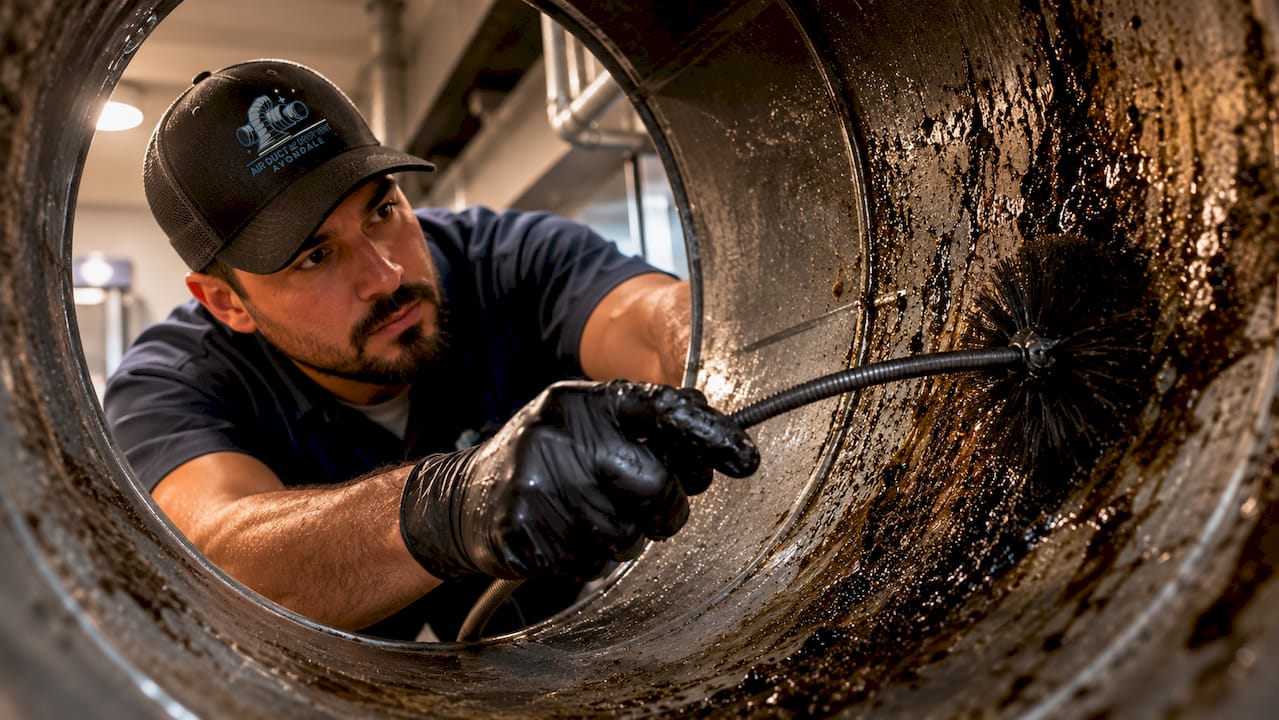
The specific threshold matters. A grease layer of 0.002 inches inside a duct triggers a mandatory cleaning requirement under NFPA 96 for high-volume kitchens. That is thinner than a sheet of standard copy paper. Most kitchen managers would never spot that buildup during a routine visual check.
Beyond fire risk, dirty ducts create serious air quality problems for staff and customers:
- Grease vapor and smoke recirculation force kitchen staff to breathe contaminated air for entire shifts.
- Mold and bacterial growth thrive in warm, grease-coated ductwork, especially in humid climates like Arizona summers.
- Dust and allergen buildup migrate from ducts into the dining area, affecting customer comfort and health.
- Carbon monoxide risk increases when blocked exhaust paths prevent combustion gases from venting properly.
HVAC efficiency also takes a measurable hit. A 0.042-inch layer of dust or grease on HVAC coils reduces system efficiency by up to 21%. That translates directly into higher utility bills and more frequent equipment failures. For a restaurant running high-heat cooking equipment 12 or more hours a day, that efficiency loss compounds quickly.
How often should ducts in restaurant kitchens be cleaned?
NFPA 96 does not set a single fixed cleaning schedule for all kitchens. Inspection frequency depends on cooking volume, and cleaning is triggered by what inspectors find, not by the calendar alone. That distinction matters because a busy steakhouse and a low-volume café have completely different grease accumulation rates.
The NFPA 96 inspection schedule works as follows:
- Monthly inspections apply to solid-fuel cooking operations, such as wood-fired ovens and charcoal grills. These produce the heaviest grease and carbon deposits.
- Quarterly inspections apply to high-volume cooking operations, including 24-hour restaurants and high-output fryer kitchens.
- Semiannual inspections apply to moderate-volume kitchens with standard cooking equipment.
- Annual inspections apply to low-volume kitchens, such as seasonal operations or facilities with limited cooking activity.
Cleaning happens when an inspection reveals grease deposits at or above the NFPA 96 threshold. A kitchen that passes its quarterly inspection with minimal buildup does not need a full cleaning that quarter. One that shows heavy accumulation after six weeks does.
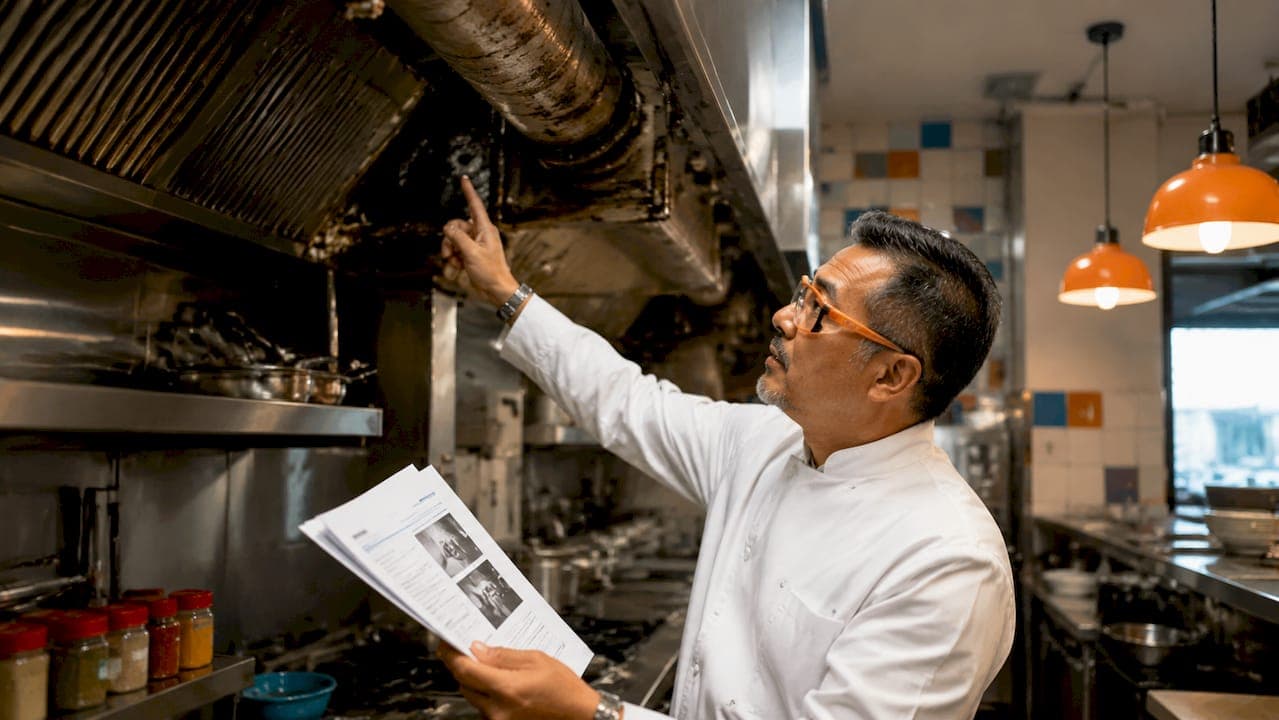
Hard-to-reach duct sections are where most violations occur. Long horizontal duct runs, elbows, and sections near the rooftop fan collect grease faster than straight vertical sections. Inspectors must physically access these areas, which requires code-compliant access panels installed at intervals throughout the ductwork.
Pro Tip: Daily grease filter maintenance by kitchen staff is the single most effective way to slow duct accumulation between professional inspections. Filters that are cleaned or replaced on schedule prevent raw grease from entering the ductwork in the first place.
What does a professional duct cleaning service involve?
Professional exhaust duct cleaning covers the entire system, not just the visible hood surface. Certified cleaning includes the hood, plenum, ducts, fans, and rooftop discharge, with the goal of cleaning all surfaces to bare metal where feasible. A surface wipe of the hood face does not meet NFPA 96 requirements.
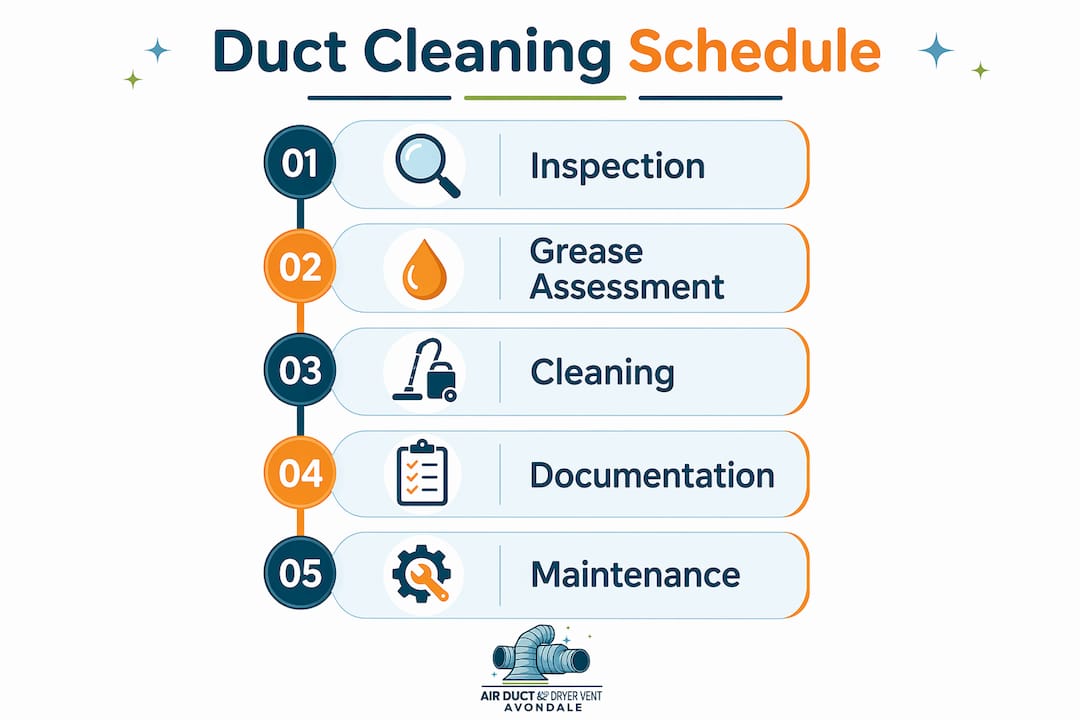
The cleaning process follows a defined sequence:
- Pre-inspection and access panel check. Technicians verify that code-compliant access doors exist at all required duct intervals. Missing panels are a compliance violation on their own.
- Dry scraping. Heavy grease deposits are scraped from duct walls before any liquid is applied.
- Chemical degreaser application. Food-safe chemical degreasers break down grease bonds on metal surfaces throughout the duct run.
- Mechanical agitation. Rotary brushes and pneumatic tools work the degreaser into corners, seams, and fan blades.
- High-pressure rinsing. Hot water rinse removes loosened grease and chemical residue from all surfaces.
- Fan and rooftop unit cleaning. The exhaust fan and discharge point receive the same treatment as the interior ductwork.
- Documentation. Before-and-after photos, a signed service report, and a service tag affixed to the hood confirm the work for NFPA 96 compliance records.
Documented cleaning reports with photos and service tags are not just paperwork. They are the evidence that protects your restaurant during a fire investigation, a health inspection, or an insurance claim. Without them, a cleaning that happened may as well not have happened.
Pro Tip: Ask your cleaning contractor for a copy of the service report immediately after each visit. File it with your insurance documents. If a fire inspector or insurer asks for proof of compliance, you need that report on hand, not chasing a contractor weeks later.
Many restaurant owners confuse a thorough hood wipe with full NFPA 96-compliant cleaning that covers the entire exhaust path. That confusion is one of the most common reasons restaurants fail fire inspections. Only a certified professional with the right equipment and documentation can deliver a compliant result.
What are the real benefits of regular duct cleaning?
The benefits of kitchen duct cleaning go well beyond passing an inspection. Professional duct cleaning boosts airflow by 4%–32%, which directly reduces the mechanical load on exhaust fans and makeup air units. Lower mechanical load means longer equipment life and fewer emergency repair calls.
The operational gains stack up across several areas:
- Energy savings. Cleaner coils and ducts restore HVAC efficiency, cutting utility costs that compound over a full operating year.
- Odor reduction. Grease-coated ducts trap and recirculate cooking odors. Clean ducts exhaust them properly, improving the dining room environment.
- Staff health. Kitchen workers exposed to cleaner air report fewer respiratory complaints. That matters for retention in a high-turnover industry.
- Equipment longevity. Exhaust fans running against restricted airflow wear out faster. Clean ducts extend fan motor life measurably.
- Insurance and compliance protection. Well-documented cleanings support both regulatory compliance and insurance coverage in the event of a fire.
The HVAC efficiency improvement from clean ductwork also reduces the strain on cooling systems, which is a significant factor in Avondale, Arizona, where summer temperatures push HVAC systems hard. A restaurant that cleans its ducts on schedule spends less on cooling and repairs than one that defers maintenance.
Key Takeaways
Restaurant kitchens require regular duct cleaning because grease buildup creates fire hazards, reduces HVAC efficiency, and triggers NFPA 96 compliance violations that carry real legal and financial consequences.
| Point | Details |
|---|---|
| NFPA 96 sets the legal threshold | A grease layer as thin as 0.002 inches triggers a mandatory cleaning requirement in high-volume kitchens. |
| Cleaning frequency follows inspection findings | NFPA 96 ties cleaning to grease thickness detected at inspection, not to a fixed calendar date. |
| Full system coverage is required | Compliant cleaning covers the hood, plenum, ducts, fans, and rooftop discharge, not just the visible hood surface. |
| Efficiency gains are measurable | Clean ducts improve airflow by 4%–32% and restore HVAC efficiency by up to 21%. |
| Documentation protects the business | Service reports and photos are required evidence for fire inspections, health audits, and insurance claims. |
What I've learned from watching restaurants skip this step
Shaun here. After years of working in commercial HVAC cleaning, the pattern I see most often is not outright negligence. It is misplaced confidence. A kitchen manager sees a clean-looking hood and assumes the ductwork behind it is fine. It almost never is.
The second most common mistake is treating duct cleaning as a one-time fix rather than a scheduled program. A restaurant that cleans its ducts once after a near-miss and then waits three years has not solved the problem. Grease does not stop accumulating because you cleaned it once.
What actually works is building the inspection and cleaning schedule into the annual budget from the start. Kitchens that do this spend less overall because they avoid emergency cleanings, equipment failures, and the worst-case scenario: a grease fire that shuts down the business for weeks. Neglected grease filters are the hidden accelerant in most of these situations. Staff filter maintenance between professional visits is not optional. It is the difference between a quarterly cleaning and a monthly one.
The restaurants I have seen handle this best treat their exhaust system the same way they treat their cooking equipment: scheduled service, documented records, and no deferred maintenance. That mindset keeps kitchens open and staff safe.
— Shaun
Airanddryerventcleaningavondale serves restaurant kitchens in Avondale
Airanddryerventcleaningavondale provides commercial duct cleaning services built specifically for restaurant kitchens and commercial food service operations in Avondale, Arizona. Every service follows NFPA 96 standards, covers the full exhaust system from hood to rooftop discharge, and includes documented before-and-after photos for your compliance records. Airanddryerventcleaningavondale also offers air quality testing to verify that your kitchen environment meets health and safety benchmarks after cleaning. Flexible scheduling, including after-hours appointments, means cleaning happens on your timeline, not at the cost of service hours. Contact Airanddryerventcleaningavondale to schedule an inspection and get a clear picture of where your exhaust system stands today.
FAQ
What triggers a mandatory duct cleaning under NFPA 96?
NFPA 96 requires cleaning when grease deposits inside the ductwork reach 0.002 inches in high-volume kitchens. Cleaning is triggered by inspection findings, not by a fixed date on the calendar.
How often should a high-volume restaurant inspect its kitchen ducts?
High-volume kitchens require quarterly inspections under NFPA 96. Solid-fuel operations such as wood-fired or charcoal cooking require monthly inspections due to heavier grease and carbon output.
Does a surface wipe of the hood count as compliant cleaning?
No. NFPA 96-compliant cleaning must cover the entire exhaust path, including the plenum, duct runs, exhaust fan, and rooftop discharge. A hood surface wipe does not satisfy the standard.
What documentation should a restaurant keep after duct cleaning?
Restaurants should retain the signed service report, before-and-after photos, and the service tag affixed to the hood after each cleaning. These records are required for fire inspections and insurance purposes.
Can dirty ducts affect a restaurant's energy costs?
Yes. Grease and dust buildup on HVAC coils reduces system efficiency by up to 21%, and restricted airflow forces exhaust fans to work harder. Both effects increase utility costs and accelerate equipment wear.