
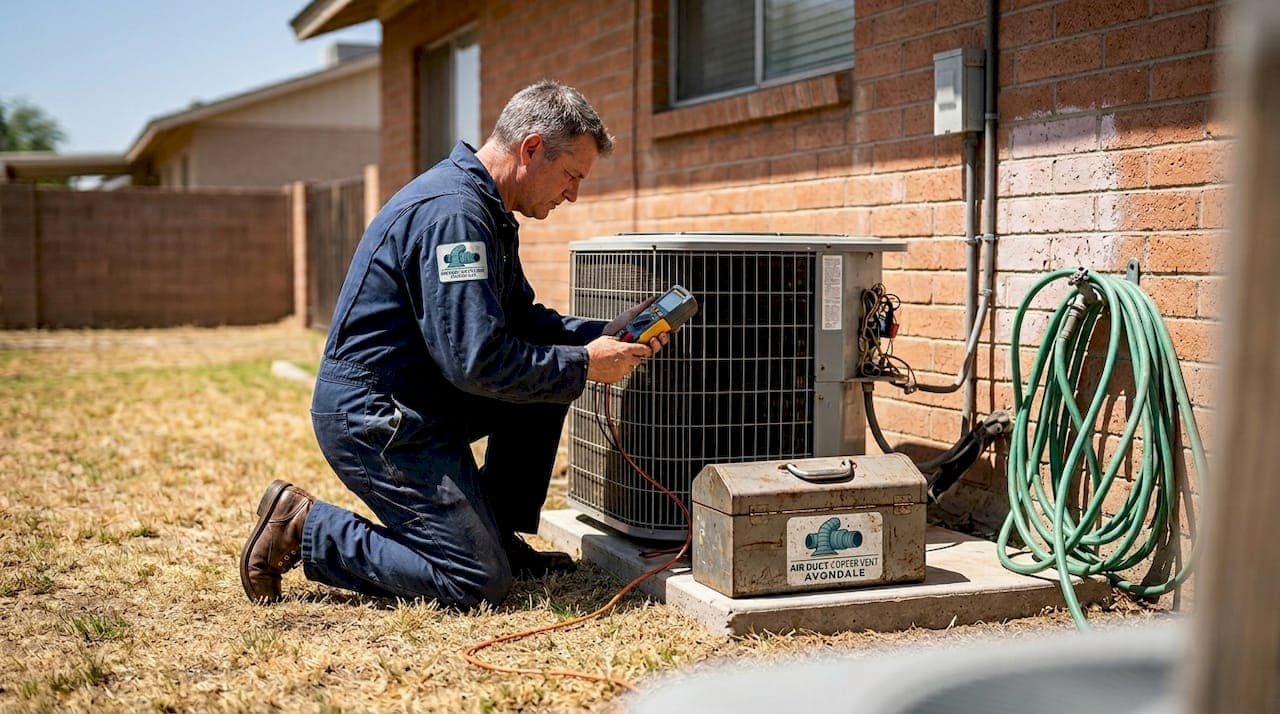
If your HVAC system is more than 10 years old, it's quietly costing you more than you realize. Avondale summers are brutal, and Arizona's extreme heat shortens HVAC lifespan and reduces system capacity significantly. That means your older unit is working harder, cooling less effectively, and pushing your utility bills higher every single month. Upgrading your system isn't just about staying cool. It's about breathing cleaner air, spending less on energy, and protecting your home's long-term value.
Table of Contents
- Why your HVAC matters more in Avondale
- Top benefits of upgrading your HVAC system
- Upgrade paths: Full replacement vs retrofits
- Regulatory and environmental considerations for 2026
- How to get started with your HVAC upgrade in Avondale
- Frequently asked questions
Key Takeaways
| Point | Details |
|---|---|
| Beat Arizona heat | Upgrading your HVAC system ensures better comfort and performance during extreme Avondale summers. |
| Maximize energy savings | High-SEER2 systems paired with utility rebates reduce monthly bills and environmental impact. |
| Improve indoor air | Modern HVAC equipment and retrofits greatly enhance your home's air quality for a healthier living space. |
| Future-proof your investment | Upgrading now avoids future regulatory headaches and ensures your home stays compliant with the latest standards. |
Why your HVAC matters more in Avondale
Avondale isn't like most cities. Temperatures regularly exceed 110°F in summer, and that kind of heat puts your HVAC system under constant, extreme stress. Most systems are rated for moderate climates, so running them at full capacity for months at a time accelerates wear and reduces their ability to cool your home properly.
High ambient temperatures in Arizona cut HVAC capacity by 10 to 15% and decrease system life. That's not a minor inconvenience. That's a measurable drop in performance that shows up in your comfort level and your monthly bill.
Older homes in Avondale face an additional problem: leaky ductwork. When ducts have gaps or cracks, conditioned air escapes before it ever reaches your living spaces. You're paying to cool air that never makes it to your bedroom or living room. Understanding the air filter benefits in Avondale homes can experience is a great first step, and pairing that with ductwork repair can make a dramatic difference in both efficiency and air quality.
Here are the key regional factors that make HVAC performance critical in Avondale:
- Extreme summer heat runs systems at maximum load for 5 to 6 months per year
- Dust and desert particulates clog filters and coils faster than in other climates
- High cooling demand means even small efficiency losses translate to big cost increases
- Older duct systems in Avondale homes often lose 20 to 30% of conditioned air
Local reality check: An HVAC system that performs adequately in a mild climate may be completely overwhelmed in Avondale. Efficiency ratings tested in standard lab conditions don't reflect real-world Arizona performance.
Pro Tip: Schedule a duct inspection before investing in a new HVAC unit. Leaky ducts will undermine even the most efficient new system, so fixing them first maximizes your return on investment.
Top benefits of upgrading your HVAC system
Upgrading your HVAC system in Avondale delivers benefits that go well beyond just staying cool. Modern systems are built for efficiency, cleaner air, and lower operating costs.
Utilities offer rebates up to $225 per ton for high-efficiency HVAC units rated at 15.2 SEER2 or higher. That's real money back in your pocket just for choosing a more efficient system. Combined with lower monthly energy bills, the financial case for upgrading is strong.
New systems also use low global warming potential (low-GWP) refrigerants, which are better for the environment and are now required by federal regulations. And modern variable-speed compressors maintain more consistent temperatures, reducing the hot and cold swings that older single-stage systems create.
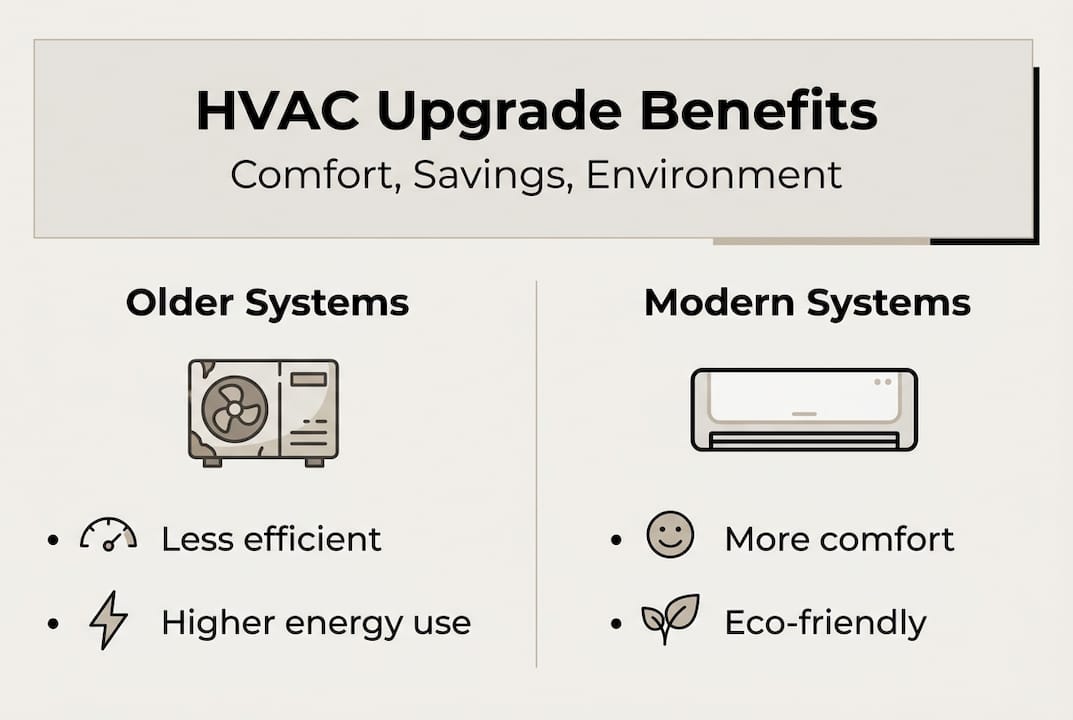
Here's a quick comparison of old versus new HVAC performance:
| Feature | Older system (pre-2015) | New high-efficiency system |
|---|---|---|
| SEER2 rating | 8 to 12 | 15.2 to 22+ |
| Refrigerant type | R-22 or R-410A | R-454B or R-32 |
| Utility rebate eligibility | None | Up to $225 per ton |
| Air filtration capability | Basic | Advanced (MERV 13+) |
| Noise level | High | Significantly reduced |
| Estimated lifespan in AZ | 10 to 12 years | 15 to 18 years |
Beyond energy savings, new systems dramatically improve indoor air quality. Better filtration captures more dust, pollen, and allergens, which matters a lot in Avondale's dusty desert environment. Pairing your upgrade with attention to healthier air and lower bills gives you a complete picture of what's possible. Working with professional HVAC cleaners ensures your new system starts clean and stays that way.
Key benefits Avondale homeowners gain from upgrading:
- Lower monthly utility bills from higher SEER2 efficiency
- Rebate savings of up to $225 per ton from SRP
- Cleaner indoor air with advanced filtration
- More consistent room-to-room temperatures
- Quieter operation with variable-speed technology
- Reduced environmental impact from low-GWP refrigerants
Upgrade paths: Full replacement vs retrofits
Not every homeowner needs to replace their entire system right away. Depending on your budget and your current system's age, a targeted retrofit might be the right first step.
HVAC retrofits like improved filtration (MERV 13), UV lights, and energy recovery ventilators (ERVs) yield better air quality but are less effective than full replacements for energy savings. That's an important distinction. If your primary concern is air quality and your system is less than 10 years old, a retrofit can deliver meaningful improvements at a lower upfront cost.
Here's a side-by-side look at your main options:
| Upgrade type | Upfront cost | Energy savings | Air quality impact | Best for |
|---|---|---|---|---|
| Filter upgrade (MERV 13) | Low | Minimal | Moderate | Systems under 8 years old |
| UV light installation | Low to medium | None | Good | Mold and bacteria concerns |
| Duct sealing | Medium | High | Moderate | Leaky older duct systems |
| Full system replacement | High | Maximum | Excellent | Systems 10+ years old |
Here's how to decide which path makes sense for your home:
- Check your system's age. If it's over 10 years old, a full replacement almost always makes more financial sense than repeated repairs.
- Assess your duct condition. Leaky ducts reduce the value of any upgrade. Seal them first.
- Review your utility bills. A sudden spike in cooling costs often signals a system that's losing efficiency fast.
- Explore rebate eligibility. Full replacements with qualifying units unlock the biggest rebates.
- Consider your air quality concerns. If allergies or dust are a major issue, prioritize filtration upgrades alongside any system work.
Exploring your HVAC filter options is a smart starting point regardless of which upgrade path you choose.
Pro Tip: If your system is between 8 and 12 years old and needs a major repair, use the "5,000 rule." Multiply the repair cost by the system's age. If the result exceeds $5,000, replacement is usually the smarter investment.
Regulatory and environmental considerations for 2026
The HVAC industry changed significantly at the start of 2026, and Avondale homeowners need to understand what that means for their systems and their wallets.
New HVAC units as of 2026 must use low-GWP refrigerants like R-454B or R-32 instead of R-410A. This federal mandate affects every new system sold in the country. If your current system uses R-410A or the older R-22, you're not required to replace it immediately. But here's the catch: as production of these refrigerants winds down, repair costs will rise sharply.
Here's what the 2026 refrigerant changes mean for you:
- R-22 refrigerant is already scarce and expensive, making older systems costly to repair
- R-410A production is being phased out, so recharging your current system will get pricier
- New systems using R-454B or R-32 are more efficient and environmentally responsible
- Upgrading now locks in access to affordable parts and refrigerant for years to come
- Waiting until your old system fails completely may mean emergency replacement at peak summer prices
Important: Homeowners with systems still running R-22 should treat every repair season as a potential tipping point. One major refrigerant leak could cost more to fix than a new system would cost to install.
Beyond refrigerants, the 2026 efficiency standards also raise the minimum SEER2 requirements for new equipment sold in the Southwest. This means any new system you install today will be more efficient than what was available just a few years ago. Scheduling after-hours HVAC cleaning is a practical way to keep your current system running well while you plan your upgrade timeline.
How to get started with your HVAC upgrade in Avondale
You've got the facts. Now it's time to take action before the next Avondale summer hits full force.
At Air Duct and Dryer Vent Cleaning Avondale, we help homeowners get the most out of every HVAC upgrade. Clean ducts and vents are the foundation of any efficient system, and our Avondale HVAC duct cleaning service removes the dust, debris, and buildup that quietly drags down your system's performance. We also offer air vent cleaning services to make sure every room in your home gets the clean, conditioned air it deserves. Not sure where your air quality stands right now? Our indoor air quality testing gives you a clear baseline so you can measure real improvement after your upgrade. Reach out today for a free consultation and let's build a plan that fits your home and your budget.
Frequently asked questions
What efficiency rating should I look for in a new HVAC system in Arizona?
Choose a unit with a SEER2 rating of 15.2+ to qualify for the highest utility rebates and maximize your energy savings in Arizona's demanding climate.
Can HVAC retrofits help improve air quality without replacing my whole system?
Yes. Upgrades like MERV 13 filters, UV lights, and sealed ducts deliver real air quality gains, but full replacements outperform retrofits when it comes to overall energy efficiency and long-term results.
How are refrigerant regulations changing for HVAC systems in 2026?
As of 2026, all new systems must use low-GWP refrigerants like R-454B or R-32, replacing the R-410A that most current systems rely on.
Will upgrading my HVAC system really save me money in Avondale?
Absolutely. Between higher SEER2 efficiency and available utility rebates, most Avondale homeowners see meaningful reductions in both monthly energy costs and long-term HVAC repair expenses.