
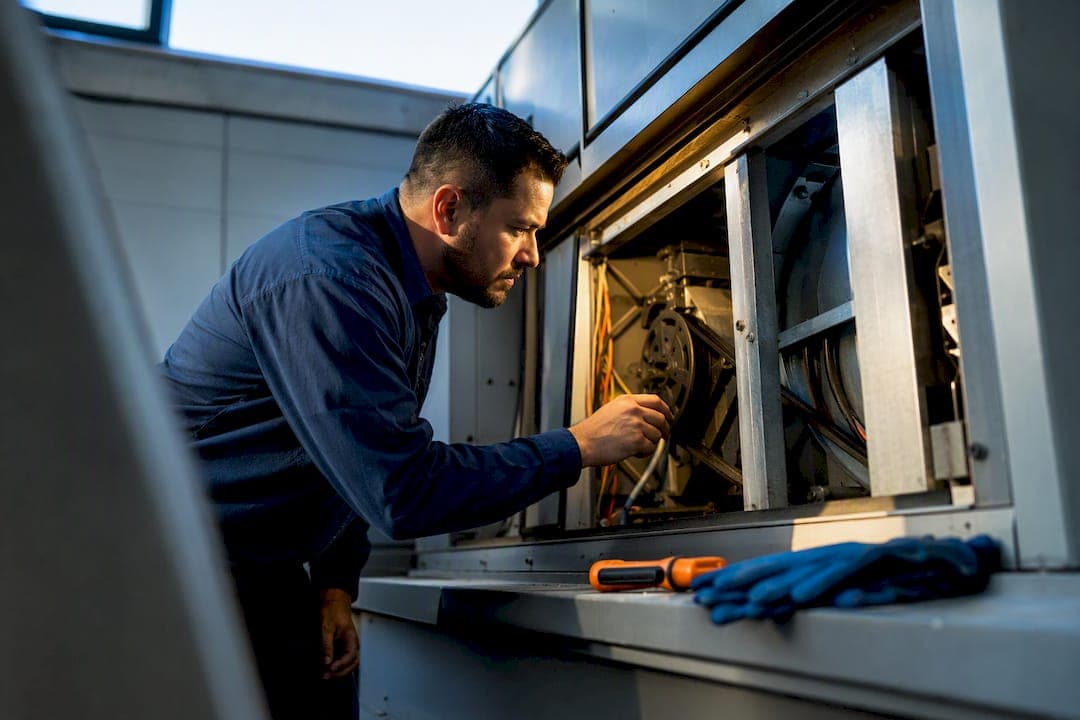
Budget roughly $0.15 to $0.30 per square foot annually for routine commercial HVAC maintenance in Avondale, which works out to about $1,500 to $3,000 a year for a 10,000 square foot site. One-time diagnostic or service visits typically add $200 to $500 per call. Before signing anything, ask any vendor for a written maintenance contract quote and a walk-through site survey so the number reflects your actual equipment and building.
TL;DR:
- HVAC maintenance costs in Avondale typically range from $0.15 to $0.30 per square foot annually, with larger or more complex properties reaching higher costs.
- Maintenance for rooftops units usually runs $500 to $1,500 per unit per year, while chillers can cost $2,000 to $5,000 per unit annually, depending on complexity.
- A standard service call or diagnostic update generally costs $200 to $500, with emergency visits incurring higher fees based on after-hours labor and parts.
- Inclusive contracts should cover inspections, filter changes, coil cleaning, refrigerant checks, and prompt reporting, with optional add-ons like parts coverage and predictive monitoring.
- Critical for compliance, documenting refrigerant leak checks, energy savings, and maintenance records can prevent penalties and help justify ongoing costs.
Table of Contents
- What commercial HVAC maintenance actually costs
- What a maintenance contract should actually include
- Why do quotes vary so much between vendors?
- How to budget and what to ask before you sign
- The energy and compliance payoff of staying on schedule
- How long do commercial HVAC contracts typically run in Avondale?
- Watch for these extra fees before you sign
- When to plan your maintenance budget around the season
- How property size and type change your maintenance cost
- Does insurance affect what you pay for maintenance?
- What I see most often on Avondale service calls
- Get a written maintenance proposal for your Avondale property
- Sources
- FAQ
What commercial HVAC maintenance actually costs
The per-square-foot benchmark is the fastest way to sanity-check a quote. Industry cost guides put annual preventive maintenance at $0.15 to $0.30 per square foot for typical commercial buildings, though property type shifts that range: offices tend to land near $0.20 to $0.30 per square foot, retail spaces run $0.30 to $0.50, and industrial buildings with heavier equipment loads often reach $0.40 to $0.60 per square foot, according to the same cost benchmarking data.

Per-unit pricing tells a different part of the story, especially for buildings with mixed equipment. Rooftop units commonly run $500 to $1,500 per unit annually for maintenance, while chillers, with their added refrigerant circuits and mechanical complexity, typically cost $2,000 to $5,000 per unit each year.
One-time visits fill the gaps between contract cycles. A standard diagnostic or single-service call generally falls in the $200 to $500 range, while emergency callouts or complex repairs push higher depending on parts and after-hours labor.
Three quick scenarios show how this adds up:
- A 5,000 square foot retail storefront with two rooftop units might budget $1,500 to $2,500 a year in contract maintenance, plus occasional per-visit charges for anything outside the scope.
- A 15,000 square foot office building with four RTUs could see $3,000 to $4,500 annually, depending on age and filter cadence.
- A 40,000 square foot industrial site running a chiller plant alongside several split systems might land between $16,000 and $24,000 a year once you combine per-unit chiller costs with RTU and split-system line items.
Line items on most invoices include filter changes, coil cleaning, refrigerant top-offs, belt and bearing checks, and labor. Build a simple spreadsheet listing square footage, unit count and type, and the date of the last major service for each site. That single habit makes it far easier to catch a vendor quote that is out of line with what your building actually needs.
What a maintenance contract should actually include
A written scope of work is the difference between a real maintenance plan and a glorified filter swap. Look for these core elements when comparing bids:
- Scheduled inspections covering coils, belts, electrical connections, and airflow, typically two to four times a year.
- Filter replacement on a set cadence tied to your building's occupancy and air quality needs.
- Coil cleaning and calibration to keep the system running at rated efficiency rather than losing capacity gradually.
- Refrigerant leak checks documented at each visit, which also supports the recordkeeping obligations discussed below.
- Defined response times for emergency calls, often tiered by priority level for critical spaces like server rooms or cold storage.
- Reporting and documentation after every visit, ideally with photos, readings, and a summary of parts used.
Beyond the core scope, many contracts offer optional add-ons: predictive or condition-based monitoring that flags problems before they cause downtime, parts coverage that caps your exposure to surprise repair bills, capital-planning support for budgeting equipment replacement years in advance, and duct cleaning bundled in as a periodic service rather than a separate line item. A contract that only lists "seasonal tune-up" without specifying tasks, frequency, or reporting is a scope you should push back on before signing.
Why do quotes vary so much between vendors?
Two buildings the same size can generate wildly different quotes, and the gap usually comes down to a handful of factors. System type matters most: a chiller plant demands more specialized labor and parts than a row of split systems, which shows up directly in per-unit pricing. Equipment age is the second variable. A unit past 12 to 15 years old often needs more frequent repairs, and rising maintenance costs on aging equipment is frequently the signal that replacement, not another repair, is the better investment.
Site specifics also drive labor time. Rooftop access that requires a ladder hoist, a high multiunit count, or a duct system with awkward runs all add hours to every visit. Local labor and parts availability in the Phoenix metro area factor in too, since technician wages and part sourcing times affect what vendors can quote profitably.
Regulatory requirements add a less obvious cost layer. Following operations and maintenance best practices can save 5 to 20% annually on energy bills for commercial HVAC equipment, according to the Department of Energy's Better Buildings program, but hitting that savings range requires the kind of consistent inspection and calibration work that costs more upfront than a bare-bones plan.
- System complexity and equipment mix affect labor hours per visit.
- Equipment age often predicts near-term repair frequency.
- Rooftop access and duct layout add or subtract labor time.
- Local labor rates in the Phoenix metro shift baseline pricing.
- Refrigerant-handling rules add documentation and inspection time.
How to budget and what to ask before you sign
Three approaches work well depending on your portfolio. Per-square-foot budgeting is fastest for single sites: multiply your square footage by the applicable rate for your property type. Per-unit budgeting works better for mixed equipment, since you add RTU, split-system, and chiller costs separately. A flat annual contract price, quoted after a site survey, is easiest to plan around but requires you to confirm exactly what is included.
Before signing, ask every vendor:
- What are the response time guarantees for standard versus emergency calls?
- How is parts pricing handled, marked up, itemized, or included in a flat fee?
- Who handles refrigerant leak detection and where is it documented?
- Can you provide proof of license, insurance, and a sample service report?
Red flags include vague scope language, no written reporting after visits, and refrigerant or parts pricing that is never itemized. A full-service contract suits buildings with critical operations or older equipment, while a seasonal or reactive model can work for smaller, newer sites with light usage.
Pro Tip: Ask for a sample maintenance report from an actual client visit, not a template, before you sign anything.
The energy and compliance payoff of staying on schedule
Consistent maintenance is not just about avoiding breakdowns. The Department of Energy's Better Buildings initiative reports that organizations following O&M best practices save 5 to 20% annually on energy costs, a range wide enough that even the low end often justifies the added cost of a full-scope contract over a bare-bones one.
Regulatory recordkeeping adds its own financial logic. The EPA requires owners of appliances with 50 or more pounds of refrigerant to keep detailed servicing records, and appliances that leak more than 125% of their full charge in a calendar year require a formal report. Building that documentation into your maintenance contract avoids scrambling for records during an inspection.
- Energy savings from consistent O&M can offset a meaningful share of contract cost over time.
- EPA recordkeeping is mandatory for larger refrigerant systems, not optional paperwork.
- Avoided costs include emergency replacements, leak-related penalties, and unplanned downtime.
How long do commercial HVAC contracts typically run in Avondale?
Most commercial maintenance agreements in the Avondale area run on annual terms, often with automatic renewal unless either party gives notice, typically 30 to 60 days before the term ends. Multi-year contracts exist too, sometimes with a modest discount for locking in two or three years, but they carry more risk if your equipment needs change or a vendor's service quality slips.
Cancellation terms deserve a close read before you sign. Some contracts allow cancellation with written notice and no penalty, while others include early-termination fees or require you to pay out the remainder of a locked-in rate. Ask specifically what happens if you sell the property, change vendors, or need to scale service up or down mid-term. A contract that locks you in without a clear exit clause is worth negotiating before it becomes a problem, not after.
For most facility managers, a one-year term with a defined renewal window and a reasonable notice period offers the best balance of flexibility and predictable budgeting.
Watch for these extra fees before you sign
The quoted contract price rarely covers everything. Emergency service premiums are the most common surprise, often charged as a multiplier on standard labor rates for after-hours, weekend, or holiday calls. Travel fees can also apply for sites outside a vendor's normal service radius, even within the greater Phoenix area.
Other line items to check for: overtime rates for repairs that run past a technician's normal shift, disposal fees for old filters or refrigerant, and "diagnostic" charges that apply even when the visit is covered under a maintenance plan. Some vendors also charge separately for parts markup rather than including it in the contract rate, which can turn a modest repair into a larger invoice than expected.
Ask for a full fee schedule alongside the base contract price, not just a one-line total. A vendor unwilling to itemize these costs upfront is more likely to surprise you with them later.
When to plan your maintenance budget around the season
Arizona's cooling season puts the heaviest load on commercial HVAC systems from roughly May through September, and equipment that skips spring inspection tends to fail during the hottest stretch of summer, when emergency rates and vendor availability both work against you. Scheduling your primary preventive visit in March or April, ahead of peak demand, gives technicians time to catch worn belts, low refrigerant, or failing capacitors before they cause a breakdown.

A second visit in fall, after the cooling season winds down, is the right time to inspect heating components and catch any damage from months of heavy AC use. Budgeting for both visits at the start of your fiscal year, rather than treating maintenance as a reactive expense, keeps costs predictable and reduces the odds of paying premium emergency rates in July or August.
How property size and type change your maintenance cost
Square footage sets the baseline, but property type changes the multiplier. Offices generally sit at the lower end of the per-square-foot range because occupancy loads and equipment counts are moderate. Retail spaces often run higher, partly due to frequent door traffic affecting temperature control and partly due to a mix of display lighting and refrigeration that adds load to the HVAC system. Industrial buildings, with high ceilings, heavier equipment, and often larger unit counts, tend to land at the top of the cost range.
Beyond raw size, unit count and diversity matter as much as square footage. A 20,000 square foot building with three large RTUs will often cost less to maintain than the same footprint split across eight smaller units, since travel time and setup between units adds labor even when the total capacity served is similar. Multi-tenant commercial properties add another layer, since shared systems may require coordination across tenants for access and scheduling.
Does insurance affect what you pay for maintenance?
A vendor's insurance coverage shapes contract pricing more than most facility managers expect. Contractors carrying full general liability and workers' compensation coverage typically build that cost into their rates, but it protects you from liability if a technician is injured on your property or if equipment is damaged during a service call. A noticeably cheaper quote sometimes reflects thinner coverage, which shifts risk back onto you as the property owner.
Ask every vendor for proof of current insurance and, where relevant, bonding, before signing a contract. It is also worth checking whether your own commercial property insurance requires maintenance documentation as a condition of coverage, since some policies reduce payouts on equipment failure claims if regular service records are not on file. That single requirement is one more reason a documented, itemized maintenance history is worth more than a verbal assurance that "everything's been taken care of."
What I see most often on Avondale service calls
Filters left in too long and rooftop units skipped during spring inspections cause most of the emergency calls I see. A simple fix: set filter changes on a calendar, not a guess, and schedule rooftop inspections before the heat arrives, not after a unit fails. Keep every refrigerant service documented, since that record is what protects you if EPA reporting ever comes up.
— Shaun
Get a written maintenance proposal for your Avondale property
A lower maintenance bill starts with fewer surprises, and that means knowing exactly what a technician finds before it becomes an emergency repair. Air Duct and Dryer Vent Cleaning Avondale works with commercial property owners across Avondale on the cleaning and inspection side of preventive maintenance, including commercial air duct cleaning, filter replacement, and air quality testing that keep systems running closer to rated efficiency between full service visits.
- A site survey gives you an accurate scope before any work begins.
- A written proposal lays out tasks, cadence, and pricing so you can compare it against other bids.
- Guarantees on completed work help support the scope agreed to.
Request a site visit or a sample maintenance agreement through the commercial air duct cleaning page to see where your building's ductwork and air quality fit into your broader maintenance plan.
Sources
- Preventative Maintenance for Commercial HVAC Equipment | Better Buildings & Better Plants Initiative
- Recordkeeping and reporting requirements for stationary refrigeration | US EPA
FAQ
What is the typical cost of a commercial HVAC maintenance contract?
Most commercial maintenance contracts fall between $0.15 and $0.30 per square foot annually, though retail and industrial properties often run higher. A 10,000 square foot building typically lands between $1,500 and $3,000 a year under a standard contract.
What is the HVAC $5000 rule?
The $5,000 rule is a rule of thumb some contractors use to decide between repair and replacement: multiply the age of the unit by the estimated repair cost, and if that number exceeds $5,000, replacement is usually the better financial choice. It is a guideline, not a fixed regulation, so weigh it alongside your unit's actual condition and remaining expected lifespan.
How often should a commercial HVAC system be serviced?
Most commercial systems benefit from two to four professional inspections a year, with spring and fall visits covering the cooling and heating seasons respectively. Buildings with heavier equipment loads or critical operations, such as server rooms, often schedule toward the higher end of that range.
How much is a HVAC maintenance call?
A standard diagnostic or single maintenance visit typically costs $200 to $500, depending on the scope of work involved. Emergency or after-hours calls usually cost more due to premium labor rates and, in some cases, added travel fees.