
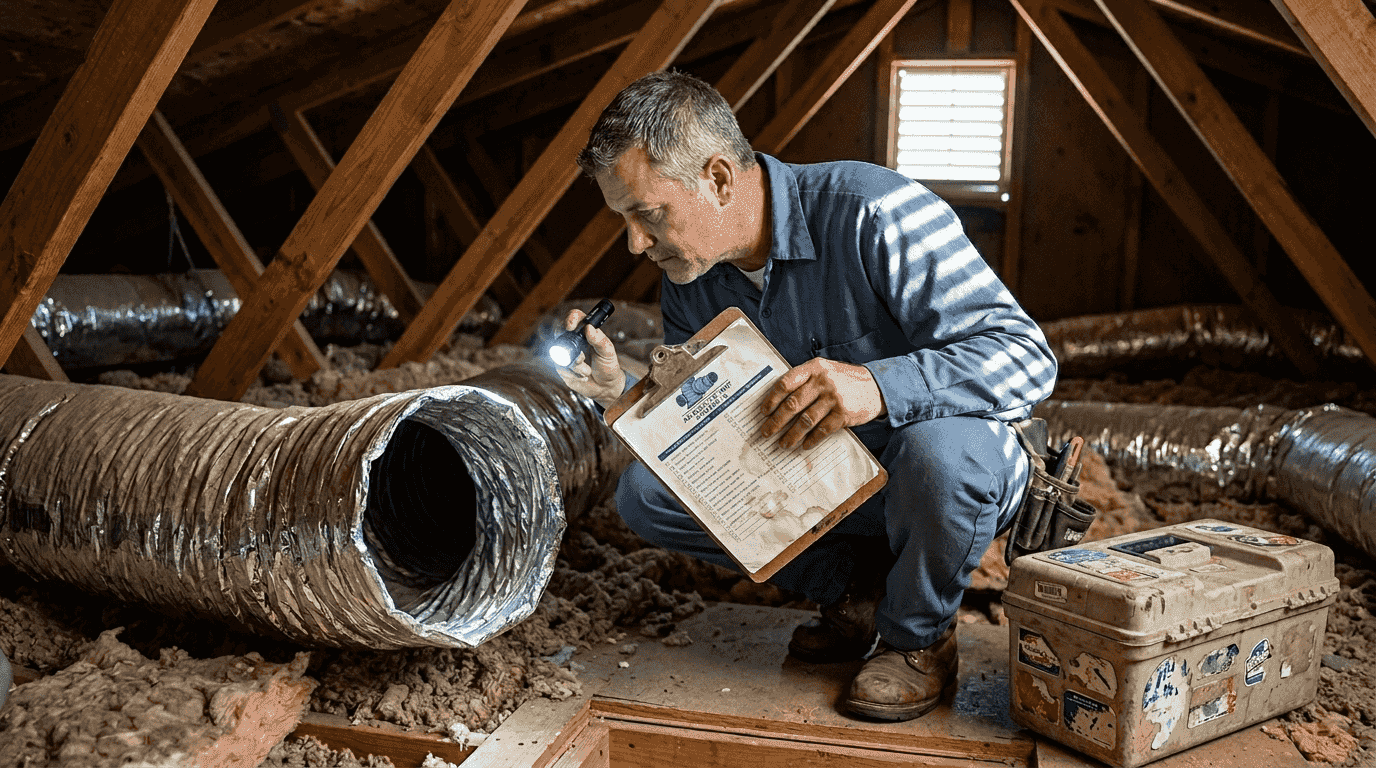
Many homeowners in Avondale underestimate how hidden duct problems quietly inflate their cooling bills and compromise indoor air quality. Your HVAC system works overtime when leaky ductwork pulls hot attic air into your living space, forcing your AC to run longer cycles. Duct inspection reveals invisible issues like leaks, blockages, and dust buildup that impact both energy efficiency and the air you breathe. This guide explains what professional duct inspection involves, how it benefits your home or small business, and why Avondale's desert climate makes regular checks especially valuable for maintaining comfort and controlling costs.
Table of Contents
- What is duct inspection and why is it important?
- Common duct inspection methods and standards
- Duct inspection challenges and special considerations in Avondale, Arizona
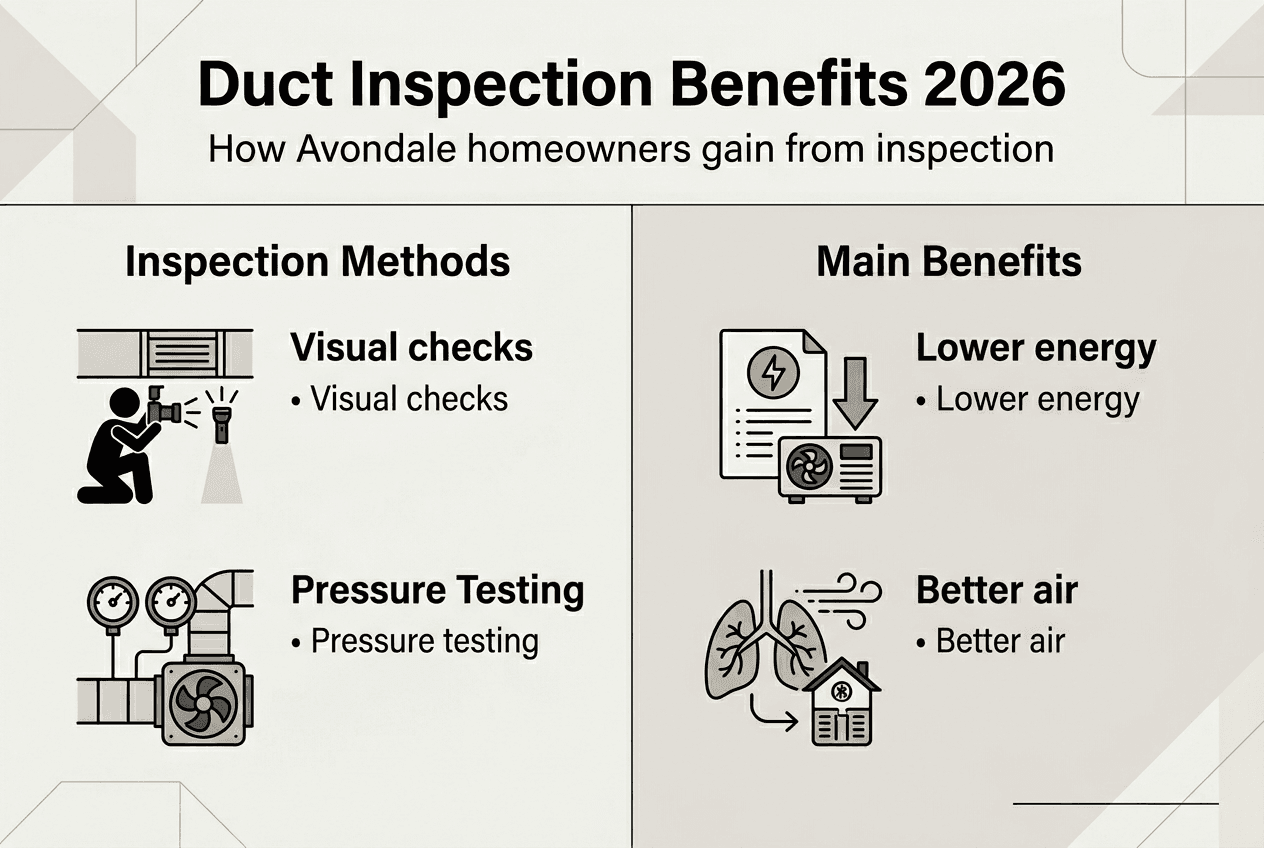
- Benefits of duct inspection and sealing for homeowners and businesses in 2026
- Improve your indoor air quality with expert duct inspection in Avondale
- Frequently asked questions
Key takeaways
| Point | Details |
|---|---|
| Inspection methods detect hidden issues | Visual checks, camera scoping, and pressure tests reveal leaks and blockages that raise energy costs. |
| Energy savings reach 30% | Sealing identified leaks cuts cooling expenses significantly while improving air quality by eliminating dust pathways. |
| Symptoms signal inspection needs | Uneven room temperatures, rising utility bills, or excessive dust buildup indicate duct problems requiring attention. |
| Proper sealing materials matter | Mastic compound provides lasting duct repairs, while standard tape fails under temperature stress. |
What is duct inspection and why is it important?
Duct inspection thoroughly examines HVAC ductwork to identify leaks, damage, blockages, dust buildup, mold, pests, and poor insulation that reduce air quality and efficiency. Professional technicians use multiple techniques to assess your system's condition. Visual examination checks accessible duct sections for obvious damage or disconnections. Airflow measurement determines whether supply registers deliver adequate volume. Moisture checks detect condensation that encourages mold growth. Leak detection pinpoints where conditioned air escapes before reaching your rooms.
Common issues discovered during inspection include several costly problems:
- Leaks at joints and seams that waste 20-30% of cooled air, forcing your AC to work harder
- Accumulated dust and allergens that circulate through your home every time the system runs
- Degraded insulation allowing hot attic air to warm supply ducts before air reaches living spaces
- Disconnected sections that dump expensive conditioned air into unconditioned areas
In Avondale's desert climate, these problems intensify quickly. Dust infiltrates ductwork through tiny gaps, building layers that restrict airflow and harbor allergens. Attic temperatures exceeding 140°F during summer months stress duct insulation and sealants. The constant thermal cycling causes materials to crack and separate. Your AC compensates by running longer cycles, which accelerates wear on components and drives up monthly bills.
"Homeowners who inspect and seal their ducts typically see immediate improvements in room-to-room temperature consistency and noticeable reductions in energy consumption within the first billing cycle."
Typical inspection costs range from $140 to $380 depending on property size and testing complexity. This investment provides significant returns through lower energy bills, improved comfort, and better indoor air quality. Professional air duct and dryer vent cleaning services often bundle inspection with maintenance for comprehensive system care. The data gathered during inspection guides targeted repairs that deliver maximum benefit for your budget.
Common duct inspection methods and standards
Professionals use several proven techniques to evaluate duct system performance. Visual inspection provides the foundation, allowing technicians to spot obvious damage, disconnections, or deteriorated insulation in accessible areas. Camera scopes extend this capability by navigating inside ductwork to examine interior surfaces, joints, and sections hidden behind walls or above ceilings. High-resolution video reveals cracks, holes, and buildup that escape visual detection from register openings.
Pressure pan testing uses specialized gauges placed over supply and return registers while a blower door creates 25 to 50 Pa pressure difference in the home. Readings exceeding 5 Pa indicate significant leaks allowing conditioned air to escape to unconditioned spaces. This method pinpoints which sections need sealing without requiring access to the entire duct system. Technicians test each register systematically to map leak locations.
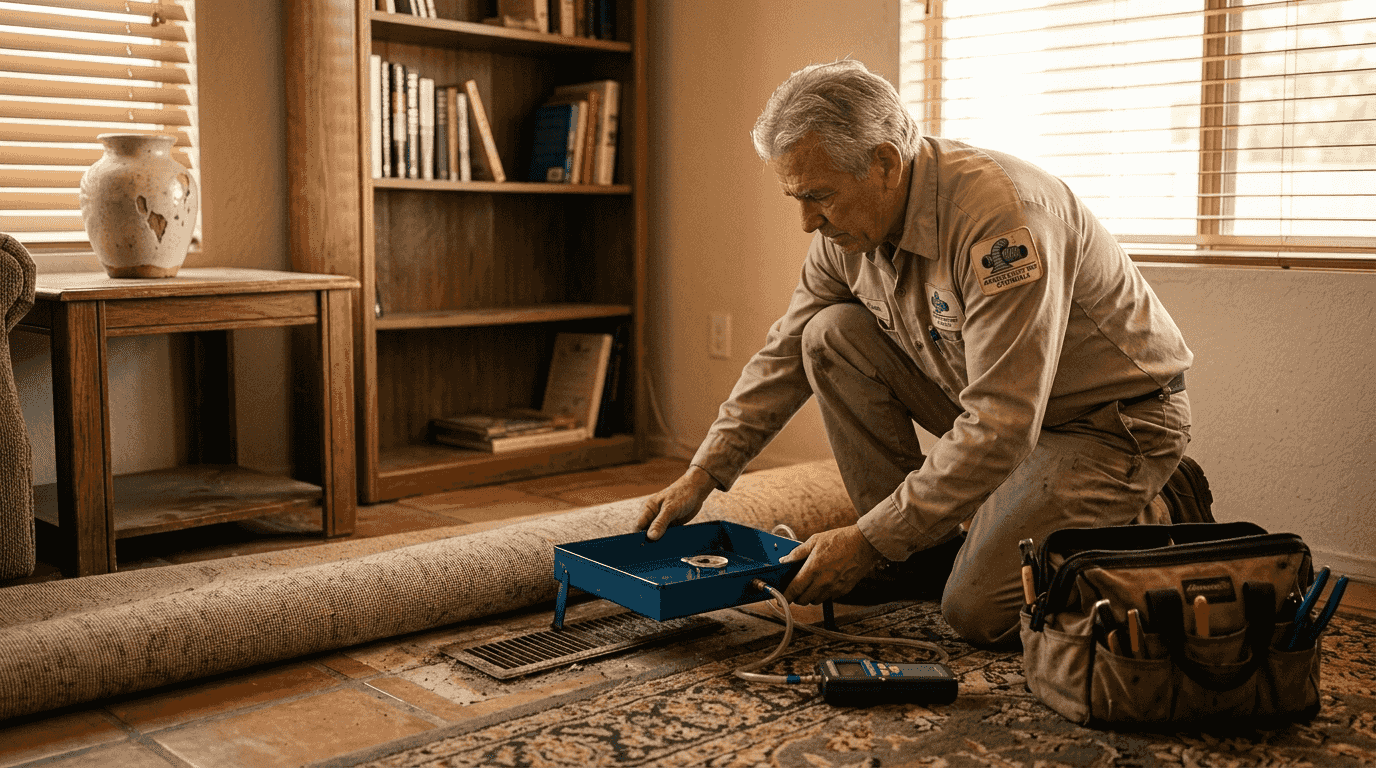
Duct blaster testing quantifies total system leakage by temporarily sealing all registers and measuring airflow required to maintain 25 Pa pressure. The equipment calculates cubic feet per minute of air escaping through all leaks combined. Results expressed as CFM25 or percentage of total airflow help prioritize sealing efforts and verify repair effectiveness.
| Method | Detects | Equipment Needed | Accuracy | | --- | --- | --- | | Visual inspection | Obvious damage, disconnections | Flashlight, mirror | Moderate | | Camera scope | Interior cracks, buildup | Flexible camera system | High | | Pressure pan test | Individual register leaks | Pressure gauge, blower door | High | | Duct blaster | Total system leakage | Duct blaster fan, gauges | Very high |
Conducting a proper pressure pan test follows these steps:
- Set up blower door equipment to depressurize the house to 50 Pa with respect to outside
- Place pressure pan firmly over first supply register, ensuring airtight seal around edges
- Record pressure reading displayed on digital manometer connected to pan
- Repeat measurement at each supply and return register throughout the home
- Document readings on floor plan to identify patterns and prioritize repairs
- Compare results against benchmark of 5 Pa to classify leak severity
Pro Tip: Always quantify leaks with testing equipment before starting repairs so you can verify improvements afterward and ensure you addressed the most significant problems first.
Sealing materials matter significantly for long-term performance. Mastic compound remains flexible through temperature extremes and adheres to metal, fiberglass, and flex duct surfaces. Standard cloth or foil tape fails within months as Arizona attic heat breaks down adhesives. Professional commercial air duct cleaning methods often include pressure testing to validate system integrity after maintenance. Similarly, dryer vent cleaning techniques apply pressure concepts to ensure exhaust systems vent properly without restriction.
Duct inspection challenges and special considerations in Avondale, Arizona
Arizona's desert environment creates unique conditions that accelerate duct system degradation. Dust accumulation inside ductwork reduces airflow capacity and provides substrate for allergen growth. Fine particulates enter through tiny gaps and settle in horizontal runs where air velocity drops. Each cooling cycle redistributes this dust throughout your living space. The problem compounds in homes near construction sites or unpaved areas where airborne soil concentrations run higher.
High attic temperatures degrade duct insulation and cause sealants to crack, creating new leak pathways. Supply ducts running through 140°F attic spaces gain heat even with insulation, forcing your AC to overcool air to compensate. Return leaks in attics are particularly costly because they pull superheated air directly into your system. Your AC must cool this hot air from attic temperature down to your thermostat setting, which can increase energy consumption substantially.
Older Avondale properties may harbor additional problems requiring careful inspection:
- Mold growth in sections where condensation occurs due to temperature differentials
- Pest intrusion through damaged duct sections or inadequate sealing at penetrations
- Asbestos-containing duct wrap materials in homes built before 1980 needing specialized handling
- Collapsed flex duct from age or improper support causing severe airflow restrictions
Several symptoms signal your ducts need professional inspection:
- Rooms that never reach comfortable temperatures despite AC running constantly
- Musty or stale odors when system starts, indicating mold or stagnant air in ductwork
- Utility bills climbing without changes in usage patterns or rate increases
- Visible dust accumulation on furniture within days of cleaning
- Family members experiencing worsening allergy symptoms indoors
Pro Tip: Combine regular filter changes every 30 to 60 days with annual duct inspection to maximize indoor air quality and system efficiency in Arizona's dusty climate.
Sealing identified leaks reduces fan power consumption by up to 30%, which translates to lower electricity bills and improved comfort. The investment in inspection and sealing typically pays back within two to three cooling seasons through energy savings alone. Health benefits from reduced allergen circulation and better humidity control add value that's harder to quantify but equally important. Professional services like repairing ductwork for better air quality address these challenges with materials and techniques proven effective in desert conditions. Maintaining clean filters through regular air filter replacement in Avondale complements duct sealing by preventing new dust accumulation.
Benefits of duct inspection and sealing for homeowners and businesses in 2026
Professional duct inspection and sealing delivers measurable improvements across multiple performance metrics. Energy savings represent the most immediate financial benefit. Leaky ducts increase fan power consumption by 30%, with large buildings saving up to 9,700 kWh annually after sealing. Residential savings scale proportionally based on system size and leak severity. A typical Avondale home running AC six months yearly can reduce cooling costs by $300 to $600 annually after addressing significant duct leakage.
| Metric | Before Inspection | After Sealing | Improvement |
|---|---|---|---|
| Annual cooling cost | $1,800 | $1,260 | 30% reduction |
| Room temperature variance | 5-8°F | 1-2°F | Better comfort |
| Dust accumulation rate | 40 lbs/year | 25 lbs/year | 37% less cleaning |
| HVAC runtime hours | 2,400 | 1,680 | Extended lifespan |
Comprehensive benefits extend beyond energy savings:
- Lower monthly utility bills through reduced cooling load and shorter AC runtime
- Consistent temperatures in all rooms eliminating hot and cold spots
- Fewer airborne allergens and dust particles improving respiratory health
- Extended HVAC equipment lifespan from reduced operating stress
- Better humidity control preventing mold growth and material damage
- Quieter operation as sealed ducts reduce air noise and vibration
"Aim for total duct leakage below 5% of system airflow to achieve optimal efficiency. Most homes test between 15% and 30% leakage before sealing, leaving substantial room for improvement."
Indoor air quality improvements benefit everyone but prove especially valuable for allergy sufferers, children, and elderly residents. Homes accumulate 40 pounds of dust annually on average, with much of it circulating through ductwork. Inspection identifies dust reservoirs and leak points allowing outdoor contaminants to enter. Cleaning and sealing these areas reduces allergen exposure and respiratory irritation.
Pro Tip: Prioritize sealing return leaks in attics first when working in Arizona, as these pull the hottest air and create the largest energy penalty per square inch of opening.
Comfort gains from duct sealing often exceed expectations. Rooms that previously struggled to cool become comfortable. Temperature swings between day and night moderate. Your thermostat accurately reflects actual room conditions rather than just the air near the return register. These improvements enhance quality of life while reducing energy waste. Professional air duct cleaning benefits compound when combined with sealing, as clean ducts maintain better airflow and prevent recontamination. Post-renovation properties especially benefit from vent cleaning after renovation to remove construction dust before it circulates through sealed ductwork.
Improve your indoor air quality with expert duct inspection in Avondale
Local professionals understand the specific challenges Avondale homeowners face with dust infiltration, extreme attic temperatures, and aging duct systems. Expert inspection services use calibrated equipment to accurately measure leakage and identify problems invisible to homeowners. Technicians trained in desert climate conditions know where to look for heat stress damage and how to apply sealing materials that withstand temperature extremes. Professional repairs extend duct system life while decreasing energy costs through targeted improvements.
Scheduling regular inspections alongside filter replacements keeps your HVAC system running efficiently year-round. Catching small problems early prevents expensive emergency repairs and premature equipment replacement. Professional air duct cleaning removes accumulated debris that restricts airflow and harbors allergens. Comprehensive air vent cleaning services ensure supply and return registers deliver optimal performance. Don't overlook dryer vent cleaning services that prevent fire hazards while improving appliance efficiency. Taking action now protects your investment and creates a healthier indoor environment for your family or employees.
Frequently asked questions
Do I need to have my ducts inspected regularly?
Duct inspection isn't required on a fixed schedule like oil changes, but becomes important when you notice performance issues or after major home changes. New homeowners should inspect ducts to establish baseline condition and identify inherited problems. Post-renovation inspection removes construction dust and verifies contractors didn't damage ductwork during remodeling. Allergy sufferers and pet owners benefit from inspection every three to five years to address accumulated dander and debris affecting air quality.
What are the signs that my ducts need inspection?
Uneven room temperatures where some spaces never cool properly indicate supply duct leaks or blockages preventing adequate airflow. Musty odors when your AC starts suggest mold growth in damp duct sections requiring immediate attention. Rising energy bills without corresponding usage increases often trace to new or worsening duct leaks. Visible dust accumulation on furniture within days of cleaning means your ducts are distributing contaminants throughout your home instead of filtering them properly.
How long does a typical duct inspection take?
Most residential duct inspections require one to two hours depending on home size and accessibility. Single-story homes with attic ductwork inspect faster than multi-story properties with ducts in walls and crawlspaces. Comprehensive diagnostics including duct blaster testing may extend the appointment by 30 to 45 minutes. Complex commercial systems need proportionally more time based on square footage and duct complexity.
Can I inspect my ducts myself or should I hire a professional?
DIY visual checks through register openings help spot obvious problems like disconnected ducts or heavy dust buildup near vents. You can feel for air leaks by running your hand along accessible duct sections while the system operates. However, professional equipment detects hidden leaks and quantifies their impact on efficiency, information impossible to gather without specialized tools. Professionals follow industry standards for testing and use proven sealing materials that last decades rather than temporary fixes that fail quickly.