
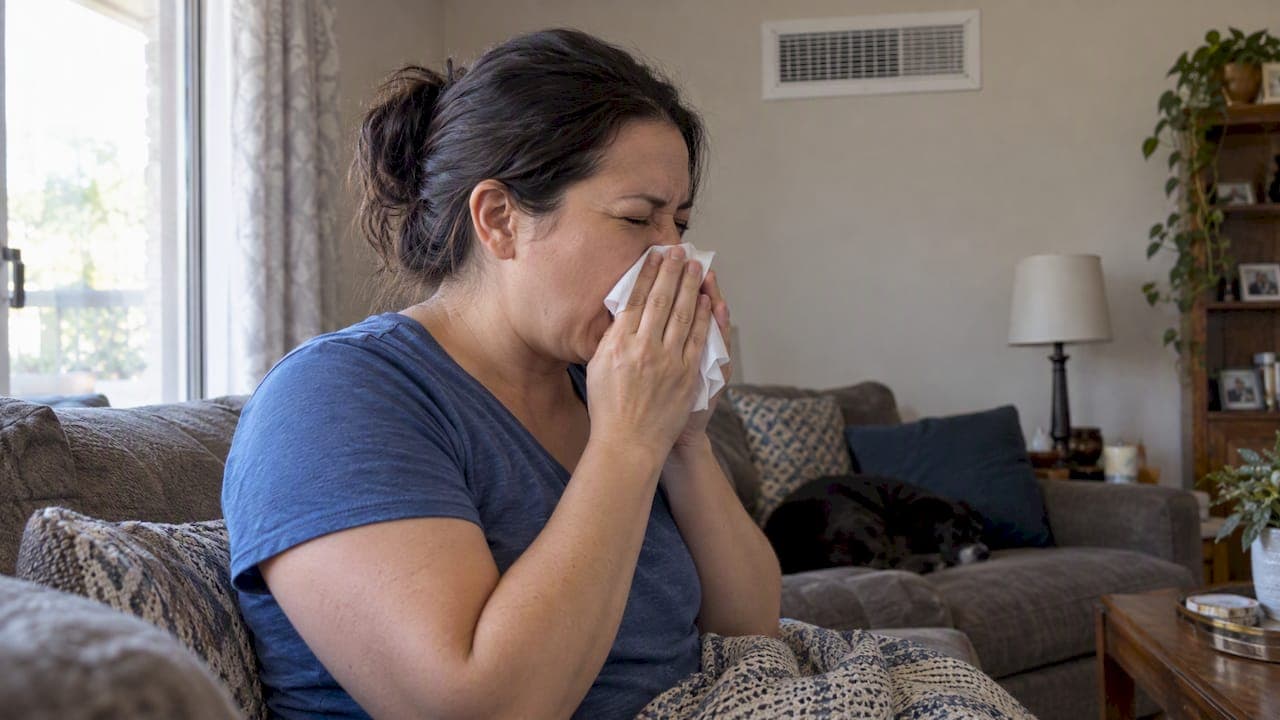
Your air ducts are a possible contributor to allergy symptoms, but they are rarely the only cause, and cleaning them is not a guaranteed fix. Start by checking filters, looking for visible mold or dust streaks near vents, and noting any musty odor. If symptoms are severe or a household member has asthma or a weakened immune system, talk to a doctor first, then consider a local inspection to confirm what is actually happening inside your system.
TL;DR:
- EPA finds little independent evidence that routine cleaning reduces symptoms; reserve it for visible mold, pests, or heavy debris restricting airflow or releasing dust.
- In Arizona, use a pleated MERV 8 to MERV 11 filter, check monthly in dusty seasons, and replace it every one to three months.
- Keep indoor humidity between 30% and 50%, and fix leaks or exhaust fans that vent into attics rather than relying on unnecessary whole house dehumidification.
- Before hiring, require a written scope covering ducts, registers, the air handler, coils, and drip pan, plus contained vacuuming and before and after photos.
- If anyone has moderate to severe asthma, a chronic lung condition, or weakened immunity, consult a doctor before paying for duct work.
Table of Contents
- Signs your HVAC system and ducts may be contributing to allergies
- What the evidence actually says about duct cleaning and allergies
- How a proper duct cleaning job works and where it goes wrong
- Prevention steps that often matter more than cleaning
- A local checklist before you call anyone
- A note on balancing the evidence with real households
- How we can help if your ducts need a closer look
- FAQ
- Sources
Signs your HVAC system and ducts may be contributing to allergies
Allergy symptoms that flare indoors and ease when you leave the house are the clearest signal that something in your home environment, possibly your ductwork, is involved. Sneezing fits, nasal congestion, itchy eyes, coughing, or a tightness in the chest that gets worse soon after the air conditioner kicks on all point toward airborne triggers moving through your vents rather than something seasonal outside.
Pay attention to timing. If symptoms are worse at home than at work or school, or worse specifically when the HVAC system runs, that pattern matters more than the symptoms themselves. A single sneeze means nothing. A predictable flare every time the blower starts is worth investigating.
Several household clues raise the likelihood that ducts are involved:
- A persistent musty or moldy smell, especially near vents or in rooms the system serves directly.
- Visible dust or dark streaks blowing out of registers or settling heavily around vent covers.
- A past roof leak, plumbing leak, or flooding that soaked insulation or ductwork.
- Signs of rodents or insects near ducts, attic access points, or the air handler.
Ducts themselves do not usually generate allergens, they accumulate them. Dust, pollen tracked in from outside, pet dander, and dust-mite debris settle in the system over time, and where moisture has ever been present, mold can take hold on duct liners or in the drip pan. Of these, dust mites and mold are typically the strongest provoking agents for people with allergic rhinitis or asthma, while general household dust is more of an irritant than a true allergen for most people.
If anyone in the home has moderate to severe asthma, a chronic lung condition, or a weakened immune system, prioritize a medical consult before spending money on duct work. A doctor can help confirm whether symptoms match an airborne allergen pattern at all, which saves you from chasing the wrong fix.
What the evidence actually says about duct cleaning and allergies
Expectations matter here, because this is where a lot of money gets wasted. The EPA states plainly that there is little independent scientific evidence that routine removal of light dust from air ducts improves indoor air quality or reduces health symptoms in a typical home. Clean ducts sound appealing, but "clean" and "symptom relief" are not the same promise.
That does not mean duct cleaning is pointless. The EPA recommends it in specific situations: visible substantial mold growth inside the ducts or on other HVAC components, an infestation of insects or rodents, or ducts clogged with heavy debris that is restricting airflow or visibly releasing dust into rooms. Those are concrete, checkable conditions, not vague feelings that the air "seems dusty."

An EPA field study across several single-family homes found that mechanical cleaning can remove adhered dust and some surface fungal growth from non-porous sheet-metal ductwork, but airborne particle reductions after cleaning were inconsistent and depended partly on outdoor air conditions. That is the honest middle ground: cleaning can physically remove what has built up on the duct surface, but it does not reliably translate into cleaner air in the room, especially if the contamination source (a leak, a gap, an unsealed attic penetration) is still active. The EPA field study also noted that porous duct linings with embedded contamination are often better replaced than cleaned, since cleaning cannot fully remove material that has worked into the lining itself.
The practical takeaway for an Avondale homeowner: duct cleaning is indicated when you can point to something specific, mold you can see, a rodent problem, heavy debris, or damage from a past leak or fire. It is not a routine maintenance item that will reliably calm general seasonal allergies on its own. If your main complaint is seasonal pollen or year-round dust with no visible contamination, filter upgrades and humidity control will likely do more for you than a duct cleaning appointment.
How a proper duct cleaning job works and where it goes wrong
A real whole-system cleaning covers more than just the metal tubes behind your walls. It should include the supply and return ducts, every register and grille, the air handler itself, the cooling coils, the drip pan, and the blower fan housing. Skipping any of these pieces risks recontaminating the ducts almost immediately, since dust and mold spores sitting on a dirty coil or in a dirty drip pan get redistributed the moment the system runs again.
Most legitimate jobs follow a similar sequence:
- Technicians inspect the system and document existing contamination with photos before touching anything.
- They seal the registers and use mechanical agitation tools to loosen dust and debris stuck to duct walls.
- A high-powered vacuum, ideally venting to the outside or through HEPA filtration, pulls the loosened material out of the system rather than just stirring it into the air.
- Coils, drip pans, and the blower housing get cleaned as part of the same visit, not left for a separate call.
- Where duct liners are porous and visibly contaminated beyond what cleaning can reach, replacement of that section is recommended instead of repeated cleaning attempts.
Some of the worst outcomes come from shortcuts. A contractor who only cleans the visible registers, skips the air handler and coils, or uses a shop vacuum without proper containment can leave the real contamination source untouched, or worse, push dust further into the system. Scare tactics (showing you a scope image of "typical" dirty ductwork that is not actually yours, or insisting your system is a health hazard without evidence) are a red flag, as is any quote that comes in dramatically below market rate for a whole-house job.
Pro Tip: Ask for before-and-after photos of the air handler and coils specifically, not just the duct interior, since that is where corners get cut most often.
Before you sign off on a job, confirm in writing: the full scope of what will be cleaned, whether vacuuming vents to the outside, documentation of before and after conditions, and whether the work carries any warranty.
Prevention steps that often matter more than cleaning
For most Avondale households, the biggest allergy wins come from maintenance habits rather than a one-time cleaning. Filters are the first line of defense. A standard fiberglass filter does little beyond protecting the equipment, while a mid-range pleated filter rated MERV 8 to MERV 11 captures a meaningfully higher share of dust, pollen, and pet dander without choking airflow in most residential systems. Check filters monthly during Arizona's dustier spring and summer months, and replace them on whatever schedule keeps them from looking visibly gray, often every one to three months depending on the filter type and household.
CDC home-assessment guidance for asthma recommends keeping indoor humidity in the 30% to 50% range and using exhaust fans and proper ventilation to limit dust mites and mold growth. In Avondale's dry climate, humidity swings usually come from specific sources rather than general dampness, a poorly vented evaporative cooler, a bathroom fan that dumps into the attic instead of outside, or a slow leak under a sink. Fixing those specific sources does more good than running a whole-house dehumidifier you probably do not need. Dry any leak or spill within a day or two to keep mold from ever starting, a window the CDC also flags for mold remediation after flooding.
Beyond humidity, a few habits reduce allergen reservoirs directly:
- Run bathroom and kitchen exhaust fans during and after showers or cooking, and confirm they vent outside, not into the attic.
- Keep windows closed on high-pollen days and rely on the air conditioner with a clean filter instead.
- Seal visible gaps around duct connections and attic penetrations where dust and outside air can leak in.
- Vacuum with a HEPA-filter vacuum, wash bedding weekly in hot water, and use mattress and pillow encasements to cut down on dust mites.
These steps are cheap, repeatable, and often resolve mild symptoms without any duct work at all.
A local checklist before you call anyone
Before you spend money, document what you are seeing. Take photos of vent covers, note any odor and when it is strongest, and write down when symptoms flare relative to the system running. That record helps a technician diagnose the actual problem instead of guessing.
When you do call a provider, ask directly: Do you clean the air handler and coils, not just the ducts? Do you vacuum to the outside or use HEPA containment? Will you show before-and-after photos of the specific components in my system? Is there a warranty on the work?
- A responsible provider welcomes these questions and answers them specifically, not vaguely.
- A provider who pressures you toward cleaning without having inspected anything first is a red flag.
- A provider who cannot describe their vacuum containment method or whether they clean the air handler is one to skip.
Pro Tip: Save your photos and notes. If symptoms persist after cleaning, that record helps rule out the duct system and point toward other causes, like bedding, pets, or outdoor pollen tracked indoors.
For deeper detail on the cleaning process itself, our post on why removing allergens from ducts boosts indoor air quality and our answers to common duct cleaning questions cover more of what to expect during a visit.
A note on balancing the evidence with real households
Routine duct cleaning rarely guarantees relief from general allergy symptoms, and we say that plainly even though it is our business. What it reliably does is remove documented contamination, visible mold, heavy debris, rodent evidence, once that contamination is actually present and confirmed.
The households who benefit most are the ones who track their symptoms, document what they see in the ducts, and treat an inspection as a diagnostic step rather than an automatic purchase. If someone in your home is especially vulnerable, a child with asthma, an older adult, anyone immunocompromised, that documentation matters even more before anyone enters the ducts for remediation work.
— Shaun
How we can help if your ducts need a closer look
If your home matches any of the EPA's specific triggers, visible mold, pest activity, heavy debris, or damage from a past leak, a proper inspection is worth scheduling. 
A proper duct cleaning job should handle the full scope: inspecting the air handler, coils, and drip pan alongside the ductwork, not just the visible registers, to avoid a partial job that leaves the real problem untouched. Technicians documenting conditions before and after the work and backing services with a warranty is recommended.
What we offer for allergy-related duct concerns:
- Whole-system air duct cleaning covering supply, return, air handler, and coils.
- Dryer vent cleaning, since a clogged vent is a related but separate indoor air and fire-safety risk.
- Air filter replacement with guidance on the right filter rating for your system.
- An indoor air quality test if you want data before deciding on cleaning at all.
If you are seeing the warning signs above, schedule an air duct cleaning inspection with our Avondale team and get a clear answer before spending on anything else.
This article is general information, not a substitute for advice from a qualified doctor. Consult a qualified healthcare professional about your own circumstances before acting on anything here.
FAQ
Could my air ducts be making me sick?
Ducts can contribute to symptoms when they contain visible mold, heavy dust buildup, or pest debris, but the EPA notes that light dust alone has little proven link to health effects. If you have musty odors, visible mold, or symptoms that flare specifically when the system runs, an inspection can confirm whether the ducts are the source.
What happens if you never clean air ducts?
Ducts that are never cleaned and never develop visible contamination usually do not pose a measurable health problem, according to EPA guidance. However, if moisture, pests, or heavy debris do build up over time, leaving them unaddressed can allow mold to spread or airflow to become restricted, which is when cleaning becomes worthwhile.
Will cleaning my air ducts help with allergies?
It depends on the cause. An EPA field study found that mechanical cleaning removes adhered dust from ductwork, but airborne particle improvement was inconsistent, so cleaning helps most when there is confirmed mold, debris, or pest contamination rather than general seasonal allergies.
How do I know if I need a professional duct inspection?
Signs worth checking include a musty smell near vents, visible dust streaks, a past leak or flood near the ductwork, or symptoms that reliably worsen when the HVAC system runs. Documenting these signs with photos before calling a provider helps them diagnose the actual issue rather than defaulting to a full cleaning.
What should a quality duct cleaning service include?
A proper job cleans the full system, supply and return ducts, registers, the air handler, coils, and drip pan, using mechanical agitation and vacuuming that contains the removed debris. Ask providers for before-and-after photos and a written scope that covers these components specifically, since partial cleanings raise the risk of recontamination.
Sources
- Should you have the air ducts in your home cleaned? | US EPA
- Evaluating Residential Air Duct Cleaning and IAQ: Results of a Field Study | EPA