
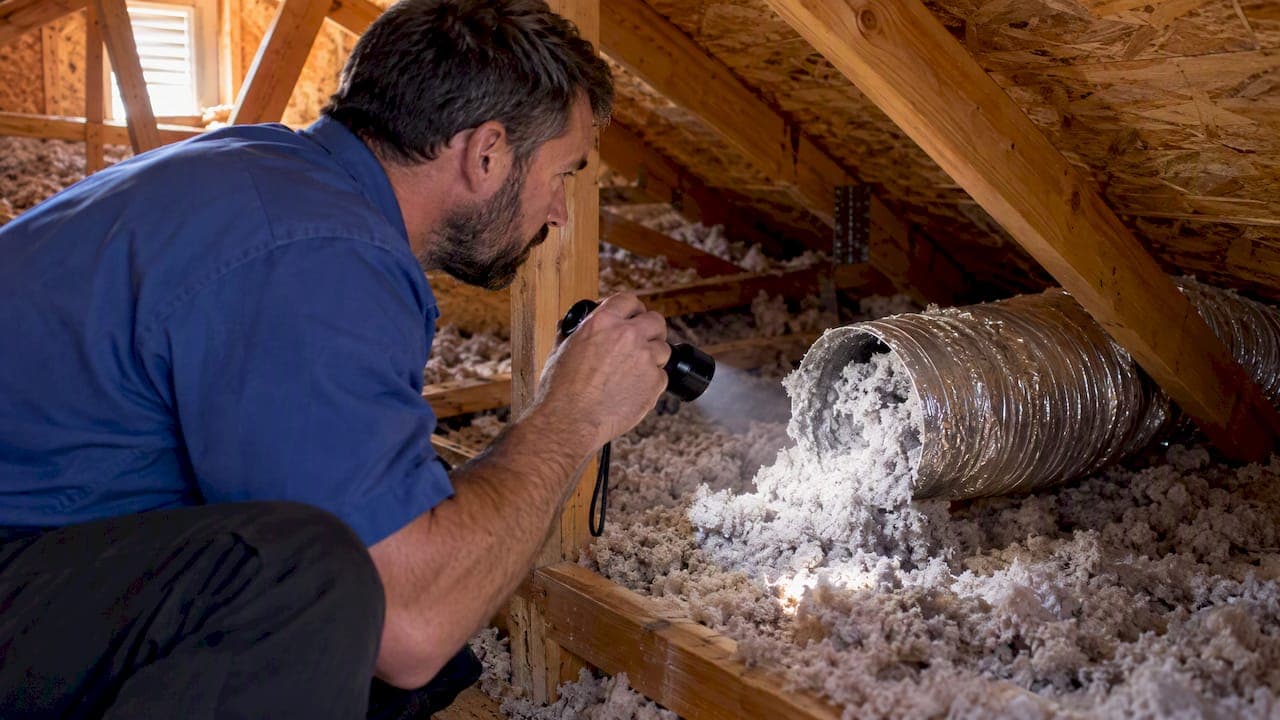
Yes, terminating a dryer vent in an attic creates real fire and moisture hazards and should be corrected so the exhaust vents outdoors. Lint buildup raises fire risk, trapped moisture invites mold and rot, and the setup violates building code. If your dryer vent ends in the attic instead of outside, limit dryer use today and schedule an inspection before running another load.
TL;DR:
- Wet lint buildup in attic-terminated vents significantly increases fire risk due to the high flammability of lint and hot attic temperatures.
- Repeated condensation from attic venting causes mold growth, insulation dampness, and structural damage in roof sheathing and framing.
- Attic venting allows moisture and mold spores to migrate into living spaces, potentially triggering health issues for allergy and asthma sufferers.
- Building codes strictly require dryer vents to discharge outside using proper rigid metal ducts with sealed roof or wall caps for safety and compliance.
- Routine inspection, cleaning, and proper rerouting to outdoor vents are essential to prevent fire, moisture, and health hazards associated with attic vent termination.
Table of Contents
- Fire risk from lint buildup in attic-terminated vents
- How attic dryer venting causes condensation and mold
- Structural damage from chronic attic moisture
- Indoor air quality and health risks from attic contamination
- What building code says about dryer vent termination
- Finding and fixing an attic-terminated dryer vent
- What field inspections reveal about attic vent problems
- A homeowner's priority list for attic vent problems
- Get your attic dryer vent inspected and corrected
- FAQ
- Sources
Fire risk from lint buildup in attic-terminated vents
When a dryer vent dead-ends in an attic instead of discharging outside, lint has nowhere to go. It settles in the ductwork, around the termination point, and across nearby insulation with every load. That lint is highly flammable, and attics run hot, especially in summer, which shortens the gap between a stray spark and a real fire.
A significant portion of home dryer fires trace back to failures to clean and start when accumulated lint, dust, or fiber ignites, according to NFPA research on dryer fire causes. An attic termination makes both failure points worse, since the lint is harder to see and harder to reach.
Watch for these warning signs:
- Visible lint clumps or gray fuzz around the vent opening or on attic framing
- Ductwork that feels hot to the touch after a drying cycle
- Scorched or discolored insulation near the vent run
- Clothes taking noticeably longer to dry than they used to
If you notice any of these, stop using the dryer until the vent is inspected. The FEMA/USFA dryer fire safety flyer recommends cleaning the lint filter every cycle and having the venting system checked professionally, two habits that matter even more when the vent path is hidden in an attic.
How attic dryer venting causes condensation and mold
A single load of laundry releases a meaningful amount of water vapor, and that moisture has to go somewhere. When the vent terminates in the attic instead of outside, warm, humid exhaust air hits cold roof sheathing or rafters and condenses, load after load, season after season.

Over time, that repeated condensation soaks insulation, feeds mold growth on wood framing, and leaves the attic persistently damp. The EPA's guidance on moisture control is direct on this point: preventing mold depends on venting moisture-generating appliances straight outdoors rather than into any interior space, attics included.
Signs that moisture is already a problem:
- Dark staining or streaking on roof sheathing or rafters
- Frost or ice buildup on attic surfaces during cold weather
- Insulation that feels damp or has visibly compressed
- A musty smell when you open the attic hatch
Catching these early is far cheaper than waiting for visible damage to spread.
Structural damage from chronic attic moisture
Moisture that collects in an attic does not stay contained to the surface. Wet insulation loses R-value and often needs full replacement rather than drying out on its own. Wood rafters and roof sheathing exposed to repeated condensation can soften and rot, while metal fasteners, flashing, and HVAC components nearby corrode faster than they should.
Attics are also designed with a balance of intake and exhaust airflow to manage heat and humidity. Dumping dryer exhaust into that space throws off the balance, creating pockets where moisture lingers instead of escaping. If you see sagging sheathing, rusted nail heads, or soft spots when walking the attic, those are signs the damage has moved past cosmetic and into structural territory, worth a contractor's look before it spreads further.
Indoor air quality and health risks from attic contamination
Lint and mold spores in an attic rarely stay put. Gaps around recessed lighting, attic hatches, and ductwork let contaminated air migrate into living spaces, and a return-air duct running through or near the attic can pull spores directly into the home's air supply.

For people with allergies or asthma, that migration matters. Mold exposure can trigger respiratory symptoms, and chronic lint dust in circulating air adds another irritant on top of it. If you notice a musty smell inside the home, unexplained allergy flare-ups, or visible mold near attic access points, it is worth testing the air or bringing in an indoor air quality professional rather than guessing at the cause.
What building code says about dryer vent termination
Building code does not leave this open to interpretation. IRC M1501.1 requires mechanical exhaust systems, including dryer vents, to discharge to the outdoors, and it explicitly prohibits terminating that exhaust into an attic, soffit, or other concealed space.
A compliant setup generally includes:
- Smooth, rigid metal duct rather than flexible foil or plastic
- A back-draft damper at the termination point to block outside air and pests
- At least 3 feet of separation from windows, doors, or other building openings
- A duct run that stays within the manufacturer's maximum equivalent length
Following code is not just a formality. It reduces fire and moisture risk, and it can affect whether an insurance claim gets paid or a permit gets signed off. When repairs are made, keep the permit, contractor receipts, and before-and-after photos on file in case you need to show proof of compliance later.
Finding and fixing an attic-terminated dryer vent
Confirming the problem does not require special tools—following an air duct cleaning checklist for homeowners can guide you through inspection and cleaning steps. Run the dryer and have someone check for steady airflow at the exterior vent cap. If there is little or no airflow outside, head into the attic and look for lint accumulation, staining, or frost near the duct path, a smoke pencil or a contractor's tracing can help confirm exactly where the run ends.
Until repairs happen, take these steps:
- Limit dryer use to essential loads only.
- Clear stored boxes or materials away from the attic duct run.
- Clean the lint trap before every load without exception.
- For gas dryers, have a technician check for combustion venting issues before running the unit again.
A durable fix means rerouting the duct through rigid metal pipe, sloped slightly downward toward the exterior to drain condensation, with elbows and length kept to a minimum. The exterior termination should use a listed roof or sidewall cap with a damper, and all roof penetrations need proper sealing to avoid trading a vent problem for a leak. For most homes, annual cleaning is a reasonable baseline, but long runs, flexible ducting, or shared systems call for more frequent attention.
Pro Tip: Keep a flashlight and your phone's camera in the laundry room. A quick attic photo before and after cleaning makes it easy to track buildup over time.
What field inspections reveal about attic vent problems
In the course of inspecting and cleaning dryer vents around Avondale, common issues include roof caps that have come loose or disconnected entirely, old corrugated flex duct that should have been swapped for rigid metal years ago, and heavy lint accumulation wherever the duct run brushes against attic HVAC equipment. Some situations only need a thorough cleaning and a resealed cap. Others, especially long or poorly routed runs, call for a full reroute. We provide completed work with flexible scheduling, including after-hours options, so an inspection does not have to wait for a convenient weekday.
A homeowner's priority list for attic vent problems
If you only do one thing, stop using the dryer until the exhaust path is confirmed safe. Moisture and air quality issues come next, since they build quietly and get more expensive to reverse the longer they sit. Document every repair for insurance and, if you manage rental property, for tenant safety records. Then schedule an inspection soon. Waiting rarely makes this cheaper.
— Shaun
Get your attic dryer vent inspected and corrected
If your dryer vent ends in the attic, the fix usually involves three things: tracing the current duct path, clearing out accumulated lint, and installing a properly sloped, code-compliant termination outdoors. We handle all three as part of our dryer vent cleaning service, using rigid metal duct and listed caps built to last.
Some jobs are simple cleanings. Others, especially long attic runs, awkward roof penetrations, or gas dryers with suspected venting issues, call for a full reroute best left to a professional rather than a weekend DIY attempt. If that sounds like your situation, request an inspection or quote and we will tell you exactly what your setup needs.
FAQ
Is it safe to run a dryer vent through the attic?
No, running a dryer vent through the attic is not safe when it terminates there instead of continuing outside. IRC M1501.1 requires exhaust to discharge outdoors, and attic termination raises both fire and moisture risk.
How do you clean out a dryer vent that goes to the attic?
Start by locating the full duct path from the dryer to its termination point, then remove lint from accessible sections using a vent brush or vacuum attachment. Because attic runs are often long, obstructed by insulation, or hard to reach safely, professional cleaning is usually the more thorough and safer option.
How often do dryer vent fires happen?
Dryer fires are a recognized hazard, and NFPA research finds that about 32% stem from failure to clean the system and 27% start when lint or dust ignites. Vents terminating in an attic make lint harder to spot and clean, which raises the odds further.
Is it bad if your dryer vents into your house?
Yes, venting a dryer into any enclosed space, including an attic, basement, or crawlspace, traps heat, lint, and moisture that should be removed from the home entirely. The EPA recommends venting moisture-producing appliances directly outdoors to prevent mold growth and structural damage.
Sources
- NFPA — Dryer fire causes (research brief)
- EPA — What are the main ways to control moisture in your home?
- Jaspector — IRC 2018 M1501.1: exhaust must discharge outdoors
- USFA/FEMA — Clothes dryer fire safety flyer