
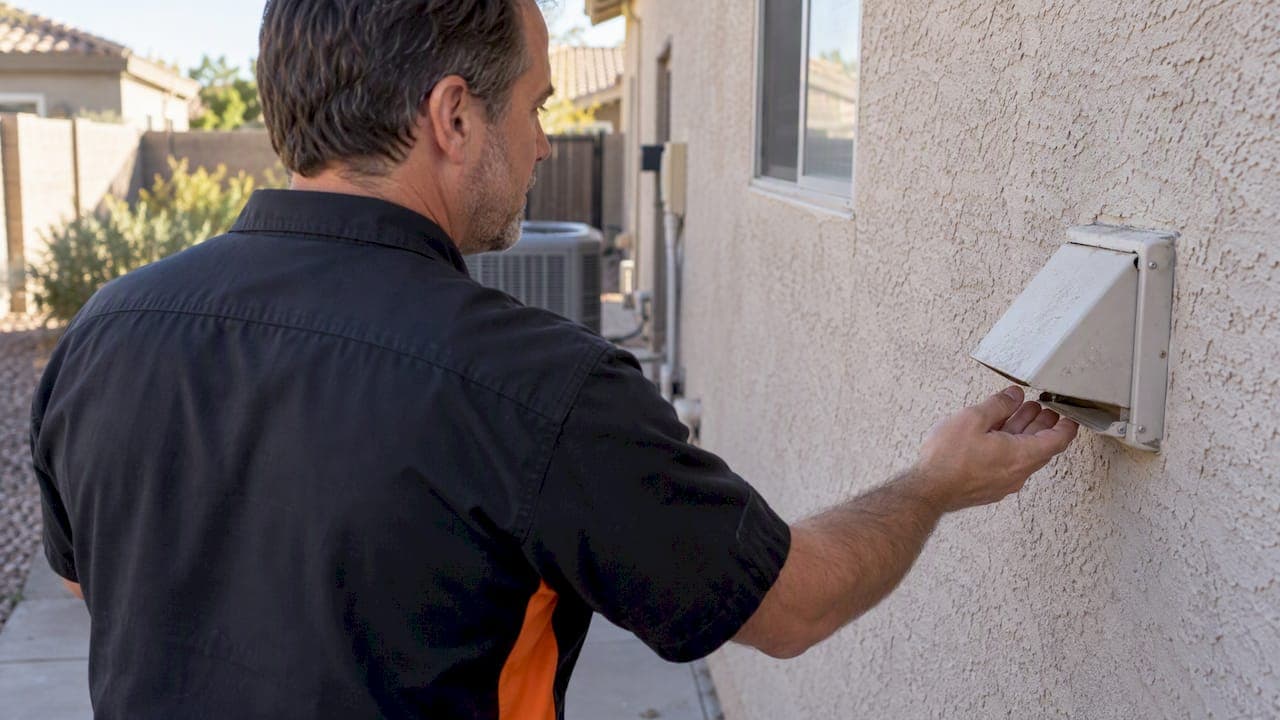
If your dryer smells like it's burning, takes twice as long to dry a load, feels hot to the touch, or shows lint piling up at the outside vent, stop using it now. Smoke or visible flames mean you call 911 immediately. Otherwise, hold off on running it until the vent and duct are inspected: dryers cause an estimated 13,820 home structure fires a year, and federal testing confirms blocked vents can push internal temperatures high enough to ignite trapped lint.
TL;DR:
- If a dryer's drying time doubles or it feels excessively hot, it likely has a vent blockage that risks ignition from accumulated lint.
- Signs like burning smells, lint on the exterior vent, or weak airflow indicate immediate need for vent cleaning and professional inspection.
- Lint buildup begins from first use and severe blockages can cause internal temperatures to rise enough to ignite lint within the dryer or vent system.
- Regular maintenance includes cleaning lint traps after each load, inspecting ducts annually, and replacing plastic or foil ducts with rigid metal ones.
- Smoke, sparks, or discolored vent connections require prompt shutdown and professional assessment before further use.
Table of Contents
- Detailed signs and a safe diagnostic checklist you can run right now
- Why those signs matter: how lint, airflow, and heat combine to create fire risk
- If you notice these signs: prioritized immediate steps and what to avoid
- Prevention: routine maintenance, correct venting, and inspection cadence
- Professional inspection and cleaning: what technicians check and why it matters
- Initial small sparks or flames inside the dryer
- Discolored or melted vent connections
- Unusual sounds such as popping or rattling noises
- Smoke coming from the dryer or vent area
- Warning signs on the circuit breaker related to the dryer
- Why we emphasize pro inspections and safety-first maintenance
- Dryer vent cleaning service snapshot and how to book
- FAQ
- Sources
Detailed signs and a safe diagnostic checklist you can run right now
Most dryer vent problems announce themselves well before anything catches fire. You just have to know what you're looking and smelling for, and a few of these checks take less than five minutes.
- Track your drying time. If a load that used to take 35 to 40 minutes now needs two cycles, treat that as a real warning sign, not an annoyance.
- Notice the smell. A sharp, burning odor suggests lint or fabric is heating against a hot surface; a musty smell often points to trapped moisture from restricted airflow.
- Touch the dryer and the clothes. A cabinet that feels hot on the outside, or clothes that come out noticeably hotter than usual, suggests heat isn't escaping the way it should.
- Check the outside vent hood. Lint clinging to the exterior flap, a flap that won't open, or lint scattered on the ground beneath it all point to a clogged line.
- Run the hand test. With the dryer on a short cycle, hold your hand near the lint trap opening and at the outside vent. Weak or absent airflow at either point means the path is restricted.
- Look for moisture behind the machine. Condensation, steam, or a damp wall near the vent connection usually means exhaust air isn't escaping outdoors fast enough.
Manufacturer guidance echoes this approach. Samsung's troubleshooting steps recommend disconnecting the exhaust duct and feeling for hot air inside the drum for about 30 seconds, a simple way to confirm whether the vent itself is the bottleneck. Whirlpool publishes a similar test for homeowners checking airflow before assuming the dryer itself is broken. For a broader walkthrough of these at-home checks, see this guide to DIY air vent inspection tips.
Pro Tip: Run the hand test right after a 10-minute cycle. A cold or barely warm airflow at the outside vent, paired with a hot dryer cabinet, is one of the clearest signs of a blocked line.
If you smell burning, see smoke, or notice sparking, skip the checklist and stop the dryer immediately.
Why those signs matter: how lint, airflow, and heat combine to create fire risk

Lint is the fuel, restricted airflow is the trigger. The CPSC's testing on electric clothes dryers found that lint builds up inside the dryer chassis from the very first use, regardless of how often the lint screen gets cleaned, and that severe exhaust blockage of 75% to 100% produced large internal temperature increases capable of igniting that accumulated lint.
Lint and dust were the leading item first ignited in home dryer fires, factoring into roughly a quarter of incidents. That single statistic explains why cleaning habits matter more than almost anything else in this appliance.
Restricted airflow doesn't just slow drying, it traps heat that the dryer's internal safety thermostat is meant to vent out. When blockage is severe enough, that heat can build faster than the safety systems account for. Plastic or foil ducting makes this worse because it sags, traps lint at the seams, and holds heat differently than rigid metal. Long duct runs with multiple bends, or an outside vent blocked by a bird's nest or debris, create the same bottleneck from the opposite end of the line.
If you notice these signs: prioritized immediate steps and what to avoid
What you do in the next few minutes matters more than what you do next week.
- Flames or heavy smoke: Turn off the dryer if it's safe to reach the switch, get everyone out of the room or home, and call 911. Don't try to fight an active appliance fire yourself.
- Warning signs but no fire: Unplug or stop using the dryer, check the lint trap and outside vent, and write down what you noticed before calling a technician.
- Avoid pushing through it: Never run another cycle "to finish drying" when you've already noticed heat, smell, or airflow problems.
- Avoid opening a dryer that's actively burning. Adding oxygen can intensify a fire that's already contained inside the drum.
- Record details for the technician: the dryer's make and model, exactly what you noticed and when, any recent repairs, and whether you can see the venting material from outside the home.
Prevention: routine maintenance, correct venting, and inspection cadence
A few consistent habits cut dryer fire risk more than any single repair; for instance, investing in a fire-resistant safe checklist can help homeowners prepare for protecting valuables in the event of a fire.
- Every load: Clean the lint trap before or after each cycle, and wipe away lint that collects around the drum opening.
- Every 6 to 12 months: Pull the dryer out, inspect the flexible transition hose for crushing or disconnection, and clear lint from behind the machine.
- At least once a year: Have the full vent run cleaned and inspected, especially for heavy-use households or shared laundry rooms. Public health guidance recommends cleaning lint traps every load and professionally inspecting the vent system at least annually, with more frequent service for commercial or high-volume use.
- Installation standards: Use rigid or smooth-wall metal ducting instead of plastic or foil, keep the run as short and straight as possible, and vent directly outdoors, never into an attic or soffit. Federal fire prevention guidance specifically calls out metal ducting and outdoor venting as code-driven requirements, not just best practice.
Pro Tip: If you can't see daylight through the outside vent flap when it's open, or the duct run disappears behind a wall with no access panel, that's a job for a professional, not a shop vac.
DIY cleaning works fine for the lint trap and the first few feet of accessible duct. Once lint shows up inside the dryer's chassis, the run passes through walls or a roof, or you've found evidence of a nest or animal in the line, it's time to bring in someone with the right tools.
Professional inspection and cleaning: what technicians check and why it matters
A thorough inspection goes well beyond what a homeowner can reach with a vacuum hose.
- Interior chassis and heater housing: checked for lint that has worked past the drum seals, a common spot DIY brushing never reaches.
- Blower and transition duct: inspected for buildup, damage, or disconnection at the point where the dryer meets the wall.
- Full vent run to the exterior termination: cleared with rotary brushes and long vacuum hoses, sometimes paired with a camera inspection on long or inaccessible runs.
- Exterior hood and damper: checked for damage, replaced if the flap no longer opens and closes properly.
After the cleaning, a technician typically recommends a full interior and vent cleaning, swaps out any plastic or foil duct sections for rigid metal, and sets a follow-up schedule based on how often the dryer runs. For more detail on how this differs from vent-line cleaning alone, see this breakdown of professional dryer vent cleaning and why lint trapped inside the cabinet often survives a basic duct cleaning.
Initial small sparks or flames inside the dryer
A spark or brief flame visible through the dryer's door or drum opening is not something to wait out. It usually means lint has made contact with a heat source inside the cabinet, often near the heating element or the drum seal where CPSC testing found lint tends to accumulate over time.
If you see this, shut the dryer off at the switch or unplug it if you can do so safely, and do not open the door until you're sure there's no active flame. A spark that goes out on its own after the dryer is off still means there's enough built-up lint or heat damage inside to warrant a full inspection before the next cycle. This is one of the clearer early signs that lint has moved past the parts a homeowner can reach, and it's a situation where calling a professional before running the dryer again is the safer move than hoping it was a one-time event.
Discolored or melted vent connections
Check the flexible or rigid section where the dryer connects to the wall duct. Scorch marks, a yellowed or warped section of metal, or a soft, melted spot on a plastic or foil connector all point to sustained heat exposure well above what a properly venting dryer should produce.

Plastic and foil transition ducts are especially vulnerable because they're not rated for the same heat tolerance as rigid or smooth-wall metal duct, which is why fire prevention guidance steers homeowners away from them entirely. If you find a discolored connection, replace it before running the dryer again, and have the full vent line checked. Heat damage at the connection point rarely happens in isolation. It's usually a sign that airflow has been restricted long enough for temperatures to climb well past normal.
Unusual sounds such as popping or rattling noises
A dryer that suddenly starts popping, rattling, or thumping during a cycle is often telling you something has shifted inside the drum or the venting path. A rattle can mean a loose vent clamp or a section of duct that has come partially disconnected, letting lint and hot air escape into a wall cavity instead of outdoors.
A popping sound is more concerning. It can indicate lint igniting briefly and extinguishing on its own, or a foreign object caught near the heating element. Either way, these aren't background noises to tune out. Turn the dryer off, check the accessible sections of duct for looseness or damage, and treat repeated popping sounds as a reason to stop using the machine until a technician has looked inside.
Smoke coming from the dryer or vent area
Smoke from the dryer cabinet, the lint trap area, or the exterior vent hood means heat has already exceeded what the system was designed to handle. Wisps of smoke during a cycle call for the same response as visible flames: shut the dryer down, get people clear of the area, and call 911 if the smoke is heavy or doesn't stop quickly.
Smoke seeping from behind the machine or from the wall where the duct runs can mean the fire risk has moved past the dryer itself and into the surrounding structure, which is more dangerous than smoke contained to the appliance. Even a small, brief wisp of smoke that clears on its own is not a sign to ignore. It means conditions inside the vent or dryer reached a point where something briefly burned, and the underlying blockage or damage that caused it is still there until a technician removes it.
Warning signs on the circuit breaker related to the dryer
A breaker that trips repeatedly when the dryer runs, or one that feels warm to the touch, often means the dryer's motor or heating element is working harder than it should, frequently because restricted airflow is forcing the system to run longer and hotter per cycle. This isn't always a wiring problem. Sometimes it's the vent blockage showing up as electrical strain instead of a smell or a slow dry time.
A breaker that trips the moment the dryer starts, rather than partway through a long cycle, points more toward an electrical fault and warrants an electrician rather than a vent cleaning. But a breaker that only trips on longer loads, paired with any of the airflow or heat signs already covered, is worth mentioning to whoever inspects the vent. The two problems can compound each other, and ruling out a blocked vent first is usually the faster, cheaper step.
Why we emphasize pro inspections and safety-first maintenance
Fieldwork on rental properties and older homes turns up the same pattern again and again: lint hiding past the point a homeowner's vacuum or brush can reach, often behind seals a DIY cleaning never touches. Property managers juggling multiple units tend to underestimate how fast that buildup returns between tenants.
That pattern is exactly why we treat inspection cadence, not just reactive cleaning, as the real safeguard.
— Shaun
Dryer vent cleaning service snapshot and how to book
A standard visit clears lint from the full vent run, including the sections past the point most homeowners can reach, and checks the exterior termination for damage or blockage. Have your dryer's make and model, how long you've noticed symptoms, and your address ready when you call.
Flexible scheduling options, including after-hours slots, are available for both homeowners and property managers coordinating multiple units. You can review the full dryer vent cleaning service details and book an inspection before running the dryer again.
FAQ
How common are dryer vent fires?
Dryers are involved in an estimated average of 13,820 home structure fires each year, based on data from 2014 through 2018. Failure to clean the appliance or its vent accounted for about one-third of those fires, making it the single largest preventable cause.
How can you tell if your dryer is going to catch fire?
Watch for a dryer that runs much hotter or longer than usual, smells like burning, or shows little to no airflow at the outside vent. Visible lint piling up at the exterior hood or a flap that won't open are also strong warning signs that exhaust is blocked.
How do dryer fires usually start?
Most start when lint, the leading material ignited in these fires, builds up near a heat source inside the dryer or along a restricted vent path. CPSC testing found that severe exhaust blockage can raise internal temperatures enough to ignite that accumulated lint, even in dryers that get regular use.
Is breathing dryer vent air toxic?
Dryer vent air itself is mainly warm, moist exhaust carrying fine lint particles, not a recognized toxic hazard on its own. The bigger concern is a blocked vent pushing that exhaust, along with heat and humidity, back into the home instead of outdoors, which is a fire and air-quality issue rather than a direct toxicity one.
Sources
- Home Dryer Fires (NFPA research)
- CPSC — Final report on electric clothes dryers and lint ignition characteristics
- USFA home appliance fire prevention
- How to prevent clothes dryer fires in your home (NCHH)