
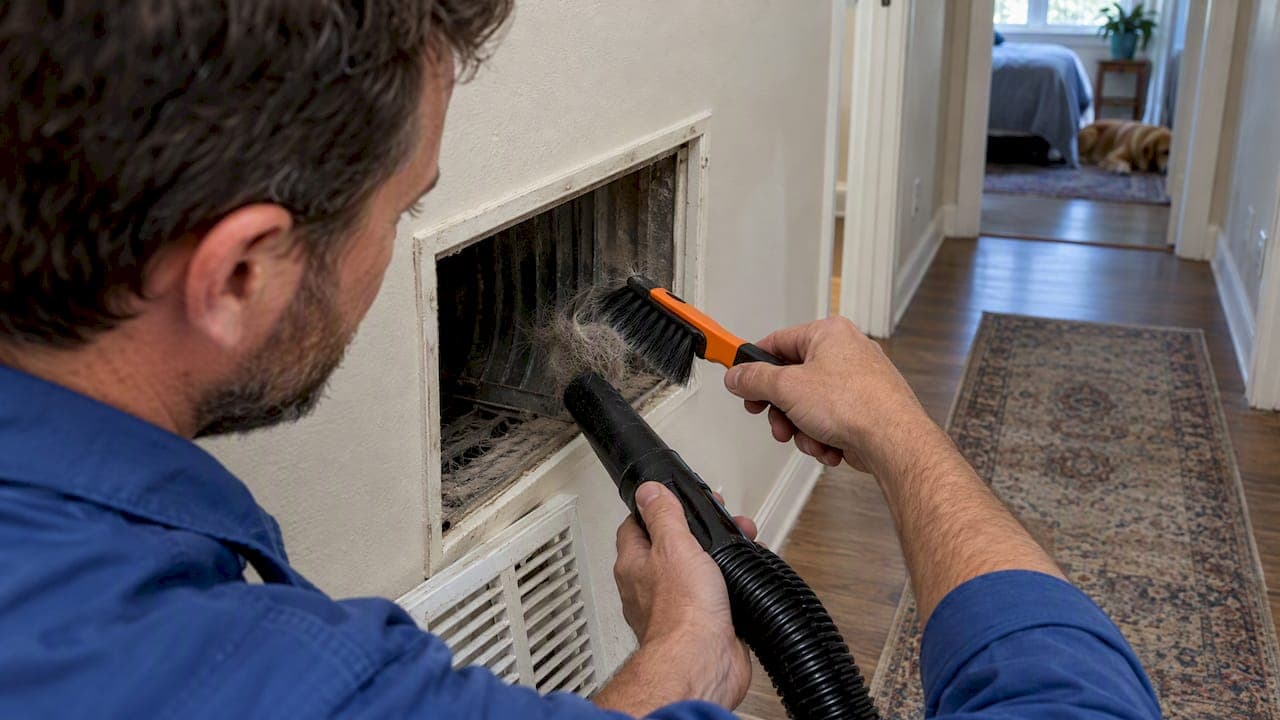
Most pet hair you see at registers is handled by filter and register cleaning: check and change your filter, vacuum the registers, then reassess. Full duct cleaning only becomes necessary when inspection turns up visible mold, pest activity, or heavy clogging. Work through inspection first, then DIY steps, then a professional call if warranted, then prevention.
TL;DR:
- Most pet hair and dander settle at return registers and in trunk lines, especially when ducts are leaky or unsealed, spreading debris into unconditioned spaces.
- A pattern of heavy hair buildup at returns, musty smells, visible mold, or allergy spikes indicates ducts need inspection and possible professional cleaning.
- DIY cleaning is effective for surface deposits using a vacuum and microfiber cloth, but deeper cleaning should only happen if inspection reveals mold, pests, or heavy clogging.
- Full-system professional cleaning is recommended only after thorough inspection, including coils and fans, and should be performed by NADCA-certified technicians with proper equipment.
- Upper surface management like regular grooming, filter changes, and air purifiers has a greater impact on allergy symptoms than duct cleaning alone, which addresses surface contamination rather than airborne particles.
Table of Contents
- How pet hair and dander move through your HVAC system
- Signs your ducts need attention: a quick inspection checklist
- Safe DIY cleaning steps for vents and accessible duct openings
- When professional duct cleaning helps and how to hire a reputable service
- Allergen-reduction strategies that work beyond duct cleaning
- Preventing future buildup: home fixes and maintenance cadence
- What our technicians see on pet-hair duct jobs
- The real priority with pet hair in ducts
- Get your ducts and vents professionally checked
- FAQ
- Sources
How pet hair and dander move through your HVAC system
Return registers pull air (and whatever is floating near it) back toward the furnace or air handler, which is why hair and dander collect most heavily at returns and in the trunk lines feeding them. Once pulled in, lighter dander can ride the airflow further into the system while heavier hair tends to drop out near the intake.
Duct leaks, unsealed return boxes, and ducts running through attics, crawl spaces, or garages let hair and dust escape into those unconditioned areas and pull in extra debris at the same time. This is one reason sealing and insulating ducts in unconditioned spaces pays off beyond energy savings.
- Return registers collect the heaviest hair and dust buildup.
- Leaky or unsealed ducts spread debris into attics and crawl spaces.
- Surface deposits inside ducts often stick to duct walls and don't necessarily raise airborne particle counts throughout the home.
Signs your ducts need attention: a quick inspection checklist
A thin film of dust at your registers is normal and doesn't mean your ducts are failing. What's worth flagging is a pattern: heavy hair clumps at returns, allergy symptoms that spike specifically when the system runs, musty smells coming from vents, visible mold on register covers, or pest droppings near duct openings.
Walk through this sequence before deciding what to do next:
- Pull the return grille and look for matted hair or heavy dust.
- Run a flashlight a few inches into the duct and check for mold or moisture staining.
- Sniff near the register while the system runs for musty or stale odors.
- Check accessible duct joints for pest droppings or chew marks.
- Note whether allergy symptoms track with the HVAC cycling on and off.
If none of these show up, routine filter and register maintenance is likely all you need.
Safe DIY cleaning steps for vents and accessible duct openings
Most homeowners can handle the hair and dust sitting at registers and just inside the duct opening without special equipment. You'll want a vacuum with a brush or crevice attachment, a microfiber cloth, and a dust mask if anyone in the house has allergies.
- Turn off the HVAC system at the thermostat before removing any covers.
- Unscrew and remove the register or return grille.
- Vacuum inside the duct opening as far as the hose reaches, using the brush attachment to loosen embedded hair.
- Wipe the grille and surrounding wall or floor area with a damp microfiber cloth.
- Replace or upgrade your filter, moving to a higher MERV rating if your system can handle the reduced airflow.
- Reinstall the grille and turn the system back on.
Pro Tip: A higher-MERV filter traps more pet dander, but check your HVAC manual first: some older blowers struggle with denser filters and lose airflow.
Avoid pushing a vacuum hose or any tool further than your arm's reach into the ductwork. Forcing debris deeper, or attempting to clean coils, fans, or the air handler yourself, tends to pack contamination further into the system rather than remove it.
When professional duct cleaning helps and how to hire a reputable service
EPA guidance is clear that duct cleaning usually isn't necessary unless an inspection turns up visible mold, pest infestation, heavy clogging, or debris left over from construction work. Unexplained respiratory symptoms tied to HVAC use are another trigger worth acting on.
A thorough job covers more than the ductwork itself. NADCA's homeowner guidance recommends a full-system scope that includes coils, fans, drain pans, registers, and the air handler, because skipping any one of these lets contamination recolonize the rest of the system within weeks.
Before hiring, check for:
- NADCA membership or certification for the technicians doing the work.
- A written scope of work that names every component to be cleaned, not just "ducts."
- Commercial-grade vacuum equipment with HEPA filtration and visible home-protection measures like floor coverings.
- References or documented before-and-after results from past jobs.
- A clear explanation of how they'll seal access points afterward.
Our commercial air duct cleaning services follow this full-system approach rather than a quick pass at the registers.
Allergen-reduction strategies that work beyond duct cleaning
Duct cleaning addresses what's inside the ductwork, but most pet allergen exposure happens in the living space itself. A layered approach built around keeping pets out of bedrooms, regular bathing and grooming, HEPA air purifiers, allergen-proof bedding covers, and consistent filter changes tends to do more for symptom control than duct cleaning alone.
Filter choice matters here. Higher-MERV filters capture more dander and fine particles, but filter selection involves a tradeoff between filtration strength and airflow, and a filter rated beyond what your system can handle restricts airflow and strains the blower.
- Keep pets off bedding and out of bedrooms when possible.
- Bathe and groom pets regularly to cut shedding at the source.
- Run a HEPA purifier in rooms where the pet spends the most time.
- Wash bedding and soft furnishings on a regular cycle.
- Swap HVAC filters more often than the standard schedule in pet households.
Duct cleaning still earns its place as a complement to this routine, particularly after mold remediation or when registers show heavy clogging that filters alone can't fix.
Preventing future buildup: home fixes and maintenance cadence
Prevention is mostly about keeping hair from accumulating in the first place rather than cleaning it out after the fact. A consistent grooming and vacuuming schedule at home cuts the amount of loose hair available to get pulled into returns, and register guards over return grilles catch larger clumps before they enter the ductwork.
- Vacuum floors and furniture near pet resting spots at least weekly.
- Install mesh guards over return registers to catch hair before it enters the duct.
- Swap filters more frequently in homes with multiple pets, and check them monthly.
- Seal visible gaps at duct joints and register boots to stop hair-laden air from leaking into wall or floor cavities.
Porous fibrous duct liners are the exception to "just clean it." If those liners get contaminated with mold or heavy debris, replacement is often the better fix since the material holds moisture and contamination deep inside rather than on the surface, where cleaning can't reach it. For leak concerns specifically, a quick duct leak check can tell you whether sealing work should come before any cleaning job.
What our technicians see on pet-hair duct jobs
Our team regularly opens up systems where a prior cleaning only touched the visible ductwork and skipped the coils, fans, and drain pans. That partial approach is the most common reason homeowners call us back within months: leftover contamination on an uncleaned coil reseeds the whole system once airflow resumes.
Our full-system approach covers the air handler, coils, and fans alongside the ducts themselves, plus dryer vent cleaning and air quality testing when a household wants objective before-and-after data rather than a guess. We also lean on complete HVAC cleaning rather than spot treatments, since partial work tends to undercut the airflow gains a thorough job can deliver.

The real priority with pet hair in ducts

The conventional advice on this topic treats duct cleaning as the default fix for pet allergen complaints, and that's backward. The strongest, best-documented lever is what happens in the living space: grooming, HEPA filtration, and keeping pets out of bedrooms. Duct cleaning is a surface treatment, and EPA's own field research found that cleaning reduces contamination on duct surfaces without reliably lowering airborne particle counts throughout a home.
What's underrated is the filter. A cheap, rarely-changed filter undoes most of the benefit from grooming or air purifiers, yet homeowners treat it as an afterthought compared to a dramatic-sounding duct cleaning service. If I had to rank priorities: filter first, living-space controls second, register and return cleaning third, and full professional duct cleaning only when inspection actually shows mold, pests, or heavy clogging. Skipping straight to a full cleaning without that inspection step wastes money on a problem you may not have, while ignoring the filter leaves the real problem untouched.
— Shaun
Get your ducts and vents professionally checked
When your own inspection turns up mold, heavy clogging, or hair you can't reach, our air duct cleaning service covers the full system rather than just the visible ductwork.
- Full-system inspection covering ducts, coils, fans, and registers, not just a surface pass.
- Dryer vent cleaning and air filter replacement available alongside duct work.
- Air quality testing to confirm results with real data instead of a guess.
Booking starts with a scheduled inspection so you know what's actually in your ducts before any work begins. Request your air duct cleaning and we'll walk you through the full scope before we start.
FAQ
How do I keep dog hair out of air vents?
Vacuum your floors and pet resting areas regularly to reduce loose hair at the source, and install mesh guards over return registers to catch hair before it enters the ductwork. Changing your HVAC filter more often in pet households also cuts down on what makes it past the first line of defense.
What are the signs that my air ducts are dirty?
Heavy hair or dust clumps at return registers, musty odors near vents, visible mold on register covers, and allergy symptoms that spike when the HVAC runs are the clearest signs. A light film of dust at registers is normal and doesn't on its own mean ducts need cleaning.
Does pet dander travel through vents in HVAC systems?
Pet dander can ride airflow into return registers and through ductwork, though EPA field research found that surface deposits inside ducts don't necessarily translate into higher airborne particle counts throughout the home. Leaky or unsealed ducts in attics or crawl spaces are a more direct path for dander to spread beyond the system.
Can animals get into ductwork?
Small pests can enter ductwork through gaps at duct joints, unsealed returns, or openings in unconditioned spaces like attics and crawl spaces. Droppings or chew marks near duct openings are a trigger for professional cleaning rather than a DIY fix.
When should I call a professional instead of cleaning vents myself?
Call a professional when inspection shows visible mold, pest activity, heavy clogging, or leftover construction debris inside the ducts. For routine hair and dust at registers, filter changes and register vacuuming are usually enough on their own.
Sources
- Should You Have the Air Ducts in Your Home Cleaned? (EPA)
- Evaluating Residential Air Duct Cleaning and IAQ: Results of a Field Study (EPA)
- Homeowner guides and tips about air duct cleaning (NADCA)