
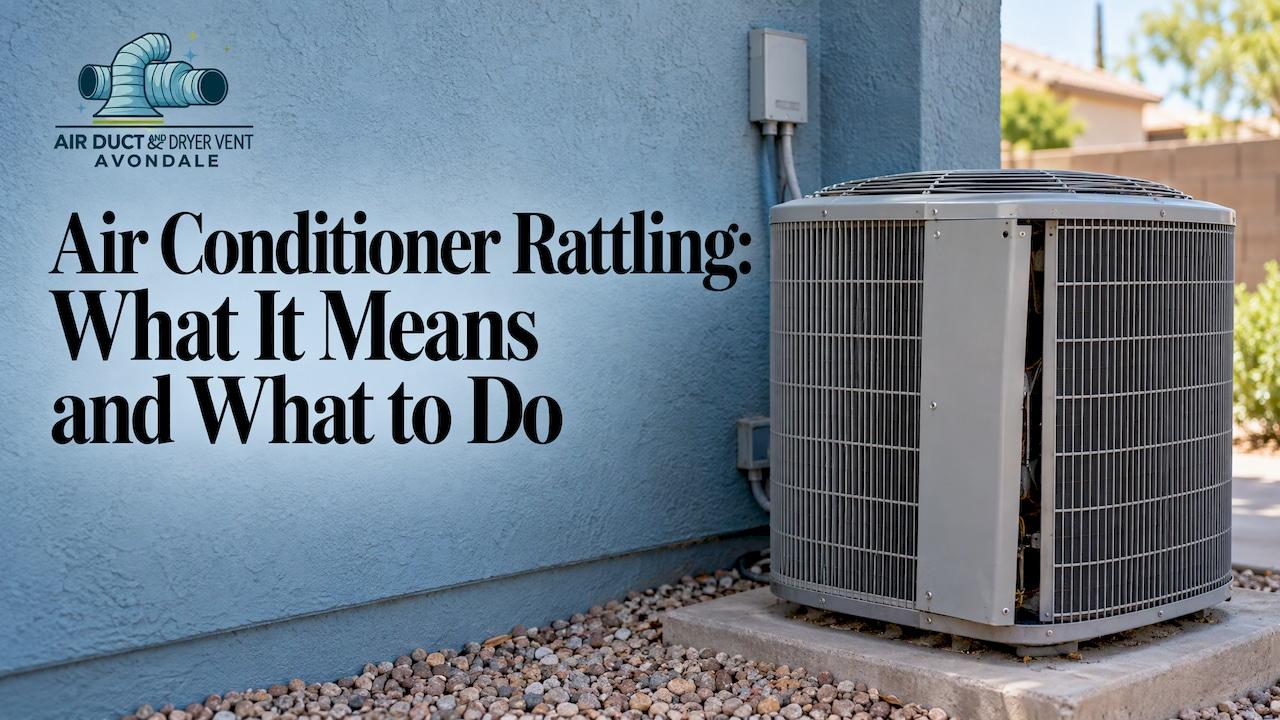
A rattling air conditioner usually means something has come loose, something has blown in, or something is vibrating against something else. Most causes are simple: a loose panel, a stray screw, a twig in the fan path, a dirty filter or a duct section that is not held firmly. A few are not, and the difference shows up in where the noise comes from, when it happens and whether cooling has changed. In Avondale, our team handles A/C repair, ductwork repair, vent and duct replacement and filter replacement, so the same visit can fix the rattle and what causes it.
This guide helps you narrow the source in a few minutes, tells you which checks are safe to do yourself, and lists the signs that mean you should switch the system off and book an inspection.
TL;DR
- Work out first whether the rattle comes from the outdoor unit, the indoor air handler, or the vents and ducts. That one step rules out half the possible causes.
- Loose screws or panels, debris, an unlevel unit, a dirty filter and loose ductwork are the most common sources, according to manufacturer troubleshooting guides.
- Safe checks mean switching the system off at the thermostat, looking at the filter, looking for visible debris and noting the pattern. Never reach through the fan guard or open electrical panels.
- Turn the AC off and book service if the rattle is loud, getting worse, or comes with grinding, scraping, a burning smell, weak cooling or breaker trips.
- Our A/C repair and duct teams in Avondale can find the source and fix it, including after-hours scheduling.
Table of Contents
- Start with where the rattle comes from
- Outdoor AC unit rattling
- Rattling at the indoor unit, vents and ducts
- Safe checks you can make in ten minutes
- When to switch the AC off and book an inspection
- How a technician finds the real source
- Book the fix in Avondale
- Our view: treat a rattle as an early warning
- Keeping the rattle from coming back
- FAQ
- Sources
Start with where the rattle comes from
Before you touch anything, listen. With the AC running, stand near the indoor air handler (the unit with the blower, usually in a closet, garage or attic), then near the outdoor condenser (the box with the fan on the side of the house or on the roof). Then stand under a supply vent. Note which spot is loudest, what the sound is like and when it happens.
The location gives you a short list of suspects:
| Where you hear it | Likely sources |
|---|---|
| Outdoor unit | Loose panel or screw, debris near the fan, bent or loose fan blade, unlevel unit, worn motor |
| Indoor air handler | Loose access panel, dirty filter, blower problem |
| At a vent or in the walls | Loose grille, loose or poorly supported duct section, restricted airflow |
| Along the refrigerant lines | Lines touching a wall or a bracket |
Timing adds a second clue:
- Only at startup: often a loose part that settles once the system is running.
- Throughout the cycle: commonly debris or an unsecured component.
- Rhythmic, rising and falling with fan speed: usually something in the fan path, such as a blade touching the shroud or a loose panel.
- Only at shutdown: often a component relaxing or refrigerant settling, and often harmless.
One caution: noise travels through cabinets, ducts and walls, so the loudest spot is not always the failed part. A rattle you hear at a vent can start at the air handler, and a thump in the yard can come from a panel rather than the motor. That is why a technician listens at several points before touching a part.
Outdoor AC unit rattling
If the rattle is outside, the cause is usually one of these.
Loose screws and panels
The outdoor cabinet is held together with many small screws, and constant vibration works them loose over the years. A loose front or access panel buzzes and rattles against the frame. TCL's troubleshooting guide lists loose screws and a loose front panel among the first things to check when a unit rattles or vibrates. If the panel is simply an outer cover and the screws are visible, you can snug them with the power off. If the panel covers electrical components, leave it alone.
Debris near the fan
Leaves, twigs, small stones and landscaping clippings can fall through the top grille or be pulled against the sides. The fan then strikes them, and you hear a fast, irregular rattle or scrape. In a desert yard with gravel, palo verde litter and wind, it is worth looking at the unit after every big blow.

If you hear a sudden rapid rattle, turn the system off at the thermostat first. Look through the grille from a safe distance. Do not reach in, and do not try to spin the blades by hand.
An unlevel or shifting unit
A condenser sits on a pad. If the pad has settled, cracked or shifted, the cabinet can vibrate against its own base or against the refrigerant lines. TCL's guide also names an unlevel unit as a common cause of rattling. A unit that has visibly tilted needs to be re-leveled and secured, not just tightened.
A bent or loose fan blade
A fan blade that is damaged, bent or off-center will wobble and knock. It also moves less air and makes the motor work harder, so the sound is a warning about wear, not only an annoyance. TCL's guide says that damaged or off-center blades need service rather than a home fix. This is a repair we handle through our A/C repair service.
Motor, compressor and mounts
A deep, heavy rattle or thump from inside the cabinet, especially with weak cooling, can point to worn motor bearings or a compressor problem. This is not something you can see from the yard. Switch the system off and have it inspected rather than letting it run.
Rattling at the indoor unit, vents and ducts
If the noise follows the air into the house, look at the airflow path.
A dirty or clogged filter
A clogged filter makes the blower work harder, and the extra strain and turbulence can show up as noise at the vents. GE Appliances lists a dirty filter among the causes of a rattling air conditioner and recommends cleaning or replacing it. For a central system, check the filter first: it takes a minute, and a fresh one is cheap. If you would rather not deal with it, we offer filter replacement as part of our HVAC services.
A loose grille or register
A vent cover that is not fully seated, or a screw that has backed out, buzzes when air passes. Press the grille gently while the system runs. If the sound stops, you have found it. A grille that is warped, cracked or no longer sits flat should be replaced, and our air vent replacement service covers that. Our own guide to air vent noise causes explains the other sounds vents can make.
Loose, unsupported or sharply bent ductwork
Ducts are held by straps and connections. Over time a strap loosens, a joint separates or a flexible run sags. Then the duct vibrates or knocks against framing as air moves through it. In an attic, that rattle can sound as if it comes from the ceiling. Duct sections that have aged or been crushed often need repair or replacement, not just a retightened screw. Our ductwork repair and air duct replacement service is for exactly this.

When the rattle comes with weak airflow in some rooms, the duct system is the first place to look. Our guides on uneven airflow and on HVAC noise reduction walk through that in more detail.
Debris inside the system
Construction dust, debris left after a remodel and years of buildup can sit in ducts and vents. Heavier debris can rattle as air pushes it along. Cleaning the system removes it and also helps the air that reaches your rooms. Our air duct cleaning and air vent cleaning teams do this for homes and, through commercial air duct cleaning, for offices and other commercial properties.
Safe checks you can make in ten minutes
These checks are low risk. They are meant to give a technician better information, not to replace one.
- Set the thermostat to off. Do not just switch to fan. Wait for the fan to stop before you go near the outdoor unit.
- Check the air filter. Replace it if it is dirty. This is also routine upkeep.
- Look at the outdoor unit from a safe distance. Check for leaves, branches, trash or anything wedged near the grille. Clear loose material from around the base, and keep the area open. One contractor guide suggests leaving at least 2 feet of open space around the unit, which also helps airflow.
- Look for visible damage. Is the pad cracked? Is the cabinet tilted? Are any screws missing, or a panel bowed?
- Check the vents. With the system running, press each loose-looking grille.
- Record the pattern. Note when the rattle happens and where it is loudest. A short phone video helps.
- Check that cooling is normal. Weak cooling alongside the noise matters more than the noise alone.
GE says that for a window unit you can inspect and reinstall a loose front grille using the owner's manual, clean or replace the filter and remove exterior debris. That is the same spirit as the checks above.
What to leave alone
- Do not reach through the fan guard, and do not spin or straighten blades.
- Do not remove electrical panels or touch capacitors, wiring or the contactor.
- Do not test live voltage.
- Do not use a pressure washer on the condenser coil.
- Do not force out an obstruction you cannot reach safely. Stop and call.
- Refrigerant lines, oily residue, frost or leak signs need a licensed technician.
These limits keep you safe. The inside of an outdoor unit holds stored electrical charge and fast-moving blades, and a small mistake there is costly.
When to switch the AC off and book an inspection
A short, mild rattle that you trace to a loose grille is low urgency. Put it on your list and fix it this week. A rattle that stays after your checks, or gets worse, needs a technician. Turn the system off and book service when you notice any of these:
- The rattle suddenly becomes loud, harsh or violent.
- Grinding, scraping, banging or screeching joins the rattle.
- The outdoor fan wobbles, or is not turning.
- The unit vibrates visibly.
- Cooling is weaker, or the system will not cool at all.
- You smell burning or see smoke or sparks.
- The breaker trips repeatedly, or the system struggles to start.
- You see oily residue or frost near the refrigerant lines.
Why not run it and see? A part that is rubbing or loose keeps wearing, and the damage spreads to the parts around it. A cracked blade can ruin a motor. A loose mount can stress the refrigerant lines. In Avondale's summer heat, a failure also arrives at the worst moment, so catching a rattle early is the cheaper path.
If you manage a rental or a commercial building, the same rules apply, and a tenant's report of "a strange noise" is worth a same-week look. We offer flexible scheduling for commercial clients, including after-hours visits, so a repair does not have to interrupt the business day.
How a technician finds the real source
A good inspection does not start with a guess. The technician listens at the indoor and outdoor units and along the ductwork, then checks the cabinet panels and fasteners, the fan guard and blade clearance, the mounting hardware and the pad, and looks for debris around the base. They also listen for how the vibration changes as the system starts, runs and stops. That sequence separates a loose panel from a failing motor without replacing parts at random.
The outcome is usually one of three:
- A quick fix: tightening fasteners, clearing debris, re-leveling the pad or replacing a filter.
- A part repair: a fan blade, a motor or a mount.
- An airflow fix: repairing or replacing duct sections and vents, or cleaning the system.
Book the fix in Avondale
If your checks did not stop the rattle, or you would rather not climb around the unit, we can take it from here. Our team provides A/C repair, ductwork repairs, air duct and vent replacement, air filter replacement and air duct and vent cleaning for homes and commercial properties in Avondale, with warranties on our services. Start on our A/C repair page and tell us what you hear, where, and when.

If the rattle comes with a dusty smell, uneven rooms or allergy symptoms, ask us about an air quality test at the same visit.
Our view: treat a rattle as an early warning
Most rattles we hear about start small. A loose screw, a bit of debris, a duct strap that has given up. The trouble is that people live with the noise until it becomes a breakdown.
Our approach is to look at the whole air path, not just the loudest part. A rattle at a vent can start in a duct. A rattle outside can be a sign the system is working harder than it should. Because duct cleaning, duct repair, vent replacement and A/C repair are what we do every day, we can follow the noise from the outdoor unit to the register in one visit instead of handing you from one trade to the next.
Our advice: do the safe checks, write down what you hear, and call us early. A rattle caught in the first week is usually the shortest repair.
Shaun
Keeping the rattle from coming back
- Change filters on schedule. A clean filter keeps the blower from straining.
- Keep the area around the outdoor unit clear. Trim back plants and remove clippings and loose gravel.
- Look at the unit after storms and high winds. Check for branches, shifted pads and loose screws.
- Listen at the start of the season. Run the system once before the heat peaks, so a new sound shows up before you need cooling every day.
- Have ducts and vents inspected. Loose runs, damaged grilles and buildup are easier to deal with when they are small. Our guide to common HVAC issues lists what to watch for.
A steady, low hum is normal for a running system. What matters is a change: a new, sharper or louder sound that was not there last month.
FAQ
Why is my outdoor AC unit rattling?
The most common causes are a loose panel or screw, debris near the fan, an unlevel unit and a bent or loose fan blade. Switch the system off, look from a safe distance and note when the noise happens. If you cannot see an obvious cause, or the fan looks damaged, book an inspection.
Is a rattling air conditioner dangerous?
Often it is not, if the cause is a loose grille or a filter. It becomes a concern when the rattle is loud, getting worse, or comes with grinding, a burning smell, weak cooling or tripped breakers. In those cases turn the AC off and have a technician inspect it before it runs again.
Why does my AC rattle only when it starts up?
A startup-only rattle often points to a loose part that settles once the system is running, such as a panel, a screw or a duct strap. It can also be harmless settling at shutdown. If the sound lasts longer each week or spreads to the whole cycle, have it checked.
Can I fix a rattling AC myself?
You can replace a dirty filter, clear loose debris from around the outdoor unit and seat a loose vent grille. Anything involving the fan blades, electrical panels, refrigerant lines or the compressor should be handled by a technician. We repair these in Avondale through our A/C repair service.
Can dirty ducts or vents make a rattling sound?
Yes. Loose or poorly supported ducts can vibrate as air moves, and debris or a clogged filter changes how air flows and how loud it is at the vents. Cleaning, repairing or replacing the affected sections can quiet the system and improve airflow.
Sources
- TCL: Troubleshooting an air conditioner that's making noise
- GE Appliances: Air conditioner rattling noise
- West Florida Air: 7 ways to reduce AC noise at home