
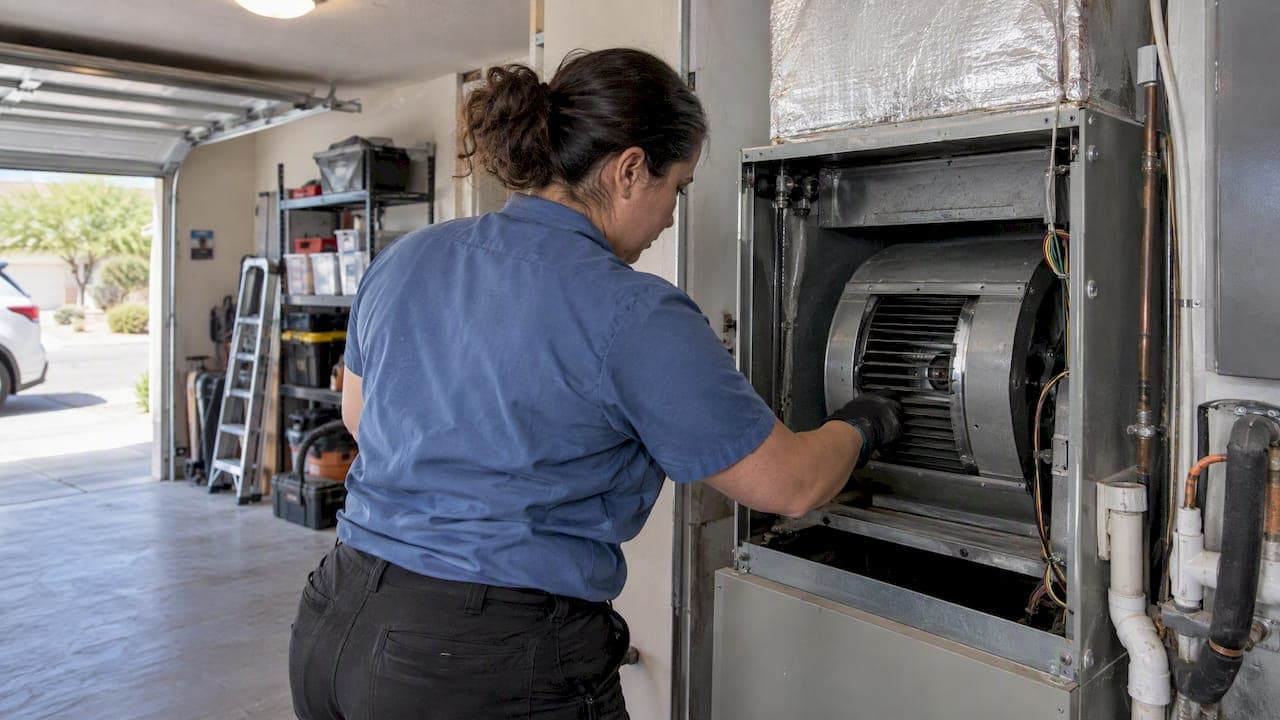
HVAC cleaning can meaningfully reduce energy use, but the savings come mostly from cleaning coils, fans and the air handler, not from duct-only cleaning. A recent peer-reviewed study measured fan and blower energy reductions of roughly 41% to 60% and airflow gains of 10% to 46% after HVAC cleaning work, while the Department of Energy notes a clogged filter alone can raise energy use by 5% to 15%. Start with filters and an annual tune-up, and call a professional when you see specific performance or contamination problems.
TL;DR:
- HVAC cleaning, especially coils and fans, can reduce fan energy consumption by roughly 41% to 60%, but duct-only cleaning offers minimal savings.
- The energy improvements often result from repairs like leak sealing and loose connection fixing, not just dust removal from ducts.
- Regular filter checks and replacements, plus annual tune-ups, provide significant energy savings and should precede duct cleaning.
- Duct cleaning is effective mainly for visible mold, pest contamination, or heavy debris, not as a routine energy-saving measure.
- Proper inspection and measurable airflow tests are essential before paying for professional cleaning to ensure actual performance benefits.
Table of Contents
- What recent studies and industry reports measured after cleaning
- Which HVAC components drive efficiency: coils, fans, filters and ducts
- When you should schedule professional cleaning or a tune-up
- Step-by-step actions to maximize your HVAC energy savings
- How a professional HVAC cleaning visit should actually work
- A straight answer on cleaning claims versus what works
- Getting professional help with HVAC energy efficiency in Avondale
- FAQ
- Sources
What recent studies and industry reports measured after cleaning
The strongest recent evidence comes from a multi-climate, peer-reviewed evaluation of HVAC cleaning interventions published in Energy and Buildings. Researchers measured supply airflow and fan energy consumption before and after cleaning work at test sites across different climate zones, and found fan and blower energy use dropped by roughly 41% to 60% while supply airflow rose 10% to 46%. Those are large numbers, and trade groups covering the study have used them to argue that cleaning pays for itself quickly in reduced run time and lower utility bills.

The catch is in how the interventions were performed. Coil and blower cleaning were frequently bundled with small duct repairs, meaning a meaningful share of the airflow and energy improvement likely came from fixing leaks and loose connections rather than scrubbing dust off duct walls. That distinction matters for anyone trying to predict their own results from a duct-cleaning-only service.
A few caveats keep these figures from translating directly to every home:
- The test conditions, equipment age and climate zones in the study do not match every household, so your results could fall outside the measured range.
- Instrumentation used to measure airflow and fan power in a controlled study is more precise than a visual before-and-after check a homeowner might get.
- When repairs happen alongside cleaning, isolating how much benefit came from cleaning versus the repair work is difficult.
A multi-climate evaluation found fan energy reductions of roughly 41% to 60% and airflow gains of 10% to 46% after HVAC cleaning interventions, a range that reflects both cleaning and the minor repairs often performed alongside it. The EPA reinforces where the evidence is strongest: cleaning coils, fans and heat exchangers tends to produce measurable efficiency gains, while duct-only cleaning rarely delivers large energy savings on its own.
Which HVAC components drive efficiency: coils, fans, filters and ducts
Energy waste in a home HVAC system usually traces back to a handful of mechanical problems, and each one responds differently to cleaning.
- Dirty coils reduce heat transfer between the refrigerant and the air passing over them, forcing the system to run longer to reach the same temperature.
- Blower and fan friction from dust buildup increases motor load, which raises electricity draw even when airflow looks normal at the vents.
- Clogged filters restrict airflow across the whole system; the Department of Energy puts the resulting energy penalty at 5% to 15% and recommends checking filters monthly and replacing them every 1 to 3 months.
- Duct leaks and loose connections, more than dust sitting on duct walls, are usually what causes distribution losses, since conditioned air escapes into attics, crawl spaces or wall cavities before it reaches a room.
Coil and fan cleaning restore the system's ability to move and condition air efficiently, while filter neglect quietly drains energy every single day it's ignored. Duct problems are mostly structural: sealing a disconnected joint typically does more for airflow than vacuuming the inside of the duct run.
Pro Tip: Check your filter against a bright light; if you can't see light through it clearly, it's past time to replace it, regardless of the calendar date.

When you should schedule professional cleaning or a tune-up
Not every home needs duct cleaning, and the EPA is explicit that it isn't something to do on a routine schedule. Instead, treat it as a response to specific conditions or performance symptoms.
- Visible mold growth inside ducts or on other HVAC components warrants professional inspection and remediation.
- Water damage or contamination from a leak, flood or pest infestation is a clear trigger for cleaning.
- Vermin or insect debris obstructing ducts or vents should be removed promptly for both air quality and airflow reasons.
- Heavy visible debris that physically blocks supply or return registers reduces airflow enough to matter.
- Rising energy bills without a clear cause, paired with reduced airflow at the registers or uneven temperatures between rooms, often point to a coil, fan or duct problem worth diagnosing.
- Persistent dust that returns quickly after a filter change can signal duct leaks pulling in unconditioned, dusty air from attics or crawl spaces.
ENERGY STAR recommends scheduling professional tune-ups seasonally, in spring before cooling season and in fall before heating season, which also tends to line up with when technicians have more availability than during peak demand weeks.
Step-by-step actions to maximize your HVAC energy savings
Start cheap and fast, then move to higher-cost, higher-payoff work once the basics are covered.
- Check your filter monthly and replace it every 1 to 3 months, since a clogged filter alone can raise energy use by 5% to 15%.
- Clear leaves, grass clippings and debris from around your outdoor condenser unit so it can exchange heat properly.
- Set a thermostat schedule that avoids heating or cooling an empty home to the same degree as an occupied one.
- Book an annual professional tune-up that includes coil and blower cleaning, a refrigerant check and a motor inspection, following the tasks ENERGY STAR lists for seasonal visits.
- Ask your technician to inspect ductwork for leaks or loose connections and repair what they find, since those repairs often drive a large share of the airflow gains attributed to cleaning.
Once the fundamentals are handled, a few upgrades compound the savings over time:
- Sealing and insulating ducts addresses the distribution losses that duct-only cleaning can't fix.
- An electronically commutated (ECM) variable-speed blower motor can reduce energy use meaningfully, but only pays off when the ducts and coils around it are already in reasonable shape.
- A smart thermostat reduces run time by adjusting automatically to occupancy and schedule.
- Equipment older than 10 years is often a candidate for replacement rather than repeated repair, especially if efficiency complaints persist after cleaning and sealing.
A multi-climate study measured supply airflow increases of 10% to 46% after HVAC cleaning work, which gives a rough sense of what's achievable when cleaning and minor repairs happen together. If you've handled filters, a tune-up and duct sealing and energy use still looks high, replacement is probably a better use of money than another round of cleaning.
How a professional HVAC cleaning visit should actually work
We provide a range of HVAC-related cleaning, repair, and installation services for residential and commercial clients. Our step-by-step cleaning process walks through inspection, cleaning and a post-service check, and in one case we documented we measured a 46% improvement in airflow after a comprehensive cleaning, though that figure reflects a single observed job rather than a guaranteed outcome for every property.
Before hiring anyone for HVAC cleaning, ask these questions:
- Will you measure airflow or system performance before and after the service, not just inspect visually?
- Does the visit include coil and blower cleaning, or only the ductwork?
- What minor repairs, like sealing a loose joint, are included if you find them during the job?
- What warranty backs the work, and how long should the visit take?
A straight answer on cleaning claims versus what works
Marketing around duct cleaning tends to promise dramatic energy savings from vacuuming ductwork alone, and that's the part of the pitch I'd push back on. The real gains, based on the recent research, come from cleaning coils and fans and fixing the leaks and loose joints that let conditioned air escape. Duct cleaning earns its place when there's visible mold, pest contamination or heavy debris, not as a blanket annual ritual.
If you're paying for a service, ask for a measurable before-and-after airflow check rather than a visual sign-off. Evidence beats a sales pitch every time, and the data we have supports a prioritized approach: filters first, tune-ups next, duct work when there's a real contamination or leak problem.
— Shaun
Getting professional help with HVAC energy efficiency in Avondale
If the inspection turns up coil buildup, a worn blower or duct leaks you can't fix yourself, that's where hiring a specialist earns its cost. We handle air duct cleaning, coil and blower service, duct repairs and sealing, air filter replacement, and air quality testing so you know whether cleaning actually moved the needle on your system's performance.
Our jobs are backed by service guarantees and flexible scheduling including options that accommodate different client needs. If you want to know where your system stands before committing to a full cleaning, our air quality test is a useful first step, and booking an inspection is the fastest way to find out what your system actually needs.
A system that's been unsealed and neglected for years affects more than energy bills too: our partners at Elite Builder Renovation cover how HVAC condition and duct placement factor into commercial remodeling decisions, which is worth a look if you're planning renovations alongside efficiency upgrades.
FAQ
Does air duct cleaning save energy?
Duct cleaning by itself rarely produces large energy savings, since the bigger gains come from cleaning coils, fans and the air handler, or from sealing duct leaks. The EPA notes that evidence for efficiency improvement is strongest for cleaning system components rather than duct surfaces alone.
What is the $5,000 rule for HVAC systems?
This isn't a standard figure referenced in Department of Energy, EPA or ENERGY STAR guidance, and definitions of it vary across contractor marketing. A more reliable rule of thumb is comparing repair cost to the age and remaining expected life of the system, with replacement usually making more sense once a unit passes 10 years old and repairs keep recurring.
What are the downsides to air duct cleaning?
Unnecessary duct cleaning costs money without a guaranteed energy benefit, and the EPA specifically cautions against routine cleaning absent visible mold, contamination or heavy debris. Poorly done cleaning can also dislodge dust into living spaces or damage ductwork if technicians use improper equipment.
Is air duct cleaning really worth the money?
It's worth it when there's visible mold, pest contamination, water damage or debris blocking airflow, situations the EPA specifically flags as valid triggers. Outside those conditions, a filter schedule, annual tune-up and duct sealing typically deliver more reliable energy savings for the cost.
Sources
- Impacts of HVAC cleaning on energy consumption and supply airflow: A multi-climate evaluation
- Should You Have the Air Ducts in Your Home Cleaned? | EPA