
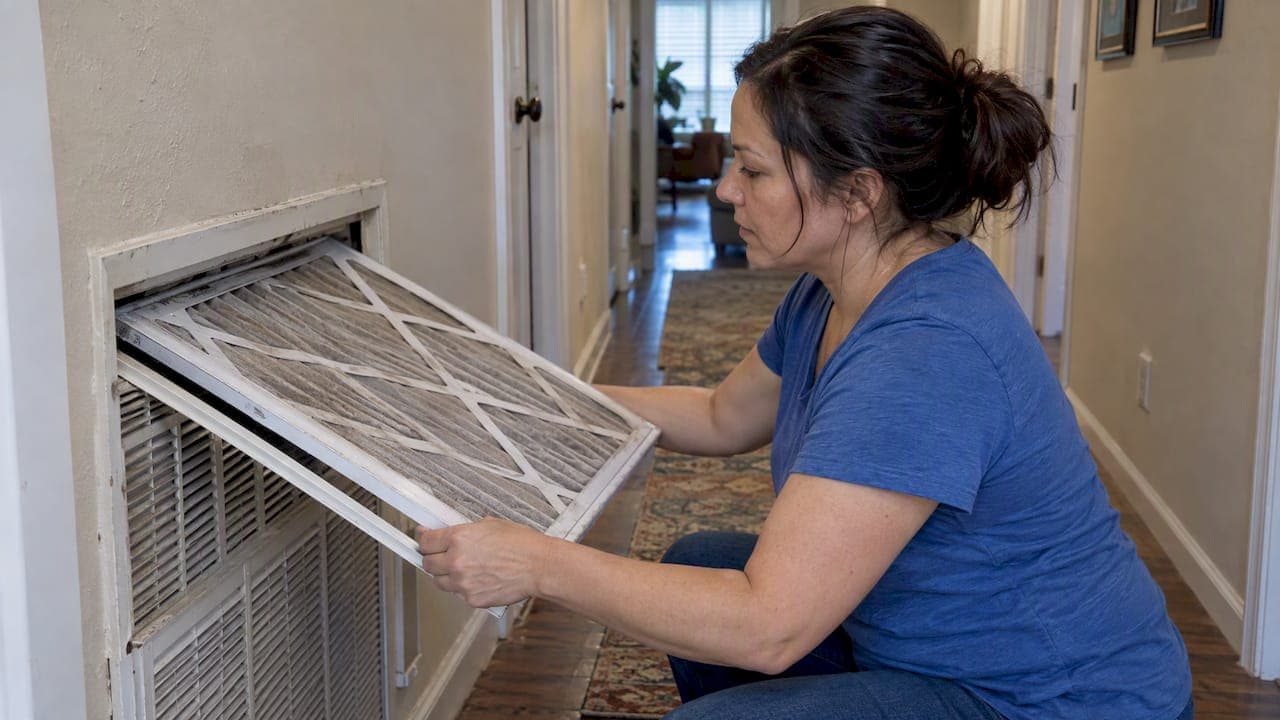
A musty, mildew-like AC smell most often means moisture-driven microbial growth on the coils, in the drain pan or line, or inside the ducts. Change the filter and check the drain now, and run the fan alone to air things out. Turn the system off if you see standing water or heavy mold, and call a professional if the smell persists.
TL;DR:
- Keep indoor relative humidity between 30% and 50%, replace filters every 1 to 3 months, and keep the condensate line clear.
- For central systems, clean only accessible surfaces; leave coil removal, chemical sprays, and opening a mini split’s indoor coil housing to a technician.
- Replace a clogged filter, clear the outdoor drain end with a vacuum and vinegar, then run the fan alone for 30 minutes to dry surfaces.
- If visible mold, recurring odor, overflow, water stains, or breathing symptoms appear, turn the system off and call a professional rather than running it.
- UV C lamps and antimicrobial coil treatments can slow regrowth, but mold can return unless drainage works and indoor humidity stays controlled.
Table of Contents
- What causes a mildew or musty smell in an AC system?
- Which quick checks can you do in 10 to 30 minutes?
- How do you clean a central system, window unit, or mini-split safely?
- How do you stop the smell from coming back?
- When should you call an HVAC professional?
- Shaun's take: fix the moisture, not just the smell
- Get the musty smell diagnosed and cleared in Avondale
- FAQ
- Sources
What causes a mildew or musty smell in an AC system?
Mildew needs moisture, organic material to feed on, and time. Your air conditioner supplies all three whenever it pulls humidity out of the air. HVAC School describes "dirty sock syndrome" as an odor from evaporator coils, caused by microbial activity on organic debris. It is more common in humid climates and often tied to heat-pump systems.
Most musty smells trace back to one of these sources:
- Microbial growth on the evaporator coil. The coil stays cold and wet during cooling, so any dust that lands on it becomes food for mold and bacteria.
- A clogged condensate drain line or overfull drain pan. Standing water turns stale quickly and smells like a damp basement.
- A dirty or saturated air filter. A clogged filter traps dust and moisture, and it also restricts airflow across the coil.
- Frozen coils that thaw. Ice that melts all at once floods the pan and leaves surfaces soaked.
- Short-cycling or poor sizing. A system that shuts off before it finishes dehumidifying leaves damp surfaces behind.
Bob Vila's guide to musty AC smells lists dirty coils or filters, clogged drain lines, and mold in ducts among the common culprits. That matches what we find in the field. If you also notice a sharp "dirty socks" note, the coil is the first place to look.
Which quick checks can you do in 10 to 30 minutes?
Start with the low-risk steps below. They cost almost nothing, and they tell you whether the problem is simple or deeper.
- Do not work inside or near the air handler. If you suspect contamination or need to inspect or clean internal components, leave the system off and contact a qualified HVAC professional.
- Pull the air filter and look at it. If it is gray, matted, or damp, replace it with a fresh one of the same size.
- Find the condensate drain pan and look for standing water. Water that sits there, or a slimy film, points to a blockage.
- Clear the drain line. Use a wet/dry vacuum on the outdoor drain end, then flush the line with white vinegar.
- Run the fan-only setting for 30 minutes. Open a few windows while you do. This dries surfaces and clears lingering odor.
- Sniff test. Smell at the vent closest to the air handler, then at one far away. A stronger smell near the unit points to the coil or pan.
For window or portable units, follow the manufacturer's cleaning instructions. If cleaning requires opening the unit or reaching internal components, contact a qualified professional.
Pro Tip: Take a phone photo of the drain pan and filter before you clean them. If the smell comes back, the photos help a technician see what changed.
Treat these steps as a first pass. If the smell returns within days, the contamination is likely deeper than a filter or a clogged drain.
How do you clean a central system, window unit, or mini-split safely?
Each system type has a different safe limit for homeowners.
Central split systems and air handlers:
- Change the filter and vacuum any accessible return grilles.
- Inspect the drain pan and flush the drain line as described above.
- Wipe accessible plastic and metal surfaces with a damp cloth and mild detergent.
- Stop there. Pulling the coil or spraying chemical cleaners into the cabinet is a technician's job.
Window and portable units: Follow the manufacturer's cleaning instructions. If cleaning requires opening the unit or reaching internal components, contact a qualified professional.
Mini-splits: Wash the indoor filters and clear leaves and debris around the outdoor unit. Do not open the indoor coil housing. Deep coil and drain work needs a professional.
A few cleaner rules keep you safe:
- Use mild dish detergent or white vinegar for drain lines and pans.
- Avoid concentrated bleach on coils, since it can corrode the metal and the fumes are a hazard.
- Never mix cleaning products.
Pro Tip: Let the pan and filter dry completely before you restart the system. Reinstalling damp parts may bring the smell back.
You have likely passed the DIY limit if you see any of these:
- Visible mold inside ducts or on the coil
- A dirty-sock smell that survives a proper cleaning
- A drain pan that overflows again after flushing
- Water stains on ceilings or walls near the air handler
Our own guide on safely removing mold from vents covers the limited DIY work that is reasonable around registers and grilles.
How do you stop the smell from coming back?
Prevention comes down to moisture control. The EPA says there is no practical way to eliminate all mold and mold spores indoors, so the goal is to keep conditions dry and the drainage working.
The EPA recommends keeping indoor relative humidity between 30% and 50%. Higher humidity over time gives mold spores a place to settle in HVAC components.
Practical steps that keep you in that range:
- Change filters every 1 to 3 months, depending on pets, dust, and how often the system runs.
- Keep the condensate line clear and make sure it slopes away from the unit.
- Use a dehumidifier in damp rooms, and consider running the fan continuously during humid weather.
- Schedule a seasonal professional inspection before heavy cooling season.
Longer-term options exist too. UV-C lamps and antimicrobial coil treatments are used in the trade to slow regrowth on coils. HVAC School notes that remedies such as these can still see recurrence without continuous controls, so they work best alongside good drainage and humidity control. For more on this topic, read our piece on the role of humidity in HVAC and our HVAC mold prevention tips.
When should you call an HVAC professional?
Some situations are beyond a filter swap and a vinegar flush. Call a technician when:
- You see visible mold inside the ducts or on the coil.
- The dirty-sock or mildew smell returns after proper cleaning.
- Water stands in the pan, overflows, or has stained nearby walls or ceilings.
- Anyone in the home has allergy-like or breathing symptoms that seem tied to the system.
The EPA's remediation guidance says that if HVAC contamination is suspected, you should consult a professional and not run the system.
A professional visit typically covers clearing the drain line, cleaning the coil, inspecting the ducts, and checking moisture sources. Depending on what turns up, the fix can be quick, such as a cleared line and a cleaned coil, or larger, such as a component replacement. If water damage has reached your walls or flooring, it is also worth understanding mold coverage in property insurance before repairs begin.

Shaun's take: fix the moisture, not just the smell
Most repeat mildew smells I see come from the same pattern: someone masks the odor, the moisture source stays, and the smell returns. The fix that lasts is moisture control plus periodic professional maintenance. Our services cover air duct cleaning, air vent cleaning, A/C repair, filter replacement, and air quality testing, which map directly to the causes above. Try the safe checks first, and book an inspection if the smell persists.
— Shaun
Get the musty smell diagnosed and cleared in Avondale
If the smell keeps returning, we can find where the moisture and growth are hiding. Our visits cover inspection, targeted cleaning of ducts and vents, and A/C repair when drainage or mechanical faults are involved. We also offer air quality testing and filter replacement. You get a clear explanation of what we found and what to do next. Start with our air duct cleaning service, or contact us through our A/C repair page to book.
FAQ
Why does my house air conditioner smell bad?
Usually moisture has allowed mold, mildew, or bacteria to grow on the coil, in the drain pan, or in the ducts. A dirty filter or clogged drain line often starts the problem. Changing the filter and flushing the drain fixes many cases.
What is the 3-minute rule for air conditioners?
It is a common rule of thumb that you should wait about three minutes after turning an AC off before restarting it. The pause lets pressure equalize so the compressor does not strain. It does not affect mildew smells, but frequent short cycling can leave coils damp.
How do I get a mildew smell out of AC vents?
Replace the filter, clear the condensate drain, and run the fan-only setting to dry the system. If the smell stays, the coil or ducts likely need professional cleaning. Persistent odors can also signal hidden moisture that needs an inspection.
Is a musty AC smell dangerous?
It can be a sign of mold growth, which may aggravate allergies or breathing problems for some people. If anyone has symptoms or you see visible mold, stop using the system and have it inspected. Controlling moisture is the main way to reduce risk.
Sources
- Epa
- What Causes Dirty Sock Syndrome? - HVAC School
- 6 Reasons Your AC Smells Musty & How to Fix It - Bob Vila