
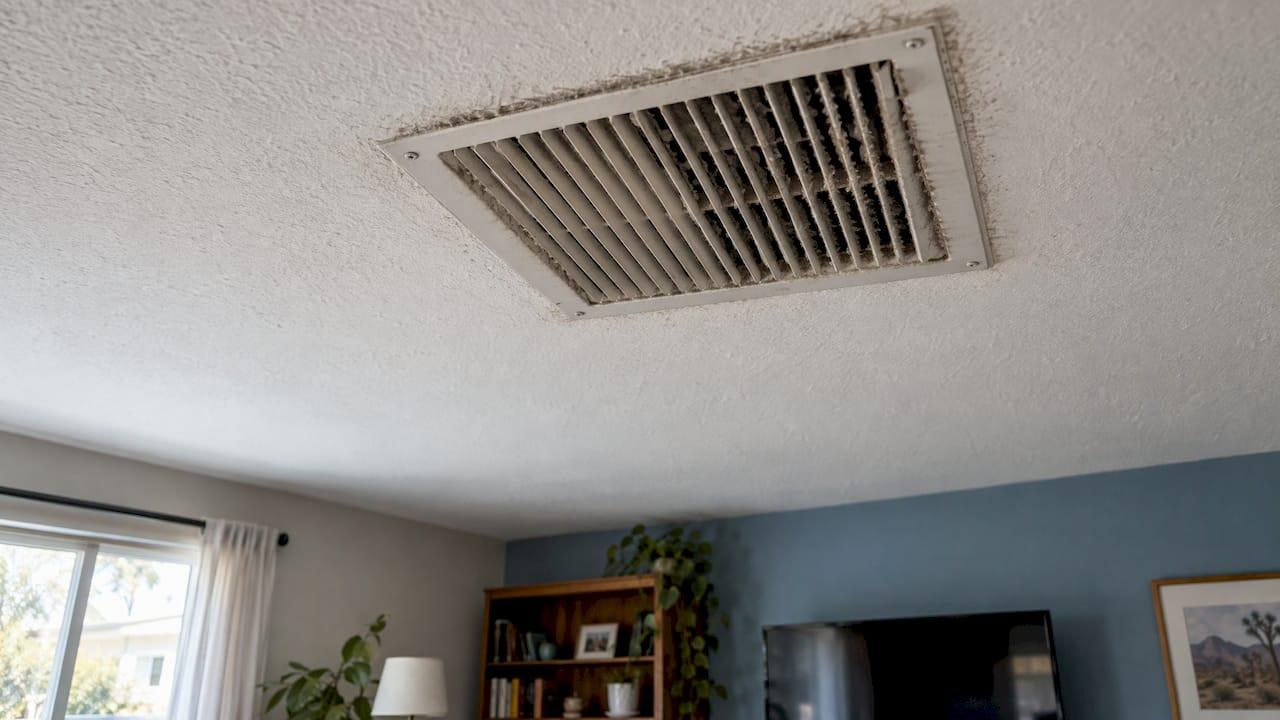
A dusty smell in your house usually comes from one of three places: dust that has built up on surfaces or inside your ductwork, moisture that has let mold or mildew start, or a heating or cooling component burning off dust. Dust alone has little odor. A smell you would call dusty is often dust carrying something else with it, such as damp, mold byproducts or debris sitting in your vents. This guide shows you how to tell the difference, trace the source room by room, and decide when it is time to bring in a professional.
TL;DR
- A dusty or musty smell that lingers after you clean often points to your HVAC system, hidden moisture or mold, not to the surfaces you can see.
- Mold gives off compounds that smell musty, and the EPA says a moldy odor suggests mold is growing and should be investigated.
- Leaky or dirty ductwork can pull dust from attics and crawlspaces and spread it through every room.
- A dusty smell on the first heating startup of the season is common and should fade within a couple of hours. A sharp, electrical burning smell means shut the system off at the breaker.
- Fix the cause (moisture, filters, ducts), not just the smell. Air fresheners and diffusers only cover it.
Table of Contents
- Why you can smell dust in your house
- Dust, dampness or mold: how to tell them apart
- How to trace the smell to its source
- When your HVAC system is the source
- A dusty, burnt smell: normal or not?
- Can you smell dust mites?
- How to get rid of the smell for good
- Our perspective
- Get the air in your Avondale home or business checked
- FAQ
- Sources
Why you can smell dust in your house
Indoor dust is a mix of many things. The EPA lists outdoor soil tracked or blown in, pollen, mold spores, pet dander, dust mites, skin flakes, particles from cooking and burning candles, and traces of chemicals. Each of those can add its own note to the air. Old skin flakes and pet dander smell stale. Mold spores and damp dust smell earthy. Soil and construction debris smell dry and chalky.
The EPA also notes that household dust can contain biological contaminants, including mold, which can enter through windows, doors, poorly maintained ventilation systems, plumbing, and cracks in the building's exterior. Everyday activity stirs that dust back into the air, so the smell seems to follow you around the house.
So when someone says the house smells dusty, there are really four questions to answer:
- Is it actual dust that needs removing from surfaces and fabrics?
- Is it dampness or mold behind the dust?
- Is your HVAC system moving dust or odor through the house?
- Is a component heating up and burning off dust?
Dust, dampness or mold: how to tell them apart
Use your nose and your eyes. Smell is useful here, and the official guidance says so. The Alabama Department of Public Health puts it plainly: look for mold growth and use your nose to find the source of a suspicious odor, and if there is an earthy or musty smell, assume a mold problem exists.
The EPA explains why. Some molds release microbial volatile organic compounds, and these compounds are the source of the moldy, musty odor many people associate with mold. A moldy odor suggests mold is growing in the building and should be investigated.
Here is a practical way to sort what you smell:
| What you notice | Most likely cause | First step |
|---|---|---|
| Dry, chalky smell that returns a day or two after dusting | Settled dust, construction debris, dust in vents | Clean surfaces with damp cloths, check filter and vents |
| Earthy, stale smell, like wet socks or rotten wood | Moisture and possibly mold | Look for leaks, stains and damp spots, then dry the area |
| Smell strongest when the A/C or heat runs | Dust or growth in ducts, dirty filter, leaky returns | Check filter, inspect vents, consider duct cleaning |
| Dusty and slightly burnt when heat first runs | Dust burning off the heating components | Ventilate, and see whether it fades in a couple of hours |
| Sharp electrical or acrid burning smell | Overheating electrical parts | Shut off at the breaker and call a professional |
Poison Control describes mold as smelling musty and damp, sometimes stale, earthy, or like rotten wood or wet socks, and notes it can develop in any moist part of the home, especially bathrooms and laundry rooms. If your dusty smell fits that description, treat it as a moisture problem first.
Where mold hides
The CDC says mold grows where there is moisture, such as around leaks in roofs, windows or pipes, or after a flood. It can grow on paper, cardboard, ceiling tiles and wood, and also in dust, insulation, drywall, carpet, fabric and upholstery. That last point matters: a layer of dust is not just a nuisance, it can be a place for growth when moisture is present.

The Consumer Product Safety Commission adds that a musty odor or water stains may come from air conditioning units, basements, attics, crawlspaces, bathrooms, carpets, and heating and cooling ducts. Dust and building materials such as wood, wallboard and insulation contain nutrients that let biological pollutants grow.
How to trace the smell to its source
Don't guess. Walk the house with a plan. The EPA's guidance for diagnosing indoor air problems starts with the most logical odor source and advises resetting your nose often with clean air. Step outside for a minute between rooms. Your nose adapts quickly, and a smell you live with every day is easy to stop noticing.
- Start where it is strongest. Bedroom, hallway, laundry room or a closet? Note the time of day and whether the A/C or heat is running.
- Run the fan, then smell the vents. Turn the system fan on and put your face near a supply vent. If the smell is stronger there than in the room, the source is likely in the ducts or the air handler.
- Check every water source. Look under sinks, around toilets, tubs and the water heater, and near the A/C condensate line for slow leaks, stains or soft spots.
- Inspect the places dust and moisture collect. Attic, closets on exterior walls, behind furniture pushed against walls, and under carpets.
- Check the dryer vent. The CPSC recommends confirming that the clothes dryer vents outside. A blocked or disconnected vent can push warm, lint-laden, humid air into your living space.
- Watch for airflow patterns. The EPA's diagnostic guide notes that dust tracking around door frames can reveal which way air and pollutants are moving through the building.
Our own DIY air vent inspection tips walk through what to look for at the vent covers themselves.
When your HVAC system is the source
If the smell rises when the system runs, the ducts deserve attention. Your system moves all the air in the house through the same pathways again and again. Anything living in those pathways travels with it.
Leaky ducts pull in dust
HVAC.com reports that Energy Star estimates 20% or more of conditioned air escapes through gaps or leaks in ducts. Leaks also work in reverse: they can pull unfiltered air and debris from attics, crawlspaces and wall cavities into the system. When the air is humid, dust gets heavier and sticks to surfaces, and extra moisture can encourage mold.
Molekule describes the same pattern. Dust bypasses filters and settles inside ductwork, and gaps, loose connections and deteriorating seals give dust from attics and crawlspaces a way in. Its simple check: turn the fan on and feel for air drafts at exposed duct sections. Where you find them, metal-backed HVAC tape or another suitable sealant is the recommended fix for small gaps. Larger or hidden damage is a job for a technician, which is where ductwork repair or replacement comes in.
Filters that are overdue or underrated
A clogged or low-grade filter lets particles through and restricts airflow. Panasonic recommends swapping filters every one to three months and considering filters rated MERV 13 or higher to trap tiny particles and mold spores. Check what your system can handle before upgrading, since a very dense filter in an unsuited system can restrict airflow. Our guides on filter replacement in Avondale and the correct filter change sequence cover the how-to.
Construction or remodeling dust
If you recently renovated, fine drywall and sawdust particles can settle deep inside the ducts and keep coming out for months. We cover that in stopping drywall dust in ducts. A dusty smell that began after a remodel, especially when the system was running during the work, is a classic sign.
What the smell tells you
We wrote a separate piece on air duct odors and their causes if you want to match a particular smell to a likely cause. If your smell appears only when the air conditioner kicks on, a professional inspection of the ducts, vents and air handler is the fastest way to know for sure.
A dusty, burnt smell: normal or not?
This one needs care, because the same smell can be harmless or serious.
National HVAC Parts explains that dust burnoff on the first cold-weather startup is normal and clears in one to two hours. The smell is dusty and slightly burnt, but not electrical or chemical, and there is no visible smoke from the vents. If it lingers beyond a few hours, investigate further.
A sharp electrical smell is different. The same source says it indicates wire insulation, motor windings or control board parts overheating, and the furnace should be shut off at the breaker immediately. Don't wait it out. Call an HVAC technician before you turn the system back on.
Poison Control also warns that a burning smell could mean an electrical problem in the house, and that some dangerous fumes, such as carbon monoxide, have no odor at all. If you are unsure about an unknown smell, the poison center is reachable at 1-800-222-1222. If you smell gas or see smoke, leave the house and call 911.
If your system needs checking or fixing, our A/C repair and heating services cover it.

Can you smell dust mites?
Not directly, but they are part of the picture. The National Institute of Environmental Health Sciences says dust mites are microscopic pests that live in house dust and feed on flakes of dead skin. The American Lung Association says roughly four out of five US homes have detectable dust mite allergen in at least one bed.
Mites themselves don't produce a smell you can pick out. But the humidity that lets them thrive also feeds mildew, and that is what makes a mattress or bedroom smell stale. The American Lung Association explains that people with a dust allergy are reacting to proteins from dust mite waste and decaying bodies, not to bites. If you wake up congested in a room that smells dusty, mites and dust are worth tackling together.
What the NIEHS recommends:
- Keep humidity at or below 50 percent with a dehumidifier or air conditioner.
- Use dust-proof covers on mattresses and pillows.
- Wash all bedding weekly in hot water, 130 to 140 degrees Fahrenheit.
How to get rid of the smell for good
The order matters. Start with moisture, because nothing else will last if the damp is still there.
- Fix the water problem. The EPA says that if you clean up mold but don't fix the water problem, the mold will most likely come back. Dry water-damaged areas and items within 24 to 48 hours.
- Control humidity. The CDC recommends keeping humidity no higher than 50% all day, and an air conditioner or dehumidifier helps. The EPA suggests staying below 60 percent, ideally between 30 and 50 percent.
- Remove visible mold. The CDC says you do not need to know the type of mold. Hard surfaces can be cleaned with soap and water or a bleach solution of no more than 1 cup of household laundry bleach in 1 gallon of water. Never mix bleach with ammonia or other cleaners.
- Dust the smart way. The American Lung Association recommends a damp mop, damp cloth or a duster that traps dust rather than moving it around, and suggests finding the spots that collect it, such as baseboards, molding, blinds and shelves.
- Change the filter. Do it now, and set a recurring reminder.
- Check the ducts and vents. Seal small leaks, and have the system inspected if the smell is strongest at the vents.
- Consider professional duct cleaning. Panasonic suggests professional air duct cleaning every three to five years. Sooner makes sense after a remodel, water damage or when odors keep returning.
Drafts matter too. Good Housekeeping notes that drafty windows and doors, an improperly maintained HVAC system and lots of dust-catching decor can all make a home dustier than it needs to be.
If you see widespread mold, a large area of water damage, or a smell that persists after you have fixed the moisture, bring in a professional. The CPSC advises having professionals check the heating and cooling system, including humidifiers and vents, and having duct lining and insulation checked for growth.
Our perspective
Most of the dusty-smell calls we hear about follow the same pattern. The homeowner has cleaned, dusted, run diffusers and opened windows, and the smell comes back within a day. That tells us the source is not on the furniture. It is somewhere the air travels, and in most homes that means the duct system.
We specialize in HVAC cleaning. It is the core of what we do, not an add-on to another trade. We use commercial-grade equipment and trained technicians to remove the dust, debris and buildup that collect in ducts and vents over time, especially after construction or years of system wear. That is what makes air duct cleaning a sensible first step when a smell follows the airflow.
We also look at the wider picture. If a dirty filter, a worn vent or damaged ductwork is feeding the problem, we can replace or repair it in the same visit, so you are not cleaning ducts that will just fill up again. And if you want a clearer read before deciding anything, our air quality test gives you something more than a guess.
For businesses, we offer flexible scheduling, including after-hours options, so a cleaning does not disrupt your day. Our services come with warranties, and we offer bundled discounts when you combine services.
Shaun
Get the air in your Avondale home or business checked
If your dusty smell follows the airflow, we can help you find and remove the cause. We serve homeowners, small business owners and property managers in Avondale, AZ. Our air duct cleaning removes dust, debris and buildup from your duct system, and our air vent cleaning covers the vents and registers you breathe from every day.
Not sure where the smell is coming from? Our air quality test is a good place to start. If lint or dryer exhaust is part of the story, we also handle dryer vent cleaning, and for offices and commercial properties there is commercial air duct cleaning. When ducts are damaged beyond cleaning, we offer air duct replacement. Contact us through our site to schedule.
FAQ
Why does my house smell dusty even after I clean?
The source is probably not on the surfaces. Dust can build up inside ducts, behind walls, or in damp materials where mold produces a musty odor. The EPA says a moldy odor suggests mold growth that should be investigated. Check humidity, the filter and your vents, then have the ducts inspected if the smell is strongest where air blows out.
Is a dusty smell from my vents dangerous?
Often it is dust, but it can also signal mold or an overheating part. A dusty smell when the heat first comes on should fade in an hour or two. A sharp electrical or burning smell means turn the system off at the breaker and call a technician. If you smell gas or see smoke, leave the house and call 911.
How do I get rid of a damp, musty smell?
Find and fix the moisture first, then dry affected areas within 24 to 48 hours, per the EPA. Keep indoor humidity no higher than 50% using an air conditioner or dehumidifier, and clean visible mold from hard surfaces. If the smell returns, check the ducts, vents and any hidden leaks.
Can you smell dust mites?
Not on their own. Dust mites are microscopic and don't have a smell you can pick out, but the humid, dusty conditions they favor can also promote mildew, which does. Washing bedding weekly in hot water, using dust-proof covers and keeping humidity at or below 50 percent reduces both problems.
How often should air ducts be cleaned?
Panasonic suggests every three to five years as a general guide. Cleaning sooner makes sense after a renovation, water damage, or when persistent odors or heavy dust keep coming back. A technician can inspect your system and tell you what it needs.
Sources
- Sources of Indoor Particulate Matter (PM), US EPA
- Biological Contaminants and Indoor Air Quality, US EPA
- Mold facts, Alabama Department of Public Health
- What does mold smell like? US EPA
- Unknown fumes in your home, Poison Control
- Mold, CDC
- Biological Pollutants in Your Home, CPSC
- IAQ Problem Solving Wheel, US EPA
- Diagnosing IAQ Problems, US EPA
- Why Is My House So Dusty? HVAC.com
- Why Is My House So Dusty? Common HVAC Causes and Fixes, Molekule
- Why is my house so dusty? Panasonic North America
- Furnace Burning Smell? National HVAC Parts
- Dust Mites and Cockroaches, NIEHS
- Dust and Indoor Air Quality Briefing, American Lung Association
- Dust Mites, American Lung Association
- A Brief Guide to Mold, Moisture and Your Home, US EPA
- 7 Reasons Why Your House Gets So Dusty, Good Housekeeping