
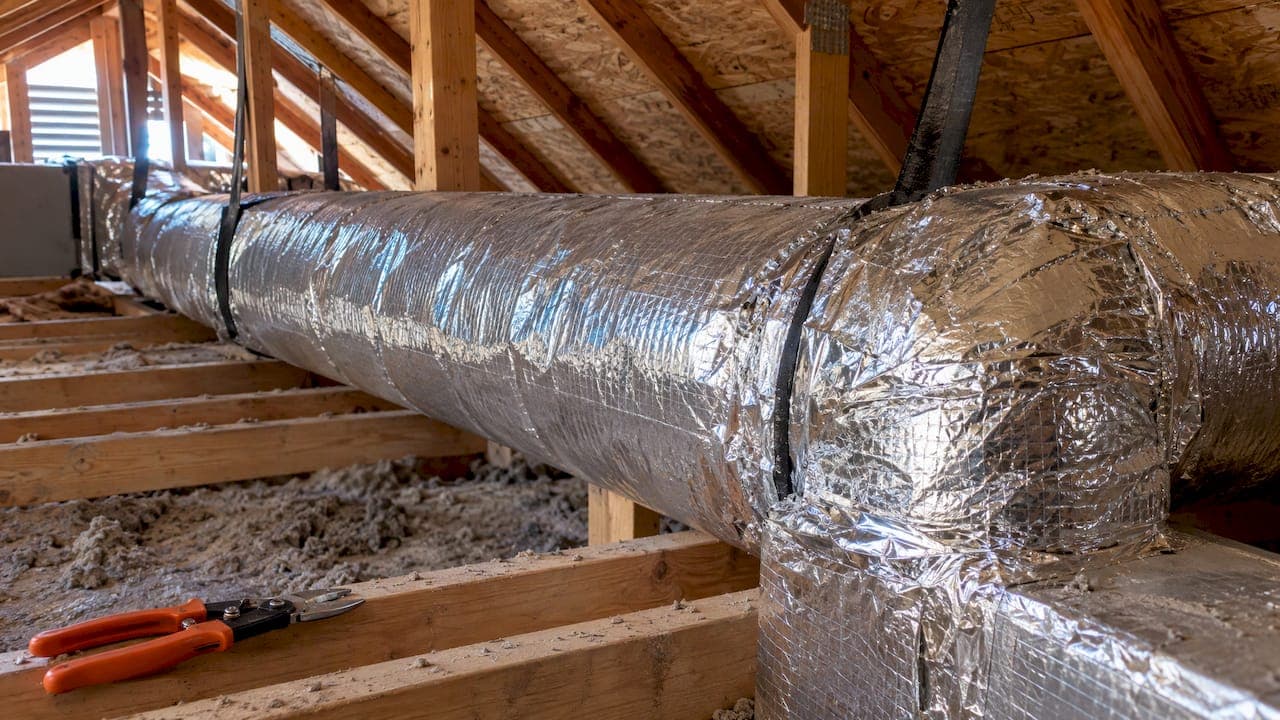
Yes, ducts that run through unconditioned space, such as an attic, crawl space or garage, should be insulated, and they should be sealed first. In a hot-summer climate like Avondale's, uninsulated supply ducts in a 120-degree attic lose a lot of the cooling you paid for before it reaches a room. The usual fix is fiberglass duct wrap on metal ducts, or pre-insulated flexible duct, at the R-value your local code requires or higher.
This guide covers which ducts need insulation, the main types, the R-values to look for, how to install wrap correctly, and the moisture problems that turn a good idea into a mold problem.
TL;DR
- Insulate ducts that pass through attics, crawl spaces, garages and other unconditioned spaces. Ducts inside the conditioned envelope need it far less.
- The 2009 IECC set R-8 for attic ducts and R-6 for ducts in other unconditioned spaces. Your local code may be stricter, so check before you buy.
- Seal every seam with mastic first, then wrap. Insulation over leaky ducts hides the leak and does not fix it.
- Insulation must touch the duct with no gaps or crushed spots, and its vapor barrier must be intact, or condensation can form.
- Damaged, wet or missing insulation is easy to spot during an inspection. It is worth checking before the cooling season.
Table of Contents
- Why insulation around ducts matters
- Which ducts should be insulated
- Duct insulation types
- What R-value should duct insulation have
- Seal first, then insulate
- How to install it correctly
- Signs your duct insulation needs attention
- Repair, re-wrap or replace
- Our perspective
- Get your ducts checked in Avondale
- FAQ
- Sources
Why insulation around ducts matters
Your air conditioner cools air to a low temperature and pushes it through a network of ducts. If those ducts sit in a space that is much hotter than the air inside them, heat moves through the duct wall into the airstream. The air arrives at your vents warmer than the system made it, so the unit runs longer to hit the thermostat setting.
Duct insulation slows that heat transfer. It also keeps the duct surface from getting cold enough to sweat. The U.S. Department of Energy's guidance on sealing and insulating your ductwork is the best-known consumer explanation of this, and it lines up with what building scientists recommend: seal first, insulate second.
There is a second reason that gets less attention. Uninsulated ducts in humid conditions can drip, and that moisture can feed mold on surrounding materials. Insulation with an intact vapor barrier keeps the cold metal surface away from warm, moist air.
Ideally, ducts should be located in conditioned space in the first place, according to the Building America Solution Center. In existing homes that usually means the ducts are already where they are, so insulation is the practical answer.
Which ducts should be insulated
The question is less "should ductwork be insulated" and more "where is this section of duct located."
Ducts that should be insulated
- Attic ducts. The hottest and most common problem location in the Southwest. Both supply and return runs belong here.
- Crawl space and underfloor ducts. Less common in Arizona homes, but the same logic applies.
- Garage ducts and ducts in exterior walls or soffits. These sit against outdoor temperatures.
- Ducts outside the building. Rooftop commercial runs are the usual example.
For commercial buildings, model code asks for insulation on supply and return ducts and plenums in unconditioned spaces, outside the building, or within exterior building components, as summarized in Pacific Northwest National Laboratory's code notes. If you manage a commercial property, that is the baseline your mechanical contractor works from.
Ducts that may not need it
Ducts fully inside conditioned space, such as a run inside an interior wall or a dropped ceiling within the thermal envelope, lose little energy because the air around them is already close to room temperature. A note of caution applies to basements: the Department of Energy's older duct-efficiency guidance points out that insulating basement ducts can make the basement colder, so some homeowners are better served by insulating the basement walls instead (source). Most Avondale homes are slab-on-grade with attic ducts, so the attic is where this guide focuses.
Duct insulation types
There are four common forms you will run into. Which one fits depends on whether the duct is metal or flexible, how much room you have, and whether the duct is new or existing.
| Type | Where it is used | How it works | Good to know |
|---|---|---|---|
| Fiberglass duct wrap (blanket) | Existing and new metal ducts in attics and crawl spaces | Rolled blanket with a foil-faced vapor barrier, wrapped around the outside of the duct | The standard retrofit choice for rectangular and round metal duct |
| Pre-insulated flexible duct | New installs and replacements | Inner liner, fiberglass blanket and an outer foil or plastic vapor barrier built into the duct | Insulation is part of the product, so it cannot be skipped or misapplied |
| Rigid duct board | Fabricated duct systems | Fiberglass or foam board formed into the duct shape itself | Insulation is the duct, with a facing that must be sealed at every joint |
| Rigid foam board | Custom wraps around rectangular trunk lines | Polyisocyanurate or similar board cut and taped around the duct | Higher R-value per inch, but cutting and sealing take care |
Fiberglass duct wrap
Residential metal ducts in unconditioned spaces are typically insulated on the exterior with fiberglass duct wrap that has a foil-faced vapor barrier, according to the Building America Solution Center guide for metal ducts. It is the answer to the common question of whether insulation goes inside or outside the duct: for metal duct, outside.
Flexible duct
Flexible ducts are pre-insulated with a fiberglass blanket and covered by a vapor barrier, and they are widely used for HVAC distribution, as described in the Building America guide to sealed and insulated flex ducts. If you want to know how flex duct differs from rigid metal, we explain it in What Is Flexible Ductwork?.
Because the insulation is built in, a torn outer jacket is the thing to look for. Once the vapor barrier is open, the blanket can absorb moisture and lose its value.
Internal liner versus external wrap
Some commercial ducts have insulation lining the inside surface, which also deadens fan noise. Residential retrofits almost never do this, because it means opening and re-fabricating the duct. If you are weighing it for a commercial space, ask the mechanical contractor about the facing and about cleaning requirements, since lined ducts need different handling during service.
What R-value should duct insulation have
R-value measures resistance to heat flow. Higher is better, and thickness is what drives it.
The code baseline
The 2009 International Energy Conservation Code requires at least R-8 insulation on ducts in attics and R-6 on ducts in other unconditioned spaces, according to the Building America measure guideline on sealing and insulating ducts. ENERGY STAR programs also call for a minimum of R-8 in unconditioned spaces such as attics, per the Department of Energy's high-R duct insulation page.

Commercial numbers shift with the code edition. The 2012 IECC requires R-6 in unconditioned spaces and R-8 for ducts outside the building, while ASHRAE 90.1 sets values by climate zone and duct location, as laid out in the PNNL commercial duct code summary.
Check your local code
The numbers above are model-code minimums from earlier editions. What applies to your building depends on the edition your city has adopted. The City of Avondale's residential plan review checklist asks that plans show the air duct insulation R-value, which tells you it is a reviewed item for new construction. For a remodel or a duct replacement, ask your contractor which value they are building to and have them write it on the estimate.
Going beyond the minimum
In a very hot attic, many owners choose to exceed the minimum. High-performance approaches include encapsulating ducts in at least 1.5 inches of spray foam, or burying them under blown-in attic insulation, with the amount depending on climate zone (Department of Energy). Burying has a limit worth knowing. In retrofits, burying sealed and insulated ducts under blown-in insulation is only recommended in dry climates, because of condensation risk in humid conditions (measure guideline). Avondale's dry desert climate fits that profile, but it is a design decision for a contractor to make with you, not a weekend task.
Seal first, then insulate
Insulation slows heat flow. It does not stop air leaks. A duct with open seams will push cooled air into the attic whether it is wrapped or not, and wrap can hide the problem from view.
The correct order is:
- Inspect the system. Look for disconnected sections, crushed flex duct, open joints and old tape.
- Seal all joints and seams. The Building America guidance recommends mastic for sealing metal ducts (guide). Mastic is a paste that dries into a flexible seal. Cloth-backed tape often fails in attic heat.
- Clean if needed. Dust, drywall residue and debris are easier to remove before the duct is wrapped. If your home had recent construction, see our guide on drywall dust in ducts.
- Wrap or replace insulation. Cut the blanket to size, keep it snug, and overlap seams.
- Seal the vapor barrier. Close the seams with the tape or mastic the manufacturer specifies.
The same logic applies to the whole building. Insulation, air sealing and smart duct placement work together, and a house that loses less energy through its envelope asks less of the ducts. If you want the wider picture, this overview of energy-efficient home construction covers how those pieces fit.
How to install it correctly
Most duct insulation failures are installation failures, not product failures. Whoever does the work, these are the points to verify.
Full contact, no gaps, no compression
For insulation to work, it must be fully aligned with and in contact with the walls of the duct system, with no gaps or compressed sections, according to the Building America Solution Center. Compressed wrap loses R-value because the trapped air that does the insulating is squeezed out. Bends, boots and takeoffs are where installers cut corners, so look at those first.
Keep the vapor barrier intact
Condensation becomes a concern when the thermal barrier and vapor barrier are misaligned, especially in humid climates (same guide). In practice: the foil or plastic facing goes on the outside, seams are taped, and any tear is repaired. Do not use unfaced fiberglass on a cold supply duct.
Do not let the wrap fight the duct
Two common problems show up in service calls:
- Straps that cut into the wrap. Use wide straps or the support the manufacturer allows.
- Wrap that blocks access. Leave access to dampers, cleanout points and any controls.
If you want to see how installation shortcuts affect comfort, read about common duct installation mistakes.
Signs your duct insulation needs attention
You do not need special equipment to spot trouble. A flashlight and a safe look into the attic access go a long way. Watch for:
- Insulation that is torn, sagging or hanging off the duct
- Flex duct with a ripped outer jacket or exposed fiberglass
- Stained, damp or flattened insulation
- Ducts that feel hot to the touch on a summer afternoon
- Rooms that stay warm while the system runs constantly
- Visible dust streaks at seams, which can indicate leaks
- Rodent or pest damage to the jacket
A few of these overlap with air-quality issues. Damaged insulation can shed fibers, and wet insulation can support microbial growth. If you suspect either, a professional inspection is the right next step, and our routine duct inspection workflow shows what a thorough check covers. We also wrote about why inspecting duct insulation lowers costs and improves air quality.
Repair, re-wrap or replace
Not every problem calls for new ductwork. A rough guide:
| What you find | Usual approach |
|---|---|
| Small tears in wrap on sound metal duct | Patch or re-wrap that section and reseal the barrier |
| Loose or missing wrap, ducts otherwise fine | Seal seams with mastic, then re-wrap |
| Flex duct with a torn jacket or crushed sections | Replace the damaged runs |
| Wet, moldy or heavily degraded insulation | Remove, correct the moisture source, and replace |
| Old system with widespread damage and poor layout | Evaluate replacement of the duct system |
Before replacing anything, get the facts. Camera and static pressure checks can tell you whether the issue is dirt, leakage, airflow restriction or the ducts themselves. Our guide on camera and static pressure checks before replacing ducts explains what to ask for, and what ductwork replacement involves walks through the process and the energy case for it.
One caution on do-it-yourself work: attics in the Phoenix area get dangerously hot, and fiberglass is a skin and lung irritant. Wear a respirator rated for the job, long sleeves and gloves, work in the early morning and keep your weight on the joists. If the project involves mold, wet insulation, or any HVAC component beyond the duct surface, hire a licensed contractor.
Our perspective
Most of what we see in Avondale attics is not a product problem. It is a pairing problem: leaky seams hidden under wrap, flex duct with a torn jacket, or old insulation that has been compressed for years.
We clean ducts, and we also repair, replace and install them, so we look at the whole picture. Dust and debris in a duct, a damaged liner and a leaking joint often show up together, and treating only one of them leaves the others working against you.
Our advice is simple. Have the system inspected, seal what leaks, make sure the insulation meets your local code and is in good shape, and then clean the system so the air you pay to cool is clean too. Our team is trained in HVAC cleaning as its own specialty, not as a side job, and we back our services with warranties.
If a section of duct needs to be replaced, it is better to do it right once than to wrap a failing duct a third time.
Shaun
Get your ducts checked in Avondale
If you live or manage property in Avondale and want to know what condition your ducts are in, we can help. We clean residential and commercial duct systems, and we handle duct repair, installation and related services when an inspection turns up damage. Where the layout or condition calls for it, we also do air duct replacement.

For a system that is sound but dusty, start with air duct cleaning. Property managers can look at our commercial air duct cleaning, which offers flexible scheduling including after-hours options. Prices depend on the property, so contact us through the site for an estimate.
FAQ
Do ducts need insulation?
Ducts in attics, crawl spaces, garages and other unconditioned areas should be insulated, and model energy codes require it. Ducts that run entirely inside conditioned space lose far less energy and need it less. Always seal the seams before you insulate.
Should insulation go inside or outside the duct?
For residential metal ducts, insulation is normally applied to the outside as fiberglass wrap with a foil vapor barrier. Flexible ducts come with the insulation and vapor barrier already built in. Interior liner exists mostly in commercial systems.
What R-value do I need for attic ducts?
The 2009 IECC set R-8 for ducts in attics and R-6 for other unconditioned spaces. Your city may have adopted a newer or stricter edition, so confirm the value with your contractor and have it written into the estimate.
Can mold grow on insulated ducts?
It can if moisture gets in. Torn vapor barriers, gaps, and misaligned layers can cause condensation, especially in humid conditions, and wet insulation is a place mold can take hold. Repair the barrier and fix the moisture source, and replace any insulation that has stayed wet.
Sources
- Building America: Sealed and Insulated Metal Ducts
- Building America: Sealed and Insulated Flex Ducts
- Measure Guideline: Sealing and Insulating of Ducts in Existing Homes
- Duct Insulation and Sealing Requirements in Commercial Buildings (PNNL)
- HVAC High-R Duct Insulation (Building Science Education)
- Improving the Efficiency of Your Duct System
- City of Avondale Residential Plan Review Checklist